
Elite Turbo Tyres
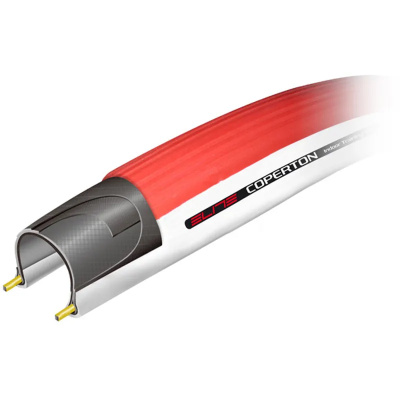
If you're running Elite turbo tyres on your wheel-on trainer, you've already avoided one of the most common and costly mistakes in indoor cycling. If you're still using your regular road rubber, stop - it's quietly destroying itself. Every session on a wheel-on trainer puts a concentrated band of heat and friction through a tiny contact patch, and standard road compounds weren't built for that. They flat-spot, they dust (that black smear on the carpet isn't a mystery), and they lose grip at higher wattages when you can least afford to slip. The Elite Coperton changes that completely. It's a tyre designed specifically for the roller environment: a proprietary rubber compound that handles heat dissipation properly, a knurling pattern that locks onto elastogel and metal rollers without slipping mid-effort, and a noticeably quieter ride that won't have your housemates knocking through the wall at 6am. It's also protecting your decent road tyres from pointless indoor wear. Check sizing compatibility before you buy, and compare prices across the range below.
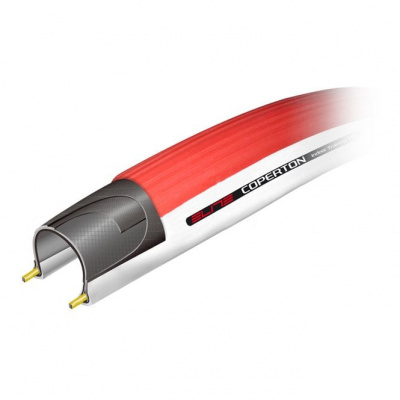
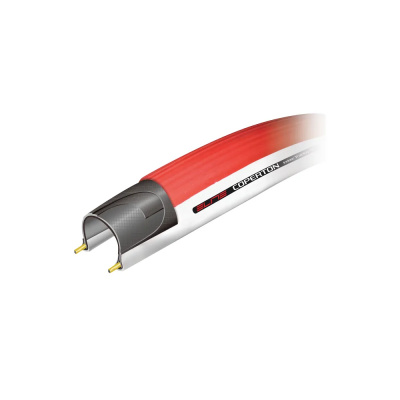
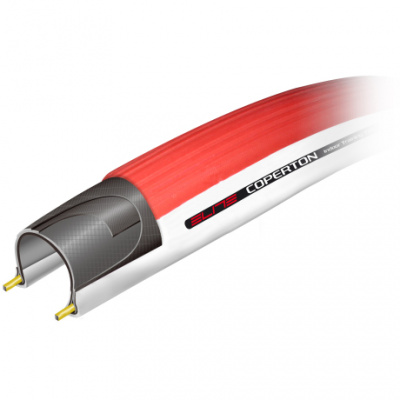
Prices and availability can change quickly. Delivery charges are not always included in listed prices.
Final price, stock status and delivery terms are set by retailer. We may receive a commission on purchases made.
Sizing, Pressure, and Trainer Compatibility
Most riders will be looking at the standard 700c x 25mm format, which covers the vast majority of road and gravel wheel-on setups. That said, the Elite trainer tyre 700c is also compatible with 29-inch rims, so if you're using an MTB wheel on a budget trainer, you're not locked out. Getting the pressure right matters more than people realise. Run the tyre at 100 - 110 PSI - lower and you increase rolling resistance and heat build-up from deformation; higher and you risk reducing the contact patch to the point where the knurling can't do its job on the roller surface. Roller tension is the other variable. Too loose and you'll spin out under load; too tight and you're accelerating wear on both the tyre and the roller itself. Snug, not strangled - a few millimetres of deflection under firm thumb pressure is the standard check.
One important clarification: if you're running a direct-drive smart trainer, you don't need a turbo tyre at all. Direct drive removes the rear wheel entirely, so there's no roller contact. Elite turbo tyres are strictly for wheel-on trainers and rollers. If you're unsure which setup you have, look at whether your rear wheel stays on - if it does, you need the tyre.
Why the Coperton Compound Is Worth Understanding
Here's the physics that makes a standard road tyre such a poor fit for indoor training. A wheel-on trainer's roller creates an extremely small contact patch - think a finger pressed hard into the tyre rather than a tyre laid across tarmac. At that contact point, heat builds fast, especially during threshold efforts or sprint intervals. Road tyres use silica-rich compounds optimised for outdoor grip and puncture resistance, not heat dissipation. The result: the compound softens, sheds particles (the black dust), and begins to flat-spot where the roller repeatedly contacts the same section of tyre.
Elite's Coperton Compound addresses this directly. It's a rubber mixture engineered to manage the heat generated at the roller contact point, staying stable under sustained load rather than degrading. The compound is harder than a typical road tyre - which is exactly what you want here - and dissipates heat efficiently enough to extend tyre life significantly. Elite claim up to 20% noise reduction compared to standard road rubber, which is credible given how much of the noise in a wheel-on setup comes from the compound vibrating against the roller surface. The knurling pattern - the surface texture of the tyre - is optimised specifically for elastogel and metal rollers, giving you roller grip that doesn't slip when you put serious watts through the drivetrain. It's the difference between a training session and a frustrating spinning contest.
If you're weighing up alternatives, Continental turbo tyres and Vittoria's indoor range take similar approaches to heat-resistant compounds, but the Coperton's knurling and Elite's long-standing focus on the wheel-on trainer market give it a specific coherence that's hard to argue with on its own hardware.
Getting Through a UK Winter Without Destroying Your Kit
British winters push indoor training hard. From November through to March, a lot of riders are logging serious hours on Zwift or TrainerRoad rather than fighting the mud and dark, and that concentrated use puts genuine stress on both the tyre and the roller. A quiet turbo tyre for indoor cycling doesn't stay quiet - or last - without a bit of basic upkeep.
The most important habit is keeping both surfaces clean. Wipe the tyre down with isopropyl alcohol every few sessions to remove any grease or residue that migrates from the drivetrain. Do the same to the roller. Contamination between the two surfaces accelerates wear dramatically and brings back the slip problem the Coperton compound is designed to prevent. It takes two minutes and it genuinely extends tyre life.
If you're training in a cold garage or shed - and a lot of UK riders are - be aware that the tyre compound will be stiffer when cold. Give it five minutes at easy effort before you start hammering; this lets the compound warm up and reach its optimal grip and wear characteristics. Flat-spotting is more likely during a cold start if you go straight into hard efforts.
After heavy interval blocks, run your thumb around the tyre casing and check for surface cracking or visible casing wear. The Coperton compound is durable, but high-wattage sprint efforts repeated over weeks will eventually show wear at the contact band. With correct pressure, clean surfaces, and sensible roller tension, expect a realistic lifespan of 2,000 to 3,000 indoor miles - roughly a full UK winter season and then some for most riders. That's a strong return for what is a low-cost component protecting your actual road tyres from pointless degradation.
Elite Turbo Tyres FAQs
Do I really need a specific tyre for a turbo trainer?
Yes, and it's not optional if you want your setup to work properly. Standard road tyres overheat on a wheel-on roller, lose grip under load, and shed black rubber dust as they degrade. Elite turbo tyres use a heat-resistant compound built for exactly this environment, protecting your road rubber and keeping your training space presentable.
How long do Elite turbo trainer tyres last?
With correct pressure (100 - 110 PSI), appropriate roller tension, and clean surfaces, an Elite Coperton tyre will typically cover 2,000 to 3,000 indoor miles before showing meaningful wear. Wiping the tyre and roller down with isopropyl alcohol every few sessions is the single biggest factor in getting to that upper figure.
Can I use an Elite turbo tyre outside?
No - and this isn't a soft recommendation. The hard, heat-resistant compound that makes turbo tyres work indoors offers negligible grip on wet or dry tarmac. Riding one outdoors is genuinely dangerous. Keep it strictly for the trainer.