
Continental Turbo Tyres
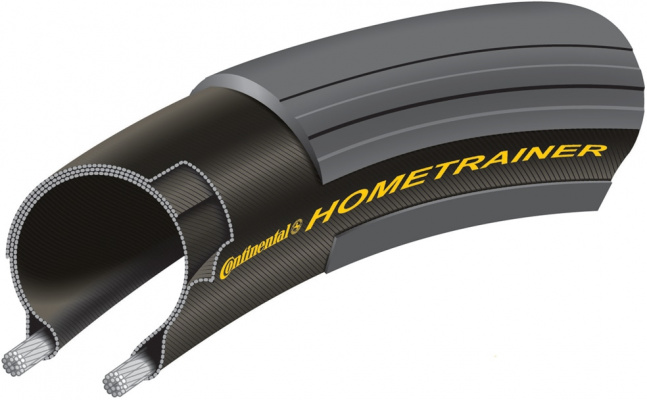
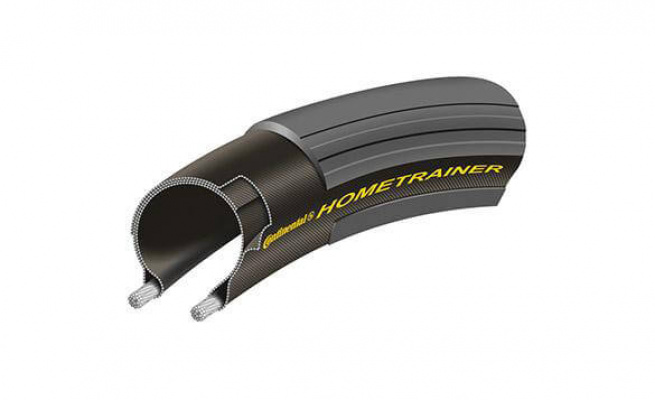
Continental Turbo Tyres exist for one straightforward reason: your expensive road rubber was never meant to be slowly destroyed by a metal roller at 400 watts. The Continental Hometrainer line is built around a proprietary cold-running compound engineered specifically for the intense, localised friction that wheel-on smart trainers generate. Standard tyres - even quality ones - can't handle that heat. They blister, wear flat, and leave a grim black dust ring on your turbo mat like evidence of a crime.
Swapping to a dedicated Continental indoor trainer tyre solves several problems at once. The heat-resistant casing prevents tread delamination, the compound grips the roller cleanly during hard sprint efforts, and the reduction in vibration is noticeable - particularly if you're training in a flat, neighbours-next-door kind of situation. No more slipping mid-interval. No more worrying that your good training tyre is being quietly murdered while you're grinding through a Zwift race.
For UK riders, where Zwift season effectively starts the moment October arrives and the roads turn greasy, having a dedicated trainer wheel set up and ready makes the transition between indoor and outdoor riding far less faff. These tyres are a small, practical investment that keeps your outdoor rubber where it belongs - on the road.
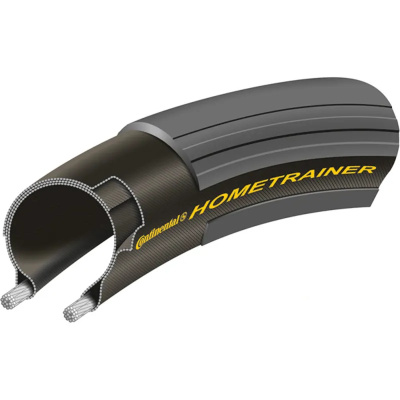
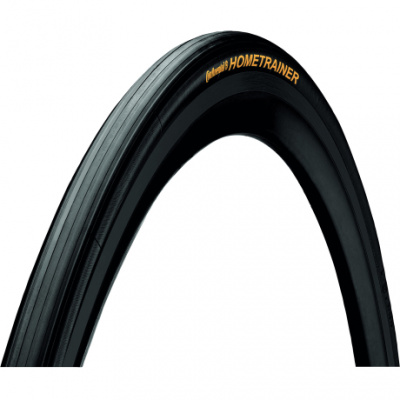
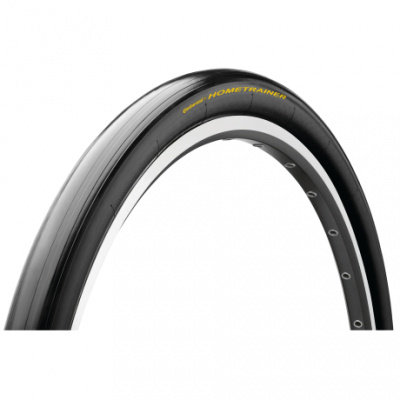
Prices and availability can change quickly. Delivery charges are not always included in listed prices.
Final price, stock status and delivery terms are set by retailer. We may receive a commission on purchases made.
Sizing Your Trainer Tyre: What Fits What
Continental's Hometrainer range covers most common wheel sizes, so whether you're training on a road bike or have pressed an older mountain bike into smart trainer duty, there's likely a match. Road setups are typically served by 700c options in 23c and 25c widths - check the sidewall of your current tyre for the ISO diameter (622 is the standard 700c road measurement) and match accordingly. If your sidewall reads 622x23 or 622x25, you're in 700c territory.
MTB and hybrid bikes being used indoors are catered for across 26-inch, 27.5-inch, and 29-inch diameters, though the Hometrainer range is most comprehensively developed around the 700c road format. All options use standard clincher rims and need a conventional inner tube - pairing with Continental inner tubes keeps the whole setup consistent and takes one variable out of the equation. Worth running a fresh tube when you fit the trainer tyre, particularly if your current one has done a full outdoor season.
One thing worth being clear on: these are not tubeless-compatible. Fit a tube, inflate correctly, and you're done. Simple.
Why Your Road Tyre Is the Wrong Tool for This Job
Wheel-on trainers work by pressing a metal or alloy roller against the tyre. That contact patch is tiny and the friction is relentless - especially at higher resistance levels. What happens to a standard road compound under those conditions? It heats up fast. Compounds like BlackChili, designed for wet tarmac grip and rolling efficiency, aren't formulated for sustained high-temperature roller contact. The result is delamination - the tread separating from the casing - blistering, or simply wearing a flat spot into a tyre that still looks mostly fine from the outside.
Continental's Hometrainer cold-running compound addresses this directly. It's formulated to dissipate heat rather than absorb and retain it, which extends the tyre's lifespan considerably and keeps the contact surface consistent throughout a session. The heat-resistant casing works alongside the compound to prevent delamination under high roller friction - so the structure of the tyre stays intact even across a winter's worth of two-hour sessions.
The noise benefit is real too. A worn or mismatched tyre on a roller hums, buzzes, and occasionally lets out an unsettling whine at high cadence. The Hometrainer's compound engages the roller more smoothly, which drops the vibration frequency and keeps things appreciably quieter. If you've been tolerating a noisy setup, the difference is immediate. Alternatives like Vittoria turbo tyres and Elite turbo tyres take a similar approach, but Continental's Hometrainer is one of the most widely recommended in the category - the cold-running compound formula has been refined over a long production run and the wear resistance holds up well across consistent heavy use.
Running the best turbo trainer tyre for smart trainers isn't about marginal gains. It's about not damaging your kit and not being the person whose turbo sounds like a small motorbike at 6am.
Building a Proper Indoor Training Setup for UK Winters
The most practical thing you can do - and plenty of riders overlook this - is build a dedicated rear trainer wheel. Grab a cheap second-hand rim, lace it to a spare hub, fit the Continental Hometrainer tyre and a fresh inner tube, and leave it permanently set up. When you're heading out on Sunday morning, swap to your road wheel. When you're back indoors, swap back. Takes thirty seconds once you've done it a couple of times. You stop wearing down your outdoor Continental road tyres on the trainer, and you stop having to swap tyres on a single wheel every time the weather changes - which, across a UK winter, is constantly.
On the maintenance side: if you notice the grip starting to feel inconsistent or the tyre seems to be slipping slightly during sprint efforts, wipe both the tyre surface and the trainer roller with isopropyl alcohol on a clean cloth. Rubber glaze builds up over time - a thin, shiny layer that reduces friction - and IPA cuts through it immediately. It's the kind of thing that takes two minutes and restores the setup to feeling new. Do it every few weeks during heavy training blocks.
Keep an eye on tyre pressure too. Cold garage conditions in November mean pressure drops between sessions - check it before every ride rather than assuming it's still at the right level from last time. A soft tyre on a roller generates more heat, wears faster, and handles sprint loads poorly. Pump it up, get on, train hard.
Continental Turbo Tyres FAQs
Do I really need a specific turbo trainer tyre?
Yes, genuinely. Standard road tyres aren't built for the sustained, localised heat a wheel-on trainer's metal roller generates - they'll delaminate, wear flat, and slip under hard efforts. Continental's Hometrainer cold-running compound is specifically formulated to handle that friction, lasting far longer and running noticeably quieter in the process.
Can I ride a Continental Hometrainer tyre outside?
No - and it's worth being firm on this. The compound is optimised for roller contact indoors and doesn't provide the wet grip, puncture resistance, or handling characteristics needed on tarmac. Keep it strictly for indoor use and run a proper road tyre when you're heading out.
What pressure should I run my Continental turbo tyre at?
Run it at the maximum recommended pressure printed on the sidewall - typically around 100 - 110 PSI for 700c models. Higher pressure reduces tyre deformation against the roller, which cuts wear, limits heat build-up, and keeps the contact consistent during hard sprint efforts. Check it before every session, particularly in a cold garage where pressure drops overnight.