
Elite Regular Turbo Trainers
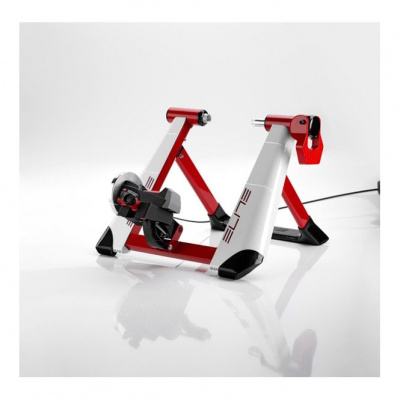
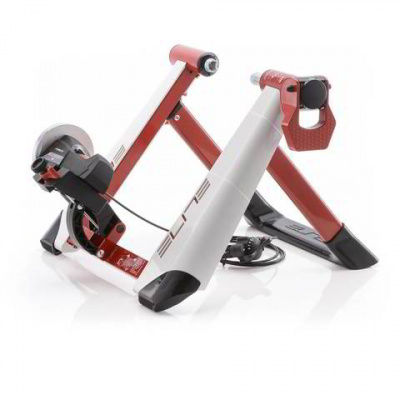
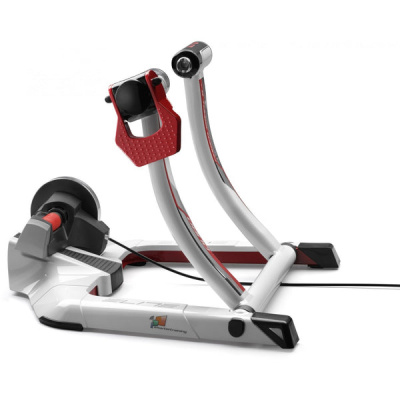
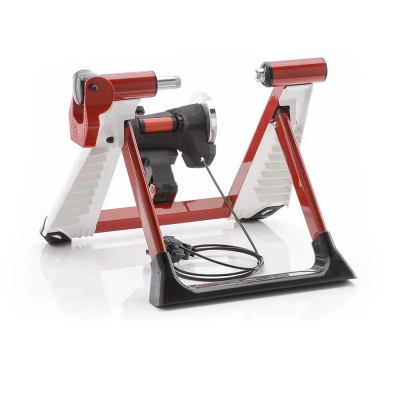
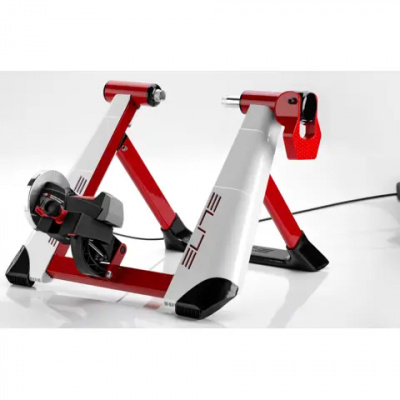
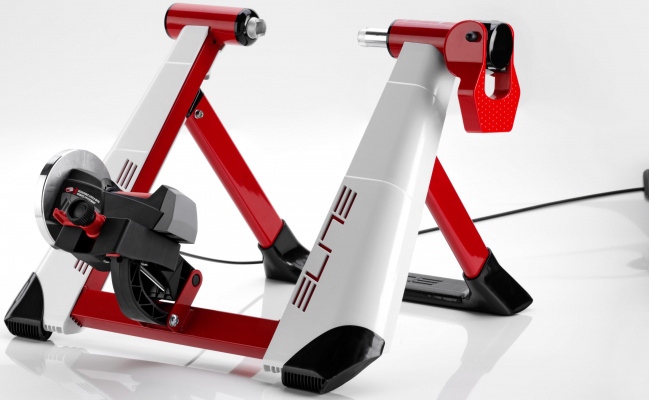
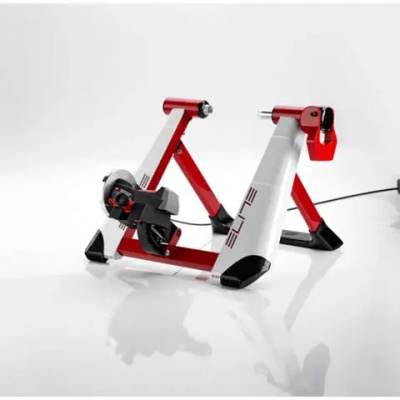
Elite regular turbo trainers are the go-to choice when short days and sodden roads make outdoor riding more punishment than training. Elite has been building wheel-on trainers long enough to know what actually matters: a solid frame, a roller that doesn't wake the neighbours, and resistance that feels like riding rather than pedalling through treacle. Their Elastogel roller is the headline feature - it cuts noise by up to 50% compared to a bare metal roller and reduces tyre wear by around 20%, which matters when you're grinding out two-hour base sessions in a terraced house or a damp garage. You've got two resistance flavours to choose from: fluid units that ramp up progressively as you push harder, and magnetic units with a handlebar lever for stepped changes on the fly. Neither requires a power socket, a firmware update, or a degree in app configuration just to start pedalling. If you want something honest, robust, and ready to go in under five minutes, Elite's regular trainer range deserves a serious look - particularly for riders who want reliable indoor cycling without the complexity or cost of a full smart trainer.
Prices and availability can change quickly. Delivery charges are not always included in listed prices.
Final price, stock status and delivery terms are set by retailer. We may receive a commission on purchases made.
Getting Connected: Apps, Sensors and Virtual Riding
A regular trainer doesn't have to mean riding blind. Pair your Elite with a Misuro B+ sensor and you can broadcast ANT+ and Bluetooth speed and cadence data to apps like Zwift or TrainerRoad - no wires, no faff. The sensor clips onto the trainer frame and picks up your wheel rotation directly, so your virtual avatar actually moves in proportion to your effort. It's not the same as a full smart trainer experience, but for structured workouts, group rides, or just making a forty-minute session feel less like staring at a wall, it does the job well.
The key trade-off to understand: the Misuro B+ gets your data onto the screen, but the resistance stays fixed at whatever you've dialled in manually. The app can't change it for you. If you want a trainer that automatically simulates gradient changes mid-ride - steepening as you hit a virtual climb - that's a different category entirely. Take a look at Elite Smart Turbo Trainers if that's the experience you're after. For riders who prefer manual control and want to keep things simple, though, the Misuro B+ is a neat way to bridge the gap between analogue hardware and digital platforms.
Fluid vs Magnetic: Which Resistance Unit Actually Suits You?
This is the choice that shapes how every session feels, so it's worth getting right. Fluid resistance - as found in the Qubo Fluid - works by pushing a viscous fluid through a sealed chamber. Pedal harder and the resistance rises with you, progressively and continuously, mimicking the way road physics actually work. There's no lever to reach for mid-effort; the trainer just responds. It's the more natural ride feel of the two, and for longer endurance sessions it makes a genuine difference to how engaged your legs feel.
Magnetic resistance, used in models like the Novo Force, operates differently. A handlebar-mounted lever lets you click through stepped resistance levels - useful for interval work where you want a defined, repeatable jump in load. The response is instant and consistent, and there's nothing to leak or degrade over time. Some riders find the stepped nature slightly artificial compared to fluid, but for structured interval sessions with clear power targets, that precision is actually an asset.
Whichever unit you choose, the Elastogel roller is doing quiet, important work underneath your tyre. That 50% noise reduction over a metal roller is the difference between a trainer session in a ground-floor flat and a noise complaint from the flat below. The reduced tyre wear matters too - standard road rubber degrades quickly on a hot metal drum, but the Elastogel compound is far more forgiving. That said, to get the most out of it, fitting a dedicated indoor cycling tyre is still the smarter move. Elite Turbo Tyres are designed specifically for this, running cooler and gripping the roller more consistently than a worn-down road tyre. The difference in both noise and longevity is noticeable.
If you're weighing up Elite against alternatives, Tacx regular turbo trainers and Saris regular turbo trainers occupy similar ground - solid builds, comparable resistance options - but Elite's Elastogel roller remains a genuine differentiator for anyone training in noise-sensitive environments.
Mounting Your Bike and Making It Last Through a UK Winter
Setup is straightforward but there's one thing that catches people out: the skewer. Don't use your lightweight road quick release skewer in an Elite trainer. It's not built for the lateral stress the clamps put through it, and it will flex or fail under hard efforts. Use the heavy-duty skewer supplied with the trainer - it's chunkier, looks less elegant, and is exactly what the design requires. Swap it back when you head outdoors if you like, but always use the trainer skewer indoors.
Got a modern disc-brake bike with thru-axles? You'll need a separate Elite thru-axle adapter - it's not included as standard, so check your axle standard before you order. The Qubo frame technology applies consistent, accurate pressure to the rear wheel regardless of bike geometry, but that only works correctly if the mounting hardware is right for your specific dropout.
Roller tension is the other thing worth five seconds of attention. Too loose and the tyre slips under a hard sprint - annoying at best, dangerous at worst. Too tight and you're generating unnecessary heat and wear. Most Elite trainers have a tension knob; firm contact with a slight resistance when you spin the wheel by hand is the target. Check it again after the first couple of sessions, as things can settle slightly once the tyre warms up.
If your trainer lives in a garage that gets cold and damp over winter, wipe the steel frame down after sessions. Sweat is corrosive - more so than rain - and a quick pass with a dry cloth takes thirty seconds. It's the kind of thing that keeps a trainer running for five winters rather than two. Want an alternative format for smaller spaces? Elite Rollers are worth a look if you're tight on floor space and want the balance challenge alongside the fitness work. For riders after a different frame approach at a similar price point, Minoura regular turbo trainers are a reliable comparison point.
Elite Regular Turbo Trainers FAQs
How do I make my Elite regular turbo trainer smart?
Fit an Elite Misuro B+ sensor to the trainer frame. It broadcasts speed and cadence data via Bluetooth and ANT+ to apps like Zwift or TrainerRoad, so your effort registers on screen. The resistance still needs adjusting manually - the trainer won't respond to virtual gradients automatically.
Are Elite wheel-on turbo trainers quiet?
Relatively, yes. Elite's Elastogel roller cuts noise by up to 50% compared to a standard metal drum, which makes a real difference in terraced housing or flats. Fitting a dedicated indoor turbo tyre reduces vibration further - that combination is about as quiet as a wheel-on trainer gets.
Do I need a special skewer for an Elite turbo trainer?
Yes - always use the heavy-duty quick-release skewer that comes with the trainer, not your standard road skewer. If your bike uses thru-axles, you'll need a separate Elite thru-axle adapter, which isn't included and varies by axle standard, so check before you buy.