
Decathlon Rucksacks
Decathlon cycling rucksacks cover a lot of ground - from waterlogged city commutes to full-day singletrack sessions - and they do it without asking you to spend a small fortune in the process. Designed under dedicated sub-brands, these packs are built around cycling-specific geometry: a trimmer profile that stays put on your back when you're sprinting for lights or dropping into a technical descent, rather than swinging about like a school bag.
Two things separate a proper cycling rucksack from a generic daypack. First, the harness - a well-placed chest strap and waist belt lock the load against your body so your centre of gravity stays predictable. Second, the back panel. Decathlon's bags use ventilation channels and aerated mesh to keep airflow moving, which matters enormously when you're grinding up a long climb in your commute kit. Key features to look for across the range include hydration bladder compatible reservoirs, integrated waterproof rain cover protection for heavy British downpours, and reflective detailing for those dark November mornings. Select models also carry a Vioo Clip mount, so you can snap a Decathlon light directly onto the bag without faffing with brackets. Whether you're after a lightweight road pack or a burly MTB hauler, there's a bag in the range that fits the mission.
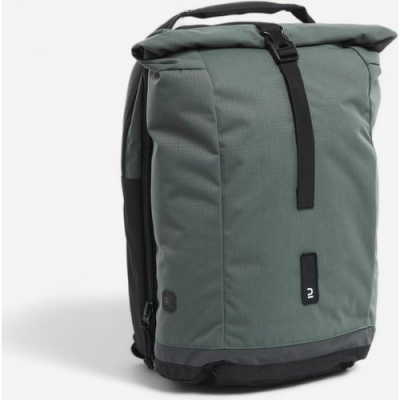
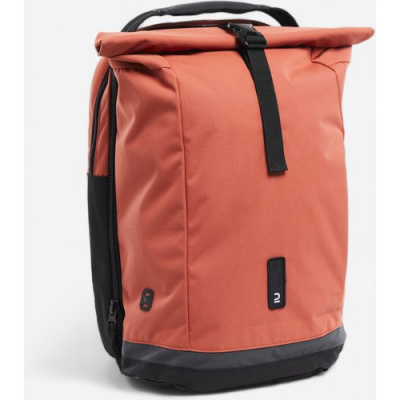
Prices and availability can change quickly. Delivery charges are not always included in listed prices.
Final price, stock status and delivery terms are set by retailer. We may receive a commission on purchases made.
Harness Systems, Hydration Routing, and On-Bike Luggage Alternatives
A cycling rucksack that shifts around mid-ride is more than annoying - it pulls at your shoulders, throws your position out, and becomes a genuine safety distraction. The fix is a properly cinched chest strap sitting across your sternum, combined with a waist belt that transfers a portion of the load onto your hips. Dial both in before you roll out, and the bag essentially disappears from your awareness. That's the goal.
Hydration hose routing is another detail Decathlon gets right on their MTB-oriented packs. The exit port is positioned at the top of the shoulder strap so the tube runs cleanly to your mouth without catching on anything. Hydration bladder compatible sleeves keep the reservoir flat against your back, which helps with weight distribution and stops the water sloshing around when you're picking a line through roots.
The Vioo Clip mount built into certain Decathlon packs is a neat touch - it accepts Decathlon's own Vioo Clip lights without any adaptor needed, giving you a rearward-facing light at torso height where drivers can actually see it. Useful on dark commutes, and it keeps the light off your helmet where it can interfere with fit.
If you'd rather keep weight off your back entirely - and on longer rides that's a sensible call - have a look at Decathlon pannier bags for commuter-friendly rack-mounted capacity, or Decathlon frame bags if you want storage that keeps your centre of gravity low without the sweat patch.
Elops, Rockrider, and Van Rysel: Picking the Right Sub-Brand
Decathlon splits their cycling bag range across three sub-brands, and the differences between them are meaningful rather than just cosmetic.
Elops handles the urban end. These packs are built around the commuter's checklist: padded laptop sleeves sized for 15-inch machines, roll-top or zip-top closures with high water-resistance, and prominent reflective detailing to make you visible on unlit roads. They tend to run in the 20 - 25 litre bracket - enough for a change of clothes, lunch, and a laptop without turning into an unwieldy lump. Think of them as the sensible choice for a daily Peckham-to-the-City grind or a wet Leeds commute.
The Rockrider range is where things get more trail-specific. Capacity litres typically runs smaller - 10 to 15 litres - because the focus is on keeping you nimble rather than hauling gear. You get the hydration bladder included (often 1.5 to 2 litres), a helmet carrier strap on the front for when you're walking into a café, and the brand's Rockrider 3D mesh ergonomic back panels that create a standoff between fabric and skin. That air gap genuinely reduces back sweat on long climbs - a bigger deal than it sounds when you're an hour into a Peak District loop in July. Compared to something like CamelBak rucksacks or EVOC rucksacks, the Rockrider packs are more affordable entry points, though the premium competitors do offer more refined frame systems and higher-end materials at their top end.
Van Rysel takes a stripped-back approach aimed at road riders who resent every unnecessary gram. Minimal padding, no hydration bladder, slim silhouette - just enough room for a gilet, a couple of gels, and your phone. If you're doing sportive-style riding and you want something that doesn't flap in the aero position, Van Rysel is the sub-brand to look at. For comparison, Altura rucksacks occupy a similar space for road-focused commuters who want UK-market weatherproofing priorities baked in from the start.
Keeping Your Decathlon Pack Working Through British Winters
British roads are hard on kit. Grit kicked up from wet tarmac works its way into zip teeth and, over time, grinds the coils down until the zip fails mid-commute. A periodic wipe of the zip with a rag followed by a light application of silicone spray - not WD-40, which strips lubricant - keeps things running smoothly. It takes two minutes and adds years to a zip's life.
The Rockrider 3D mesh ergonomic back panels are brilliant for ventilation but take longer to dry than flat foam panels. After a wet ride, open the bag fully and prop it somewhere with airflow rather than leaving it compressed in a corner. Damp mesh sitting in a sealed bag is how you end up with that persistent mildew smell that no amount of washing shifts.
On waterproofing: most Decathlon packs use a DWR (durable water repellent) coating on the outer fabric. It works well when fresh, but heavy use and washing deplete it. The B'Twin integrated neon rain covers - the pull-out covers packed into a zip pocket at the base - are your main line of defence in a proper downpour, and using them also protects the DWR by reducing the saturation the fabric has to deal with. Deploy the cover before the rain gets heavy, not after the bag is already soaked. You can refresh the DWR with a wash-in reproofer (Nikwax TX.Direct works well) if you notice the outer fabric starting to wet out rather than bead. Deuter rucksacks are another brand worth comparing if you want a pack where the seam sealing and waterproofing are more heavily engineered from the factory.
One more thing: road grit gets into the rain cover's stuff pocket too. Give it a rinse now and then or you'll find the cover jams when you actually need it in a hurry.
Decathlon Rucksacks FAQs
Are Decathlon cycling rucksacks waterproof?
Most Decathlon cycling packs use a DWR-coated outer fabric that handles light rain confidently. For heavy UK downpours, look for models with a pull-out integrated rain cover - many Elops and Rockrider packs include one. Premium options add roll-top closures or taped seams for a higher level of protection. Check the specific model's listing to confirm what's included.
How do I wash a Decathlon hydration backpack?
Hand wash the bag in warm water with mild soap - machine washing degrades DWR coatings and can damage the 3D mesh panels. For the hydration bladder, use a dedicated cleaning brush kit and a mild sterilising solution (a diluted Milton tablet works well) to clear any residue and prevent mould. Dry the bladder thoroughly with it open before storing.
What size cycling rucksack do I need for commuting?
A 15 to 20-litre pack handles the daily commuter brief comfortably - change of clothes, lunch, 15-inch laptop, and a few small tools. If you're carrying bulkier gear like cycling shoes, a full waterproof jacket, or heavy winter kit on top of that, step up to a 25-litre bag to avoid overstuffing, which strains zips and throws off the bag's fit on your back.