
Cube Touring Bikes
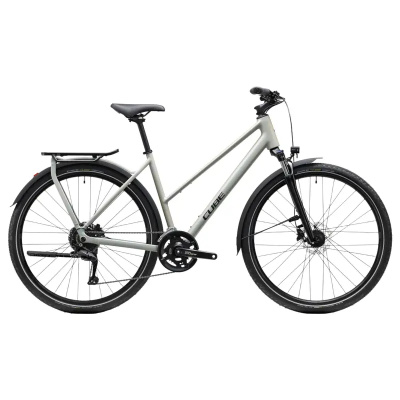
Cube touring bikes arrive ready to roll, equipped with everything you need for multi-day adventures or daily commutes without the faff of aftermarket add-ons. Each model ships with StVZO-compliant dynamo lighting, full-length mudguards, and integrated racks - German engineering that takes the guesswork out of spec'ing a tourer. Whether you're eyeing the entry-level Touring series for weekend canal paths or the expedition-grade Kathmandu for loaded Alpine crossings, Cube's range covers leisure riders and long-haul trekkers alike.
Built around Superlite aluminium frames and Efficient Comfort Geometry, these machines balance durability with all-day saddle comfort. You get a choice of frame styles - Diamond, Trapeze, and Easy Entry - so standover height and stiffness match your riding style. No need to bolt on lights or hunt for compatible racks; Cube's factory integration means you can load panniers and head for the Hebrides the day it arrives. It's the sort of pragmatic, no-nonsense approach that suits UK riders who'd rather spend time pedalling than tinkering in the garage.
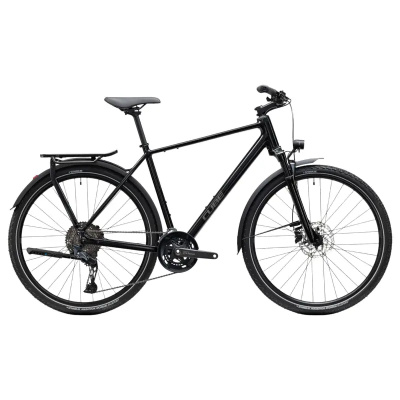
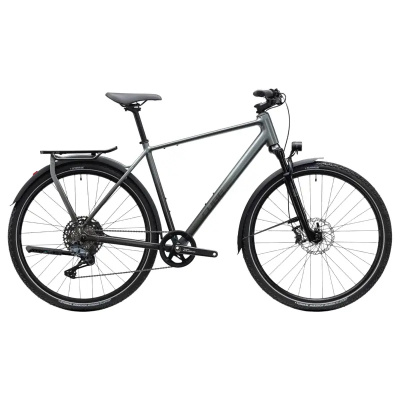
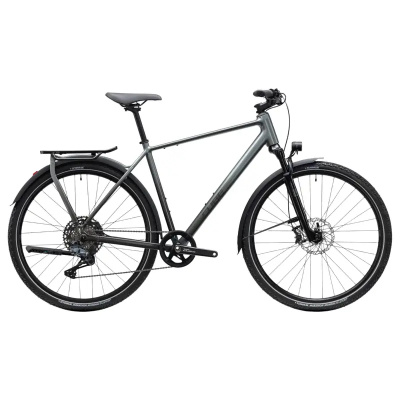
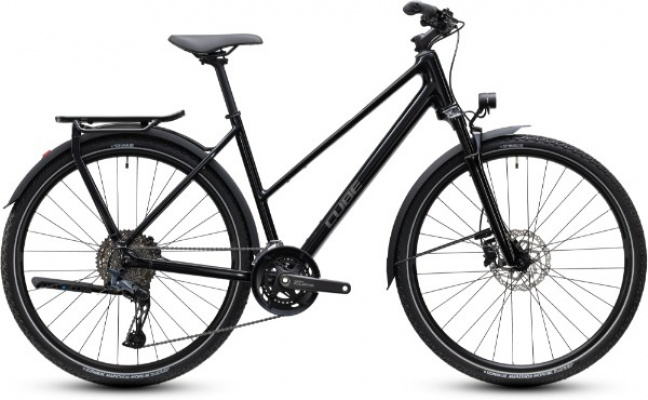
Prices and availability can change quickly. Delivery charges are not always included in listed prices.
Final price, stock status and delivery terms are set by retailer. We may receive a commission on purchases made.
Engineering the Perfect Trekking Frame
Cube's touring frames start with High Performance Aluminium, a proprietary alloy that pairs low weight with the structural integrity needed when you're hauling 20 kg of camping kit up the Cairngorms. Double-butted tubes shave grams where stress is low - mid-sections of the top and down tubes - while keeping wall thickness robust at the junctions. That's crucial when you're loading four panniers and a bar bag onto a frame that needs to stay composed over potholes and gravel tracks.
Smooth Welding isn't just cosmetic. By refining the bead finish, Cube reduces stress concentrations at the joints and creates a cleaner aesthetic that resists corrosion in Scottish drizzle or Welsh downpours. The welds are ground flush, then heat-treated to restore strength lost during the welding process. It's a detail that matters when your bike spends months outdoors, lashed to a rack in all weathers.
Frame longevity also hinges on cable routing. Internal guides keep brake and gear lines protected from spray and grit, while external dynamo wiring runs along the fork legs - easier to service mid-tour than fishing cables through the headtube. If you're comparing Genesis touring bikes or Kona touring bikes, note that Cube's approach favours field repairability over full internal routing.
Model Hierarchy: Touring vs. Kathmandu vs. Travel
The standard Touring series targets leisure riders and commuters. You'll find SR Suntour NEX coil forks with 63 mm travel, Shimano Deore or Alivio drivetrains, and mechanical disc brakes. It's dependable kit that won't leave you stranded, but it's heavier and less refined than the Kathmandu's air-sprung suspension and hydraulic stoppers. Think weekend rides along the Camel Trail or daily slogs through Manchester traffic - solid, unfussy, affordable.
Step up to the Kathmandu range and you're into expedition territory. Lighter double-butted frames, Integrated Carrier 3.0 systems that bolt the rack directly into the seatstays and chainstays, and Shimano XT or Deore drivetrains with clutch mechs to keep the chain quiet on washboard gravel. Hydraulic disc brakes are standard, as are dynamo hubs feeding Busch & Müller LED lights. This is the spec you want for the North Coast 500 or a loaded tour through the Pyrenees.
The Travel series occupies a niche: low-maintenance durability. Rigid forks, hub gears (Shimano Alfine or Rohloff), and Gates Carbon belt drives mean almost zero servicing. No derailleur hangers to snap, no chain lube to reapply in the rain. Trade-off? Weight and a narrower gear range. But if you're planning a round-the-world trip or simply hate cleaning drivetrains, it's worth the compromise. For riders exploring Cube hybrid bikes as an alternative, the Travel bridges the gap between pure touring and urban utility.
Integration and Load Capacity
Cube's Integrated Carrier system - versions 2.0 and 3.0 depending on the model - mounts the rear rack directly to the frame via dedicated eyelets and reinforced seatstay bridges. Unlike aftermarket racks that clamp onto seatstays and can flex under load, the IC design distributes weight through the frame's structure. You feel the difference when cornering with 15 kg of panniers: the bike tracks predictably rather than wagging its tail.
Maximum load capacity sits around 25 - 27 kg on the rear carrier, with front lowrider racks adding another 10 - 12 kg if you fit them. That's enough for a fortnight's wild camping in the Highlands without resorting to a trailer. The system plays nicely with Ortlieb and Vaude panniers - standard hook spacing, no proprietary fastenings - and the Easy Mount Kickstand integrates into the chainstay, keeping the bike stable when you're loading or unloading.
Dynamo hubs are factory-fitted on most models, feeding Busch & Müller Lumotec lights front and rear. The wiring runs externally along the fork and stays, secured by tidy clips that won't snag on brambles. It's a practical choice: if a wire chafes through on tour, you can splice it with a pocket knife and electrical tape rather than dismantling the frame. Fenders are full-coverage SKS or Cube-branded alloy, with stays that resist bending when you brush a kerb. If you're used to Ridgeback touring bikes, Cube's integration feels a step more polished without venturing into boutique pricing.
Geometry and Ergonomics for Long Hauls
Efficient Comfort Geometry tilts the rider upright - head tube angles around 70 - 71 degrees, shorter top tubes, and taller head tubes than a road bike. Your hands rest lightly on the bars rather than bearing weight, and your spine stays closer to vertical. After six hours in the saddle crossing the Pennines, that geometry translates to less lower-back fatigue and fewer numb fingers.
Stack-to-reach ratios favour comfort over aerodynamics. A size 58 cm Diamond frame might offer 620 mm stack and 390 mm reach, putting you in a relaxed posture that's sustainable when you're grinding into a headwind along the Northumberland coast. Chainstay length hovers around 465 - 475 mm, long enough to prevent heel strike on rear panniers but short enough to keep the bike manoeuvrable on singletrack detours.
Frame styles matter more than marketing suggests. Diamond frames (traditional men's geometry) offer maximum stiffness for heavy loads but require a higher standover. Trapeze frames (sloping top tube) drop standover by 5 - 8 cm, making mounting easier with a loaded bike, though lateral stiffness takes a minor hit. Easy Entry frames (step-through) prioritise accessibility - ideal if you're wearing a long coat or carrying a child seat - but the lack of a top tube means the down tube and chainstays do more structural work, adding a touch of flex under sprint efforts. For most touring scenarios, that flex is imperceptible; you're not racing crits, you're covering distance.
Tyre clearance runs to 50 - 55 mm on most models, enough for 700×47c Schwalbe Marathon Mondial or similar expedition rubber. Wider tyres smooth out broken tarmac and bridleways, and you can drop pressures for comfort without risking pinch flats. If you're considering Cube e-bikes for touring, note that the motor assistance comes at the cost of weight and complexity; traditional touring bikes remain simpler to repair in remote areas.
Handlebar width and sweep are tailored to the upright position: 620 - 660 mm bars with a gentle backsweep reduce wrist strain. Grips are ergonomic with palm support, and most models ship with bar-ends or multi-position trekking bars so you can shift hand placement on long descents. Saddles are typically Brooks-style sprung leather or cushioned synthetic - break-in time varies, but the geometry ensures you're sitting on your sit bones rather than soft tissue.
Are Cube bikes good for touring? Absolutely. The combination of durable HPA frames, thoughtful integration, and Efficient Comfort Geometry delivers bikes that handle loaded miles without complaint. What is the difference between Cube Touring and Kathmandu? The Touring series uses coil forks and mid-range components for leisure and commuting, while the Kathmandu line steps up to air suspension, Integrated Carrier 3.0, and higher-spec drivetrains for serious expeditions. How heavy is a Cube Touring bike? Expect 14.5 - 17 kg depending on model and size, a reflection of the robust trekking equipment - suspension, dynamo hubs, carriers - that ensures stability under load.
For riders who value reliability over flash, Cube's touring range offers German pragmatism at sensible money. The bikes won't turn heads at a café stop, but they'll get you to the ferry terminal in Ullapool with your kit intact and your back still functional. If you're also exploring Cube gravel bikes, remember that tourers prioritise load-carrying and comfort over outright speed - different tools for different jobs, but both built to last.