
Genesis Touring Bikes
Genesis touring bikes have built a fierce reputation among long-distance riders who want a rig that'll keep going long after the glamour of day one has worn off. The Tour de Fer is the centrepiece - a steel expedition machine that takes everything UK roads can throw at it and keeps asking for more. Whether you're loading up for a coast-to-coast or tackling a fully laden daily commute through December sleet, Genesis has engineered these bikes around durability, repairability, and the kind of all-day comfort that actually matters when you're 80 miles from anywhere. They're not built for Strava segments. They're built to carry your life across a continent and arrive in one piece.
The range covers both drop-bar and flat-bar configurations, with trim levels that climb from solid, workhorse geometry on the entry models up to Reynolds 725 steel frames with dynamo lighting and Tubus rack setups at the top. If you're after something with sportier geometry and more off-road bias, head over to our Genesis gravel bikes page instead - the Croix de Fer sits there and serves a genuinely different purpose. Or, if you want to spec a rig from scratch, our Genesis frames page is the place to start.
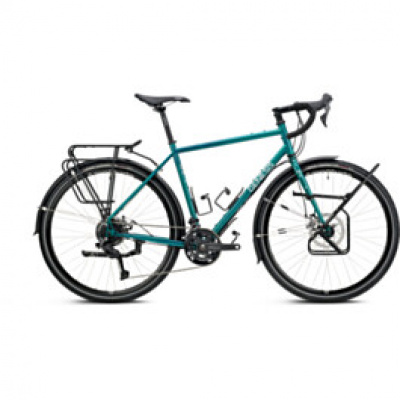
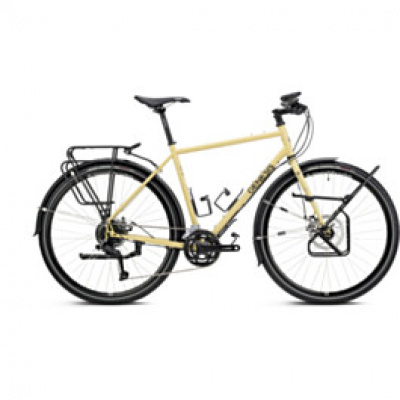
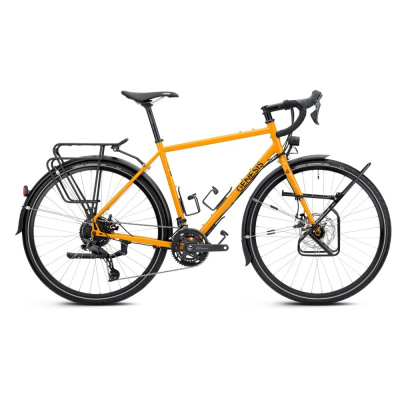
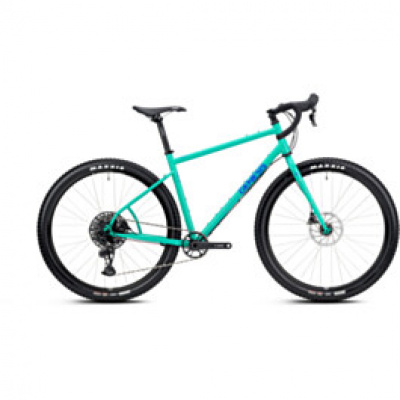
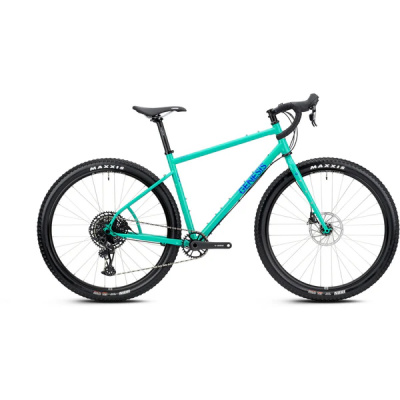
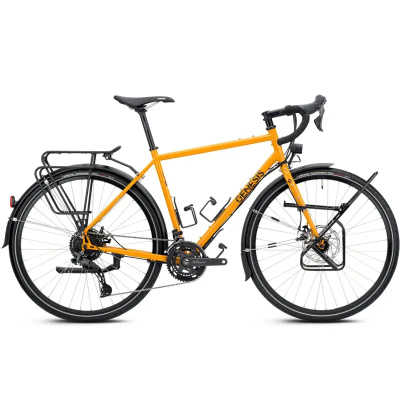
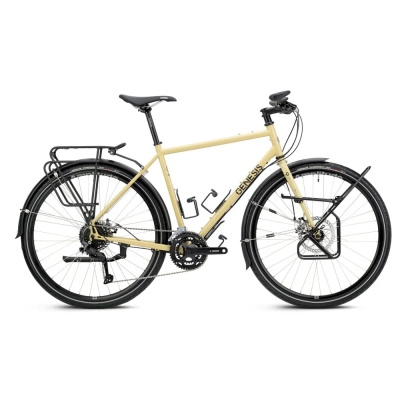


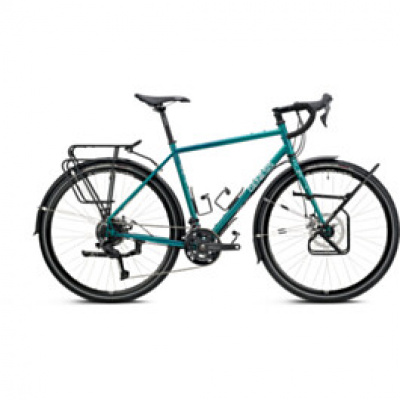
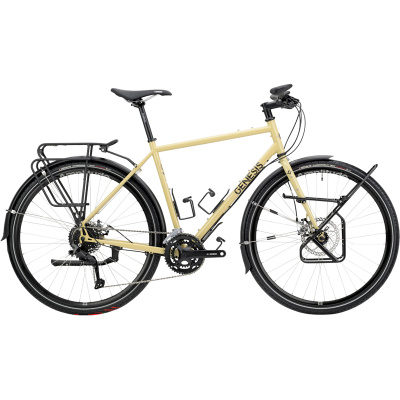
Prices and availability can change quickly. Delivery charges are not always included in listed prices.
Final price, stock status and delivery terms are set by retailer. We may receive a commission on purchases made.
Decoding the Genesis Touring Lineup
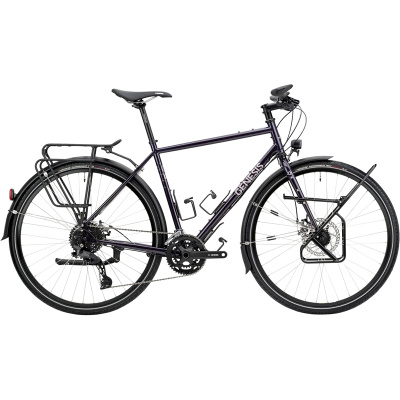
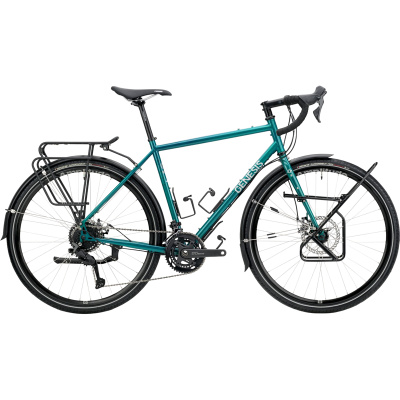
The Tour de Fer is the spine of the Genesis touring range, and it comes in enough variants to cover most riders without forcing unnecessary compromises. The core split is simple: drop-bar models for riders who want multiple hand positions on long days in the saddle, and the flat-bar FB versions for those who prefer a more upright, confident position - particularly useful when you're threading through traffic or picking your way along potholed lanes with 20kg hanging off the racks.
Trim levels are numbered sequentially, and the jumps between them are meaningful. Entry-level models use Genesis's own Mjölnir seamless double-butted chromoly frame - a proprietary tube set that's stiffer where it needs to be and more forgiving where you want compliance. Step up the range and you hit frames built with Reynolds 725 heat-treated chromoly, which offers a noticeable reduction in weight alongside a livelier, more responsive feel. It's the difference between a reliable workhorse and a proper long-haul thoroughbred. Both are repairable almost anywhere on earth, which matters more than people realise until they're standing in a bike shop in rural Romania.
The higher-spec models also come specced with kit that saves you a lot of faff at the planning stage. Tubus racks front and rear, Busch & Müller dynamo lighting wired through the frame, and Schwalbe Marathon tyres straight out of the box - these aren't afterthought additions. For riders comparing the Genesis flat bar touring bike options against the drop-bar equivalents, the geometry differences are modest; the choice really comes down to how you prefer to ride loaded over long hours. If you're unsure which way to jump, think about the riding you actually do, not the riding you imagine doing.
The Genesis Tech Philosophy: Steel is Real
Genesis's engineering choices read like a manifesto against the disposable. Every decision points toward longevity, field repairability, and consistent performance under load - and steel is the foundation of all of it. Load a carbon or aluminium frame with 20kg of panniers and you'll often feel that weight as nervous flex or harsh feedback. A well-designed steel frame - particularly one using Reynolds 725 or the Mjölnir chromoly tube set - absorbs that load differently. The material has a natural compliance that smooths out the relentless vibration of degraded B-roads without going vague or wallowy. Think of it as the difference between riding on a rutted Welsh lane in a performance saloon versus a properly damped estate car. Both arrive; one of them is still comfortable when you get there.
The custom-drawn steel forks with triple-boss mounts are worth noting. Three sets of cage mounts give you serious luggage flexibility, and the fork geometry is tuned to keep the front end stable when loaded - not an afterthought, but a deliberate part of the touring brief. External cable routing is another quietly smart call. In a workshop it looks less refined than internal cables; on the side of a road in the Scottish Highlands it means you can diagnose and fix a cable fault with a multitool and five minutes. Mechanical disc brakes on the lower-tier models follow the same logic - hydraulic performance is genuinely better in the dry, but mechanical discs can be bled, adjusted, and sourced almost anywhere. That's not a limitation; it's pragmatic engineering for Genesis expedition bikes.
Integrated dynamo lighting routing through the frame keeps wiring tidy and protected from the worst of British winter riding. It also makes the difference between a bike that's genuinely expedition-ready and one that just looks the part. Standard threaded bottom brackets complete the picture - easy to replace, compatible with a huge range of components, and immune to the creaking that plagues pressed-fit systems after a few months of wet-weather use.
Living with a Genesis in the UK
British roads are genuinely tough on steel frames - and not because of the riding. Road salt is the real enemy. If you're buying a Genesis and planning to use it through winter, treat the inside of the frame with a rust inhibitor before you rack up the first miles. Products like Framesaver or Boeshield T-9 are the standard choices among long-distance riders, and applying them is a 20-minute job that protects a significant investment. It's the kind of thing you'd mention to a mate buying their first steel tourer. Don't skip it.
The mudguard clearance on Tour de Fer models is generous enough for full-length SKS guards with fat Schwalbe Marathons fitted - no hacksawing the stays or running shortened guards that drench your heels. For year-round UK use, that clearance isn't a luxury. The pannier rack mounts are standard fitting, which sounds obvious until you've tried to retrofit racks to a bike that wasn't designed for them. Genesis has done the thinking here so you don't have to.
Weight is the honest trade-off. A fully specced Genesis touring rig is heavier than an aluminium alternative, and there's no point pretending otherwise. On a flat sportive, that matters. On a loaded tour across the Peak District or up into the Cairngorms, the compliance, the reliability, and the ability to fix almost anything roadside matter considerably more. Compared to alternatives like Surly touring bikes or Ridgeback touring bikes, Genesis holds its own on specification depth at comparable price points, and the UK-specific thinking around mudguard clearance and rack integration gives it a practical edge for home-soil riding. Kona touring bikes are worth a look if you want a more trail-oriented loaded setup, but for tarmac-focused long-distance cycling, the Tour de Fer is a more focused tool. If you ever need to replace a hanger after a mishap, Genesis hangers and drop-outs are available separately - small detail, real-world useful.
The Genesis Tour de Fer versus Croix de Fer question comes up a lot, and the short answer is that they're aimed at genuinely different riders. The Croix de Fer has sportier geometry and a lighter brief; the Tour de Fer is longer, more upright, and designed around carrying heavy loads over serious distances. Both are excellent bikes. They're just not the same bike.
Genesis Touring Bikes FAQs
Is the Genesis Tour de Fer good for long-distance touring?
Yes, and it's one of the most capable options in this category. The Tour de Fer uses a long wheelbase for stability under heavy loads, runs ultra-low gearing for steep climbs, and comes ready-fitted with heavy-duty racks on higher-spec models. The steel frame handles sustained loaded mileage better than most materials - it's genuinely built for the long haul, not just marketed that way.
What is the difference between Genesis Croix de Fer and Tour de Fer?
The Croix de Fer is a gravel and adventure bike with sportier geometry - it's faster and more agile, suited to bikepacking and mixed-surface riding. The Tour de Fer has a longer, more upright touring geometry designed specifically around carrying heavy panniers over big distances. Different tools for different jobs; if you're doing serious loaded touring on roads, the Tour de Fer is the right choice.
What steel does Genesis use for their touring bikes?
Genesis uses two tube sets across their touring range. Entry-level models use their proprietary Mjölnir seamless double-butted chromoly - a solid, compliant frame material well suited to loaded riding. Higher-spec models step up to Reynolds 725 heat-treated chromoly, which saves weight and adds a more responsive feel without sacrificing the durability and repairability that make steel the sensible choice for expedition riding.