
Concept 2 Regular Turbo Trainers
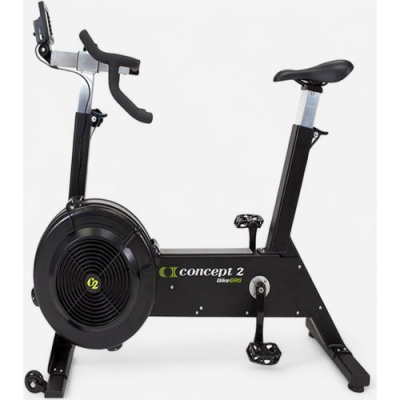
Concept 2 regular turbo trainers don't arrive quietly - they come with a pedigree built on decades of commercial ergometer engineering that's earned trust in gyms, Olympic training centres, and garages where serious athletes don't mess about. This isn't a brand that bolted a screen onto a resistance unit and called it done. The architecture here is purpose-built around data integrity, and that changes what indoor training feels like when you actually start logging watts.
At the centre of everything is the PM5 monitor - a self-calibrating power measurement system that broadcasts simultaneously over both ANT+ and Bluetooth Smart. You're not choosing between your Garmin head unit and Zwift; you're running both at once, no dongles, no faffing. Power figures are calculated from flywheel deceleration, which means they're consistent whether it's July and you've got the garage door open, or January and your breath is fogging up your glasses before you've even started pedalling.
The air resistance flywheel also does something none of the magnetic units can quite replicate - it generates its own breeze. Useful cooling mid-session, though in a freezing UK shed in February it'll remind you to keep a gilet within arm's reach. If you want training data you can genuinely trust, session after session, this is where that conversation starts.
Prices and availability can change quickly. Delivery charges are not always included in listed prices.
Final price, stock status and delivery terms are set by retailer. We may receive a commission on purchases made.
Mastering PM5 Monitor Connectivity
The PM5 monitor is where Concept 2's indoor cycling ecosystem really separates itself. It broadcasts ANT+ and Bluetooth Smart at the same time - simultaneously, not alternately - which means you can pair it to a Garmin or Wahoo head unit for lap data while Zwift or TrainerRoad pulls the same power stream on your tablet or laptop. No proprietary dongles. No adapter crowbarred into a USB port. Just open wireless protocols doing what they're supposed to do.
For Zwift users specifically, the connection process is straightforward: power up the PM5, navigate to More Options, hit Turn Wireless On, and the unit becomes discoverable. Zwift sees it as both a power source and a controllable trainer. If you're on TrainerRoad or Concept 2's own ErgData app, the same broadcast handles it - one unit, multiple simultaneous data consumers. That's not common even at higher price points. Compared to something like a Tacx regular turbo trainer or a Elite regular turbo trainer, where you're sometimes navigating proprietary app ecosystems or paying extra for ANT+ adapters, the PM5's open connectivity is genuinely refreshing.
Firmware updates are handled via the Concept 2 Utility app, which is worth doing before your first serious session. It takes about three minutes and keeps calibration algorithms current. The monitor runs on two D-cell batteries, but during a workout the spinning flywheel feeds power back to the unit, so battery drain in normal use is slow. Keep a spare set in your kit bag anyway - more on that below.
Air Resistance, Damper Feel, and Whether the Watts Are Real
Magnetic and fluid trainers give you a fixed or adjustable resistance curve. The air resistance flywheel on a Concept 2 indoor bike trainer works differently - resistance increases with the square of your speed, meaning the harder you push, the harder it pushes back. It's a more dynamic feel than most magnetic units, and the damper setting (a numbered vent that opens or closes airflow to the flywheel) effectively mimics different gearing or wind conditions. Low damper is a light, fast gear; high damper is grinding into a headwind. Getting used to what suits your training style takes a session or two.
The power accuracy question comes up often, and the answer is genuinely reassuring. The PM5 calculates wattage by measuring how quickly the flywheel decelerates - a physics-based method that doesn't rely on strain gauges or temperature-sensitive sensors. It's self-calibrating, which means you don't need to run a spin-down every time you fire it up, and the readings don't drift between a warm summer session and a cold January morning in the shed. Independent testing across the ergometer category consistently places Concept 2 power figures among the most repeatable available. If you've ever had a power meter read differently after a cold start, you'll understand why that matters.
One thing worth flagging: because resistance scales with speed rather than being electronically controlled, the Concept 2 isn't a smart trainer in the conventional ERG-mode sense. It won't automatically clamp resistance to a target wattage the way a Saris regular turbo trainer or a direct-drive unit would in a structured Zwift workout. You're controlling effort yourself. For riders who train by power and know their zones, that's fine - the data is accurate enough to work with. For those who want the trainer to do the resistance management for them, it's a genuine trade-off to weigh up.
Getting Set Up in a UK Shed or Garage
Setting up a Concept 2 trainer doesn't require much beyond levelling the feet and adjusting the seat and handlebar positions to match your road or track fit. The frame is commercial-grade aluminium and steel - it's built to live in a gym, so an unheated UK garage is well within its comfort zone. Damp isn't a concern the way it might be with cheaper steel components, and the unit folds for storage when you need the floor space back.
The flywheel fan is worth understanding before your first session. It moves serious air, which keeps you cooler than a fluid trainer would during hard intervals in summer. In January, though, you're sitting in front of what is effectively a cold-air blower for the first ten minutes of your warm-up. Layer up, ride the first five minutes easy, and you'll be fine - it's not a problem once the effort is up. Concept 2 Zwift compatibility means you can distract yourself from the temperature by getting into a virtual world quickly, which helps.
The PM5 runs entirely without mains power, which matters more than it sounds. No cable to run across the floor, no extension lead, no hunting for a socket behind a chest freezer. That portability also means you can shift the unit to a different room, take it to a track session, or lend it to a training partner without any faff. The D-cell batteries last a long time under normal conditions, but cold temperatures accelerate drain. If your garage is regularly dropping below five degrees, keep a set of spares in the house rather than stored with the unit. You don't want to find out mid-interval that the PM5 has gone dark.
For setting up a Concept 2 trainer for the first time, run the Concept 2 Utility app update first, spend a session getting your damper setting dialled in, and let the PM5 connect to ErgData at least once to log your baseline data. After that, the system largely looks after itself. If you're comparing options at this end of the market, it's also worth looking at what Minoura regular turbo trainers offer for simpler magnetic resistance setups, or Domyos regular turbo trainers if budget is the primary driver - but neither brings the same data confidence as the PM5 ecosystem.
Concept 2 Regular Turbo Trainers FAQs
How do I connect my Concept 2 trainer to Zwift?
Switch on the PM5 monitor, go to More Options, then select Turn Wireless On. That activates both Bluetooth Smart and ANT+ simultaneously. Open Zwift on your device and search for the Concept 2 as your power source and controllable trainer. The pairing process takes under a minute and doesn't require any additional hardware or dongles.
Does the Concept 2 PM5 monitor need to be plugged into the mains?
No mains connection required. The PM5 runs on two D-cell batteries and also draws charge from the spinning flywheel during use, which keeps battery drain low under normal conditions. This makes the whole unit fully portable and well suited to sheds or garages without accessible power sockets.
How accurate is the power reading on a Concept 2 trainer?
Very accurate, and consistently so. The PM5 calculates power by measuring flywheel deceleration - a physics-based method that's self-calibrating and doesn't shift with temperature changes. You won't see the cold-start drift that affects some strain-gauge power meters. No manual spin-down calibration is needed between sessions.