
Saris Regular Turbo Trainers
When the road salt is down and the nights close in, Saris regular turbo trainers give you a no-fuss way to keep the legs turning without dragging your bike through the muck. No power cables, no firmware, no app to wrestle with before you've even clipped in - just mount up and pedal. That simplicity is the whole point.
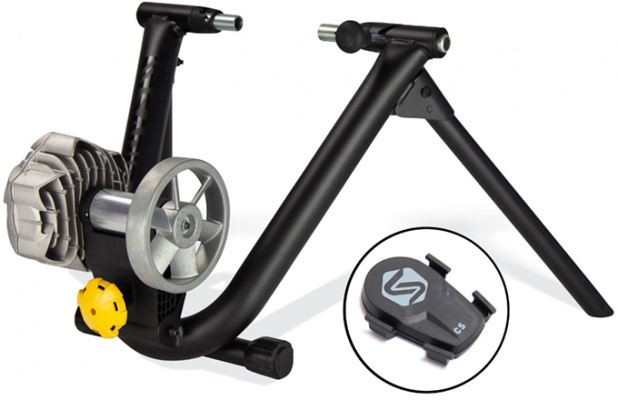
The two models you'll find here split neatly by feel. The Saris Fluid2 uses sealed fluid resistance to mimic the way outdoor riding actually feels - push harder, and the resistance grows with you. The Saris Mag+ takes a different approach, giving you five discrete magnetic resistance positions you can click through during a session. Both sit on a robust folding frame that'll survive a cold garage winter without complaint, and both take your standard quick-release rear axle with no drama.
If you're training through the British winter and want something that just works - no subscription, no signal drop, no excuses - these trainers make a compelling case. Prefer Elite regular turbo trainers or Tacx regular turbo trainers? We've got those covered too. But if reliability and a realistic road feel are the priority, Saris is worth your attention.
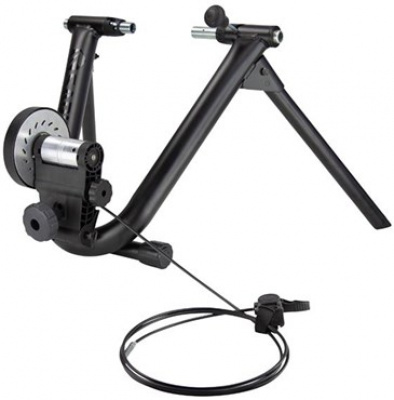
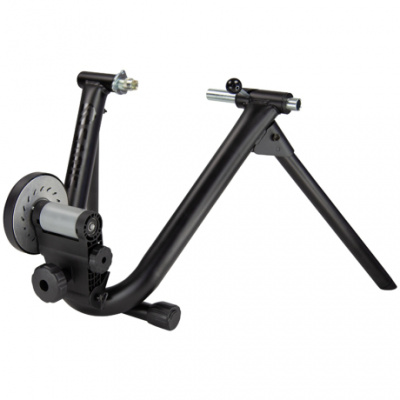
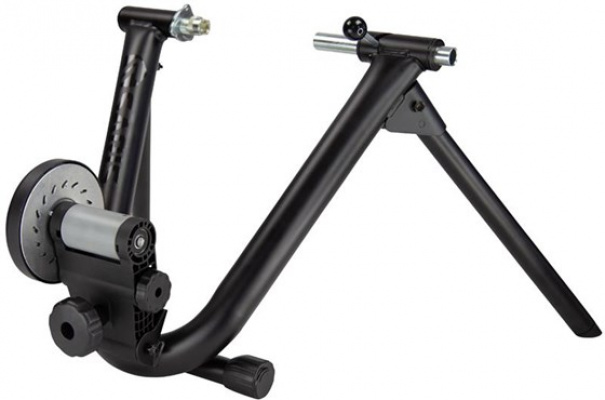
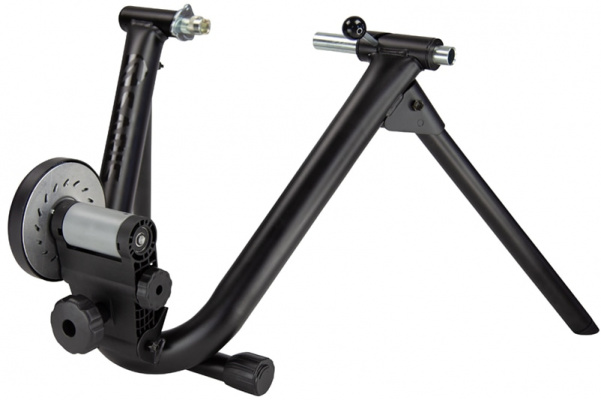
Prices and availability can change quickly. Delivery charges are not always included in listed prices.
Final price, stock status and delivery terms are set by retailer. We may receive a commission on purchases made.
Making Your Saris Trainer Work With Zwift and TrainerRoad
A regular trainer doesn't have to mean riding blind. Pair a speed sensor with ANT+ or Bluetooth BLE connectivity to your bike's rear wheel hub, and platforms like Zwift can calculate your virtual power output using the known resistance curve of your specific Saris model. It's not the same as a direct power reading, but it's consistent and repeatable - good enough for structured sessions and racing against mates in Watopia.
The process is straightforward. Attach the sensor, open Zwift, select your trainer from the device list, and the app does the maths. Zwift calls this zPower. You won't get automatic gradient simulation - resistance changes are manual on a regular trainer - but cadence, speed, and estimated watts all show up on screen. For riders who want the full interactive experience with built-in power measurement and automatic resistance, that's a different category entirely. Head over to our Saris smart turbo trainers page for fully interactive direct-drive models.
One practical note: keep the sensor away from the tyre contact point on the roller, and make sure it's reading from the wheel rather than the crank if you want the most accurate speed data for virtual power calculations.
Fluid vs Magnetic: What the Ride Actually Feels Like
This is where the two trainers diverge, and it matters depending on how you train. The Saris Fluid2 uses progressive resistance - the harder you spin, the more resistance the fluid unit pushes back. It's the closest a non-smart trainer gets to replicating road aerodynamics, where the effort required increases exponentially with speed. Sprint intervals on the Fluid2 feel organic rather than arbitrary. Steady-state efforts build naturally. If you're used to riding outdoors, it's the more intuitive of the two.
The Saris Mag+ works differently. A magnetic flywheel with five fixed positions gives you discrete jumps in resistance you can select before or during a ride. It's more linear - each position is consistent and repeatable - which suits riders doing structured intervals where they want a known, fixed load rather than a progressive curve. Think of it like riding on a dead-flat road at different speeds rather than into a growing headwind.
Noise is a real consideration, particularly if you're in a terrace or a flat above someone. Both trainers clock in at roughly 69 - 72 decibels at 20mph - comparable to a lively conversation across a table. The Fluid2 has a slightly smoother, more road-like hum; the Mag+ can produce a more mechanical whirr at higher resistance settings. Either way, a quality trainer mat underneath makes a noticeable difference to vibration transmission through floorboards. Don't skip it if you've got neighbours below. Minoura regular turbo trainers offer a comparable spread of magnetic options if you want to compare that side of things.
Getting Set Up: Axles, Rollers, and Cold Garage Reality
Setup is genuinely quick. Both trainers ship with a quick-release skewer that handles 120mm, 130mm, and 135mm rear axle spacings, covering the vast majority of road and older MTB frames. Clamp it, tension the resistance unit against the tyre, and you're ready. The key thing most people get wrong is tyre pressure - run it firm, as the spec sheet recommends, to stop the tyre walking on the roller under load.
The precision-machined alloy roller is worth a mention here. It's designed to minimise slippage and reduce tyre wear compared to cheaper steel rollers. You'll still wear a tyre faster than on the road - more on that in the FAQ below - but the alloy surface is far kinder than bare steel.
Modern disc-brake bikes with thru-axle dropouts are a different matter. These trainers are built around quick-release, so a thru-axle adapter is essential before you start. Don't assume it'll fit without one. Need a thru-axle adapter, trainer tyre, or front wheel block? Check out our Saris accessories and look through our turbo trainer spares to complete your setup.
On the cold garage question: the Fluid2's sealed unit is designed to hold its viscosity even after sitting at near-freezing UK temperatures overnight. There may be a slightly stiffer feel for the first minute or two of riding while the fluid warms up - that's normal, not a fault. The frame itself is built to handle the same conditions without flex or corrosion becoming an issue over a winter of regular use. It's a more robust proposition than you might expect at this price point, and frankly more dependable than anything with a firmware update schedule.
If you're comparing options in this category, Tacx regular turbo trainers are worth a look for their own take on fluid and magnetic resistance - useful context when you're narrowing down.
Saris Regular Turbo Trainers FAQs
How do I connect my Saris basic trainer to Zwift?
Attach an ANT+ or Bluetooth BLE speed sensor to your rear wheel hub. Zwift picks up the speed data and uses the known resistance curve of your Saris trainer to estimate your power output - what Zwift calls zPower. You won't get automatic resistance changes, but cadence, speed, and virtual watts all come through clearly enough for a proper structured session.
Is the Saris Fluid2 quiet enough for a flat?
At around 69 - 72 decibels at 20mph, it's roughly as loud as a normal conversation - not silent, but manageable. The bigger issue in a flat is vibration through the floor. A thick rubber trainer mat is essential; it dampens the buzz that travels into the structure beneath you. A dedicated trainer tyre also reduces the high-frequency whine that a standard road tyre produces on the alloy roller.
Do I need a special tyre for a Saris trainer?
You don't have to, but you'll regret not using one. A regular road tyre overheats quickly against the alloy roller, wears fast, and can leave rubber residue on the drum. A hard-compound, treadless trainer tyre runs cooler, grips better, and produces noticeably less noise. It'll also save your good road tyre for actual riding.