
Saris Smart Turbo Trainers
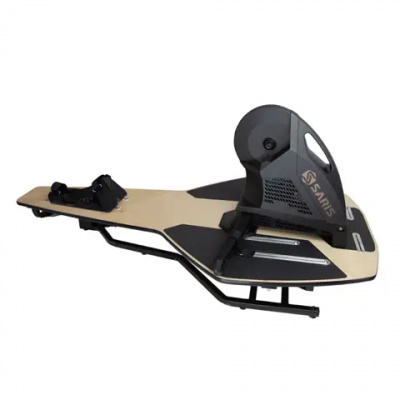
Saris smart turbo trainers have built a reputation for delivering a genuinely road-like indoor ride - and once you've felt what a precision-balanced 9kg flywheel does for momentum, cheaper alternatives feel hollow by comparison. That sustained, weighted inertia smooths out dead spots in your pedal stroke in a way that lighter flywheels simply can't replicate, making hard interval sessions feel far less mechanical.
Out of the box, every Saris direct drive trainer broadcasts on both ANT+ FE-C and Bluetooth FTMS, so you're pairing with Zwift, TrainerRoad, or Wahoo SYSTM without fiddling with dongles or firmware gymnastics. Two-way communication means resistance changes happen fast and accurately - your virtual climbs feel like actual climbs.
Noise matters too. If you're in a terraced house or a first-floor flat, you'll know the anxiety of a trainer that sounds like a jet on the runway. Saris direct-drive units run at around 59 decibels at 20mph - closer to a quiet conversation than a tumble dryer - which keeps the peace with neighbours and housemates alike. Power accuracy sits between +/- 1% and 2% depending on the model, which is as tight as anything at this level.
Prices and availability can change quickly. Delivery charges are not always included in listed prices.
Final price, stock status and delivery terms are set by retailer. We may receive a commission on purchases made.
Connectivity, ERG Mode, and the Wider Training Ecosystem
Dual-band connectivity - ANT+ FE-C and Bluetooth FTMS - is the standard you want on any serious smart trainer, and Saris delivers it across the range. In practice, that means you can run your Apple TV through Bluetooth for Zwift while simultaneously feeding power data to a Garmin head unit via ANT+. No choosing between devices. No dropouts mid-interval because two apps are scrapping over the same connection.
ERG mode performance is where structured training sessions live or die. When you're working through a TrainingPeaks plan or a Zwift workout block, you need resistance to track your target wattage quickly and without surging. Saris trainers respond briskly here - the electromagnetic resistance unit adjusts smoothly rather than hunting around a target, which makes threshold efforts feel controlled rather than chaotic. The 9kg flywheel deserves credit for this: flywheel weight gives the system momentum to work with, so small power fluctuations don't cause the resistance to overcorrect.
If you're currently running a Wahoo smart trainer or a Tacx direct drive unit, the connectivity experience will feel familiar. Where Saris differentiates is in that flywheel - it's heavier than most competitors at this price bracket, and you notice it.
Ride Feel, Noise, and Why the Flywheel Matters More Than the Spec Sheet
The 20lb precision-balanced flywheel is the single most important number on a Saris trainer's spec sheet, and it's not one that marketing invented for show. Flywheel weight determines how naturally the trainer mimics outdoor riding - specifically, how the bike responds when you surge out of the saddle, back off the power, or grind through a steep simulated climb. A heavy flywheel carries momentum between pedal strokes. A light one drops off instantly, making every effort feel choppy and disconnected from real riding.
At a simulated gradient capability of 20% or more, Saris trainers handle the steepest Zwift climbs - Alpe du Zwift, the Radio Tower - without the resistance feeling vague or maxed-out. Whether you'd ever voluntarily spend time on those is another matter, but the capability is there.
On noise: 59 decibels at 20mph is genuinely quiet for a direct drive trainer. That's roughly the volume of a normal conversation. For UK riders in flats, terraced houses, or thin-walled semis, that distinction is real. The drive belt design Saris uses is a large part of why - there's no tyre contact surface to generate friction noise, and the belt system runs smoother than a traditional chain-driven unit. Worth knowing if your housemates have strong opinions about 6am training sessions.
Looking at the broader market, Elite smart trainers compete closely on noise and power accuracy - it's a genuine comparison worth making if you're deciding between the two.
Getting It Set Up and Running Through a UK Winter
Unboxing a Saris direct drive trainer is straightforward. The main variables are your cassette and your axle standard. You'll need to fit a cassette that matches your drivetrain - if you're running 11-speed Shimano or SRAM, you'll need an 11-speed cassette installed before your first ride, and this isn't included. A chain whip, lockring tool, and ten minutes is all it takes, but factor in the cost and don't expect to be on Zwift within five minutes of delivery.
Thru-axle compatibility is well-catered for across the Saris range - most current road and gravel bikes use 12mm thru-axles as standard, and adapters are available for older quick-release setups. Check your specific model's compatibility before ordering if you're running anything unusual.
Calibration is one of those things UK riders tend to skip until power readings start looking odd. Running a spindown calibration via the Saris app every few weeks keeps power accuracy tight. If your trainer lives in an unheated garage or garden shed - common enough in the UK - do a calibration before every session in cold weather. The internal drive belt contracts in low temperatures, which affects resistance and skews your power numbers. This isn't a flaw unique to Saris; it's physics, and a two-minute spindown sorts it.
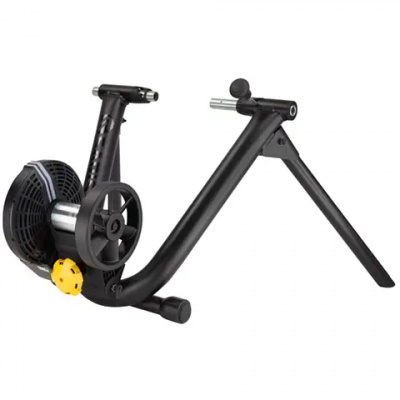
If you want to compare the direct drive experience against something simpler first, Saris also offer regular turbo trainers that work well as an entry point. And if you're thinking about transporting your bike to sportives or trails alongside your indoor setup, the Saris car racks and carriers range is worth a look.
For everything else you need to complete your setup - trainer mats to protect your floor, sweat guards to protect your bike, and spare adapters - head to our Turbo Accessories and Turbo Spares pages where we've pulled together the key add-ons alongside current pricing.
Saris Smart Turbo Trainers FAQs
How do I connect my Saris smart trainer to Zwift?
Plug the trainer in and make sure it's powered up - it'll start broadcasting automatically via Bluetooth or ANT+. Open Zwift, head to the pairing screen, and search for controllable trainers. Select your Saris device and Zwift takes over resistance control from there. If it doesn't appear, check no other app is already connected and hogging the Bluetooth signal.
Do Saris smart trainers need to be calibrated?
Yes, and it's worth doing properly. Run a spindown calibration through the Saris app every couple of weeks to keep power readings accurate. If your trainer sits in a cold garage between sessions, do one before you start - the drive belt reacts to temperature changes and will pull your power numbers off if you skip it.
What cassette do I need for a Saris smart trainer?
You need a cassette that matches your bike's drivetrain - so if you're running 11-speed Shimano or SRAM, fit an 11-speed cassette to the trainer's freehub. It's not included in the box, so factor that in before your first session. Standard Shimano HG freehub bodies are typical, but check your specific model's compatibility if you're on XD or Campagnolo.