
Compass Pannier Racks
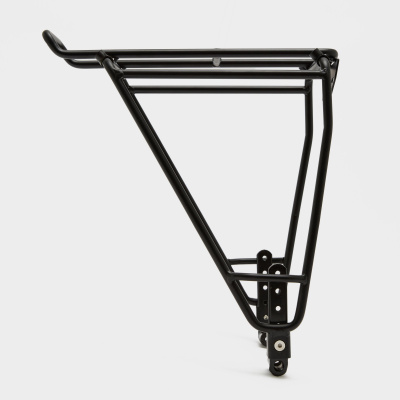
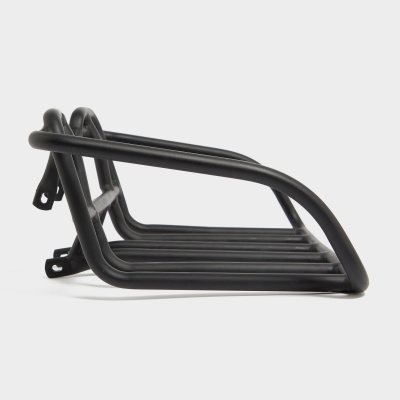
Compass pannier racks do exactly what a good rack should: get the weight off your shoulders and onto the bike, where it belongs. Fitting one transforms a Compass hybrid or commuter into a genuinely useful load-carrier without demanding a big outlay or a specialist mechanic. The tubular alloy construction keeps things light while handling real-world payloads, and the adjustable mounting stays cover wheel sizes from 26-inch up to 700c, so one rack works across a range of frames.
Lowering your centre of gravity by putting weight on the bike rather than your back makes a noticeable difference on longer runs - steadier steering, less fatigue, fewer regrets at the end of a wet commute. Compass also builds in integrated reflector and rear light mounting plates on most models, which keeps your setup tidy and keeps you legal without hunting for bracket bodges.
Before you buy, do check two things: whether your frame has threaded eyelets at the dropout and seat stays, and whether your brake setup needs a disc-specific model. Get those two right and installation is straightforward. Get them wrong and you'll be sending it back. We'll cover both in detail below.
Prices and availability can change quickly. Delivery charges are not always included in listed prices.
Final price, stock status and delivery terms are set by retailer. We may receive a commission on purchases made.
Will It Actually Fit Your Frame?
This is where most pannier rack purchases go sideways, so it's worth being methodical. A Compass rack - like any rear rack - needs threaded M5 mounting eyelets on your frame: one pair near the rear axle dropouts and ideally a second pair on the seat stays higher up. Most steel and aluminium commuters and tourers have these as standard. Carbon frames and many performance-oriented aluminium road bikes don't. Check before you order.
Wheel size compatibility is handled through universal adjustable stays, which extend and angle to suit 26-inch, 27.5-inch, and 700c wheels. That's genuinely useful if you're fitting a rack to an older mountain bike or a Compass folding bike with smaller wheels - you're not hunting for a model-specific part. Adjust the stays until the rack platform sits level, then lock them off securely.
Disc brake clearance is the other critical fit point. Standard racks run their lower legs straight down to the dropout, which can foul a disc caliper or rotor on the non-drive side. Compass disc-compatible models use either wider-set lower legs or spacers to provide the necessary offset - check the specific model's spec sheet rather than assuming. If your frame has seat stay eyelets but no upper rack bosses, P-clips - rubber-lined clamps that grip the tube directly - are a reliable workaround. They're not as rigid as bolted eyelets, so keep loads sensible and check them regularly for slippage. If you'd rather avoid rack fitting entirely, Blackburn and M Part offer seatpost-clamp racks that bypass the eyelet question altogether.
Picking the Right Rack From the Compass Range
Compass keeps its rack lineup practical rather than sprawling. The core rear rack suits everyday commuting: a flat platform, standard load rails for clip-on panniers, and a payload limit of 25kg. That's enough for a change of clothes, a laptop, and a week's worth of packed lunches - more than most riders will ever put on a bike in one go. The tubular alloy construction gives a reasonable strength-to-weight ratio at this price point; it's not gram-counted like a lightweight touring rack from a premium brand, but it's not trying to be.
Where things get more interesting is the touring-oriented models, which add a lower pannier rail running below the main platform. That lower rail lets you hang panniers further down the wheel, dropping the load's centre of gravity and - crucially - keeping the bags clear of your heels during the pedal stroke. Heel strike clearance is a real problem on bikes with short rear ends or if you're running wide bags, and a rack without that lower rail will have you scuffing your panniers on every pedal rotation within the first mile. If you're loading up for a weekend away or a loaded commute with bulky bags, the touring-style rack is the one to go for.
The integrated rear light and reflector mounting plates built into most Compass models are a small but genuinely useful detail. They give you a fixed, stable mount for a Compass rear light without zip ties or afterthought brackets. Weld quality across the range is consistent with the price bracket - functional rather than fine, but nothing that should concern you for normal use loads. If you want a step up in finish and rigidity, brands like Basil or SKS occupy the next tier up.
Keeping It Rattle-Free on UK Roads
UK roads are rough. Anyone who's ridden a loaded bike across potholed city streets or rattled along a broken country lane knows that vibration works bolts loose over time - and rack bolts are no exception. The fix is simple: use a medium-strength threadlocker on all M5 mounting bolts during installation. Loctite Blue 242 is the standard choice; it holds the bolt securely under vibration but still allows removal with a normal hex key when you need to. Don't use red (permanent-grade) threadlocker on rack bolts - you'll regret it the first time you need to adjust the stays.
Check bolt torque every few weeks during winter commuting season, and before any longer loaded trip. A loose rack under a full load is a genuine handling hazard, not just an annoyance. Finger-tight isn't enough; use a proper torque wrench or at least a calibrated feel - M5 bolts typically want around 4-5Nm.
On the corrosion side, the alloy construction won't rust, but the steel hardware - bolts, nuts, washers - will suffer if you're riding through road salt all winter. Give the mounting points a rinse after wet, salted rides and dry them off. A smear of copper grease on the bolt threads before installation slows corrosion and makes future removal less of a fight. If you're locking up outside in all weathers, a decent Compass lock is worth pairing with the rack setup - a loaded bike is a more appealing target. The adjustable stays can also work loose at their locking points over time, so include those in your pre-ride check alongside the bolts. Thirty seconds now saves a roadside stop later.
Compass Pannier Racks FAQs
Are Compass pannier racks compatible with disc brakes?
Several Compass models are built specifically for disc-brake frames, using flared lower legs or spacers to clear the caliper and rotor. Standard models won't have that offset, so always check the individual rack's spec sheet against your brake setup before buying.
How much weight can a Compass bike rack hold?
Most Compass rear racks are rated to a 25kg payload - more than enough for commuting or light touring loads. Split the weight as evenly as you can between both panniers; lopsided loading affects handling noticeably, especially at low speed or when the bike's unattended.
Do I need special mounts to fit a Compass pannier rack?
Your frame needs threaded M5 eyelets at the rear dropouts and ideally on the seat stays too. No upper eyelets? Rubber-lined P-clips can clamp to the seat stay tubes instead - they work fine, but keep loads moderate and check them regularly for movement.