
Basil Pannier Racks
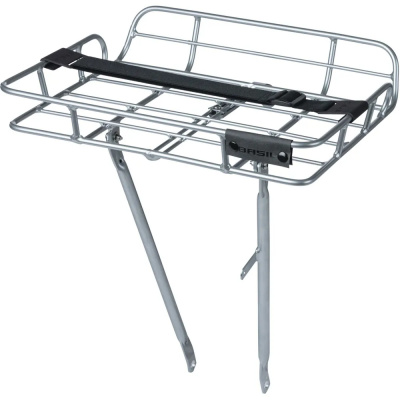
Basil pannier racks are among the most thoughtfully engineered carrying solutions you'll find for a commuter or utility bike, and the range is broader than most riders expect. Designed in the Netherlands and built from powder-coated aluminium, these racks are made to carry real loads in real weather - not just a light bag on a dry Tuesday. Whether you're running a porteur-style front carrier or a high-capacity rear rack, the construction is solid and the mounting, when set up correctly, stays rattle-free for the long haul.
The headline feature across much of the range is the MIK (Mounting is Key) click-system, which lets you snap compatible bags and baskets on and off without fussing with straps or clips. It's a genuine time-saver if you're locking up outside a station or office every day. For heavier duties - child seats, loaded touring bags - the MIK HD reinforced platform steps things up considerably. Before you buy, check your frame has the right mounting eyelets, confirm your wheel size falls within the rack's adjustment range, and make sure any disc brake setup has adequate caliper clearance. Get those basics right and a Basil rack will serve you reliably through winters that would test lesser hardware.
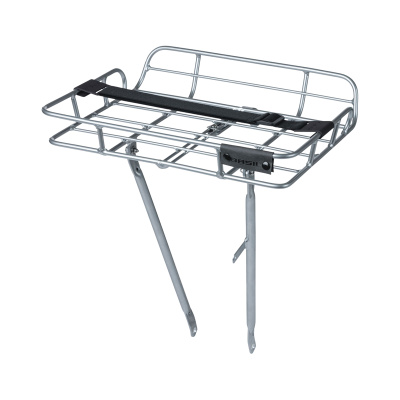
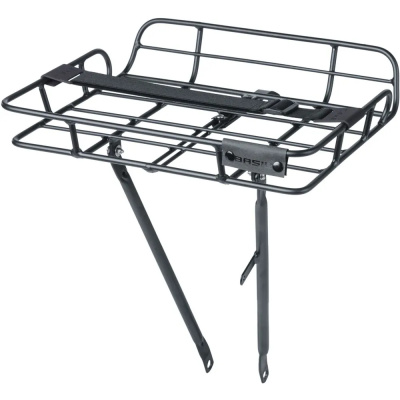
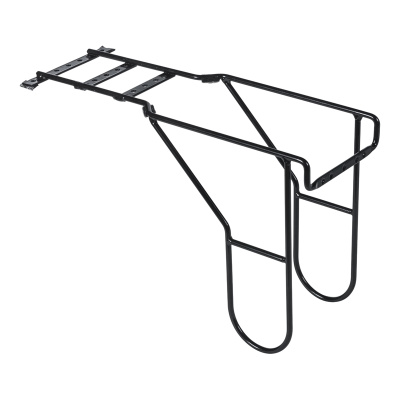
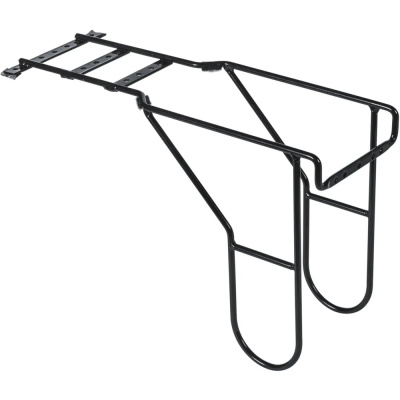
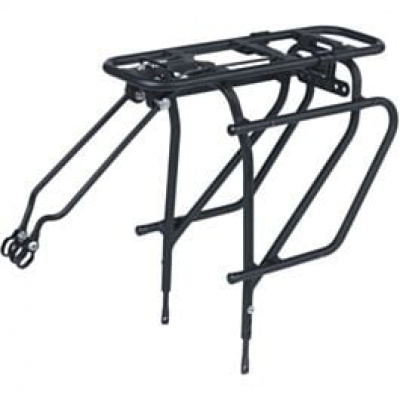
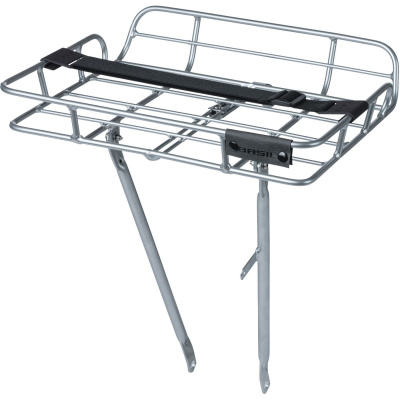
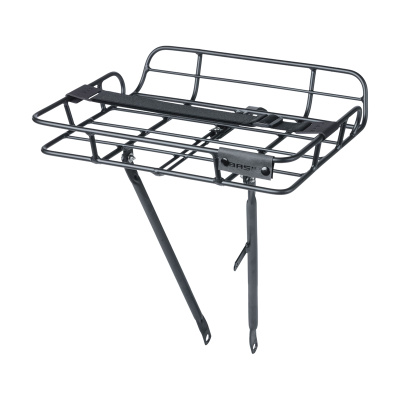
Prices and availability can change quickly. Delivery charges are not always included in listed prices.
Final price, stock status and delivery terms are set by retailer. We may receive a commission on purchases made.
Getting the Fit Right: Compatibility, Eyelets and Disc Clearance
The first question to answer before buying any rack is simple: does your frame have dedicated mounting eyelets? Basil pannier racks attach via threaded bosses on the seat stays and, for most rear models, near the dropout. No eyelets means no clean installation - adapter clamps exist, but they add flex and are worth avoiding if you're carrying meaningful weight. Most Basil rear racks are adjustable to fit wheel sizes from 26 inches through to 29 inches, with the strut length and platform angle both tuneable within that range, so the majority of modern commuter and hybrid frames are covered.
Disc brake compatibility is where you need to pay attention. Standard rack legs are designed to clear rim brake caliper positions, and on a disc bike the leg stance can foul the caliper body or rotor if you pick the wrong model. Look specifically for Basil models labelled as disc brake compatible - these have a wider leg profile or dedicated spacer provisions to keep clear of the hardware. If you're unsure, check the rack's technical sheet for minimum leg clearance figures and compare them against your caliper's protrusion. It's a five-minute job that saves a frustrating return.
Standard MIK racks carry a platform rated for bags and light cargo. MIK HD models use reinforced profiles and heavier gauge tubing to achieve the higher ISO weight certifications needed for child seats - up to 27kg on the HD platform. If a child seat is on the agenda now or later, go HD from the start. For replacement bolts, strut hardware or mounting spares, head to our Basil Pannier Bags page for bag pairings, and check our dedicated Pannier Rack Spares section for any replacement hardware you need to keep the installation solid.
Commuter Racks vs. Heavy-Duty Models: What the Price Difference Buys You
Basil's range runs from straightforward commuter racks - think the Basil Tour series - up to reinforced platforms built for e-bikes and child-seat use. At the entry level, you're getting a clean, functional rack with a sensible max load capacity for daily bags and a pannier or two. The tubing is lighter gauge, the platform is narrower, and the fittings are adequate for road commuting. Good value for a standard hybrid or city bike.
Step up to the MIK HD tier and the changes are tangible. Thicker-gauge aluminium tubing means noticeably less flex under load - relevant if you're commuting with a full laptop bag plus shopping, or using the rack as a child seat mount. Many HD models also integrate a rear light mount directly into the platform, which keeps your lighting tidy and avoids the bracket-on-bracket bodges that plague cheaper setups. The higher ISO certification isn't marketing shorthand; it reflects a rack that's been tested to carry more weight repeatedly without fatigue at the welds.
E-bike compatibility is another consideration at this tier. Motor-assisted bikes are heavier and tend to accelerate harder, which amplifies stress on rack welds and mounting points under load. Basil's e-bike compatible models account for this with reinforced strut attachment points. If you're running a Bosch or Shimano Steps motor and plan to carry serious cargo, it's worth confirming the rack's e-bike rating rather than assuming any rear rack will do. Alternatives from Blackburn and SKS occupy a similar space if you want a direct comparison point, though neither offers a click-system quite as polished as MIK for day-to-day bag swapping.
The Universal Bridge system found on select Basil models is worth flagging separately. It's a crossbar-and-rail design that makes the platform compatible with bags from other brands, not just Basil's own range. Useful if you already own quality panniers from another maker and don't want to replace them just to get a solid rack.
Keeping Your Rack Solid Through a UK Winter
Road salt is the silent enemy of any rack installation in the UK. Through autumn and winter, the grit and brine sprayed by passing traffic works into the thread of every mounting bolt, and by spring those bolts can be effectively fused to the frame - rounded off the moment you try to remove them. The fix is unglamorous but effective: when you install the rack, apply a thin coat of anti-seize compound or marine-grade grease to every mounting bolt thread before it goes in. It takes two minutes and saves a workshop bill later.
The powder-coated aluminium finish on Basil racks holds up well against surface corrosion, but the mounting bolts themselves are typically steel, and that's where galvanic corrosion sets in where dissimilar metals meet wet salt. Check the bolt heads every few months through winter - if you see white or rust-coloured deposits forming, clean them back and reapply protection before they become a problem.
UK roads, particularly on anything north of Birmingham or through rural Wales and Scotland, are genuinely hard on rack welds. Potholes transfer sharp shock loads up through the struts, and over time this can open micro-cracks at weld joints, especially if the rack is carrying close to its max load. Give the weld points a visual check every couple of months and re-torque the mounting bolts - they loosen with vibration more quickly than most riders expect. Ortlieb racks and Cube carriers are built with similar attention to weld quality if you're comparing across brands, but Basil's powder coat finish is genuinely among the more durable in this category for wet-weather commuting.
Once your rack is sorted, it's worth thinking about what goes on it. Basil baskets click straight onto MIK-equipped racks without any adapter faff, and if you need more carrying volume for longer days, Basil rucksacks make a natural companion when the rack alone isn't enough.
Basil Pannier Racks FAQs
How do I know if a Basil pannier rack will fit my bike?
Start by checking for threaded mounting eyelets on your seat stays and near the rear dropout - without them, a clean installation isn't really possible. Most Basil racks adjust across 26-inch to 29-inch wheels, so tyre size is rarely the issue. On disc brake bikes, check the rack is specifically labelled disc-compatible, as standard leg profiles can foul the caliper body.
What is the Basil MIK system?
MIK stands for Mounting is Key - it's Basil's proprietary click-and-lock platform built into the rack surface. Compatible bags and baskets clip in and lock without straps, making daily loading and unloading genuinely quick. MIK HD is the reinforced version with thicker tubing and higher load ratings, designed for child seats up to 27kg.
Can you put a Basil rack on a bike with disc brakes?
Yes, provided you choose the right model. Standard rack legs can sit too close to the brake caliper on disc-equipped bikes. Look for Basil models explicitly marked as disc brake compatible - these have a wider leg stance or spacer provisions built in to keep clear of the rotor and caliper. Check the technical clearance figures if you're in any doubt before buying.