
Cast Saddles
Your contact points make or break every ride, and Cast saddles are built to get that balance right. Combining ergonomic sit-bone support with weather-resistant covers, they're designed to hold up through the kind of riding that chews through cheaper options - wet gravel, muddy singletrack, or back-to-back winter road miles where the forecast is reliably grim.
Cast covers a broad range of profiles, from well-cushioned shapes for upright commuters and leisure riders to flat, minimal designs for aggressive road and race positions. Width options cater to different sit bone measurements, so you're not just guessing. The zone-density foam padding targets support where your skeleton actually loads the saddle, rather than spreading generic softness everywhere. Weather-sealed microfiber covers resist water ingress rather than soaking it up, which matters when you're wiping the bike down after a drenching in the Peaks or the Brecon Beacons.
Whether you're after a do-everything Cast bike seat for mixed riding or a lightweight carbon-railed race option, the range has a logical structure. Browse below to match the right width, padding density, and rail spec to your seatpost - and your riding.
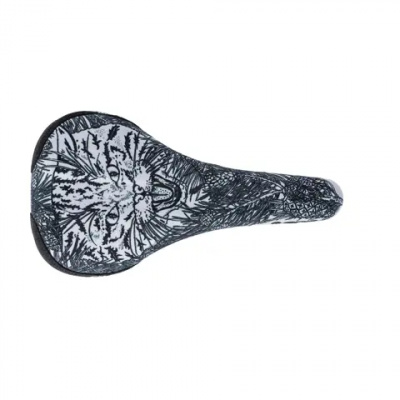
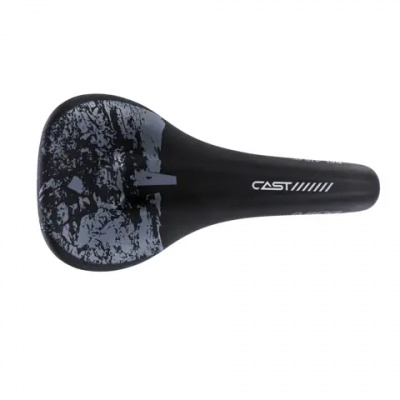
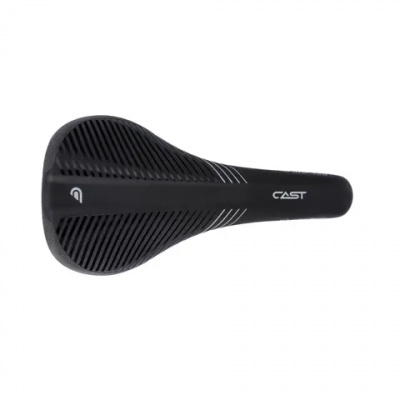
Prices and availability can change quickly. Delivery charges are not always included in listed prices.
Final price, stock status and delivery terms are set by retailer. We may receive a commission on purchases made.
Will a Cast Saddle Fit Your Seatpost?
This is the question worth answering before anything else. Most Cast saddles - entry-level through to mid-tier - use standard 7x7mm round rails, whether in steel, chromoly, or titanium. That profile fits virtually every seatpost clamp on the market, from a basic commuter post to a dropper. No compatibility headaches. Straightforward.
The top-tier carbon-railed models are a different matter. Those use 7x9mm oval carbon rails, and that oval cross-section is where things can go wrong if you're not paying attention. Side-loading clamps - the kind found on older Trek and Specialized designs, where the bolt presses in from the side - will deform or crack an oval carbon rail under load. You need a top-down clamping mechanism that cradles the full rail profile. If you're unsure what your Cast stem or seatpost uses, check the manufacturer's spec sheet before you order.
Cast saddle rail compatibility also depends on correct torque. Carbon interfaces are unforgiving - too loose and the saddle creaks and rotates mid-ride, too tight and you're into crush territory. The safe range for most carbon-railed saddles sits at 5 - 7Nm. A torque wrench here isn't optional; it's the difference between a saddle that stays put and one that's heading for the bin after a season.
How the Cast Range Breaks Down
Cast structures its saddle lineup in three fairly clear tiers, and knowing where each one sits saves you paying for features you won't use - or skimping on ones you will.
Entry-level models run steel rails and a generous padding depth. The foam is softer overall, which works well for upright riding positions - commuting, leisure cycling, longer-day touring where you're sat rather than perched. Heavier, yes, but durable and forgiving if you're not obsessing over grams. Good value if you just want something comfortable that won't dissolve after a wet winter.
Mid-tier Cast saddles step up to chromoly or titanium rails, which sheds meaningful weight and adds a degree of compliance through the rail flex itself. The flex-tuned nylon or carbon base is the more significant change - it's engineered to absorb road buzz and trail chatter rather than transmitting it directly into your sit bones. Padding density increases here too, with firmer, more targeted support rather than all-over cushioning. These suit road riders clocking regular miles, gravel riders, and anyone who's felt the difference a quality base makes on a five-hour day out.
Top-tier models go full carbon - rails and base - with minimal, high-density foam suited to aggressive forward-leaning positions. The lower padding volume isn't a penalty; at race pace with weight through the pedals, you don't want a marshy saddle. The flex-tuned carbon base does the vibration work. That said, carbon rails are brittle in a crash in a way titanium isn't. If you're regularly throwing the bike around or commuting on rough streets, the mid-tier titanium option is the more sensible long-term investment. Fizik saddles and Fabric saddles follow a similar three-tier logic if you want to compare how Cast sits in the wider market.
Sizing across the range runs on sit bone width - measure yours before committing. Sit on a piece of corrugated cardboard on a hard chair, stand up, and measure the indent centres. Add 20 - 25mm to that figure and you've got your Cast saddle width. It's not glamorous, but it works.
UK Winter Grit and Keeping Your Saddle in One Piece
British winters are specifically effective at destroying saddle covers. The combination of wet roads, road salt, and gritty spray acts like fine sandpaper on stitching and cover edges over time. Cast's weather-sealed microfiber covers handle moisture better than genuine leather or basic synthetic alternatives - they won't swell, crack, or absorb road grime in the same way. Wipe-clean rather than wash-saturate. That distinction matters.
Keep the jet wash away from the underside of the saddle. Forcing pressurised water upward through the base can work into the padding, degrade the bonding between rail and base, and accelerate the kind of internal damp that's invisible until the saddle starts creaking or delaminating. A damp cloth with mild soap is all the Cast saddle comfort and cover longevity needs after a muddy ride.
For carbon-railed Cast saddles specifically: apply a small amount of carbon assembly paste to the clamp interface before installation. It doesn't take long, and it stops the micro-movement in wet conditions that causes that nagging creak on every pedal stroke. Ergon saddles and Brooks saddles both recommend the same approach for their premium rail options - it's just good practice across the board.
Worth pairing your saddle with the right Cast grips if you're building out a contact-point refresh - bar feel and saddle feel work together more than most riders account for, especially on longer rough-road days.
Common Questions About Sizing, Setup, and Adjustment
The three questions we see most often around Cast saddles are about sizing, rail compatibility, and getting the angle right. All three have straightforward answers if you know where to look.
On sizing: the corrugated cardboard method described above is reliable. The 20 - 25mm rule means your sit bones sit fully on the saddle's support zone rather than teetering on the edges. Go too narrow and you load soft tissue; go too wide and your inner thighs catch the saddle on the pedal stroke.
On angle: start level. Use a spirit level or a dedicated app across the saddle centre. If you're getting soft tissue pressure after a few minutes, drop the nose 1 - 2 degrees. More than that and you'll be fighting to stay back on the saddle, which loads your arms and hands. Small adjustments, ride, repeat.
The best Cast saddle for UK winter use is generally a mid-tier model - the weather-sealed cover handles the conditions, the flex-tuned base takes the edge off rough surfaces, and you're not risking a carbon rail on frost-heaved tarmac or gravel that's hiding ice underneath.
Cast Saddles FAQs
How do I choose the right size Cast saddle?
Sit on a piece of corrugated cardboard on a hard surface, then stand up and measure the distance between the centre of the two indentations left by your sit bones. Add 20 - 25mm to that figure - that's the saddle width you need to ensure your skeletal structure is properly supported rather than loading soft tissue.
Are Cast saddle rails compatible with all seatposts?
Standard Cast saddles with alloy, chromoly, or titanium rails use a 7x7mm round profile that fits virtually every seatpost. Carbon-railed Cast models use a 7x9mm oval rail, which requires a top-down clamping seatpost. Side-loading clamps will damage oval carbon rails - check your post's clamp design before fitting.
How do I adjust the angle of my Cast saddle?
Set the saddle level first using a spirit level across the centre. If you feel soft tissue pressure after a few minutes of riding, tilt the nose down by 1 - 2 degrees. Keep adjustments small - too much nose-down angle causes you to slide forward and overload your hands and arms.