
Cannondale Pannier Racks
Fitting Cannondale pannier racks to your bike is one of the most practical upgrades you can make - but getting it wrong means a wobbling load, stripped threads, or a rack that simply won't bolt on. Cannondale builds their alloy racks using SmartForm alloy, the same material philosophy behind their frame construction, which keeps weight honest without sacrificing the load capacity you need for a full day's commute or a loaded weekend run.
Modern Cannondale frames often hide their fender and rack mounting points for a cleaner look. That's great for aesthetics, less great if you're standing in the car park wondering where the eyelets are. The Quick and Topstone Alloy carry standard M5 eyelets at the seatstay and dropout - straightforward. Carbon models are a different conversation entirely, and we'll get to that.
Front or rear, commuter or tourer, the rack has to match the frame's geometry, your disc brake spacing, and your actual load. Buy blind and you're buying twice. Whether you're running errands on a Treadwell or loading up a Quick for a wet Friday commute through Manchester, the right rear carrier or front rack makes the difference between a bike that works for you and one that's just in the way.
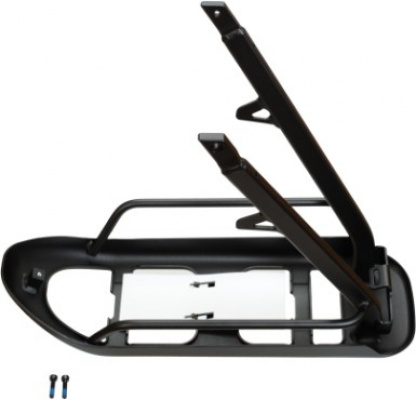
Prices and availability can change quickly. Delivery charges are not always included in listed prices.
Final price, stock status and delivery terms are set by retailer. We may receive a commission on purchases made.
Will It Actually Fit? Compatibility by Frame and Standard
Before anything else, check your frame for mounting points. On alloy Cannondale models - the Quick series and Cannondale hybrid bikes in particular - you'll find standard M5 eyelets on the seatstays and near the dropouts. These are the threaded bosses that accept the rack's legs and upper struts. Standard, reliable, and compatible with the vast majority of rear racks on the market.
The Cannondale Topstone Alloy also carries these mounts, making it a genuinely capable platform for loaded gravel riding or commuting. The Topstone Carbon with Kingpin suspension is a completely different beast. The Kingpin's flex-stay system means there are no traditional seatstay mounts - fitting a standard bolt-on rack is not possible. You're looking at axle-mounted solutions or switching to bikepacking bags entirely if you want to carry kit on that frame.
Disc brake clearance is the next check. On frames with flat-mount or post-mount calipers, the rack's legs need to clear the caliper body without fouling. Some racks require thin spacers at the dropout to achieve the right leg angle - if your rack arrives and one leg sits proud of the eyelet, that's why. Check the rack spec against your chainstay length and caliper position before you commit. A couple of minutes with a tape measure saves a trip back to the retailer.
The Treadwell uses a direct-mount front rack system specific to its geometry - the fork crown and lowrider mounts are designed around the bike's relaxed head angle and shorter fork rake. Using a generic front rack here risks toe overlap or an unacceptably high load position. Stick to racks engineered for the Treadwell's geometry if you're going front-mounted on that frame.
Front Racks, Rear Racks, and What You Actually Get at Each Price Point
Cannondale's rack range splits neatly into two jobs. Rear commuter racks - the workhorses - suit standard pannier mounts and panniers bags, sitting over the rear wheel and handling the bulk of your load. Front racks on the Treadwell are designed for lighter, bulkier items: a crate, a basket, or a small bag for city errands. The weight distribution works differently up front - you feel steering input more acutely with a loaded front rack, but the bike stays more balanced overall compared to piling everything over the rear axle.
As you move up in price within Cannondale's own rack options, a few things change in meaningful ways. Tube gauge increases, which improves rigidity under load and reduces the micro-flex that causes that low-frequency sway when you're pushing hard or hitting a pothole at pace. Weight limits shift accordingly - entry-level alloy carriers typically rate around 15kg, while heavier-gauge options push to 25kg. That gap matters if you're carrying a full change of clothes, laptop, and a packed lunch every day.
Integrated light mounts appear on higher-spec racks, which keeps your rear light tidy and away from your panniers. It's a small thing until you've spent five minutes cable-routing a light around a bag clip in the dark. Compared to what brands like Blackburn offer at similar price points, Cannondale's own racks prioritise frame-specific fitment over universal adjustability - which is exactly right if you're running a Cannondale frame, less ideal if you're mixing brands.
If you're weighing up alternatives, Specialized pannier racks and Cube pannier racks follow similar brand-specific fitment logic on their alloy commuter frames, so the compatibility homework applies equally there.
Keeping It Together on UK Roads: Maintenance That Actually Matters
UK roads are not kind to rack hardware. Winter grit and road salt work into the threads of your M5 mounting bolts and the frame eyelets, and within one winter season you can have fasteners that are genuinely seized. Getting them out then means heat, penetrating oil, and a fair chance of damaged threads. The fix is straightforward and costs almost nothing: apply copper slip or marine grease to every bolt before it goes in. Every single one. It takes two minutes and makes future removal trivial.
Potholed B-roads - and there's no shortage of those on a British winter commute - transmit constant low-level vibration into the rack's joints. Over time, that loosens hardware you'd swear you tightened properly. Check bolt torque every 500 miles or so, particularly at the dropout mounts where the load is highest. A loose rack under a full pannier load doesn't wobble gently - it shifts sharply and unpredictably, which is dangerous at any speed. A torque wrench set to the manufacturer's specified value (typically 4 - 6Nm for M5 rack bolts) and a quick check every few weeks is all it takes.
The SmartForm alloy Cannondale uses in their rack construction resists corrosion well, but stainless steel replacement hardware is worth considering for the bolt set if you're riding through winter regularly. Alloy threads in an alloy frame with a steel bolt is a galvanic corrosion risk over time - stainless hardware mitigates that significantly. If you're running a Cannondale e-bike and looking at rack options, check the Cannondale e-bike range for frame-specific guidance, as motor and battery integration affects rear dropout design on some models.
One more practical note: if the rack develops any creak under load, don't ignore it. It's nearly always a loose bolt or a dry contact point between the rack leg and the eyelet. A drop of grease at the contact point and a proper torque check usually kills it immediately. Creaks that persist after that warrant a closer look at the rack's tube joints for fatigue cracks, particularly if you've been riding heavily loaded on rough roads for an extended period.
Cannondale Pannier Racks FAQs
Do Cannondale bikes have pannier mounts?
Most alloy Cannondale models - including the Quick series and Topstone Alloy - have standard M5 eyelets on the seatstays and dropouts for bolt-on racks. Carbon models frequently omit these to save weight, so you'll need an axle-mounted rack or bikepacking solution if your frame has no visible threaded bosses.
Can I fit a pannier rack to a Cannondale Topstone Carbon?
Not with a standard bolt-on rack. The Topstone Carbon's Kingpin suspension uses flex-stay construction that removes the traditional seatstay mounting points entirely. Your options are an axle-mounted rack system that clamps to the rear axle, or ditching the rack altogether in favour of frame bags and a seatpack.
What is the weight limit on a Cannondale rear rack?
It depends on the specific rack. Entry-level Cannondale alloy carriers are typically rated to around 15kg; heavier-gauge options reach 25kg. Always cross-reference the stamped limit on the rack itself and factor in the combined weight of your panniers and load - never just the contents.