
Campagnolo Frame Bags
Campagnolo frame bags are built to keep pace with the premium gravel and endurance rigs they're mounted to - none of that mismatch between a beautifully spec'd Ekar groupset and a saggy, generic bag rattling around your front triangle. These bags are designed to sit flush, stay put, and handle whatever a British winter throws at them, from Dartmoor drizzle to Peak District grit paste collecting under every strap.
Construction centres on high-denier ripstop fabric that resists snagging and abrasion, paired with weather-resistant zippers fitted with ergonomic pullers wide enough to grab with winter gloves on. Anti-slip strap backing keeps the bag locked in place under a loaded haul, so there's no creep or sway when you're grinding up a long Welsh drag with a full complement of spares. Taped seams and tight-toleranced zip closures mean road spray from the front wheel isn't your electronics' problem.
Whether you're piecing together a multi-day bikepacking kit or just want somewhere sensible to stash a rain jacket and a couple of gels for winter base miles, these bags earn their place. Pair them with Campagnolo saddle bags to build out a cohesive luggage system that won't look like an afterthought.
Prices and availability can change quickly. Delivery charges are not always included in listed prices.
Final price, stock status and delivery terms are set by retailer. We may receive a commission on purchases made.
Fitting Your Frame Bag: Clearances and Compatibility
Before you buy, measure your front triangle properly. Run a tape from the head tube junction down the down tube, across the bottom bracket shell, and up the seat tube - then cross-reference those dimensions against the bag's listed fit range. A bag that's too large will bunch and pull against your cables; too small and you're wasting capacity you've paid for. Get this right and the bag sits like it was specced from the factory.
Bottle clearance is the compatibility check most riders skip and later regret. On smaller frames in particular, a full-frame bag will block your down tube cage entirely. Running a half-frame bag solves most of that, leaving room for at least one standard bottle, but on compact geometry you may still find access awkward. The cleaner fix is switching to side-entry bottle cages - they let you slide a bottle out horizontally without fighting the bag. Worth the few quid.
Strap placement matters too. Campagnolo's Ekar-spec gravel bikes typically run external cable routing along the top tube, and you'll want to position the bag's upper straps either side of those cable guides rather than pinching across them. If you're running a top tube bento box alongside a frame bag, check that the two mounting systems don't compete for the same real estate at the stem end. A quick dry-fit before you tighten anything saves a lot of fiddling on a dark Tuesday morning.
Understanding the Campagnolo Bikepacking Bag Range
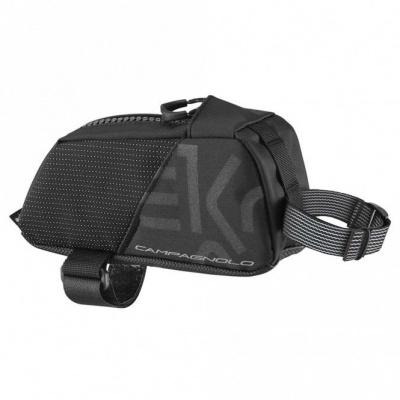
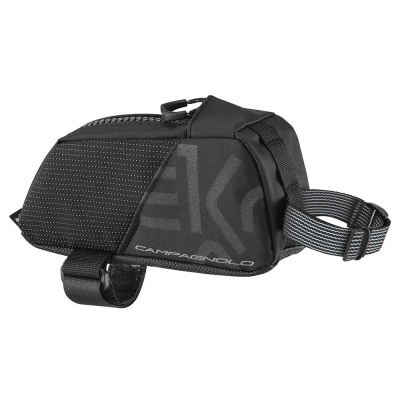
Not all frame bags do the same job, and Campagnolo's lineup reflects that. Top tube bags are compact, zippered pouches designed for fast-access items - energy gels, a phone, a small battery pack. Capacity is modest, typically under a litre, but that's the point. You reach for these without breaking rhythm, which is exactly what you want mid-ride.
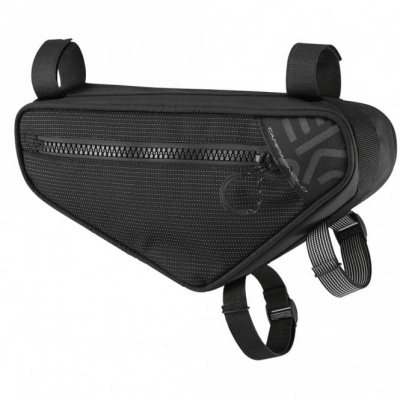
Half-frame bags occupy the lower portion of the front triangle and are where usable capacity lives - typically in the two-to-four litre range depending on frame size. That's enough for a multi-tool, a spare tube, a mini pump, emergency layers, and some trail food. The weight sits low and central, which keeps handling predictable in a way that a stuffed saddle bag never quite manages. Think of it as ballast in the right place.
Full-frame bags maximise every centimetre of the triangle and suit longer bikepacking trips where you need to carry sleeping kit components or bulk food. The trade-off is bottle access, as noted above, and a slight increase in rotational mass that you'll notice on technical descents if you're paying attention. For a weekend loop of the Scottish Borders or a loaded spin up the Pennine Bridleway, the carrying advantage outweighs that.
Across the range, the premium you're paying for relative to a budget option from a generic label is tangible in three areas: the waterproof zipper construction with its gloved-friendly ergonomic pullers, the internal organisation (dividers and mesh pockets that stop your multi-tool destroying your phone screen), and reflective detailing that catches car headlights on those short February afternoons. If you're comparing at this price tier, Apidura frame bags and Ortlieb frame bags are the obvious benchmarks, both doing an excellent job of weatherproofing, but neither is specifically tailored to the Ekar gravel aesthetic that Campagnolo has leaned into here. Brooks frame bags offer a different flavour again - more heritage-led and canvas-heavy - which suits some riders and setups but isn't chasing the same clean, performance-oriented look.
Keeping Your Frame Intact: UK Conditions and Bag Maintenance
Here's the thing most people find out the hard way: UK riding is brutal on frame finishes. A single wet ride on a gritty lane is enough for abrasive mud paste to work its way under your bag straps and act like wet-and-dry paper on your carbon lacquer or paint. Always - and this isn't optional on a premium frame - apply clear vinyl frame protection tape (helicopter tape) to every contact point before mounting the bag. Top tube, down tube, seat tube. Cover more than you think you need to. Replacing a scratched frame is not a conversation you want to have with yourself.
The anti-slip strap backing on Campagnolo's bags helps reduce movement, but it doesn't eliminate the grit-ingress risk. Check under the straps after every muddy ride and wipe the contact zones clean before re-mounting. Two minutes of attention saves a repair bill.
For cleaning the bags themselves, hand wash with mild soap and lukewarm water. A soft brush gets mud out of the ripstop fabric weave without damaging the coating. Avoid pressure washers - they'll force water through weather-resistant zips and potentially compromise the internal lining over time, regardless of how robust the construction is. Road salt from winter tarmac is the other enemy; it crystallises inside zipper teeth and causes seizing. A periodic wipe of the zip teeth with a silicone-based zipper lubricant keeps them running smoothly through the cold months. Do it at the start of winter and again in January. It takes thirty seconds.
If you're building out a full bikepacking setup, Campagnolo wheel bags and Campagnolo jackets round out the kit sensibly, keeping the same weather-resistant design language across your whole load. A matched system also means consistent strap sizing and attachment logic, which matters when you're packing by head torch at a campsite in the Brecon Beacons.
Campagnolo Frame Bags FAQs
Are Campagnolo frame bags fully waterproof?
They're highly water-resistant - waterproof fabrics and sealed zippers handle heavy rain and road spray without drama. That said, they're not rated for submersion, so if you're carrying a phone or GPS unit on a truly filthy Scottish day, slip it inside a small dry bag as a secondary layer of protection.
Will a frame bag scratch my carbon frame?
Any frame bag can scratch paintwork if grit gets trapped between the straps and the surface - and in UK conditions, it will. Apply clear frame protection tape (helicopter tape) to your top tube, down tube, and seat tube at every strap contact point before mounting. Don't skip this step on a carbon frame.
How do I fit a frame bag with water bottles?
A half-frame bag leaves room for at least one bottle in most cases, but clearance on smaller frames can be genuinely tight. Switching to side-entry bottle cages is the most reliable fix - they let you pull a bottle out horizontally without the bag getting in the way, which makes a real difference mid-ride.