
Campagnolo 12 Speed Rear Derailleurs
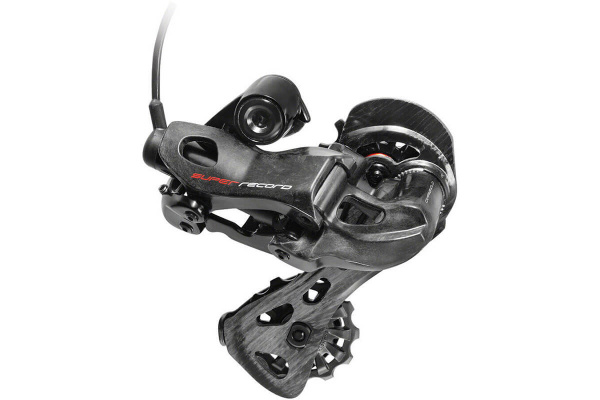
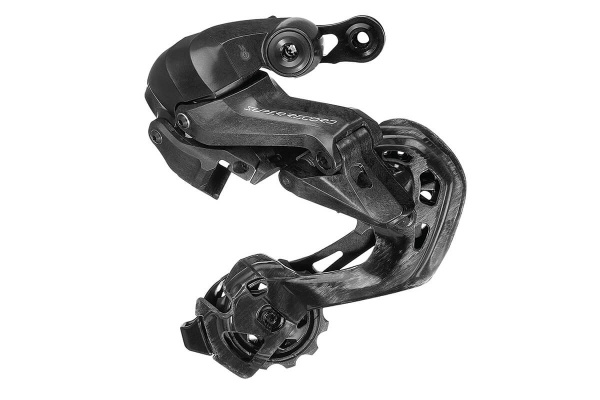
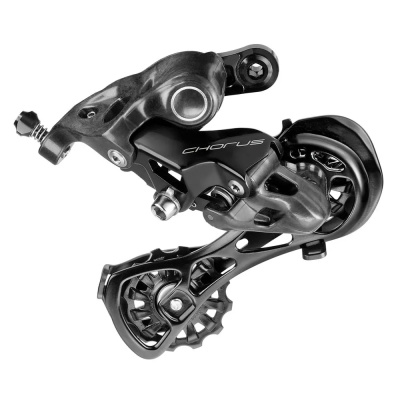
Campagnolo 12 speed rear derailleurs sit at the sharper end of road drivetrain engineering - and if you're running a Campagnolo groupset, the mech is where that precision either pays off or falls apart. Whether you're speccing the flagship Super Record, the race-hardened Record, or the dependable Chorus, each derailleur shares the same core architecture: 3D Embrace Technology that keeps the upper jockey wheel vertically tight to the sprockets, improving chain wrap and giving you shifts that feel immediate rather than considered. That geometry matters more than it sounds - especially when you're pushing hard through a climb and asking the drivetrain to change gear under real load.
Both mechanical and EPS (Electronic Power Shift) versions are available across the range. The mechanical options use carbon-reinforced technopolymer bodies to keep weight down without going soft on stiffness. EPS takes it further with waterproof actuators and a level of shift consistency that doesn't care how tired your hands are. All versions run Campagnolo's Ultra-Shift geometry, which optimises the parallelogram movement for quicker, cleaner transitions across the cassette. Compare UK prices across the full range below.
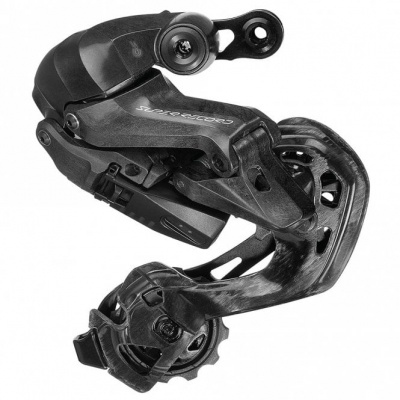
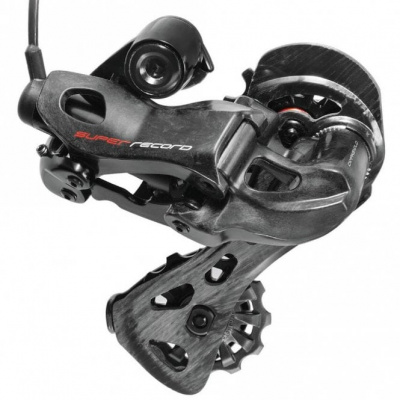
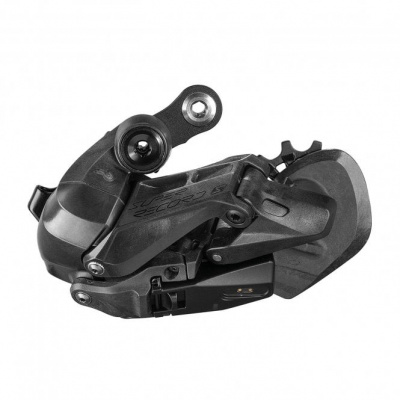
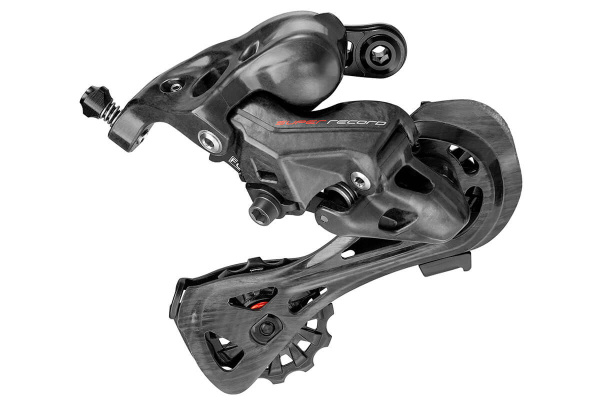
Prices and availability can change quickly. Delivery charges are not always included in listed prices.
Final price, stock status and delivery terms are set by retailer. We may receive a commission on purchases made.
Compatibility: What Works and What Doesn't
Campagnolo runs its own ecosystem, and the 12-speed rear derailleur is the component that makes that clearest. The cable pull ratio and parallelogram geometry are engineered specifically for Campagnolo 12-speed Ergopower shifters - full stop. You can't mix an 11-speed lever into a 12-speed mech and expect the indexing to hold. It won't. The geometry simply doesn't translate, and you'll be chasing ghost shifts every time you push out of a junction.
Max sprocket size varies by model and cage length. Most standard-cage 12-speed mechs handle up to 32T, while longer-cage versions extend to 34T - useful if you're running a compact or semi-compact chainset on hilly UK roads. Check the spec sheet for your exact model before ordering a wider cassette. If you're unsure which cassette pairs correctly, our Campagnolo 12-speed cassettes page has the full picture, and you'll want to cross-reference with Campagnolo 12-speed chains to keep the whole drivetrain matched. A mismatched chain is the kind of thing that ruins a Sunday ride fast.
One more thing worth knowing: derailleur hanger alignment is non-negotiable at 12-speed tolerances. Even a slight bend from a kerb tap or a dropped bike will cause indexing problems that no barrel adjuster can fully correct. Check it before assuming the mech is at fault.
Super Record, Record, Chorus: Where the Money Goes
The three tiers share the same fundamental design - 3D Embrace Technology, Ultra-Shift geometry, and carbon-reinforced technopolymer bodies - but the materials and finishing differ in ways that show up on the scales and, eventually, on the service interval.
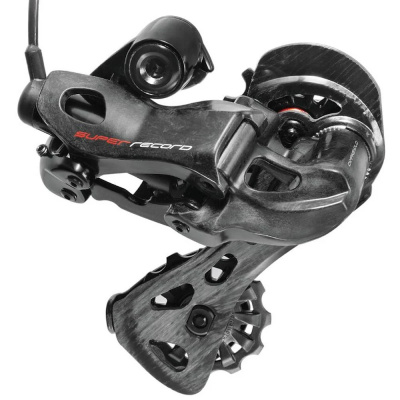
Super Record is the full works. Titanium hardware throughout, ceramic jockey wheel bearings that spin with almost no perceptible resistance, and extensive carbon fibre in the body construction. The weight saving over Record is real but incremental - the kind of gain that matters at the elite end. EPS versions of Super Record add waterproof electronic actuators that deliver a consistent shift regardless of conditions.
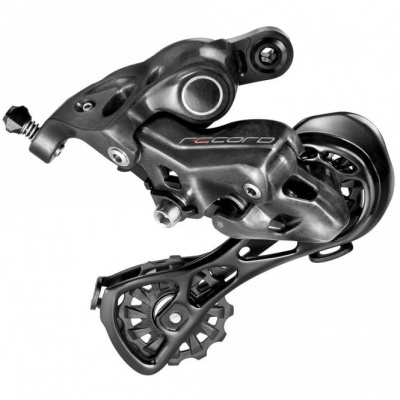
The Campagnolo Record 12s rear mech swaps the titanium for quality alloy hardware and uses standard precision bearings rather than ceramic. Shifting performance? Essentially identical in feel to Super Record on the road. The difference is grams and longevity of the bearings under hard use. For most riders building a serious road bike, Record is where the value argument becomes genuinely convincing - you're not leaving anything meaningful on the table.
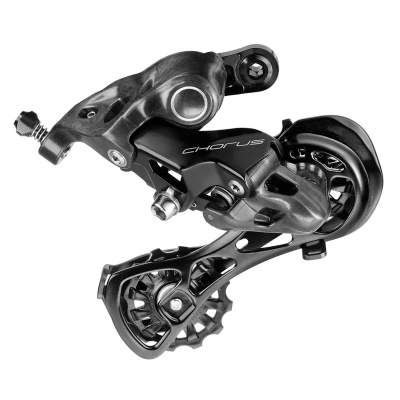
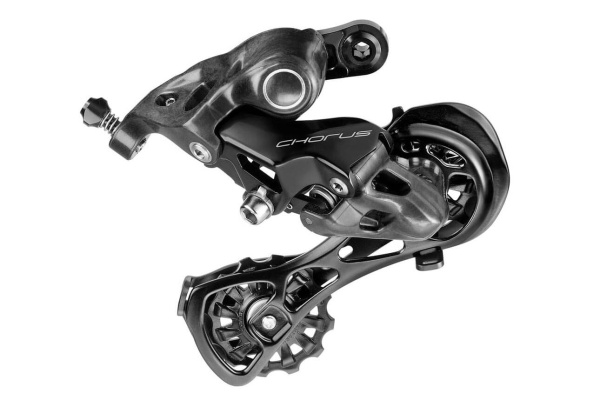
Chorus uses heavier alloy throughout, with no ceramic bearings, but it still carries the same Ultra-Shift geometry and 3D Embrace architecture as the tiers above it. That's the thing people miss: the shifting mechanic is the same. Chorus is heavier and will need more frequent servicing if you're putting in big miles in rough weather, but it's far from a compromise choice. The Campagnolo Chorus 12 speed derailleur is the one to specify if you're building a training bike that needs to survive a British winter without keeping you awake at night about workshop bills.
If you're comparing outside the Campagnolo range entirely, Shimano 12-speed rear derailleurs and SRAM 12-speed rear derailleurs offer their own takes on electronic and mechanical shifting - worth a look if you're building from scratch rather than replacing a Campagnolo mech in an existing groupset. Mixing brands across a drivetrain isn't generally advisable, but the comparison is useful context for spec decisions.
Keeping It Running Through a UK Winter
British roads in winter are hard on precision components. Road salt and grit get into the parallelogram pivots and accelerate wear on the jockey wheel bearings faster than you'd expect - particularly on Chorus, where the bearings are already the least resistant to contamination of the three tiers. A clean and re-lube of the pivots every couple of months isn't overcautious; it's just realistic maintenance.
Jockey wheels are worth cleaning every 400 - 500 miles if you're riding through autumn and winter. Grime builds up quickly and adds friction that the system wasn't designed to compensate for. Replacement jockey wheels are relatively affordable, and running worn ones long past their useful life is a common source of vague, inconsistent shifting that's easy to misdiagnose. Check the Campagnolo 12-speed front derailleurs page too - front and rear often need attention at the same point.
On mechanical systems, inner gear cables are worth replacing annually as a matter of course. Friction builds gradually in the housing - you don't notice it until it's significant, and by then you're chasing a shifting problem that a new cable fixes in twenty minutes. The Campagnolo EPS 12 speed rear mech sidesteps cable friction entirely, which is one of the less-discussed practical arguments for going electronic in the UK's wet, grimy riding season.
Derailleur hanger alignment should be checked whenever shifting feels sluggish or inconsistent, particularly after any contact with a wall, kerb, or the boot of a car. At 12-speed tolerances, the margin for error is tighter than older generations - even a bend you can't see with the naked eye can cause issues. A good hanger alignment gauge is a worthwhile addition to any home workshop kit; find alignment tools and related workshop equipment on our Campagnolo tools page.
Campagnolo 12 Speed Rear Derailleurs FAQs
Can I use a Campagnolo 12-speed rear derailleur with 11-speed shifters?
No. Campagnolo 12-speed rear derailleurs use a specific cable pull ratio and parallelogram geometry that only works correctly with 12-speed Ergopower shifters. Pairing them with 11-speed levers will give you inaccurate indexing across the cassette and risks causing drivetrain damage over time. The two generations aren't cross-compatible.
What is the maximum cassette size for a Campagnolo 12-speed rear derailleur?
It depends on the cage length of the specific model. Standard-cage versions typically top out at 32T, while long-cage variants handle up to 34T. The 3D Embrace Technology helps maintain close chain wrap across the range, but always verify the max sprocket rating for your exact mech before fitting a larger cassette.
How do I adjust the B-tension on a Campagnolo 12-speed mech?
Campagnolo refers to this as the H-screw rather than B-tension. With the chain on the largest sprocket, you're looking for roughly a 2 - 3mm gap between the upper jockey wheel and the sprocket teeth. Too close and the chain risks contact; too far and shift quality drops. Campagnolo's own setup tool makes this straightforward, but a careful eye and a ruler work for most home mechanics.