
Campagnolo 12 Speed Cassettes
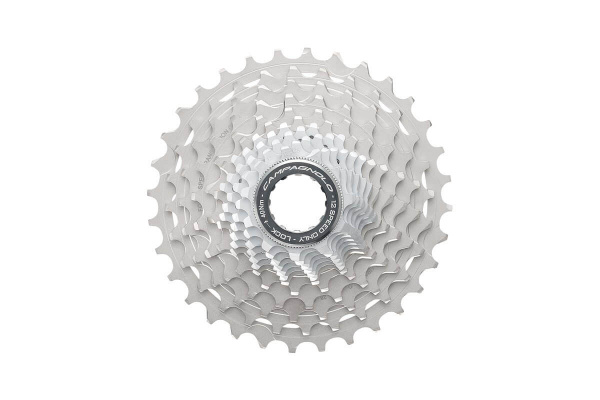
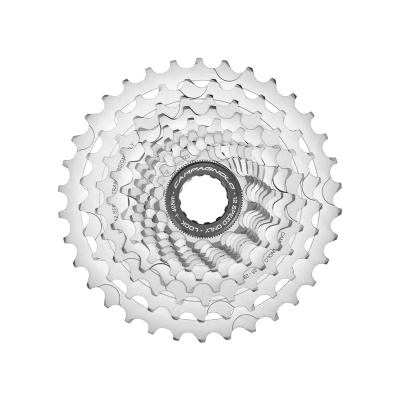
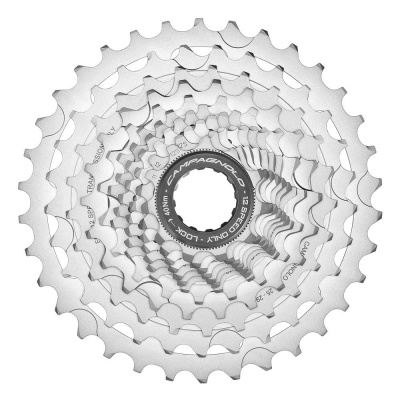
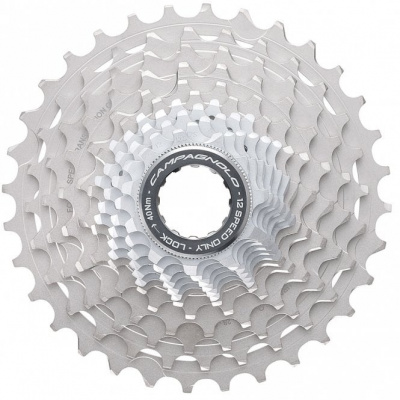
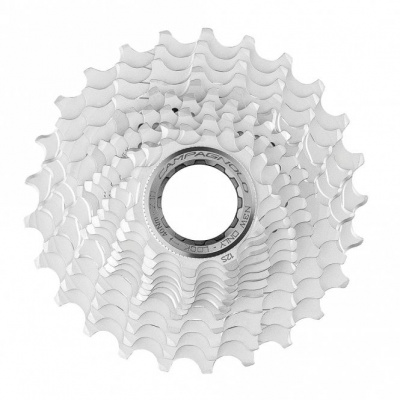
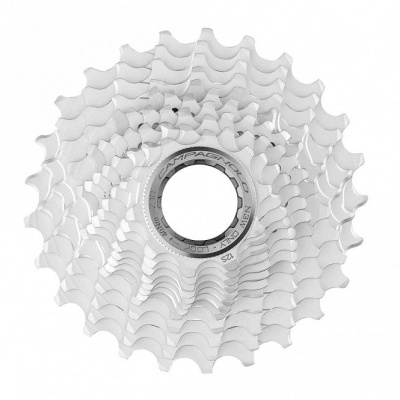
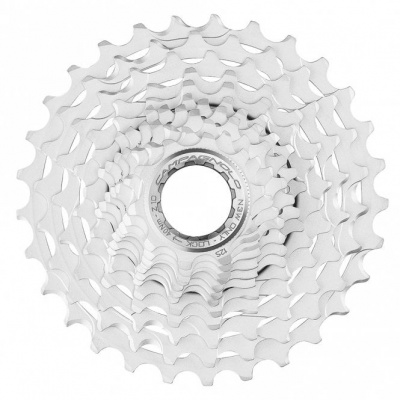
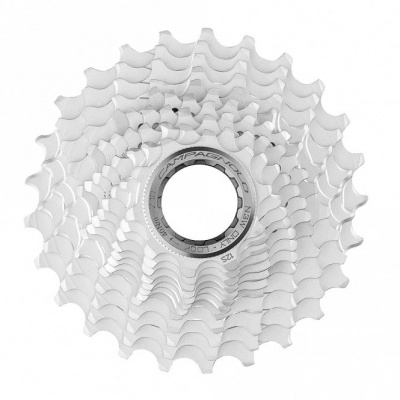
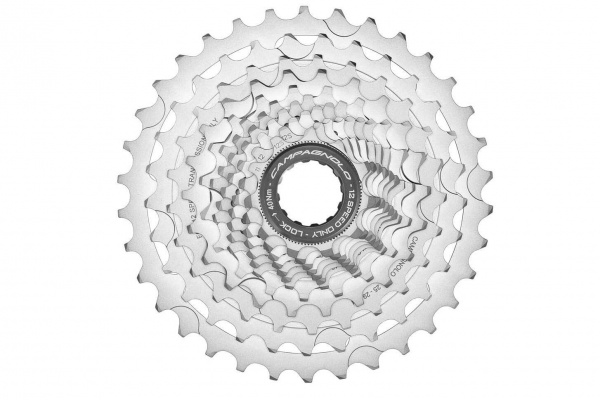
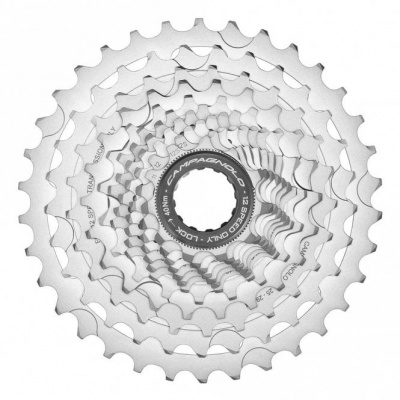
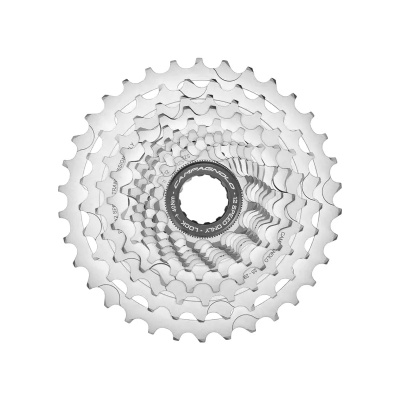
Campagnolo 12 speed cassettes sit at the sharp end of road drivetrain engineering - and the range covers more ground than people give it credit for. Whether you're chasing grams on a lightweight climber or building a bike that'll survive a Yorkshire winter without rattling your wallet, there's a cassette in the lineup that fits the brief. At the top, the Campagnolo Super Record 12 speed cassette uses titanium sprockets and Ultra-Shift tooth profiling to deliver shifts that feel almost telepathic under load. Step down to Record, and you're still getting titanium where it counts. Go Chorus, and you get an all-steel build that's heavier but genuinely hard-wearing. All three use the same freehub spline pattern as Campagnolo's older 9, 10, and 11-speed cassettes, so upgrading to a 12s drivetrain doesn't necessarily mean new wheels. Ratio options run from 11-29T through to 11-34T, covering everything from flat sportives to steep Alpine-style gradients. Compare prices across the full range below and pick the cassette that actually suits how and where you ride.
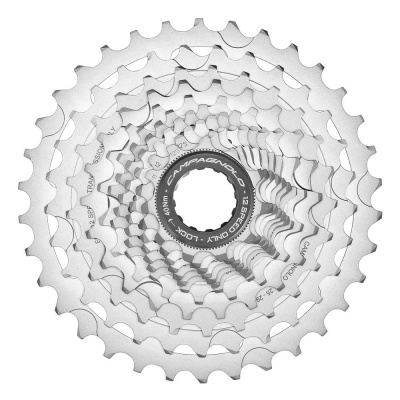
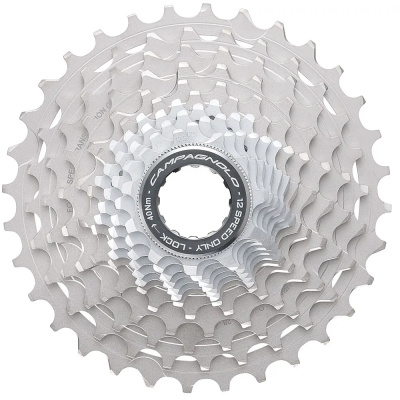
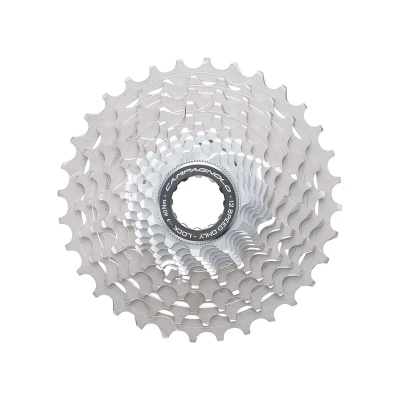
Prices and availability can change quickly. Delivery charges are not always included in listed prices.
Final price, stock status and delivery terms are set by retailer. We may receive a commission on purchases made.
Freehub Compatibility and What Fits Where
The good news first: standard Campagnolo 12-speed road cassettes use the same freehub spline pattern as every Campagnolo cassette going back to the 9-speed era. Swap the cassette, not the wheels. That's a meaningful saving if you're upgrading an existing build and were bracing for a full wheel replacement.
Where it gets slightly more involved is the N3W freehub - Campagnolo's newer standard, designed around lighter, smaller-diameter hubs. Standard 12-speed cassettes won't fit an N3W body directly, but Campagnolo produces a dedicated N3W adapter that bridges the gap neatly. Worth checking which standard your hubs run before you buy, particularly if your wheels are from the last two or three years.
One thing that isn't negotiable: Campagnolo cassettes are built for Campagnolo-specific freehub bodies only. They won't seat correctly on Shimano HG or SRAM XDR freehubs - the spline interface is different, and the sprocket spacing is tuned specifically for Campagnolo rear derailleurs and chains. If you're running a mixed drivetrain, check everything lines up before committing. For shifts that actually feel the way they should, pair your cassette with a matched Campagnolo 12 speed chain and a compatible Campagnolo 12 speed rear derailleur - mixing brands across a 12s system is where precise indexing tends to fall apart.
Super Record, Record, Chorus - What Actually Separates Them
The three-tier structure looks straightforward on paper, but the material differences between them are worth unpacking properly rather than just looking at the price tags.
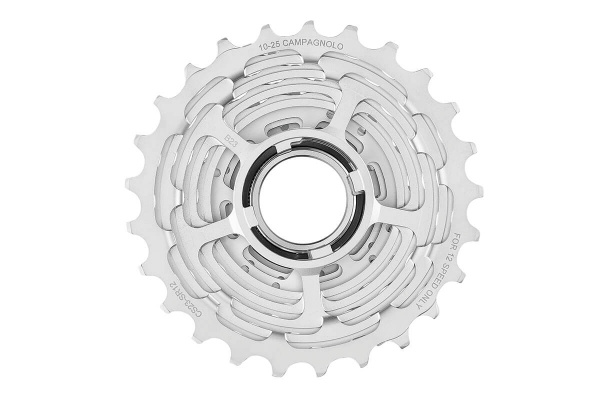
The Campagnolo Super Record 12 speed cassette features six titanium sprockets arranged as two machined monolithic triplet clusters. Triplet construction - where three sprockets are machined from a single piece rather than stacked individually - adds lateral stiffness to the assembly and keeps the shift ramps precisely positioned. Add the Ultra-Shift teeth design across every sprocket, and you've got a cassette engineered to move the chain cleanly and quickly even when you're stomping out of a tight corner. The weight saving over steel is real and measurable, which matters if you're building a climbing-focused bike where every gram adds up.
Record drops to one titanium triplet - the three largest sprockets, where the chain spends the most time on flat or rolling roads. The smaller sprockets go to steel. Still uses Ultra-Shift profiling throughout. It's a logical compromise: you get meaningful weight reduction without paying full Super Record money, and the steel small-sprocket end holds up better to sustained use.
Chorus is all steel. Every sprocket. That makes it noticeably heavier than the tiers above it, but it's also considerably more resistant to wear - particularly relevant if you're clocking big winter miles on British roads. The Campagnolo Chorus 12s cassette is the one we'd steer most riders towards as a primary training cassette, or as the obvious choice for a second bike that sees mixed-weather use. If you want to compare what competing brands offer at a similar price point, Shimano 12 speed cassettes and SRAM 12 speed cassettes are worth a look, though you'll need the right freehub to match.
Across the range, ratio options include 11-29T for riders who live on flat or gently rolling roads, 11-32T as a flexible all-rounder, and 11-34T for anyone regularly tackling steeper climbs. The best Campagnolo 12 speed cassette for climbing depends on your fitness as much as your bike - but 11-32T covers most scenarios, while 11-34T gives you that safety net on longer ascents without compromising top-end gearing.
UK Riding Conditions and Keeping Your Cassette Alive Longer
British roads are hard on drivetrains. Winter grit and road salt don't just dirty the chain - the fine abrasive particles act like grinding paste between chain and sprocket, and on titanium sprockets that wear rate accelerates noticeably compared to steel. If your Super Record cassette is on a bike that does regular November-to-February miles in the Peak District or along exposed coastal roads, expect to replace it more frequently than the marketing suggests.
The straightforward answer: run Chorus on your winter bike. Save the Super Record for the summer machine, where conditions are kinder and the weight saving is actually worth preserving. It's not glamorous advice, but it's the kind of thing that saves you money over a couple of seasons.
Whatever cassette you're running, keep a chain checker to hand. A worn chain accelerates cassette wear dramatically - by the time a chain is visibly stretched, it's already been filing down the sprocket teeth for weeks. Swap chains regularly and the cassette lasts significantly longer. Most mechanics working on 12s Campagnolo drivetrains suggest checking chain wear every 1,000 to 1,500 miles, depending on how much riding happens in the wet.
When fitting or removing the cassette, torque the lockring to Campagnolo's specified 40Nm. Under-torqued lockrings are a common source of drivetrain creaking that's easy to misdiagnose as a bottom bracket issue. Use a proper torque wrench rather than guessing - Campagnolo's own workshop tools are built to the correct interface, which makes the job cleaner and avoids damaged lockring faces. After fitting, run through the full gear range before heading out. Better to find an indexing issue in the car park than halfway up a climb.
For context, Miche 12 speed cassettes offer an alternative if you're looking for Campagnolo-compatible options at a different price point - Miche produces cassettes that work with the Campagnolo freehub interface, which is useful if you want to mix things up. That said, the Ultra-Shift tooth geometry on genuine Campagnolo cassettes is tuned specifically for Campagnolo chain and derailleur combinations, so there's a real argument for keeping the system pure if precise shifting matters to you.
Campagnolo 12 Speed Cassettes FAQs
Will a Campagnolo 12 speed cassette fit an 11 speed hub?
Yes - Campagnolo 12-speed road cassettes use the same freehub spline pattern and overall width as the 9, 10, and 11-speed versions. You don't need a new freehub body to move to 12-speed. The one exception is the newer N3W freehub standard, which requires a Campagnolo adapter to accept a standard 12-speed cassette.
Are Campagnolo 12 speed cassettes compatible with Shimano or SRAM?
No. Campagnolo cassettes require a Campagnolo-specific freehub body and won't fit Shimano HG, MicroSpline, or SRAM XDR interfaces - the spline pattern is different. Sprocket spacing is also optimised for Campagnolo chains and derailleurs, so mixing systems leads to poor indexing even if you could make it physically fit.
What is the difference between Campagnolo Chorus and Super Record cassettes?
Primarily materials and weight. Super Record uses six titanium sprockets across two monolithic triplet clusters, keeping weight to a minimum. Chorus uses all-steel sprockets throughout - heavier, but considerably more resistant to wear. For most UK riders doing year-round or winter miles, Chorus is the more practical and cost-effective long-term choice.