
Miche 12 Speed Cassettes
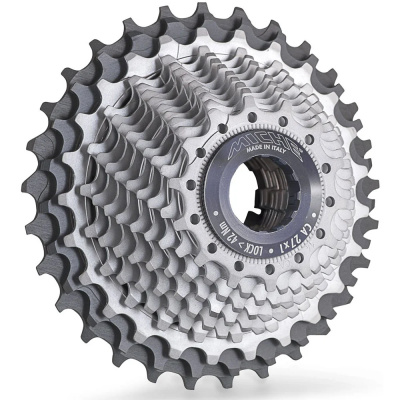
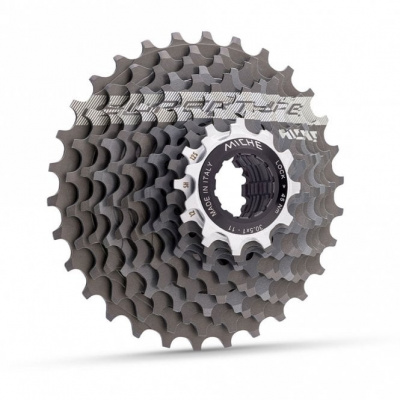
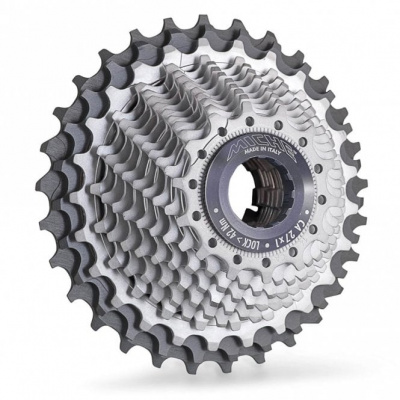
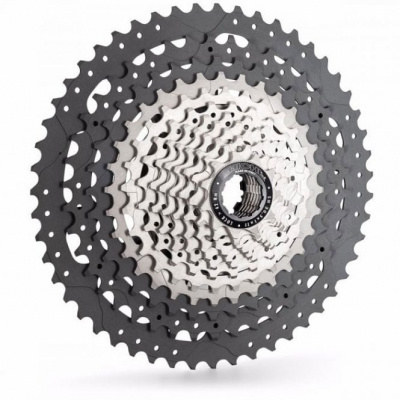
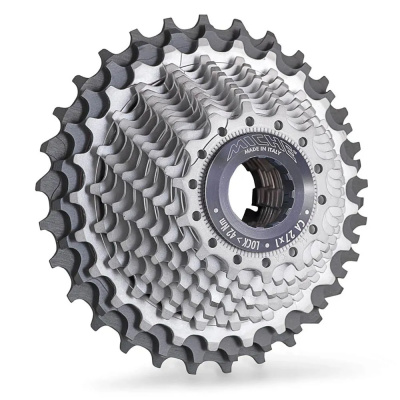
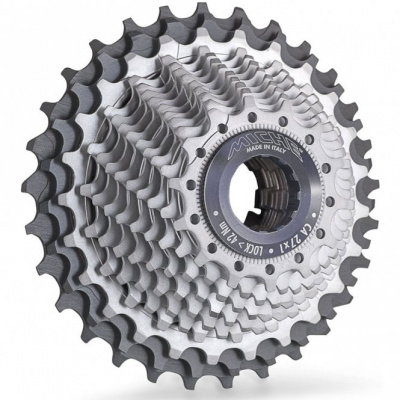
Miche 12 speed cassettes are one of those sensible choices that mechanics reach for when they want precise Italian engineering without paying OEM prices. CNC machined from nickel-plated steel with AL 7075-T6 alloy on the larger sprockets, they're built to handle UK roads in all their gritty, damp glory - and they shift cleanly across Shimano, SRAM, and Campagnolo 12-speed systems when you pick the right version for your freehub. That last point matters. Miche produces distinct cassette variants for each standard, so double-check your wheel's freehub body spline pattern before you order.
What genuinely sets Miche apart from a lot of aftermarket options is the modular construction. Rather than riveting sprockets onto a spider, the Primato series uses individual loose sprockets - meaning when your most-used middle cogs wear square, you replace those specific gears rather than the whole block. Over a winter of heavy miles, that adds up. The opaque chrome finish on steel sprockets resists the grinding paste that UK roads serve up between October and March, and the alloy sprockets keep rotational weight honest on the race day builds. A practical cassette, built with enough thought that you notice the difference on the stand and on the road.
Prices and availability can change quickly. Delivery charges are not always included in listed prices.
Final price, stock status and delivery terms are set by retailer. We may receive a commission on purchases made.
Compatibility: Matching Miche to Your Freehub
Getting the right Miche cassette starts with knowing exactly what freehub body you're working with. For Shimano 12-speed road, you need a cassette built around the HG spline pattern - the same 11-speed-width freehub that Shimano carried forward into their road 12-speed groupsets. That's a different animal from Shimano's Micro Spline standard used on their 12-speed mountain bike hubs, so a road-spec Miche 12 speed cassette Shimano compatible model won't seat on a Micro Spline body. Check before you buy, every time.
Campagnolo runs its own geometry entirely. Classic Campag freehubs use a proprietary spline that hasn't changed in decades, but Campagnolo's newer N3W (New 3 Win) body - introduced alongside their 13-speed work - adds a third standard to keep track of. Miche produces cassettes machined specifically for the classic Campagnolo freehub, making them a strong value alternative to the OEM block. If you're running Campagnolo 12 speed cassettes at OEM prices and want a durable training substitute, this is where Miche earns its reputation.
SRAM's 12-speed road and gravel groupsets use the XDR freehub standard - a threaded body that's wider than HG. Miche covers this too, but again, XDR and HG are not interchangeable. The spacing and sprocket pull ratio are also calibrated per brand, so mixing a Campag-spec cassette with a Shimano derailleur won't give you clean gear changes regardless of how close the sprockets look. Match the cassette standard to your derailleur brand, not just your hub. Pair your new cassette with Miche 12 speed chains for the best shifting consistency across the full drivetrain.
Primato vs Higher-Spec Builds: Picking Your Tier
Miche's range splits fairly cleanly along a line most mechanics understand instinctively: steel for training, alloy for racing. The Miche Primato 12 speed cassette sits at the workhorse end of the range. It's heavier than a fully machined alloy block, but the steel sprockets wear more slowly, resist grit better, and handle the abuse of back-to-back winter rides without the teeth rounding off after a couple of months. If you're doing big Peak District or Scottish Highlands road miles through the cold months, Primato is the sensible choice.
Step up to Miche's higher-spec builds and you get more aggressive CNC machining throughout, with AL 7075-T6 alloy used across a greater number of sprockets - not just the larger ones. Weight drops noticeably. Shift feel stays crisp. But alloy teeth wear faster than steel under load, particularly when grit gets into the drivetrain, and they're less forgiving if you're running a chain that's past its service life. Think of the race-spec blocks as event-day components rather than all-season tools. If you want to compare what rival brands offer at a similar price point, Shimano 12 speed cassettes and Sunrace 12 speed cassettes sit in overlapping territory, though neither offers quite the same modular sprocket replacement that Miche's construction allows.
The gear ratio options across both tiers are wide enough to cover most road and sportive riding. Compact chainset users doing hilly audax events will find suitable climbing-friendly blocks, while those chasing best aftermarket 12 speed cassette road options for flat criterium or time trial work can lean toward the closer-ratio spreads. Worth checking the specific ratios per model on the product pages - Miche's range covers more combinations than it might appear at first glance.
Surviving UK Winters: Durability and Servicing
UK roads in winter are basically a slow-motion cassette destruction service. Road grit combines with water and old chain lube to form an abrasive paste that grinds through sprocket teeth faster than most riders expect. Miche's opaque chrome finish on steel sprockets is genuinely useful here - it's not just cosmetic. The surface treatment resists surface rust and slows the rate at which that grinding paste bites into the metal, which matters when you're commuting through Cardiff or doing back-road loops in the Dales from November through March.
The modular construction of the Miche Primato 12 speed cassette is where the real long-term economy comes in. The three or four middle sprockets - typically the 15t to 19t range - take the majority of your pedalling load in normal riding. They wear fastest. With a conventional riveted cassette you replace the whole block when those cogs go. With Miche's individual loose sprockets, you pull the worn ones off and fit replacements. Over a winter season that can save a meaningful amount, and it's straightforward work on the bench.
A few practical points for installation and upkeep: always torque the lockring to 40Nm - under-torqued lockrings can unwind under load, which is an unpleasant surprise mid-ride. Apply a thin layer of anti-seize compound to the freehub body splines before fitting the sprockets. On alloy freehub bodies in particular, individual steel sprockets can fret into the splines over time without it, making future removal genuinely difficult. When cleaning, a stiff brush and degreaser does the job; high-pressure water forces grit further into the sprocket interfaces and can strip lubricant from the freehub bearings. If you're also looking at building up the wheel side of the equation, Miche hubs and Miche road wheels are worth a look for a coherent build from the same stable. For riders weighing up alternatives at the cassette level, SRAM 12 speed cassettes offer a comparison point if you're on an XDR-equipped build.
Miche 12 Speed Cassettes FAQs
Are Miche 12-speed cassettes compatible with Shimano drivetrains?
Yes. Miche makes 12-speed cassettes with Shimano HG spline spacing and geometry, designed to work with Shimano 12-speed road groupsets and derailleurs. Just confirm your wheel's freehub body matches the HG road standard - not Shimano's Micro Spline mountain bike format - before ordering.
Do Miche 12-speed cassettes work with Campagnolo?
They do. Miche produces cassettes machined specifically for classic Campagnolo freehub bodies, with the correct spline pattern and sprocket spacing to give clean shifts through a Campag 12-speed groupset. They're a well-regarded cost-effective alternative to OEM Campagnolo cassettes with no meaningful shift quality compromise.
Can I replace individual sprockets on a Miche cassette?
Yes, and it's one of the strongest reasons to choose Miche. The Primato series uses individual loose sprockets rather than a riveted spider, so you can swap only the worn cogs - typically the middle gears - without replacing the whole cassette. Particularly useful if you're racking up winter miles on UK roads.