
Campagnolo 12 Speed Front Derailleurs
A Campagnolo 12 speed front derailleur is one of those components that quietly defines how a road bike feels in motion - get it right and chain changes become an afterthought; get it wrong and every ride turns into a game of rub-and-hope. Campagnolo's 12-speed front mechs span three distinct groupset tiers - Super Record, Record, and Chorus - each sharing the same core Ultra-Shift geometry that drives faster, more positive upshifts even when you're grinding out of a steep climb with the power on. A split front link cage design keeps the chain seated under load, while unattached cable routing gives you the clearance needed for wider modern road tyres without any compromise to shift quality. Both mechanical and EPS (Electronic Power Shift) formats are available, so whether you're running a traditional cable setup or a fully electronic drivetrain, there's a mech to match. If you're replacing a worn unit, refreshing a winter bike, or speccing a new build, this is the place to compare current UK prices across the full Campagnolo 12-speed front derailleur range and find the right tier for your riding.
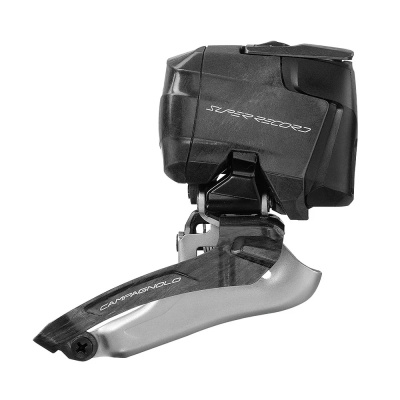
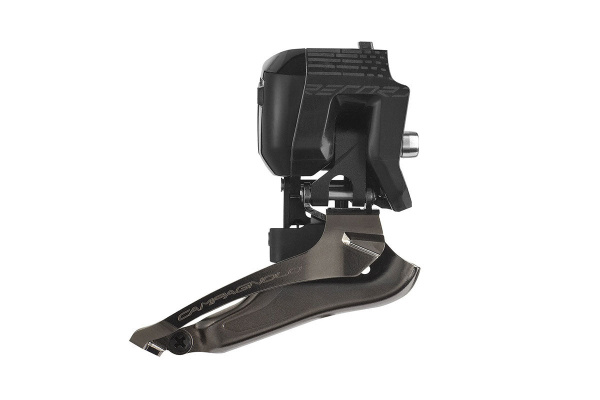
Prices and availability can change quickly. Delivery charges are not always included in listed prices.
Final price, stock status and delivery terms are set by retailer. We may receive a commission on purchases made.
Mounting Standards, Cable Pull, and What Plays Nice
Every Campagnolo 12-speed front derailleur uses a braze-on mount as standard - that's the direct-fit boss you'll find on virtually every modern road frame. If your frame only has a round seat tube, you'll need a band-on adapter; Campagnolo make their own, and getting the right diameter matters more than people think. A poorly fitting band shifts under load and ruins your setup before you've even left the car park. Check your frame spec before ordering.
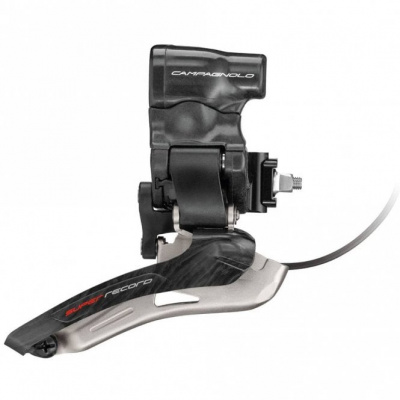
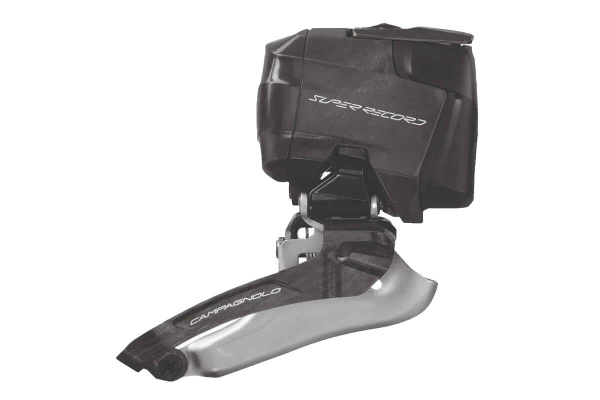
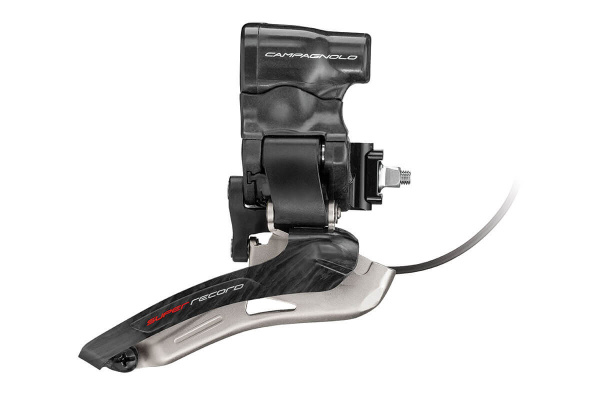
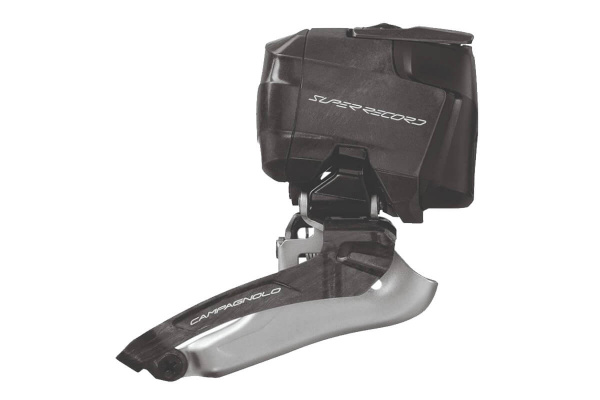
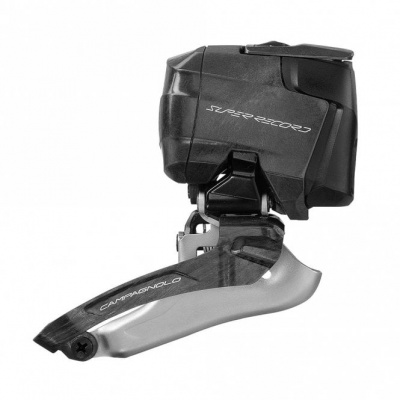
The cable pull ratio is where things get strict. Campagnolo's 12-speed mechanical front mechs are calibrated specifically for 12-speed lever pull - pair one with an 11-speed shifter and you'll get sluggish, imprecise movement that no amount of barrel adjuster fiddling will fix. Equally, EPS versions require V4 electronic components throughout; mixing generations isn't supported and the system simply won't communicate. If you're running the Campagnolo Super Record 12s front mech in EPS trim, the auto-repositioning function actively adjusts cage position when you shift at the rear, which is genuinely clever and removes the need for manual micro-trim on the fly.
Chainring compatibility is optimised for compact and standard road setups - think 34/50 through to 39/53. Pair your front mech with the correct Campagnolo 12 speed chains and a matched Campagnolo 12 speed rear derailleur and the system works as an integrated unit. Mix in components from outside the ecosystem and you're asking for trouble. Need an adapter for your frame? The Campagnolo adapters range covers the most common band-on sizes.
Breaking Down the Three Tiers
Think of the three groupset levels as different tools for different budgets and priorities - not as good, better, and best in any simple sense.
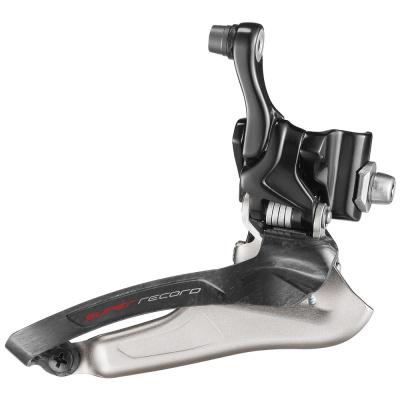
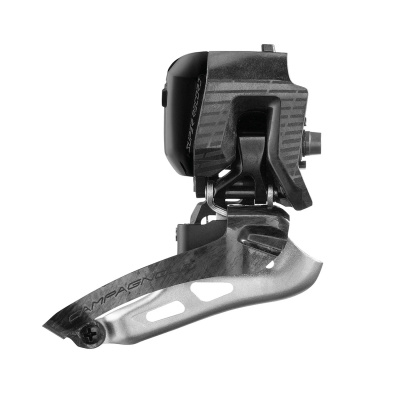
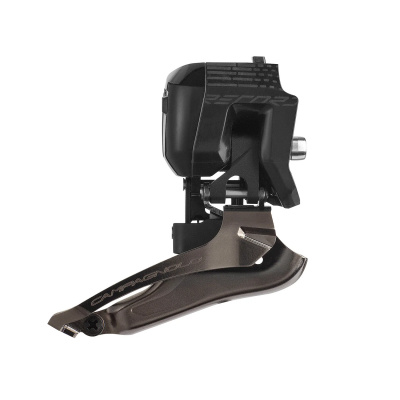
Super Record sits at the top. The cage uses high-grade carbon fiber, and the hardware runs to titanium - bolts, springs, pivot axles. That combination delivers maximum cage stiffness for minimum mass. Under hard pedalling loads, a stiffer cage means less flex and more consistent chain guidance. If weight matters to you and budget is secondary, this is the one. The Campagnolo Super Record 12s front mech is also the only front derailleur in the range available in both mechanical and full EPS V4 electronic versions.
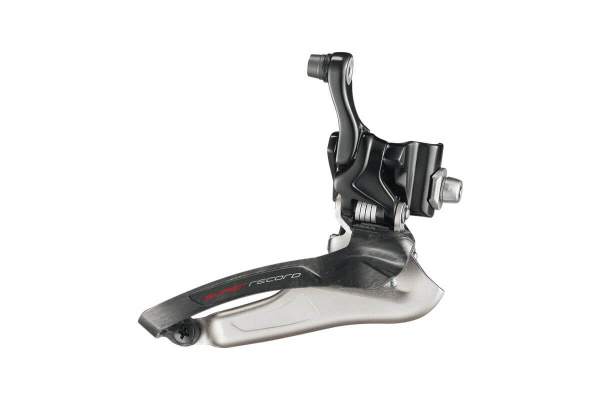
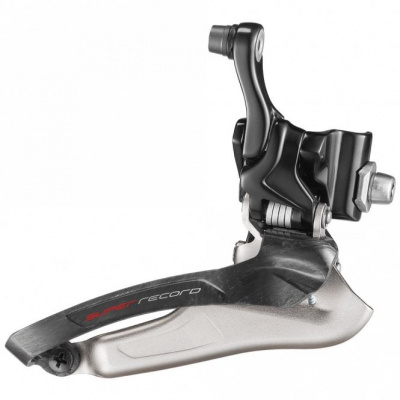
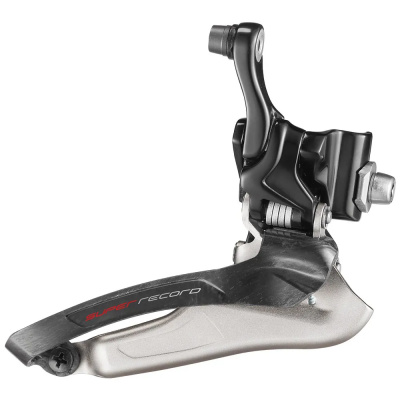
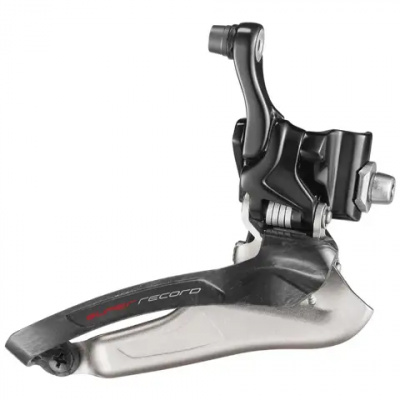
Record shares the exact same Ultra-Shift geometry as Super Record - same pivot placement, same cage profile, same shift feel. The difference is material: some titanium fasteners are replaced with lightweight alloy equivalents, and the carbon spec is slightly less exotic. The weight penalty over Super Record is modest. For most riders, the Campagnolo Record 12 speed front derailleur is the rational choice - elite shifting without paying the flagship premium.
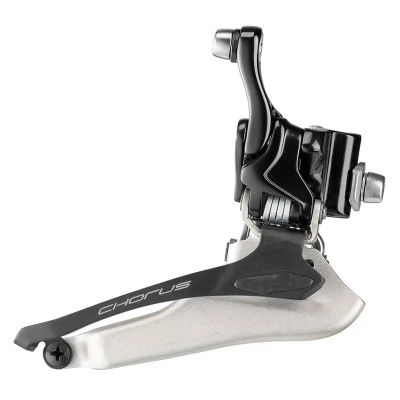
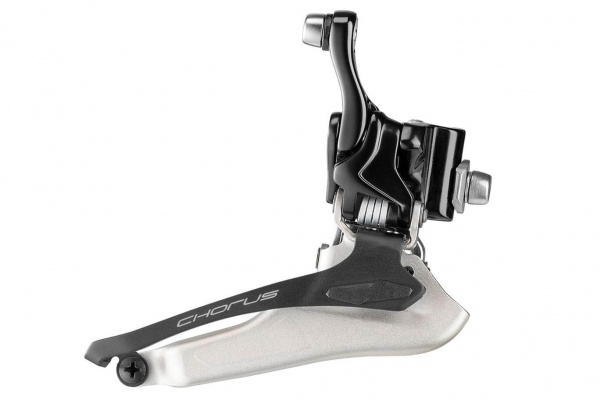
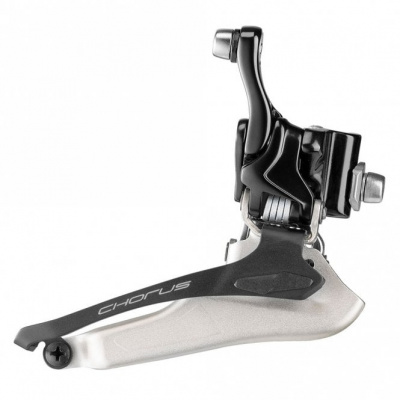
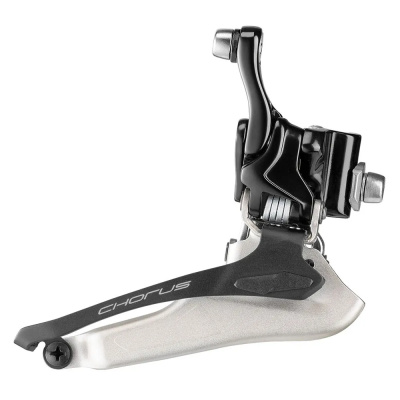
Chorus uses more steel and alloy in its construction, which adds a little weight but brings genuine durability benefits. The pivot placements are adjusted slightly to offer more clearance, which makes the Campagnolo Chorus 12v front mech a sensible fit for endurance road bikes running chunkier rubber. It's the tier that takes a winter's worth of muck without complaint, and it's easier on the wallet when the time comes to replace worn parts. If you're comparing options from other manufacturers, Shimano 12 speed front derailleurs and SRAM 12 speed front derailleurs occupy similar price brackets at each tier, but the cable pull ratios and lever interfaces are not interchangeable with Campagnolo components.
Whichever tier you choose, pair it with a matched Campagnolo 12 speed cassette to keep the whole drivetrain speaking the same language.
Keeping It Running Through a British Winter
Road salt is the quiet destroyer of derailleur pivots. After a wet ride on treated roads - anywhere from the commute through Bristol to a January sportive in the Yorkshire Dales - grit and salt work into the pivot joints and start causing sluggish, sticky downshifts. You'll notice it first as a reluctance to drop to the small ring under load. Don't ignore it.
The fix is straightforward. After any wet or salty ride, flush the pivot points with a light penetrant spray - something that displaces water and shifts debris - then follow up with a PTFE or dry lube once it's dried. Don't saturate the mech; a controlled drop into each pivot is enough. This keeps movement crisp and buys you months of extra life between services.
For mechanical setups, the inner gear cable is the single most overlooked maintenance item on a Campagnolo front mech. Degraded cable strands increase friction through the housing, and no amount of limit screw adjustment compensates for a cable that's lost tension consistency. Replace it annually as a minimum - more often if you ride through winter regularly. Fresh cable transforms a sluggish front shift back to factory feel, and it costs next to nothing relative to a new mech.
On the micro-trim function: this is your friend in crosswinds and when you're running cross-chain combinations. UK riding often means unpredictable gusts across open moorland or ridge roads where the chain line drifts enough to rub. Learning to use micro-trim as a reflex - rather than stopping to adjust - makes a real difference to how clean the drivetrain sounds and feels mid-ride. If you're running a braze-on 12 speed front derailleur Campagnolo mechanical mech, practise the micro-trim habit in both directions until it's automatic. EPS V4 handles this automatically via auto-repositioning, which is one of the more tangible day-to-day advantages of going electronic.
Campagnolo 12 Speed Front Derailleurs FAQs
Are Campagnolo 11-speed and 12-speed front derailleurs compatible?
No. The 12-speed front mech uses a narrower cage profile and a different cable pull ratio tuned specifically for the narrower 12-speed chain. Fit an 11-speed mech to a 12-speed system and you'll get imprecise, sluggish shifts and persistent chain rub that no adjustment will cure. The two generations aren't interchangeable.
How do you adjust a Campagnolo 12-speed front derailleur?
Start with height - 1 to 3mm above the large chainring teeth - and get the cage running parallel to the chainring before clamping the cable. Set your high and low limit screws to prevent chain drop at either extreme, then use the shifter's micro-trim function to manage any rub in cross-chain positions. A Campagnolo alignment tool makes the setup process significantly more reliable.
What is the difference between Campagnolo Record and Super Record front derailleurs?
Super Record uses titanium hardware and a higher-grade carbon fiber cage for the lowest possible weight and maximum stiffness under load. Record swaps some titanium for lightweight alloy and uses a slightly less exotic carbon spec, resulting in a minor weight penalty but near-identical shifting performance. For most riders, the difference in feel on the road is negligible.