
SRAM 12 Speed Front Derailleurs
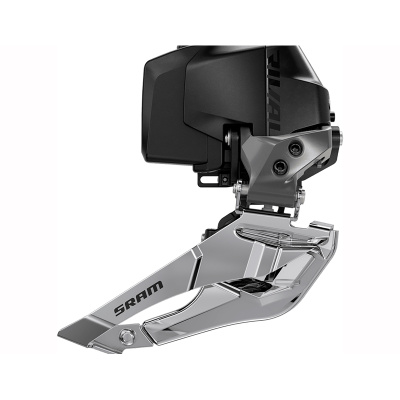
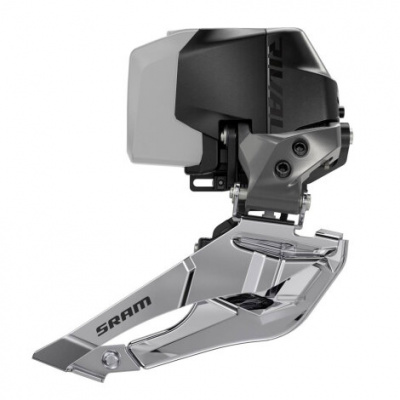
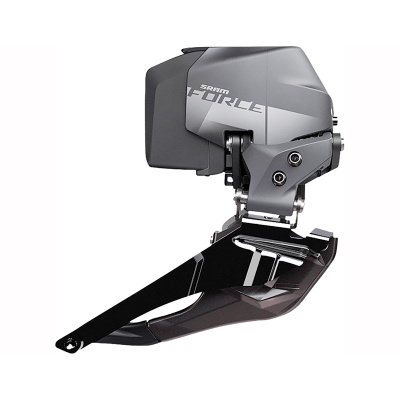
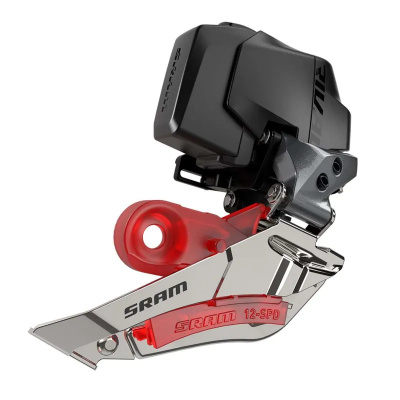
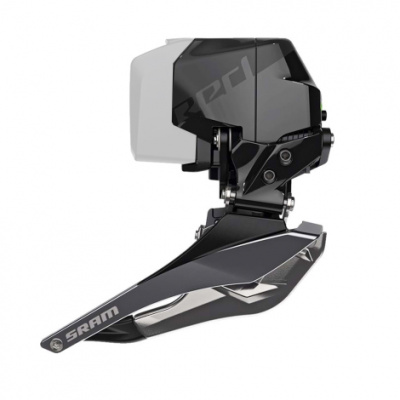
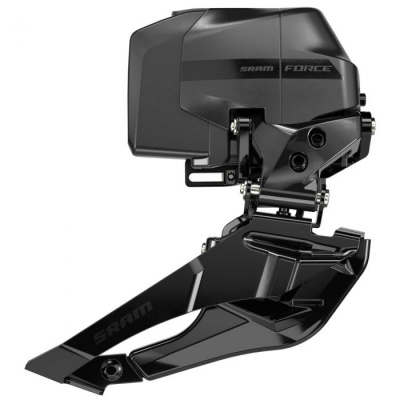
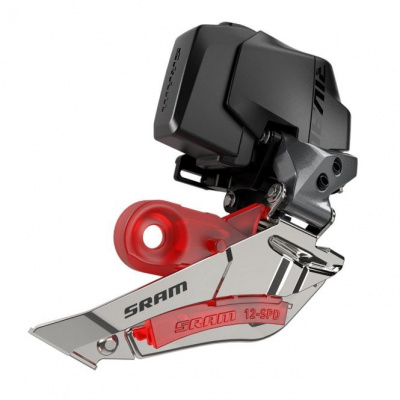
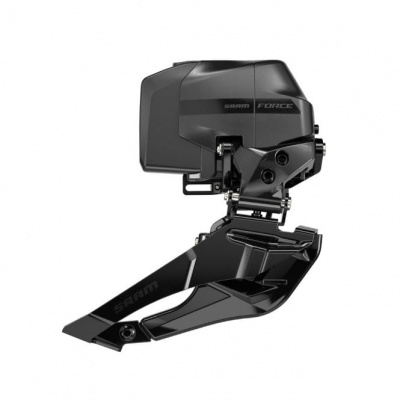
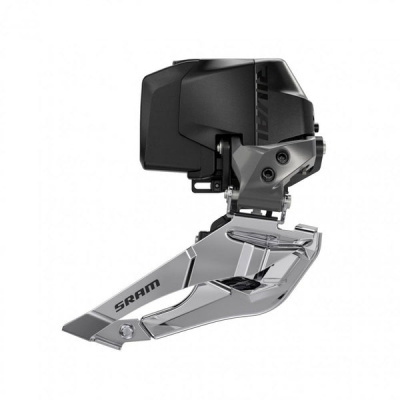
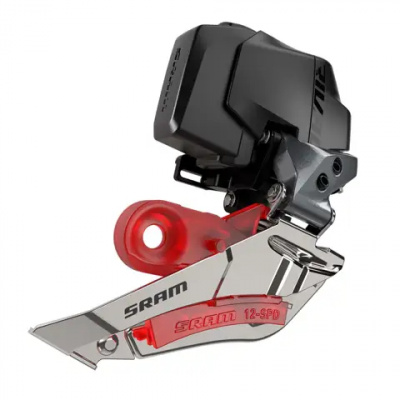
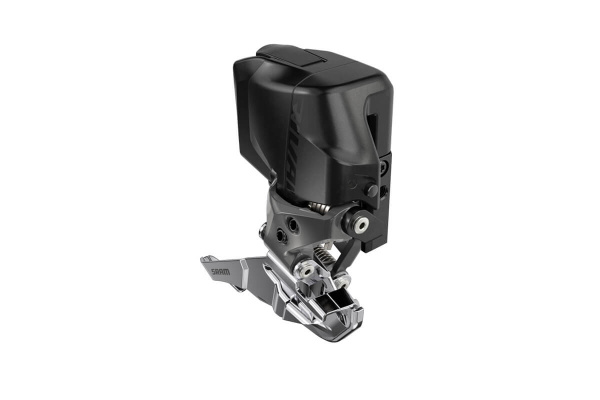
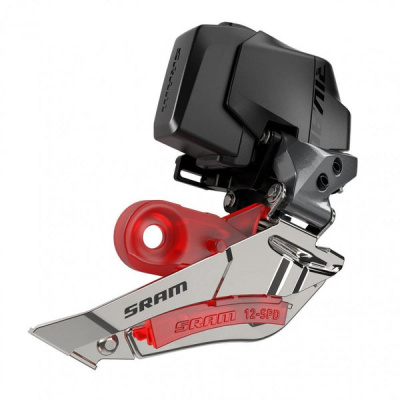
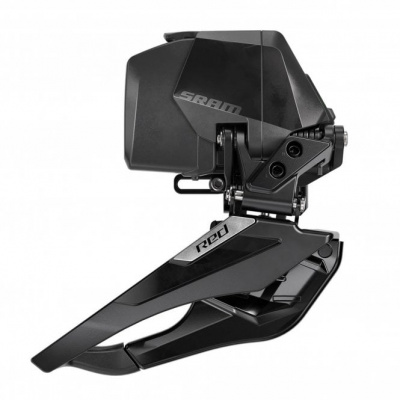
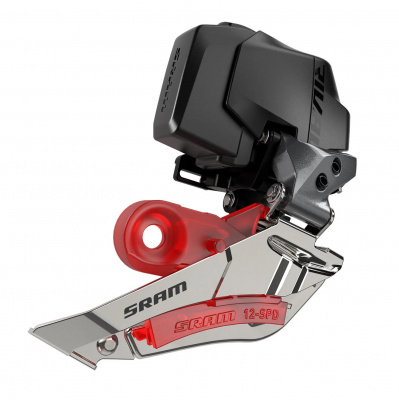
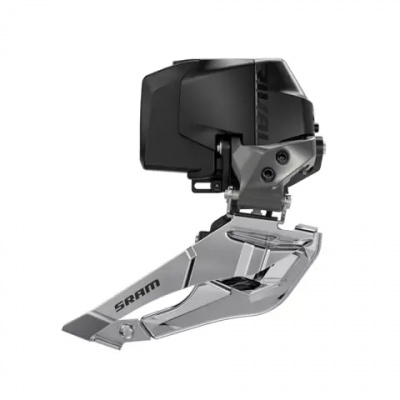
A SRAM 12 Speed Front Derailleur isn't just a component swap - it's a commitment to a fully wireless drivetrain built around the eTap AXS ecosystem. Every mech in this range, from the featherlight Red through to the budget-conscious Rival, uses the same encrypted AXS wireless protocol and Yaw technology that dynamically rotates the cage as your chain moves across the cassette. That rotation keeps the cage at a consistent angle to the chain at all times, which means no chain rub, no trim position, no fussing. Just shift and go.
All three tiers - Red, Force, and Rival - are drop-bar-only components. Worth saying plainly: SRAM's Eagle mountain bike drivetrains run 1x exclusively, so these front derailleurs have no crossover there. They're designed for road, cyclocross, and gravel builds running 2x chainsets, and they pair with X-Range gearing for tighter, more usable jumps between rings.
If you're riding UK winters - think salt-sprayed roads in the Peaks, or muddy gravel through the Welsh Marches - the choice between a standard and Wide variant matters more than you'd think. We'll break that down below, along with how Red, Force, and Rival actually differ once you strip away the marketing.
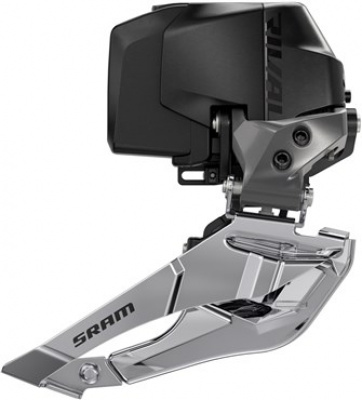
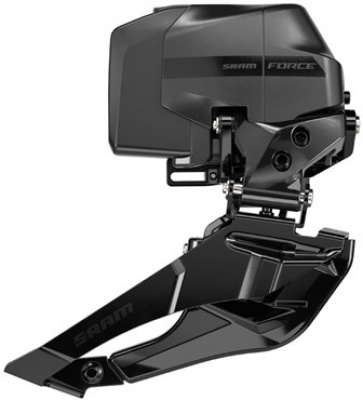
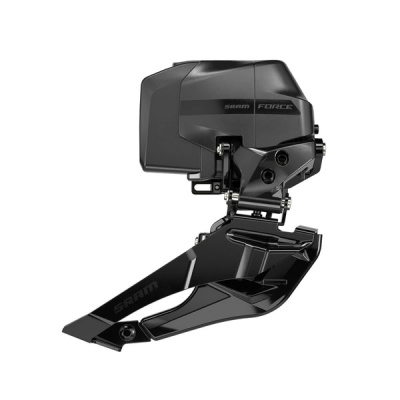
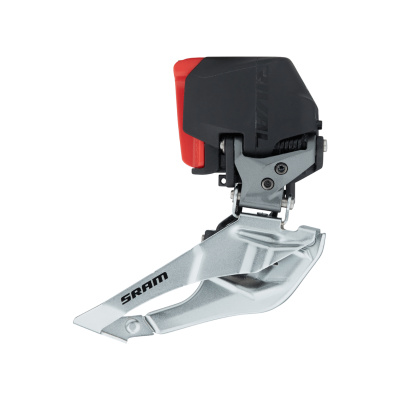


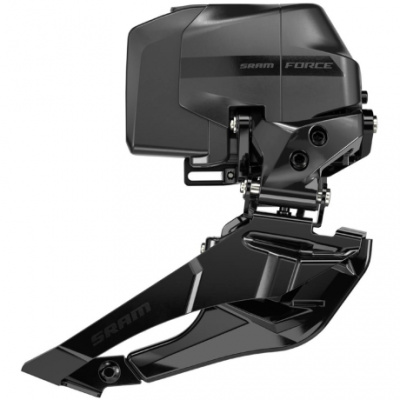
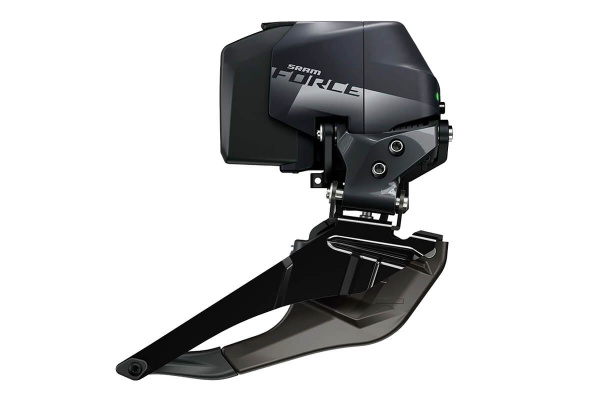

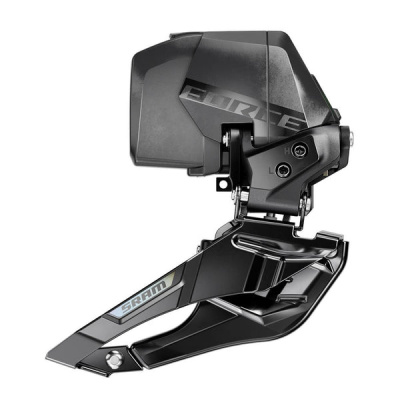
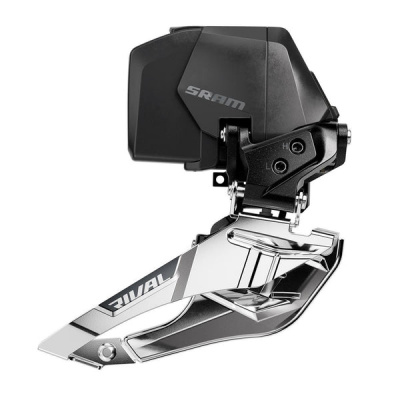
Prices and availability can change quickly. Delivery charges are not always included in listed prices.
Final price, stock status and delivery terms are set by retailer. We may receive a commission on purchases made.
Standard vs Wide: Getting the Chainline Right
The first question to answer before you buy is whether you need a standard or Wide front derailleur - and it's not just semantics. The Wide variant shifts the cage outward by 2.5mm to align with wider chainline setups, specifically those running a 43/30T crankset. It also provides the tyre and mud clearance you need if you're on rubber up to 45c. Running a standard derailleur on a wide-chainline gravel build will cause persistent rub that no amount of limit screw adjustment will fix.
For a typical road bike running a 50/37T or 48/35T setup, the standard mech is the right call. Gravel and cyclocross builds using SRAM's wider gearing spec need the Wide version - full stop. If you're not sure which chainset you're running, check the inner ring diameter stamped on the crank arm.
Both variants use a braze-on mount, which is the standard fitting on the vast majority of modern road and gravel frames. If your frame only has a band-on clamp seat, you'll need an adapter to bridge that gap - take a look at SRAM derailleur clamps for the right conversion hardware rather than forcing a mismatched fit.
Red, Force, Rival: Where the Money Actually Goes
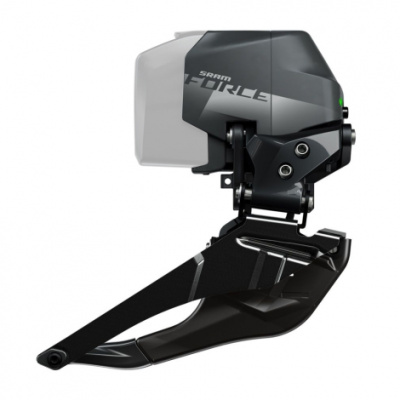
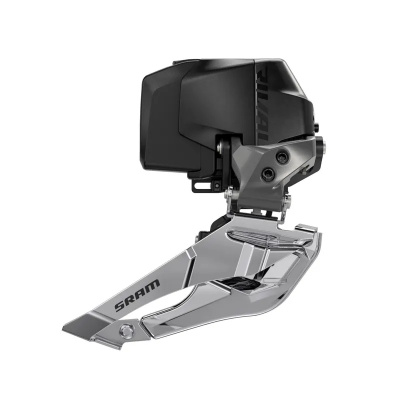
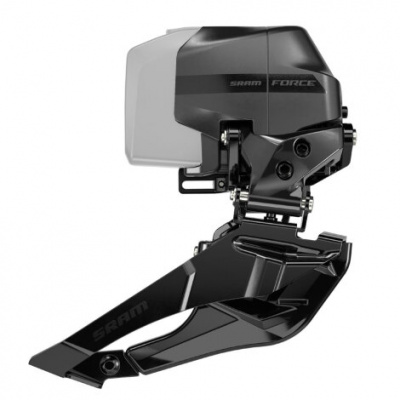
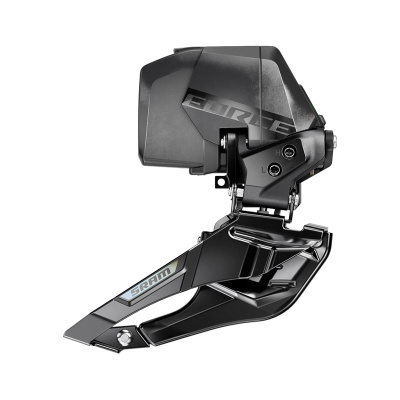
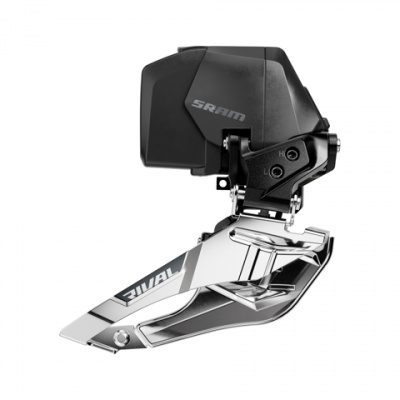
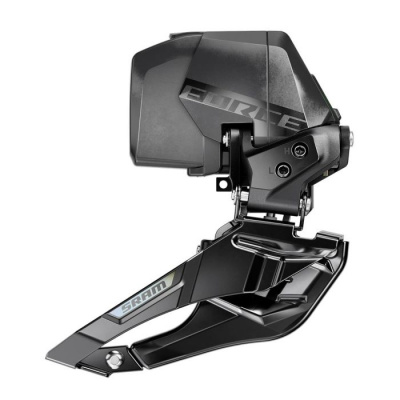
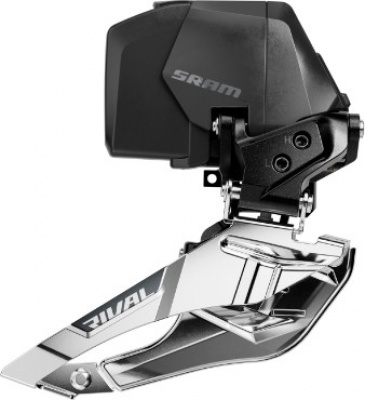
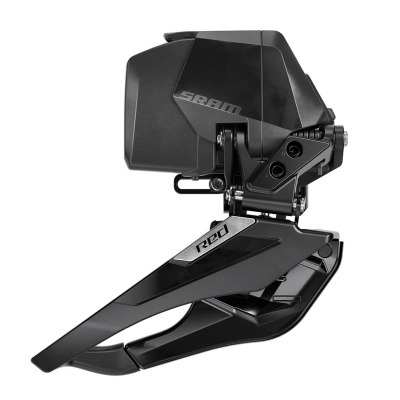
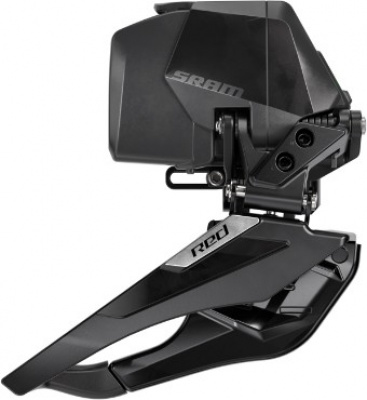
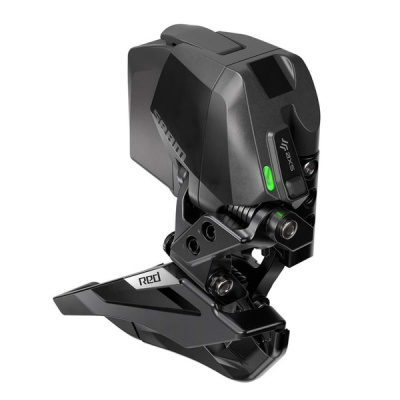
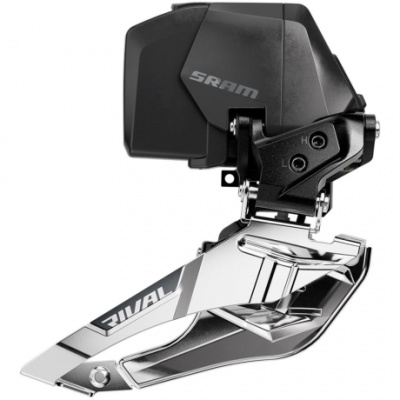
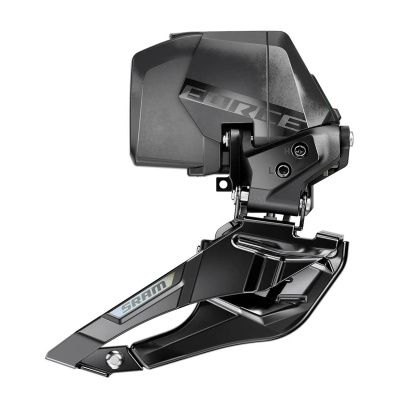
Here's something SRAM don't shout about loudly enough: the wireless motor and Yaw mechanism inside a SRAM Red 12 speed front mech and a SRAM Rival AXS front mech are functionally identical. Shift speed is the same. The AXS protocol response time is the same. What you're paying for as you move up the range is weight, materials, and hardware spec.
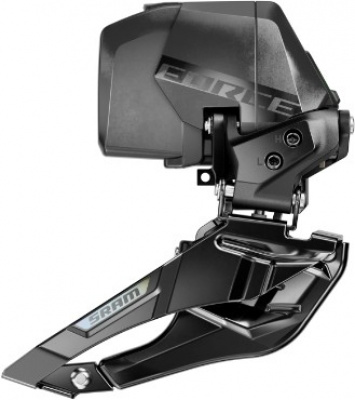
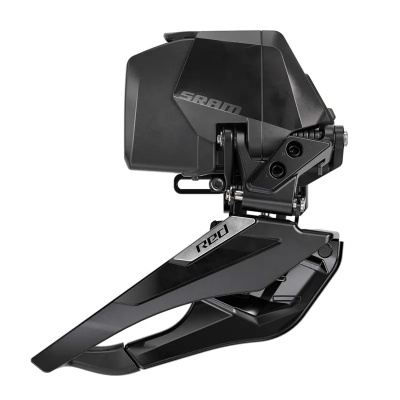
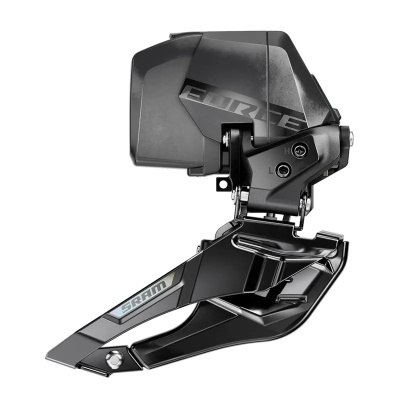
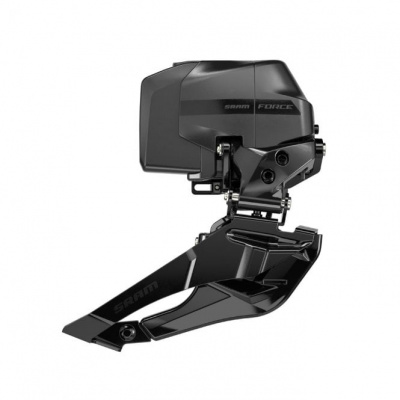
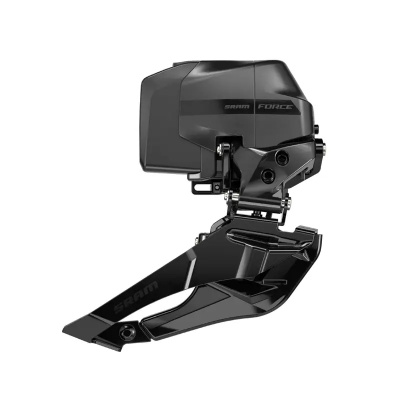
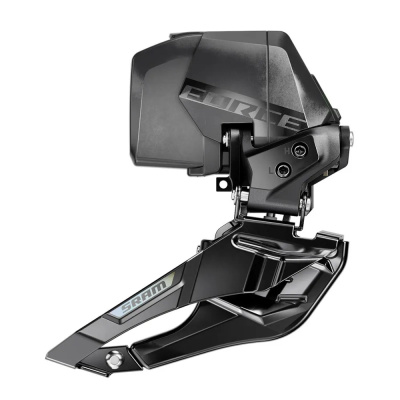
Red uses an aluminium and carbon cage with titanium fixing bolts. It's obsessively light - the choice for riders building a sub-7kg climbing machine or stripping every gram for a sportive. Force swaps the titanium for steel hardware and uses an aluminium cage; it's a touch heavier but measurably more durable under the kind of repeated use a club rider puts in across a winter of training. The SRAM Force eTap front derailleur sits in the middle ground that most riders will find genuinely sensible - you lose very little performance and gain real-world toughness.
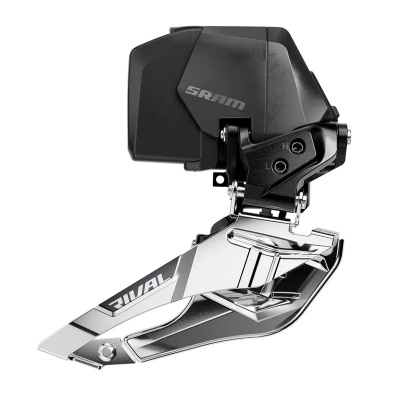
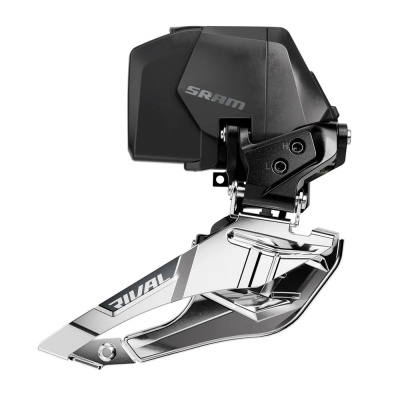
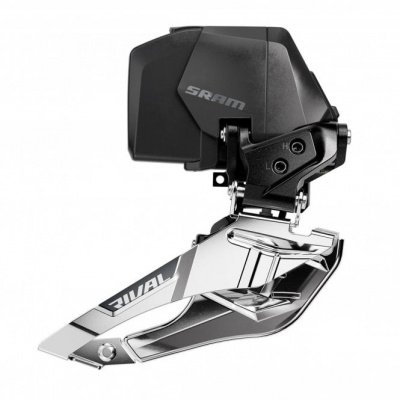
Rival is slightly bulkier in the cage design and uses heavier alloys throughout, but the shift quality that matters - the Yaw rotation, the wireless response, the X-Range compatibility - is all present. For someone doing a SRAM Rival AXS front mech upgrade from mechanical groupsets, the jump in front shift feel will be substantial regardless of the tier. Don't let the price gap convince you Rival is a compromise; for most riders, it genuinely isn't.
Crankset pairing is a separate conversation - if you're building up a complete groupset or need to match chainring sizes, our SRAM chainsets and cranks section covers the combinations in detail.
If you're weighing SRAM against the competition, Shimano 12-speed front derailleurs offer a wired Di2 alternative with a mature ecosystem, while Campagnolo 12-speed front derailleurs suit riders already invested in an Ekar or Super Record setup. Both are worth comparing if you're not locked into AXS yet.
Keeping It Running Through a UK Winter
The eTap AXS system is impressively weather-resistant, but it's not invincible - especially once the roads turn salty in November and don't recover until March. The battery contacts are the weak point. Road salt and wet grit work into the connection points and cause corrosion that produces intermittent shifting or, worse, a dead connection mid-ride. A thin application of dielectric grease on the battery contacts before fitting keeps moisture out without affecting conductivity. Do it at the start of the season, check it monthly if you're riding through winter.
Setup precision matters more with a Yaw derailleur than with a traditional cage design. The chainstay angle and limit screw positions have to be set correctly for the Yaw rotation to work as intended - SRAM's setup tool takes the guesswork out of the cage height and alignment process. It's worth having a look at SRAM's AXS app too, which lets you check battery level, configure shift behaviour, and run firmware updates from your phone. That last point is relevant if you've bought a mech that's been sitting in a box for a while; update the firmware before you head out.
Batteries themselves are interchangeable across the AXS ecosystem - rear derailleur, front derailleur, and dropper post all share the same unit, which is genuinely handy if you're ever caught short. For replacement batteries and charging cradles, our wireless shifting batteries and wireless shifting chargers sections have the current options listed. The SRAM Wide front derailleur gravel variants specifically benefit from a quick pre-ride mud clearance check in the winter months - a clogged cage on a CX course or a muddy bridleway through Dartmoor is a nuisance that costs you nothing to prevent.
SRAM 12 Speed Front Derailleurs FAQs
Are all SRAM AXS front derailleurs cross-compatible?
Yes. Red, Force, and Rival eTap front derailleurs all run on the same AXS wireless protocol, so you can mix tiers without issue. A Rival front mech will pair cleanly with Red AXS shifters, for example. The ecosystem is deliberately open across the 12-speed road range.
When do I need a SRAM 'Wide' front derailleur?
You need the Wide version if your bike runs a 43/30T crankset or tyres wider than roughly 35c. It shifts the cage 2.5mm outward to match the wider chainline and gives enough clearance for up to 45c rubber - essential on gravel or cyclocross builds where mud clearance is a real concern.
Does the SRAM 12-speed front derailleur come with a battery?
No - SRAM eTap AXS front derailleurs are sold as bare units. The battery and charging cradle are purchased separately. The upside is that SRAM's AXS batteries are interchangeable across the whole ecosystem, so if you're already running an AXS rear mech you already have compatible hardware.
How do you set up a SRAM AXS front derailleur?
Use SRAM's setup tool to set cage height - the outer plate should sit 1 - 3mm above the big ring teeth. Dial in the high and low limit screws with the chain on the relevant ring and cassette extremes, then confirm Yaw alignment. The AXS app lets you fine-tune electronically and run a firmware update before your first ride.