
BTWIN Pannier Racks
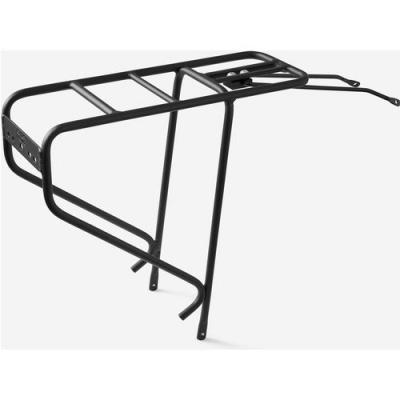
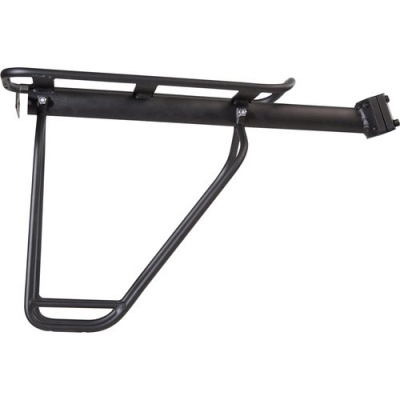
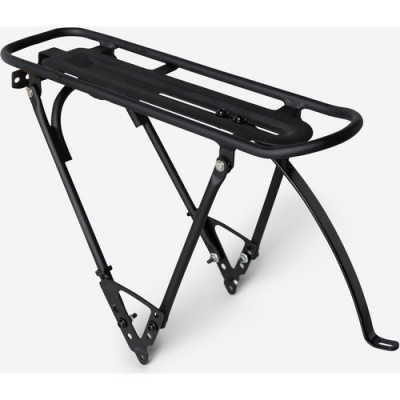
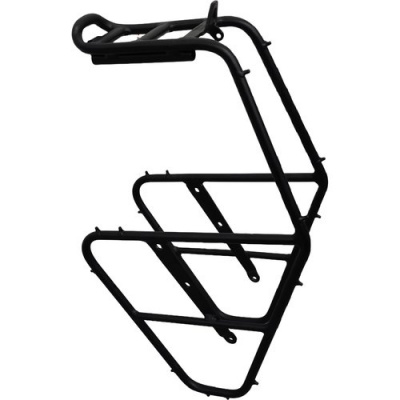
BTWIN pannier racks do one thing that a rucksack simply can't: they move the weight off your shoulders and onto the bike, where it belongs. Your handling improves, your back stops complaining, and longer rides become genuinely manageable. Whether you're grinding through a winter commute or loading up for a weekend away, there's a rack in the BTWIN range to suit your setup.
The range covers everything from stripped-back alloy racks for lighter hybrid use to heavier-duty options rated to carry 27kg - enough for fully loaded panniers or a compatible child seat. Higher-spec models feature the B'Clip system, BTWIN's quick-release interface for snapping compatible bags and baskets onto the deck without fiddling with hooks. Compatibility spans 26-28 inch wheels across most models, with adjustable telescopic stays that flex to fit multiple frame sizes on a single chassis.
If you're running disc brakes, don't just grab any rack - you'll need to check for disc-specific clearance on the lower legs. We'll walk you through all of that below. And if it's the bags you're after rather than the rack itself, head over to our BTWIN pannier bags page.
Prices and availability can change quickly. Delivery charges are not always included in listed prices.
Final price, stock status and delivery terms are set by retailer. We may receive a commission on purchases made.
Checking Compatibility Before You Buy
Fitting a pannier rack sounds straightforward until you're standing in the car park holding a rack that won't mount to your frame. The first thing to check is whether your bike has threaded frame eyelets - those small, tapped holes near the rear axle dropouts and along the upper seat stays. These braze-ons are what the rack bolts directly into. Most hybrids, tourers, and flat-bar commuters have them. Many road bikes and some budget machines don't.
If your frame has eyelets at the dropouts but nothing at the top of the seat stays, P-clips are your friend. These rubber-lined clamps wrap around the seat stay tubes and give the rack's upper legs somewhere to anchor. They're not as rigid as a bolted eyelet, but for lighter loads they work fine. Just check the stay diameter - oversized tubes on some modern frames can make standard P-clips a tight or impossible fit.
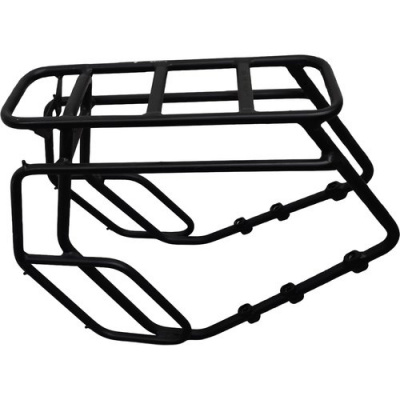
Disc brake users need to be particularly careful. Bikes with outboard mechanical or hydraulic disc calipers on the non-drive side require a disc brake clearance-rated BTWIN rack. These models have wider, flared lower legs that arc around the caliper body rather than fouling against it. Trying to force a standard rack onto a disc bike is asking for a rattling, rubbing mess - or a bent caliper mount. BTWIN's product listings flag disc compatibility clearly, so check that box before adding to cart. For comparison, Blackburn pannier racks and SKS pannier racks follow similar compatibility conventions, so it's worth cross-referencing if you're weighing up your options.
How the BTWIN Range Breaks Down
BTWIN structures its rack lineup in numbered tiers, and the differences between them are more meaningful than the pricing gap might suggest. The 100 series is the entry point - tubular alloy construction, basic pannier hooks on the sides, and a lower load rating suited to everyday commuting with a single bag. Solid. Unpretentious. Gets the job done if you're not carrying much.
Step up to the 500 and 900 series and the spec sheet changes noticeably. These racks carry a max weight of 27kg, which opens up serious touring use and makes them compatible with approved child seats. The upper tiers also bring in the B'Clip system - BTWIN's proprietary quick-release deck interface. Snap a compatible basket or top-bag onto the platform without unscrewing a single bolt. For daily commuters who swap between a pannier and a rack-top bag depending on the day, that's genuinely useful rather than just a marketing add-on.
Integrated rear light mounting plates appear on the higher-spec models too - a small detail, but one that matters when you're trying to keep a clean, rattle-free setup on a BTWIN hybrid bike or a BTWIN folding bike. Speaking of folding bikes - if that's your ride, double-check the rack is listed as folding-bike compatible, since the geometry and dropout style on folders can differ from a standard frame. The adjustable telescopic stays help here, stretching to accommodate wheel sizes from 24-inch up to 29er on a single rack chassis, which gives you genuine flexibility across different bikes in a household.
If you want to see how BTWIN's range stacks up against the broader market, Cube pannier racks and Acid pannier racks are worth a look for comparison - particularly if you're already riding a bike from either brand and want a factory-fit aesthetic.
Keeping Everything Solid Through a UK Winter
British winters are hard on rack hardware. Road salt and grit work their way into the interface between steel mounting bolts and alloy frame eyelets, and galvanic corrosion does the rest. Bolt removal twelve months later can go from a five-minute job to a half-hour drama involving heat and bad language.
The fix is simple and costs almost nothing: apply copper slip or marine grease to the threads of every mounting bolt before installation. It creates a barrier against moisture and salt, and means the bolts will actually come out again when you want them to. Don't skip this step, especially on aluminium frames where the corrosion risk is highest.
Once fitted, give the rack a torque check after your first 50 miles of loaded riding. The vibration from rough UK roads - and most of them are rough - can cause bolts to back out slightly, and a loose rack under load is a wheel-rubbing, pannier-swaying problem waiting to happen. Most BTWIN racks specify 4 - 5Nm at the mounting points; a small torque wrench makes this quick and exact.
One more thing: wherever your pannier hooks grip the rack rails, wrap a couple of turns of electrical tape around the rail first. The anodized finish on alloy racks wears away faster than you'd expect under the constant friction of hook attachment and removal, and once the finish is gone, corrosion follows. A strip of tape costs nothing and adds months of life to the rack's appearance. Pair the rack with a set of BTWIN mudguards and you've got a commuting setup that handles UK weather without drama.
BTWIN Pannier Racks FAQs
How do I know if a BTWIN pannier rack will fit my bike?
You need threaded eyelets on the frame - near the rear axle dropouts and on the upper seat stays. No upper eyelets? P-clips can clamp around the seat stay tubes as an alternative. Check your stay diameter first, as oversized tubes on modern frames can make standard P-clips a poor fit.
Can you put a BTWIN pannier rack on a bike with disc brakes?
Yes, but only if you choose a disc-specific model. These have wider, flared lower legs designed to clear the disc caliper on the non-drive side. Fitting a standard rack to a disc bike risks fouling the caliper body - always confirm disc compatibility in the product listing before buying.
What is the maximum weight limit for a BTWIN rear rack?
Most BTWIN commuter and touring racks in the 500 and 900 series are rated to 27kg, in line with ISO load standards. That's enough for heavy panniers or a compatible child seat. Entry-level 100 series racks carry a lower rating, so always check the stamped limit on the specific model you're considering.