
Brompton Pedals
Brompton pedals are one of those components where getting it wrong doesn't just cost you performance - it costs you the fold. That compact, briefcase-flat package that makes the Brompton what it is depends on every part pulling its weight, and the left-hand pedal is right at the heart of it. Fit the wrong one and you're either scratching your frame or carrying a bike that won't pack down properly on the Tube.
Whether you're replacing a worn standard folding pedal, stepping up to the Superlight quick-release system with its titanium axle, or sourcing the Advance Roller pedals that come spec'd on the P-Line and T-Line, the options break down more clearly than you might expect. Brompton cranks run a standard 9/16 inch thread, so compatibility with the right-hand pedal is rarely a headache. The left side is where you need to pay attention - it must fold or quick-release, full stop.
For daily London commuting, wet Edinburgh cobbles, or a Bristol - Bath Rail Path run in February drizzle, grip and bearing durability matter as much as the fold itself. We've pulled together everything you need to choose the right pedal, keep it running cleanly, and avoid the mistakes that send riders back to the workshop.
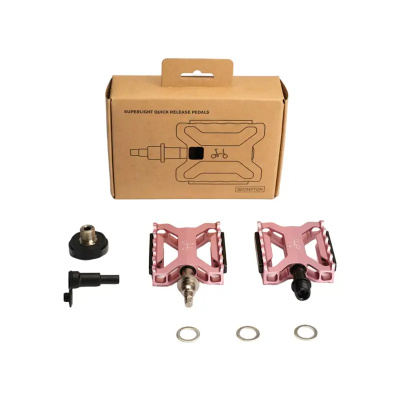
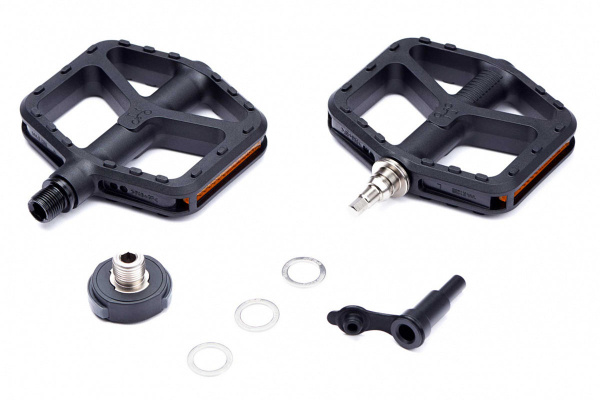
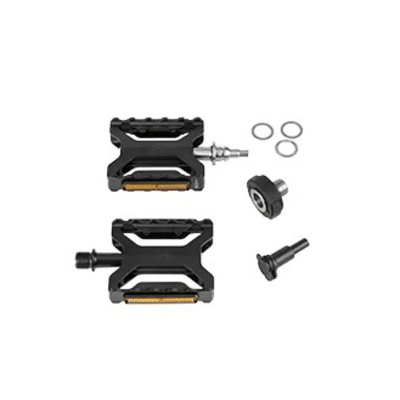
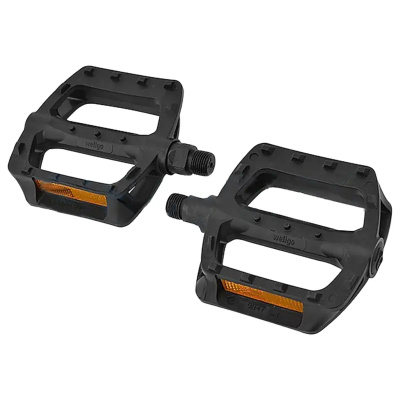
Prices and availability can change quickly. Delivery charges are not always included in listed prices.
Final price, stock status and delivery terms are set by retailer. We may receive a commission on purchases made.
What Actually Fits: Thread Standards and the Left-Pedal Rule
The good news first: Brompton cranks use a standard 9/16 inch thread, the same as the vast majority of road, commuter, and flat pedals on the market. So for the right-hand side, almost anything goes - MKS pedals are a popular flat option among Brompton commuters for exactly this reason, with their slim profile and reliable bearings playing nicely with the platform.
The left side is a different conversation entirely. It runs a reverse thread - clockwise to loosen, counter-clockwise to tighten - which catches out plenty of home mechanics. More importantly, any left pedal you fit must either fold flat or be quick-release. A standard non-folding left pedal will stick out and block the fold, and on a Brompton that's not a minor inconvenience, it's a fundamental problem. Don't do it.
On removal, the generation of your bike determines your tools. Older Bromptons need a 24mm socket to get the folding pedal off the crank arm. Newer models shifted to an 8mm Allen key fitting instead. Worth checking before you start, otherwise you'll be hunting through the toolbox twice.
If you're considering a wider aftermarket flat pedal for the right side - say something from DMR for grip in wetter conditions - that's entirely workable. Just keep the left side Brompton-specific or a confirmed folding/QR option, and you're fine. The Brompton chainset and crank is also worth inspecting at the same time; worn crank threads are a more common cause of pedal creaks than the pedals themselves.
Standard, Superlight, and Advance: Picking Your Level
Brompton's pedal range splits into three distinct tiers, and the differences aren't just about weight.
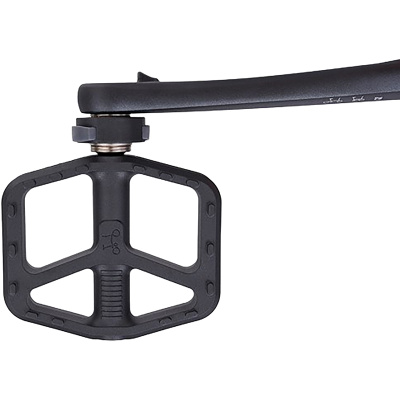
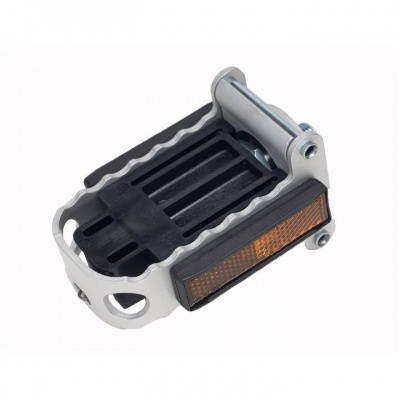
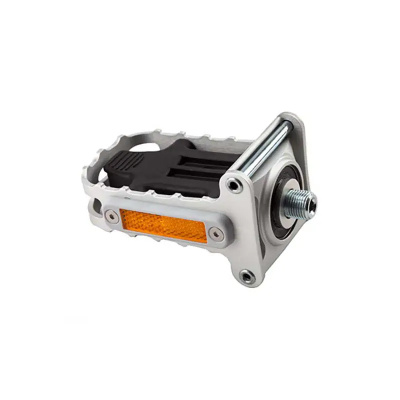
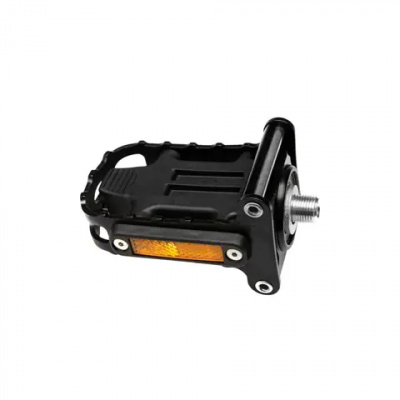
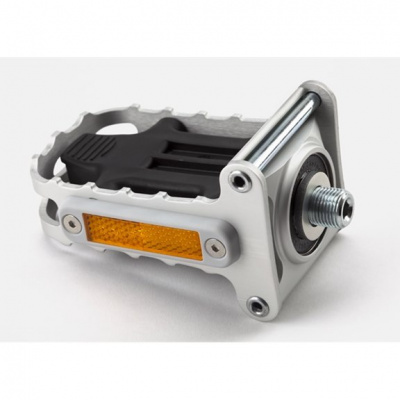
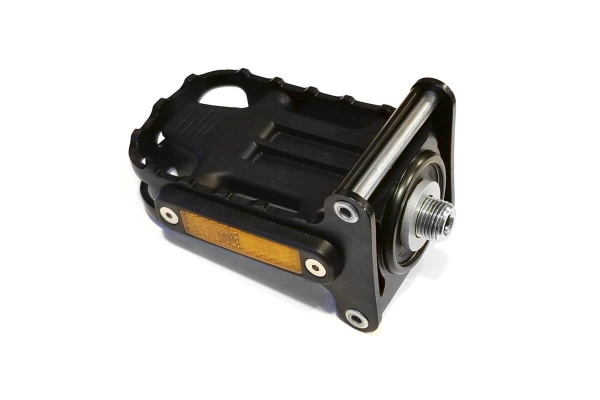
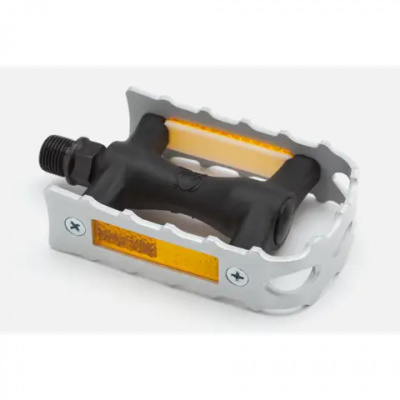
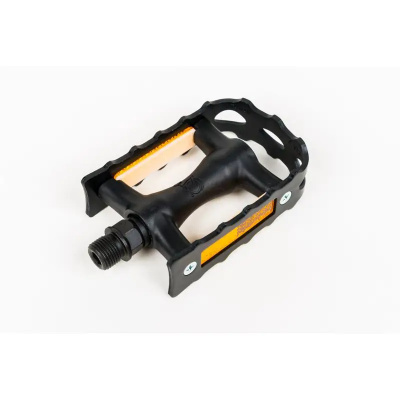
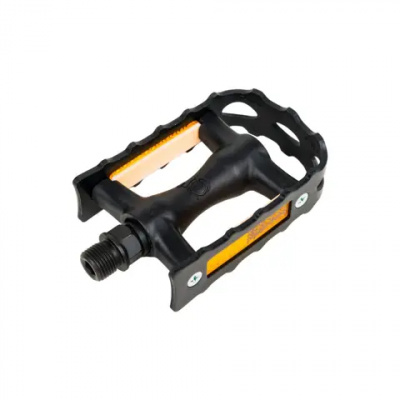
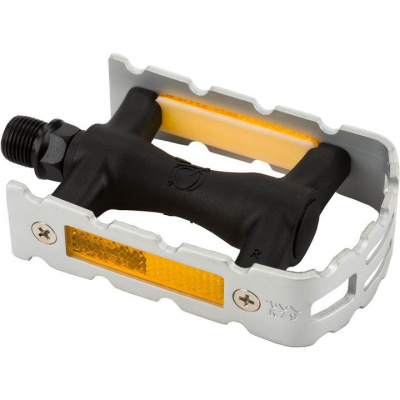
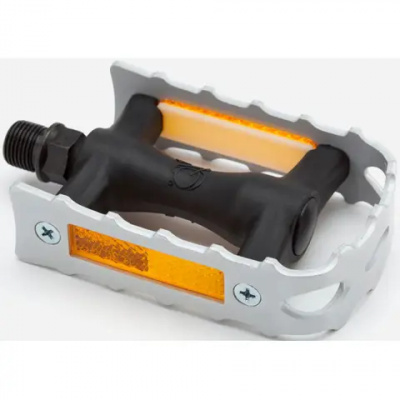
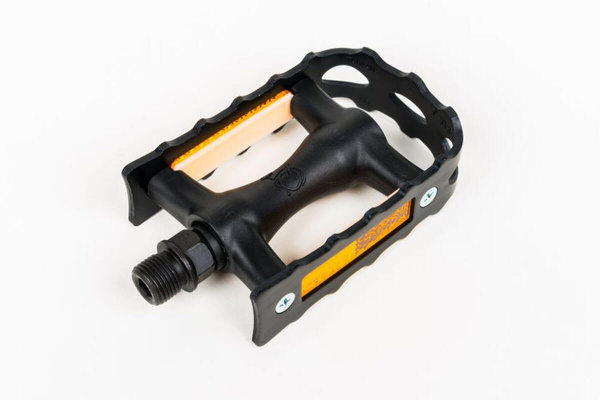
The standard resin folding pedal is what most Bromptons ship with. It's chunky, it's durable, and it does the job reliably for years of commuter use. The Brompton push-in folding mechanism - a spring-loaded system that clicks the pedal body flat against the crank - is straightforward to use one-handed and holds its position firmly. It's not light, but on a bike you're carrying through a ticket barrier or stashing under a desk, bombproof simplicity has real value.
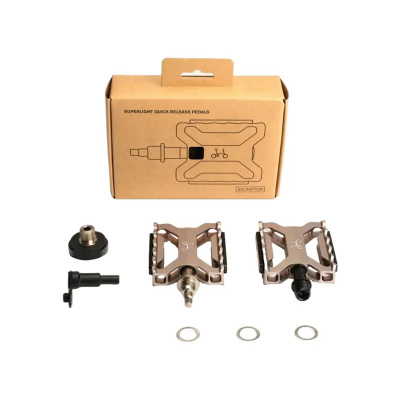
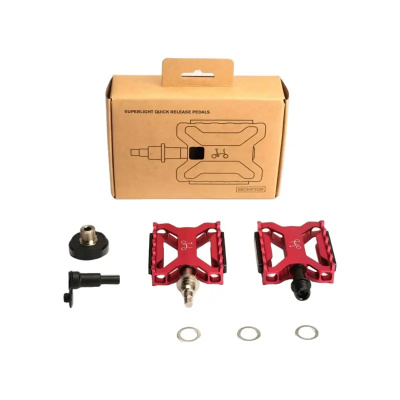
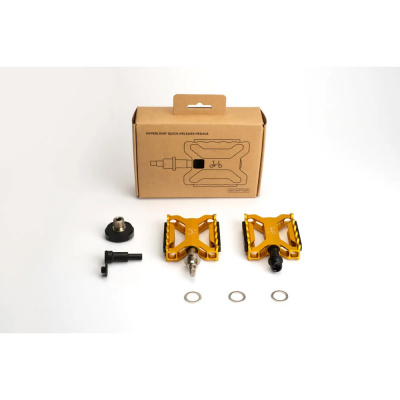
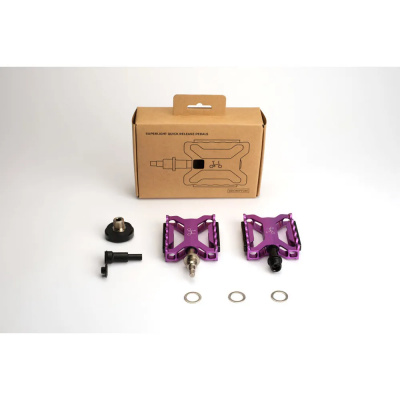
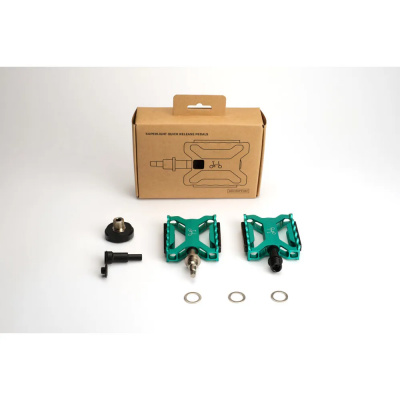
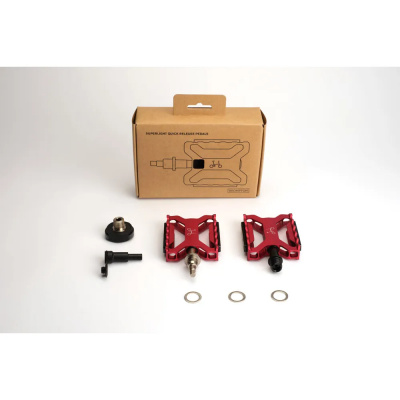
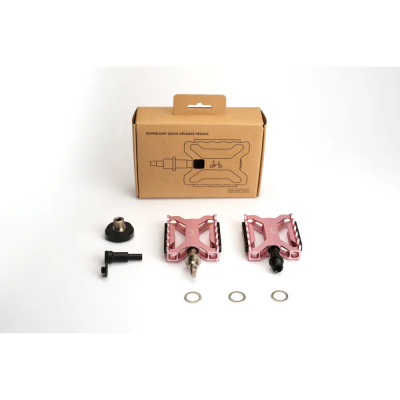
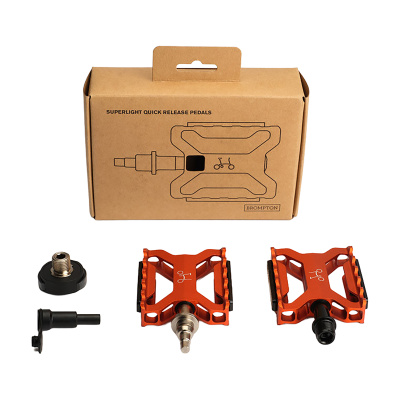
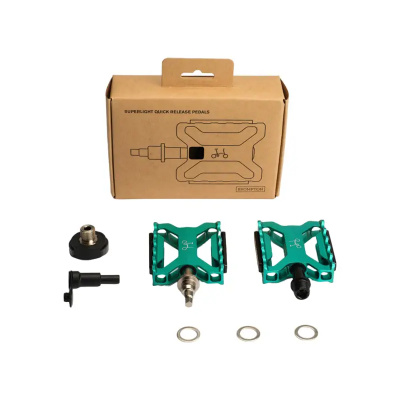
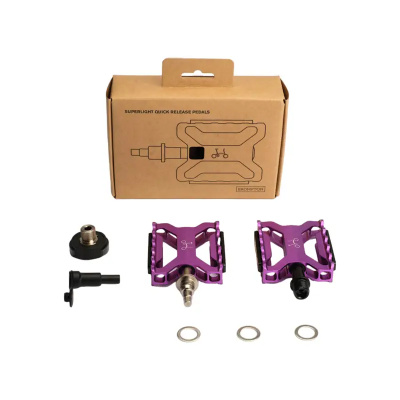
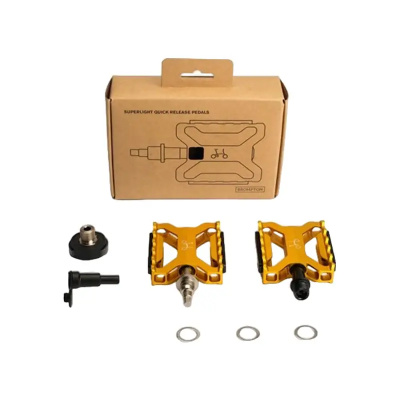
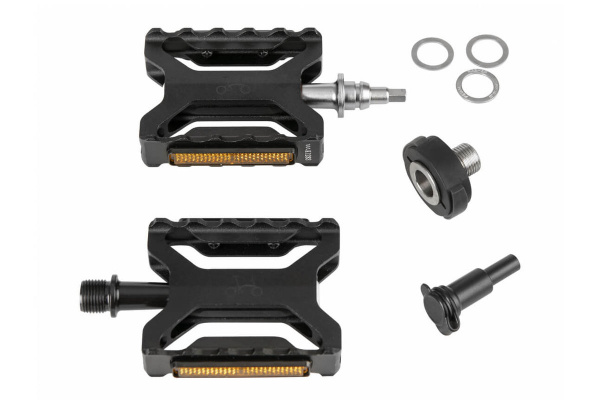
Step up to the Superlight quick-release left pedal and the calculus changes. The QR interface means the left pedal detaches completely rather than folding flush - handy if you're packing the bike into a bag or flying with it, less so if you're just locking it outside a café. The titanium axle on the Superlight is the headline feature; it saves meaningful grams and resists corrosion better than steel in British salt-and-grit conditions. The trade-off is cost, and the QR interface adds a small but nonzero risk of forgetting to reattach it before you ride - ask anyone who's done it.
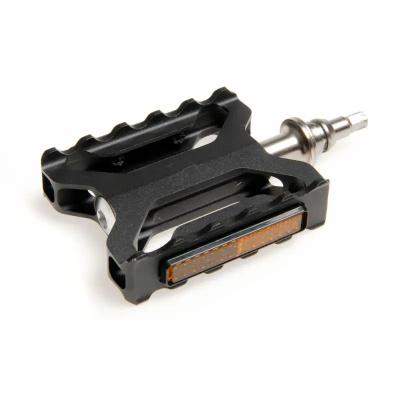
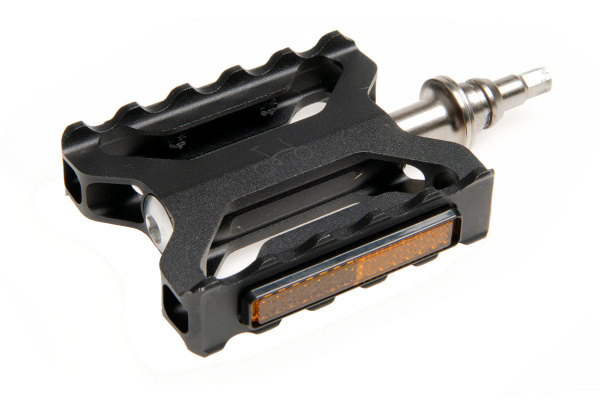
At the top of the range sit the Advance Roller pedals, spec'd on the T-Line and P-Line models. These use a roller-textured alloy platform designed for grip without aggressive pins, suiting the smooth-soled commuter shoes most P-Line and T-Line riders favour. They're not designed for stiff MTB shoes or clipless systems - the platform geometry simply doesn't suit it - but for their intended use they're polished and precise. The sealed bearings in the Advance Roller pedals are notably better at resisting water ingress than the standard units, which matters when you're rolling through puddles on the way to the office.
Looking for replacement bearings, reflectors, or titanium bolts for your existing setup? Head over to our dedicated Brompton Pedal Spares page for the small parts that keep your current pedals running. For the bigger picture on the bike itself, the full Brompton folding bike range is worth a look if you're weighing up a new build versus a component refresh.
Keeping Them Running Through a UK Winter
UK road grit is relentless on the folding mechanism. The spring inside the standard folding pedal is the first thing to seize when road salt works its way in, and once it's stiff you'll be pushing the pedal flat with your thumb every time you fold - irritating at best, damaging to the spring seat at worst.
The fix is regular attention rather than expensive replacements. A light penetrant sprayed into the folding spring pivot every month or so during winter keeps things moving. Follow it with a thin re-grease once the penetrant has done its job and dried off; something like a light marine grease works well in the hinge. Don't blast it with a pressure washer - that strips the factory grease from the sealed bearings on the axle faster than anything else and is the most common cause of the clicking that plagues neglected commuter pedals.
That clicking, when it appears, is almost always one of two things: worn internal bearings with lateral play on the axle, or grit trapped in the folding spring creating a rhythmic tick on each pedal stroke. Neither is catastrophic early on, but left alone both will worsen. A strip-down, clean, and fresh grease on the bearing surfaces often resolves the spring click entirely. If there's noticeable side-to-side wobble in the pedal body, the bearing cartridge is on borrowed time and worth replacing before it damages the crank arm thread.
Checking the Q-factor while you're in there is useful too - a bent axle from a kerb strike will show up as an uneven pedal stance and can cause knee discomfort before it's obvious to the eye. Brompton's standard axle length keeps Q-factor relatively narrow, which suits the upright commuter position well. The bottom bracket is worth inspecting at the same service interval; worn BB bearings and worn pedal bearings produce similar symptoms and it's easy to mistake one for the other.
Brompton Pedals FAQs
Can you put any pedals on a Brompton?
For the right-hand side, yes - Brompton cranks use a standard 9/16 inch thread, so most aftermarket pedals will fit without issue. The left side is the constraint: it must fold or be quick-release, otherwise the bike won't fold down to its proper compact dimensions. A standard non-folding left pedal will also risk scratching the frame on the fold.
How do you remove a Brompton folding pedal?
The tool you need depends on which generation of Brompton you have. Older bikes use a 24mm socket; newer models take an 8mm Allen key into the axle end. The critical thing to remember: the left pedal is reverse-threaded, so you turn it clockwise to loosen it. Going the wrong way just tightens it further and risks damaging the crank arm.
Why does my Brompton folding pedal click?
Nine times out of ten it's either grit in the folding spring mechanism or worn bearings with play developing on the axle. A strip-down, clean, and re-grease of the spring pivot usually sorts the first cause. If there's noticeable sideways wobble in the pedal body, the bearing cartridge needs replacing - don't leave it, as a damaged bearing will eventually chew into the crank arm thread.