
Bontrager Track Pumps
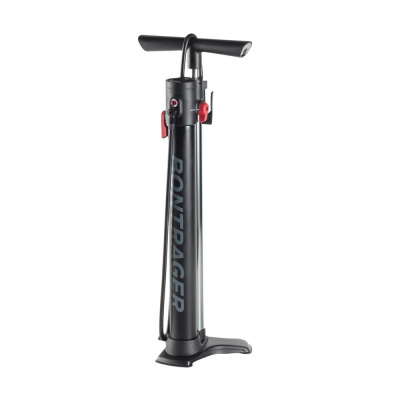
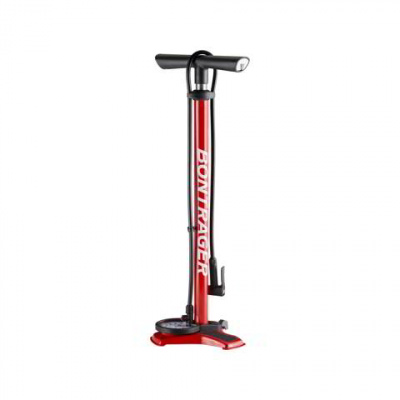
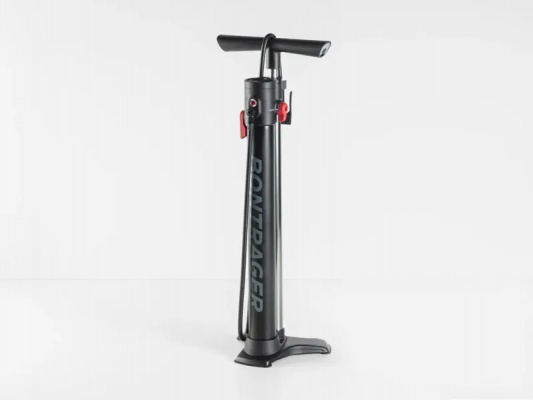
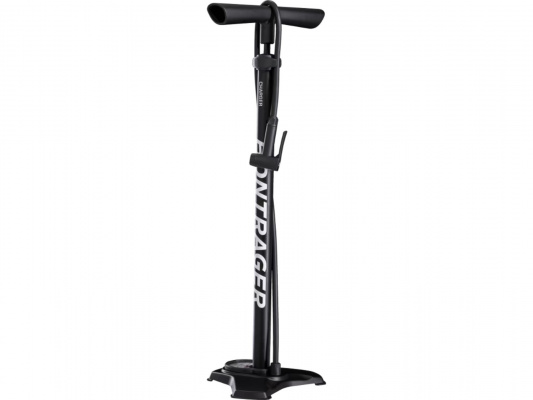
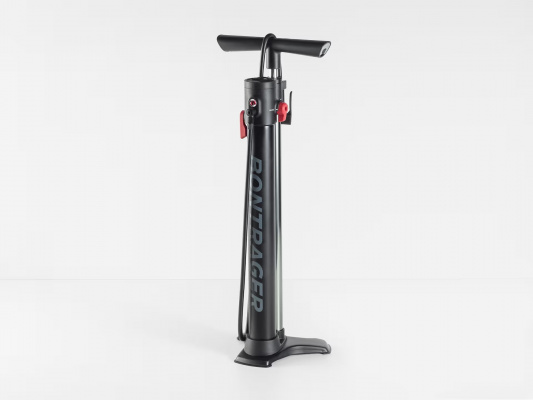
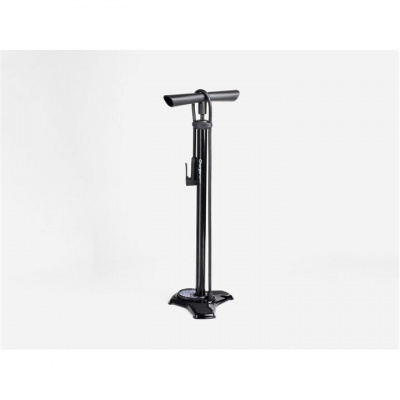
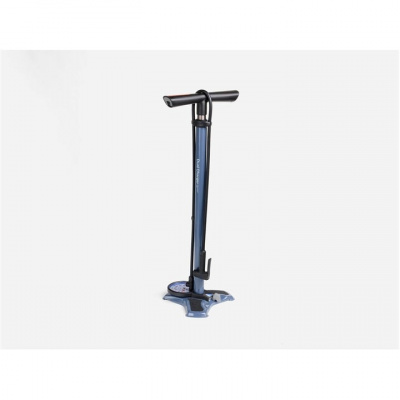
Bontrager track pumps are the kind of workshop staple you stop noticing - right up until you try to get by without one. Built around steel barrels and genuinely accurate gauges, they handle everything from 120 PSI road tyres to the sort of low-pressure, high-volume MTB setups you'd run on a wet Peak District trail day. The proprietary Auto-Select head means no fumbling with internals when you switch between a Presta-valved road bike and a Schrader-valved kids' hybrid - the head adjusts automatically. If you're running tubeless, the TLR Flash Charger stores a pressurised blast of air and releases it in one shot to seat even the most stubborn beads, no compressor required. For riders who bounce between disciplines - gravel one weekend, trail centre the next - the Dual Charger's switchable high-volume and high-pressure modes mean one pump covers both without compromise. These aren't flashy tools, but they're the best Bontrager floor pump options for riders who want accuracy and reliability built in rather than bolted on. Compare UK prices across the range below.
Prices and availability can change quickly. Delivery charges are not always included in listed prices.
Final price, stock status and delivery terms are set by retailer. We may receive a commission on purchases made.
Valve Compatibility and Tubeless Tech
The Auto-Select head is the detail that makes a real difference in a mixed-fleet garage. Most pump heads still require you to unscrew the chuck, flip the rubber grommet, and reassemble every time you swap between Presta and Schrader valves. Bontrager's head reads the valve and grips it correctly on its own - push it on, lock the lever, pump. That's it. No lost grommets rolling under the workbench at 7am before a club run.
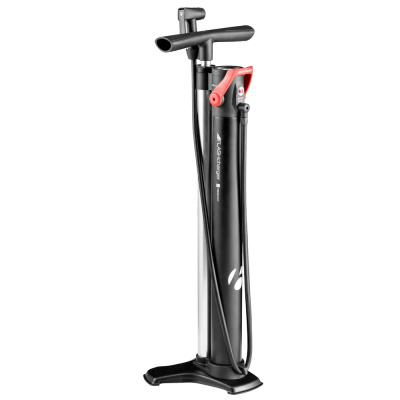
For tubeless setups, the Bontrager TLR Flash Charger is where things get genuinely clever. It works by pre-charging a secondary internal chamber to a high pressure - think of it as a built-in burst reservoir - then releasing that stored air in one rapid hit when you open the bleed valve. That sudden surge of volume is what forces the tyre bead to jump the rim's safety hump and seat properly. Without it, seating a tight tubeless tyre on a standard pump often means frantic, lung-emptying strokes while sealant goes everywhere. The Flash Charger turns that into a straightforward process, which matters whether you're fitting Bontrager MTB tyres or road rubber at home. Pair it with Bontrager tubeless valves for a system that's been designed to work together from the start.
Looking for on-the-ride inflation? The track pump stays at home - for trailside or roadside repairs, check out our ranges of Bontrager Mini Pumps, Shock Pumps, and CO2 Inflators.
Charger, Dual Charger, TLR Flash Charger: Which One Do You Actually Need?
Bontrager structures its floor pump range in three clear tiers, and the differences are worth understanding rather than just defaulting to the cheapest or most expensive.
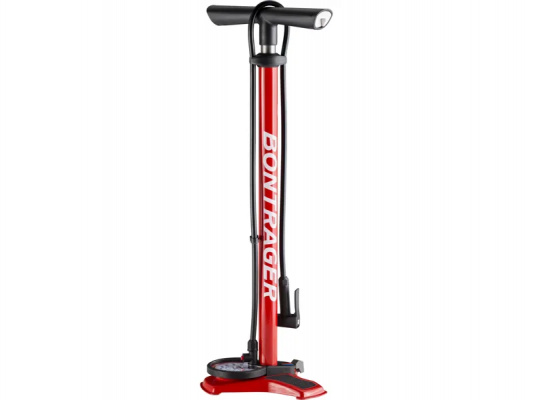
The base Charger is exactly what most riders need. Solid steel barrel, reliable gauge reading in both PSI and Bar, and the Auto-Select head as standard. It handles road, gravel, and MTB pressures without fuss. If you've got one bike and a simple tube-and-tyre setup, this does the job cleanly. No quirks, no complexity.
The Dual Charger adds a mode-switch that toggles the pump between high-volume and high-pressure operation. In high-volume mode, each stroke moves significantly more air - useful when you're inflating a 2.4-inch MTB tyre from flat and don't want to be there all morning. Switch to high-pressure mode and the pump becomes more efficient at the upper end of the range, where you need real mechanical advantage to hit 100 PSI-plus on a 25mm road tyre. It's a genuinely useful feature if you run both road and MTB, rather than a gimmick. Think of it as a pump for the Bontrager pump for road and MTB rider who doesn't want two pieces of kit on the shelf.
The TLR Flash Charger sits at the top of the range and justifies its position with the pressurised chamber technology described above. If you're running tubeless on any of your bikes - road, gravel, trail - and you're setting up or re-seating tyres at home rather than at a shop with a compressor, the Flash Charger removes the biggest friction point in that process. The extra investment makes sense. If you're still on inner tubes across the board, the base Charger or Dual Charger will serve you better for less. Alternatives from Topeak and Lezyne are worth a look at this level too, but Bontrager's tubeless integration is tighter if you're already in the Trek/Bontrager ecosystem.
Keeping Your Pump Working Through UK Winters
A track pump living in a cold, damp British shed - and let's be honest, most of them do - takes more punishment than it looks like. Rubber seals are the weak point. The main plunger seal and the grommet inside the pump head both dry out over time, and the cycle of cold nights and occasional mild days accelerates that process faster than a heated workshop would.
The fix is straightforward and takes two minutes. Every few months, pull the pump head off and give the rubber grommet a wipe with a clean rag - remove any grit that's got in there. Then apply a small amount of silicone spray or silicone grease to the grommet itself. Don't use WD-40 or petroleum-based lubricants; they degrade rubber. Same principle applies to the main barrel plunger: pull the handle to full extension, wipe the shaft clean, and apply a thin film of silicone. You'll feel the difference immediately - smoother stroke, better seal at pressure.
If the pump head starts leaking air at the valve under load, that's usually the grommet telling you it needs replacing rather than just lubricating. Bontrager pump head internals are available as replacement parts. Catching it early means the pump body itself lasts indefinitely. While you're doing maintenance, it's also worth checking whether your Bontrager inner tubes are holding pressure correctly - a slow leak from a tube can easily get misdiagnosed as a pump fault. Brands like SKS and Park Tool also offer replacement pump head parts if you're running a mixed workshop setup.
One last thing: if your gauge is reading inconsistently, check the small bleed valve on the head - it occasionally gets stuck slightly open, which bleeds pressure during the stroke. A quick push and release usually resets it.
Bontrager Track Pumps FAQs
How do you use a Bontrager track pump on a Presta valve?
Most current Bontrager pumps use an Auto-Select head that handles Presta valves without any internal swapping. Unscrew the valve cap and open the Presta valve core, push the pump head firmly onto the valve, then flip the lock lever upward to seal it. Pump as normal. The head grips the narrower Presta valve automatically - no grommet fiddling required.
Can a Bontrager track pump seat tubeless tyres?
Standard Bontrager floor pumps can seat tubeless tyres with quick, sustained pumping, but results depend on the tyre and rim combination. For reliable bead seating at home, the Bontrager TLR Flash Charger is the purpose-built answer - it stores air in a pressurised secondary chamber and releases it in a single burst, replicating what a workshop compressor does without needing one.
Why is my Bontrager pump leaking air at the valve?
Nine times out of ten, it's the rubber grommet inside the pump head. Cold UK garage storage dries it out, and it loses its seal under pressure. Try cleaning the grommet and applying a small amount of silicone lubricant first - that often brings it back. If the leak continues, the grommet needs replacing. Replacement pump head internals are available as spare parts.