
BMC Road Wheels
BMC road wheels sit at the sharper end of Swiss engineering - built around the same Carbon Racing Design (CRD) philosophy that underpins the Teammachine and Timemachine race programmes. Whether you're eyeing a set of deep-section CRD carbon hoops or a more practical alloy training wheelset, there's a clear logic to how BMC structures its wheel range, and it's worth understanding before you buy.
Modern BMC wheels are built wide. Internal rim widths of 21mm or more are now standard across the CRD line, which means they're optimised for 28c to 32c tyres - the kind of sizing that makes a real difference on the potholed B-roads that make up most UK riding. Pair that with tubeless-ready rim beds and you've got a setup that cuts rolling resistance and adds a meaningful buffer against pinch flats.
Disc brake compatibility is baked in throughout the range, with Centerlock rotor mounting and 12mm thru-axle spacing front and rear. That matters if you're upgrading an existing BMC road bike or fitting these to a disc-ready frame from another brand. If you need replacement parts for wheels you already own, our dedicated freehub and skewer pages are the better starting point.
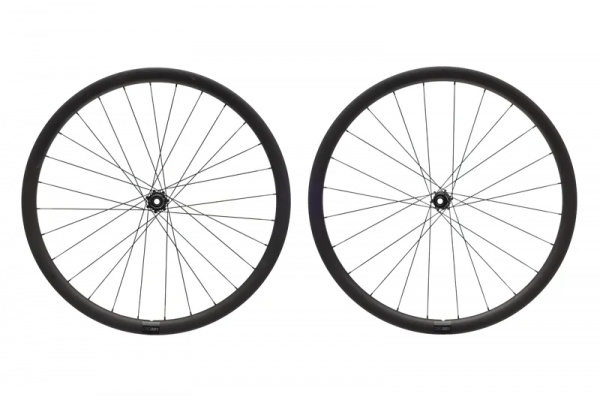
Prices and availability can change quickly. Delivery charges are not always included in listed prices.
Final price, stock status and delivery terms are set by retailer. We may receive a commission on purchases made.
Fitting BMC Wheels: Axles, Rotors, and Freehub Bodies
Get the compatibility sorted before anything else - it's the kind of thing that's easy to overlook until the wheels arrive and nothing lines up. BMC road wheels are disc-only across the CRD range, using Centerlock disc rotor mounting as standard. That's the splined interface rather than the six-bolt pattern, so you'll need either Centerlock rotors or an adapter ring if your current rotors are six-bolt.
Axle spacing follows modern road disc convention: 12mm thru-axle at both ends, with 12x100mm up front and 12x142mm at the rear. Check your frame and fork specs before ordering - older disc road bikes occasionally ran 15mm front axles, and those aren't compatible here.
Freehub body options typically cover Shimano HG (11-speed), SRAM XDR (12-speed), and Campagnolo N3W depending on the model. If you're running SRAM AXS or a 12-speed Shimano groupset, confirm the correct freehub variant at point of purchase - swapping bodies later is straightforward on DT Swiss-based hubs, but it's an extra step and cost you don't need. The wide internal rim width of 21mm-plus also dictates tyre choice: you'll get the best performance and tyre shape with 28c or wider. Running a narrow 23c on these rims isn't advised and will compromise the tyre's casing geometry.
CRD Carbon vs. Alloy: How the Range Stacks Up
BMC's Carbon Racing Design naming does the heavy lifting in terms of product hierarchy. The CRD numbering broadly reflects rim depth and tier - lower numbers tend to indicate shallower, lighter climbing-focused profiles, while higher numbers point toward deeper aero profile sections optimised for flat and rolling roads. A CRD-35-style wheel sits in a different conversation to a CRD-50, and the intended use case shifts accordingly.
At the top of the carbon range, BMC integrates DT Swiss internals - specifically the Ratchet EXP freehub system on premium models. That's a magnetic, spring-loaded ratchet mechanism rather than the traditional pawl-and-spring setup you'll find on cheaper hubs. The practical upside is faster freehub engagement - useful when you're sprinting out of a corner and need immediate power transfer - and better long-term durability because there are fewer small parts to wear or corrode. Mid-tier CRD wheels and entry-level alloy options use standard pawl systems, which are perfectly reliable but don't offer the same engagement speed or serviceability.
The specific carbon layups across the CRD range are engineered to balance two things that don't naturally coexist: radial compliance (the vertical flex that absorbs road buzz) and lateral stiffness (the rigidity that turns power directly into forward motion). It's a genuine engineering trade-off, and BMC's approach leans toward stiffness under load without sacrificing all road feel - which is roughly what you'd expect from wheels designed around race geometry. If pure vibration damping is the priority, Fulcrum road wheels offer some alloy options with a slightly more forgiving character for sportive use. For riders who want to compare deep-section carbon alternatives, ENVE road wheels sit at the premium end with their own approach to layup and rim shaping.
One practical note on deep-section CRD wheels: anything over 50mm rim depth will feel lively in crosswinds on exposed coastal or moorland roads. That's not a flaw specific to BMC - it's physics - but worth factoring in if your regular routes include open ridge lines or seafront stretches. A shallower 35mm-ish profile is a more versatile choice for mixed UK riding.
Keeping BMC Wheels Running Through a UK Winter
A British winter will find the weakest point in any wheelset. Grit, salt, and standing water get into bearings faster than most riders expect, and the hubs are the first thing to suffer. The DT Swiss-based hubs used across the CRD range use double-sealed cartridge bearings, which hold up well - but they're not maintenance-free. Strip and regrease the hub internals at least once a season if you're riding through winter regularly. Leave it too long and you'll feel it as drag before you notice any play, by which point the bearing races may already be pitted.
BMC's carbon rim construction is built to handle impact loading, and the layup spec on CRD wheels is designed with real-road use in mind rather than just track-smooth tarmac. That said, carbon isn't indestructible on UK B-roads - a direct hit on a sharp pothole edge at speed can still crack a rim bed. Inspect your rims every few rides during winter, particularly around the spoke bed area. Hairline cracks near nipple holes are the thing to catch early.
If you're running tubeless - and you should be - check your sealant levels every three to four months. Cold weather accelerates drying, and a tubeless setup with dried-out sealant offers almost no puncture protection. Top up or replace the sealant before it becomes an issue rather than after a flat in the Peaks. You'll also want to confirm that your tubeless rim tape is still seated correctly after any tyre changes; it's easy to nick or displace during a roadside fix. DT Swiss road wheels share many of the same hub servicing principles if you're cross-referencing maintenance guides. For those also running a BMC frame or aero bars, keeping the full cockpit and contact points in good nick over winter pays off come spring.
One small thing that gets missed: after a particularly gritty ride, rinse the hub flanges and around the freehub body before storing the bike. Salt residue left to sit will work its way past seals over time. Two minutes with a bottle of water saves a bearing service down the line. Mavic road wheels are another option worth considering if you want a different approach to bearing serviceability with similarly wide rim profiles.
BMC Road Wheels FAQs
Are BMC road wheels tubeless ready?
Most modern BMC CRD wheels are tubeless-ready straight out of the box. You'll need to add tubeless valves, confirm the rim tape is properly seated, and add your choice of sealant to complete the setup. Cold UK conditions mean checking sealant levels every three to four months is worth building into your maintenance routine.
What hubs do BMC CRD wheels use?
BMC uses DT Swiss hub internals across a large part of the CRD range. Premium models feature the Ratchet EXP system - a magnetic star ratchet mechanism that offers fast freehub engagement and straightforward servicing. Lower-tier wheels use a standard pawl system, which is dependable but doesn't match the engagement speed or long-term serviceability of the Ratchet EXP.
What is the maximum tyre width for BMC road wheels?
It varies by model, but most modern CRD wheels have an internal rim width of 21mm or wider, which safely accommodates 28c to 32c road tyres. Running wider rubber in that range gives you better grip and comfort on rough UK roads. Check the specific model's stated maximum before fitting anything beyond 32c.