
Birzman Saddle Bags
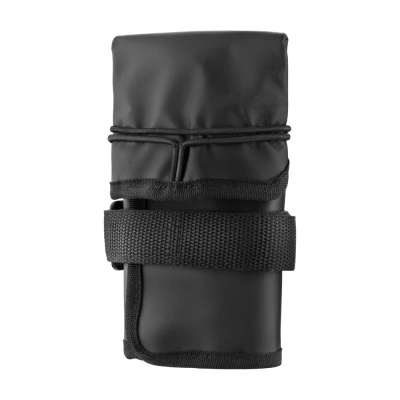
Birzman saddle bags are built around a simple idea: carry what you need, nothing flaps, nothing soaks through. That matters more than you'd think once you're deep into a wet November ride on the Pennine lanes with grit coming off the rear wheel like a pressure washer. Birzman constructs these bags from high-density 420D and 600D fabrics with a PU coating that deflects road spray competently, and the narrow-profile Velcro strapping is cut slim enough to sit clear of your thighs on the pedal stroke - a detail that sounds minor until you've spent two hours with a wide strap rasping your leg.
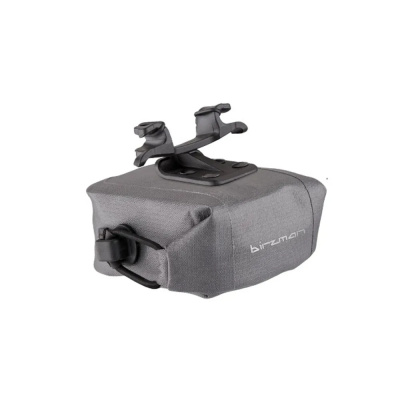
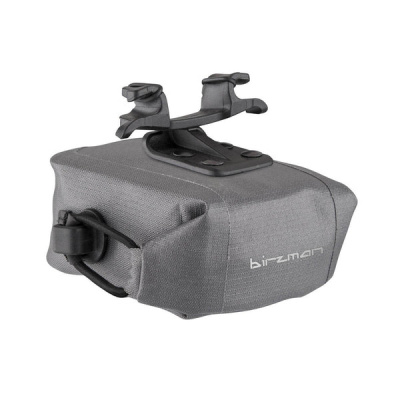
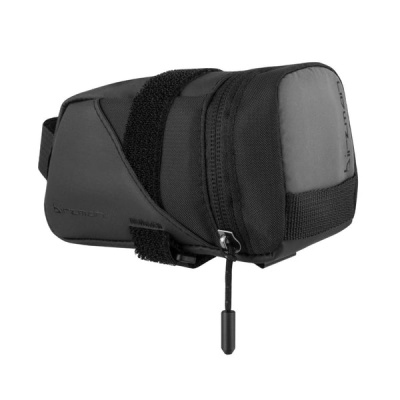
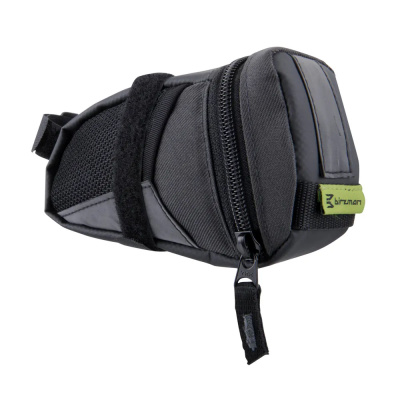
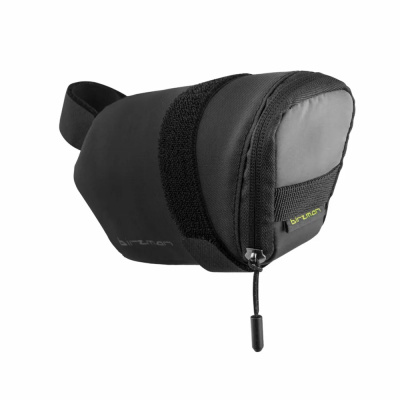
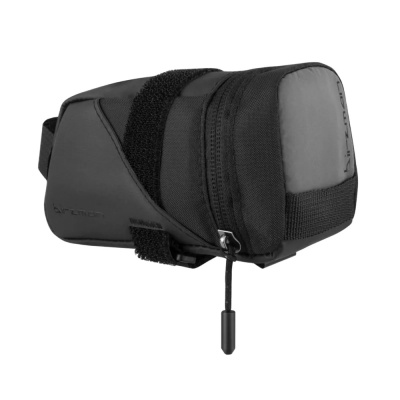
The range splits into two clear families. The Zyklop series takes an aerodynamic wedge shape aimed squarely at road riders who want a tube, a CO2, and a couple of levers stashed and forgotten. The Packman series steps up in volume and modularity for gravel or longer days out. Both lines use secure saddle rail and seatpost attachment systems designed to keep the bag locked in place over rough surfaces without the pendulum sway that drives you slowly mad on a long descent. Reflective light loops are built in across the range - useful when UK light does what UK light does.
Prices and availability can change quickly. Delivery charges are not always included in listed prices.
Final price, stock status and delivery terms are set by retailer. We may receive a commission on purchases made.
Mounting, Rail Compatibility, and Dropper Post Considerations
Fitting a Birzman saddle bag correctly takes about two minutes, but getting it wrong means wobble, rub, or worse - a bag that drops mid-ride. The top straps thread over the saddle rails behind the seatpost clamp, and Birzman's system is designed around standard 44mm rail spacing. On alloy rails that's straightforward. On carbon rails, snug the Velcro firmly but don't crank it beyond the rated tension - carbon rails are more vulnerable to point-load pressure from overtightened straps, so hand-tight and check-after-five-miles is the sensible approach.
The lower strap wraps the seatpost. On a standard round post it's simple. On aero-profile posts - the kind of D-shaped or blade sections you find on modern road bikes - you'll want to check the strap width clears the post geometry cleanly and doesn't introduce a twist. Most Birzman bags manage this well, but it's worth a quick look before you roll out.
For MTB and gravel riders running a dropper post, compatibility is the question worth asking before you buy. When the post is fully dropped, the saddle descends sharply and the bag travels with it - at which point tyre clearance becomes real. Measure the gap between the back of your saddle and the top of the tyre with the dropper fully compressed. You need enough room that the bag base isn't contacting the tyre even on compression through a rough section. A shorter, stiffer bag profile - like the smaller Zyklop models - tends to clear better than a long, flexible pack on a short-travel dropper. If you're shopping for dropper post compatible saddle bags specifically, prioritise compact bag depth over pure volume.
Zyklop vs. Packman: Choosing the Right Capacity
Birzman's product line isn't complicated once you understand what each series is optimised for. The Zyklop series uses an aerodynamic wedge profile - tapered toward the rear - which keeps wind resistance low and the bag's silhouette tight under the saddle. At 0.3L to around 0.5L, the smaller Zyklop models hold a road inner tube, two tyre levers, a multi-tool, and a CO2 canister without drama. That's your standard road kit sorted. The wedge shape also helps the bag sit still rather than pendulum on descents, which is one of the Zyklop's most practical qualities on fast road riding.
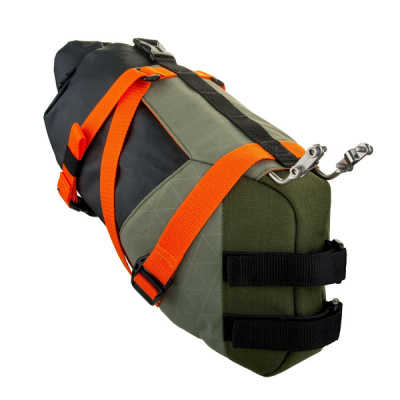
The Packman series is a different proposition. Packman's modular attachment systems allow for larger volumes - moving from around 0.8L up to 3L and beyond depending on the specific model - and the construction is oriented toward bikepacking-style use where you're carrying a lightweight waterproof, snacks, or a full MTB tube alongside tools. At 0.8L you can comfortably fit a 29er inner tube, a multi-tool, tyre levers, a small pump, and a gel or two. Push to 2L or 3L and you're into overnight-kit territory. The trade-off is profile: a bigger Packman is bulkier and sits further from the bike's centreline, which you notice on technical trails more than on open road.
Think of it this way - the Zyklop is what you clip on for a sportive and forget about; the Packman is what you pack the night before a long gravel day in the Cairngorms. If you're looking for the best Birzman saddle bag for road bikes, the Zyklop range is the natural starting point. For gravel or multi-surface riding, the Packman's capacity and modularity make more sense. Worth pairing either with a set of Birzman mini pumps - the bag dimensions are designed with Birzman's own pump formats in mind. And if you're loading up with Birzman tools, you're unlikely to have awkward fit issues between kit from the same system.
If volume requirements push beyond what Birzman's saddle bags offer, Apidura saddle bags and Carradice saddle bags both offer larger bikepacking-specific options, some with full drybag construction. For riders who want a complementary front-end storage option, Birzman bar bags run in the same system aesthetic and work well alongside the Packman series on longer routes.
UK Grit, Road Salt, and Keeping Your Bag Running
The PU-coated 420D and 600D fabrics handle road spray well - waterproof Birzman seat packs is a phrase you'll see, though splashproof is the more accurate description. The coating deflects the sustained rear-wheel spray you get on a wet A-road competently, but it's not a submersion-rated dry bag. Zippers are the weak point in any bag of this type, and on UK winter roads, abrasive silica grit carried in road spray gets into zipper teeth fast. Left unchecked, that grit works through the coating on the zipper tape and eventually locks the mechanism.
The fix is simple but easy to overlook: rinse the bag with clean water after winter rides, paying attention to the zipper. A light application of silicone spray - not WD-40, which strips lubrication over time - keeps the zipper moving freely and displaces moisture from the teeth. Do this every few rides through winter and the zipper will outlast the bag fabric comfortably. Don't machine wash PU-coated fabric bags; the agitation and heat degrades the coating faster than hand-washing does. A gentle scrub with cool water and mild soap is enough.
Low-light riding in the UK is a year-round reality, not just a winter issue. The reflective light loops built into Birzman's bags are a practical detail - they give you a mounting point for a rear light that sits in a consistent position regardless of bag size. Worth using rather than routing a light onto your seatpost where it may conflict with the bag's lower strap. If you want more visibility options or a heavier-duty storage approach for commuting, Lezyne saddle bags and EVOC saddle bags are worth comparing for integrated light mounts and more structured weatherproofing.
Birzman Saddle Bags FAQs
How do you attach a Birzman saddle bag securely?
Thread the top straps over the saddle rails behind the seatpost clamp, pull the Velcro snug to remove any sway, then fasten the lower strap firmly around the seatpost. On carbon rails, avoid overtightening - firm hand pressure is enough. Check the lower strap clears dropper post seals and doesn't interfere with aero-post profiles before you ride.
Are Birzman saddle bags fully waterproof?
They're splashproof rather than fully waterproof. The 420D/600D fabrics with PU coating handle sustained road spray and mud well, but standard zippers will allow water ingress in prolonged heavy rain or if submerged. For fully dry conditions in extreme wet, a separate inner bag or a drybag-construction alternative is worth considering.
What size Birzman saddle bag do I need for a spare tube and multi-tool?
For road riding, a 0.3L to 0.5L Zyklop model fits a road inner tube, multi-tool, two tyre levers, and a CO2 canister without overstuffing. MTB or gravel riders carrying a larger tube or multiple spares should look at 0.8L or above - that's where the Packman series becomes the more practical choice.