
Alpina Kids Helmets
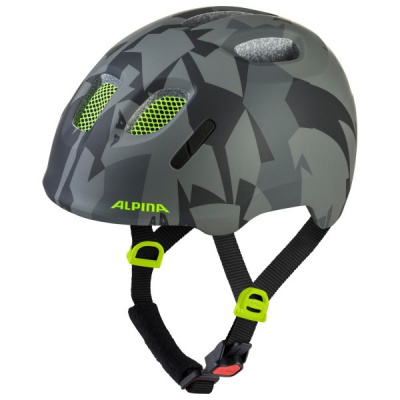
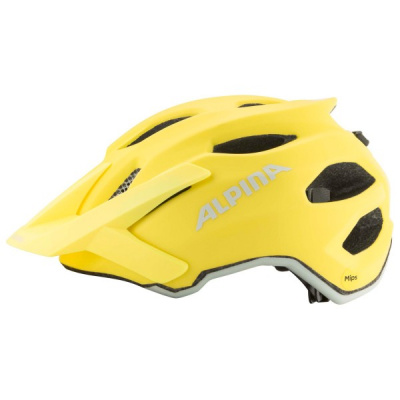
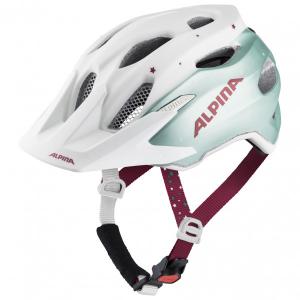
Alpina kids bike helmets bring German-engineered protection to the school run, the park and the trail without loading your child's neck with unnecessary bulk. Where a lot of kids' lids feel like an afterthought, Alpina applies the same In-mold technology and Hi-EPS foam used across their adult range, scaling it down properly for smaller heads rather than just shrinking an adult shell. The result is a helmet that's genuinely light, absorbs impacts well, and doesn't tip forward the moment your child looks down at their front wheel.
The Run System dial adjuster is the detail that makes the biggest practical difference. It lets the helmet expand as your child's head grows, so you're not buying a new lid every season. Pair that with the Ergomatic buckle - which fastens cleanly without pinching small chins - and you've got a fit system that kids can actually manage themselves. Reflective details keep them visible on dark January afternoons, and the ventilation is balanced enough to handle a sweaty summer ride without turning into a wind tunnel in October. If they're ready for something independent, Alpina children's cycling helmets give you genuine confidence that the protection is there.
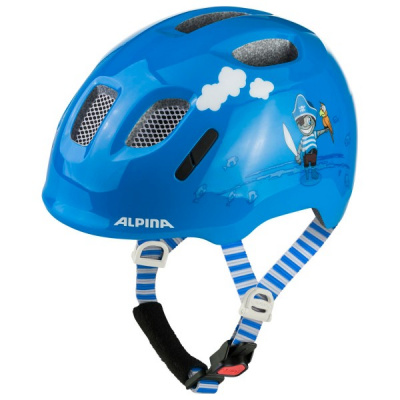
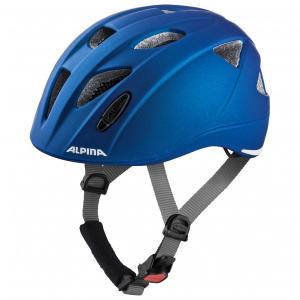
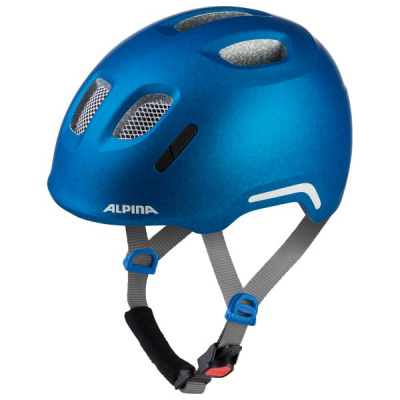
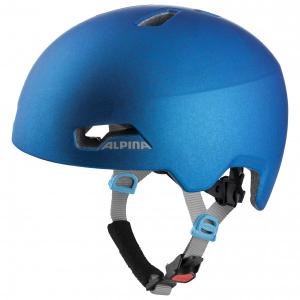
Prices and availability can change quickly. Delivery charges are not always included in listed prices.
Final price, stock status and delivery terms are set by retailer. We may receive a commission on purchases made.
Safety Tech and Construction: What's Actually Going On Inside
The core of any Alpina kids helmet is In-mold construction - a process that fuses the polycarbonate outer shell directly to the EPS foam liner during manufacture rather than gluing them together afterwards. That bond makes the helmet stiffer and lighter than a traditionally bonded shell, and it means the structure stays coherent under impact rather than the outer shell peeling away from the liner. For a child's helmet, where weight really does affect how long they'll keep the thing on, that matters.
The Hi-EPS (High Expanded Polystyrene) liner is the impact absorption layer doing the real work. Hi-EPS is a denser, more refined version of standard EPS foam - think of it as the difference between cheap packing foam and the tightly structured padding inside a good camera case. It deforms in a controlled way during a knock, spreading the force across a wider area rather than transmitting it directly to the skull. On a kids' helmet that's going to meet a lot of tarmac driveways and gravel paths, that controlled deformation is exactly what you want.
Some Alpina youth models also feature a Ceramic Shell finish on the outer polycarbonate. This is a hardened, scratch-resistant coating that takes the cosmetic punishment of childhood - scrapes against brick walls, drops in the shed - without compromising the structural integrity underneath. It looks better for longer, which matters when your child decides they'll only wear the helmet if it doesn't look battered. Practical, not just aesthetic.
Getting the Fit Right Across the Alpina Range
Alpina's Run System dial adjuster sits at the rear of the helmet and tightens or loosens the internal retention ring with a single twist. The Ergo Flex variant uses a slightly articulated ring that conforms to the back of the head rather than clamping as a rigid hoop, which suits the more variable head shapes you find in younger children. Getting this dialled correctly takes about thirty seconds: sit the helmet flat on the head (two fingers above the eyebrows), tighten the dial until it's snug but not tight, then adjust the straps to form a V-shape just below the ears.
On Alpina children's cycling helmets aimed at toddlers and young children in seat-mounted positions, the rear profile is deliberately flatter. A standard domed rear would force the head forward in a bike seat, which is uncomfortable and unsafe. Alpina's toddler-specific profiles account for this geometry. Youth MTB models, by contrast, extend further down the back of the skull - useful for off-road riding where a fall is more likely to involve rotation and the back of the head needs coverage.
Measuring your child's head before you buy is straightforward. Wrap a soft tape horizontally around the head, roughly a finger's width above the eyebrows and ears. That circumference in centimetres maps directly to Alpina's size brackets (for example, 47 - 51 cm). The Run System dial then fine-tunes within that bracket, so there's a reasonable margin for growth - but don't buy two sizes up hoping to get three years out of it. If it's too loose at maximum tightness, the protection is compromised regardless of how good the materials are. For Alpina kids helmet sizing, matching the measurement to the correct bracket first is non-negotiable.
If you're shopping for older teens who've outgrown the youth range, our full Alpina Helmets range covers adult sizes and more performance-oriented models. Brands like Abus kids helmets and Bell kids helmets are worth comparing if you want alternative dial-fit systems or different coverage profiles - both are strong in this category.
UK Conditions, Practical Use and Keeping the Helmet in Good Shape
British riding conditions for kids cover a wide range: woodland bridleways in July, dark canal towpaths in November, wet school runs in pretty much any month. Alpina addresses the summer end with integrated front bug nets on several models - a small detail that makes a real difference on warm evening trail rides where midges are a genuine nuisance rather than a mild inconvenience. The ventilation vents are sized to move air without creating the kind of draughts that make a child refuse the helmet the moment the temperature drops below fifteen degrees.
Reflective details on the shell and straps are genuinely important for toddler bike helmets used in low-light conditions. A child on a balance bike at 4pm in December is at exactly the height where car headlights don't pick them up easily. Alpina's reflective elements aren't just rear-facing strips - several models have side and front placement, which improves visibility from multiple angles.
Keeping the helmet performing well is simple but worth doing consistently. Remove the internal pads (they press-stud out on most Alpina models) and wash them by hand with mild soap and cold water. Let them air dry - tumble drying will degrade the foam backing. For the Ceramic Shell exterior, a damp cloth is all you need. Avoid solvent-based cleaners, furniture polish or anything with alcohol in it - these can degrade the EPS foam if they seep through cracks in the shell. Check the shell surface after any hard knock, even one that looks minor. EPS absorbs impact by crushing internally, and damage isn't always visible from outside.
On that note: replace the helmet after any significant crash, full stop. EPS foam doesn't recover once it's compressed, and a helmet that's taken a proper hit offers meaningfully less protection the second time around. Plan to replace regardless of crashes every three to five years as the foam naturally degrades and your child pushes the upper limit of the dial adjustment.
Youth mountain bike helmets from Alpina work well for pump tracks, gravel paths and cross-country trails - the kind of riding a confident ten-year-old is doing at somewhere like Cannock Chase or Glentress. For aggressive bike park or downhill sessions, you'd be looking at a full-face helmet instead, which is a different product category entirely. Pairing a helmet with Alpina sunglasses is worth considering for summer trail riding, where glare and debris are both real factors. If you want to compare across the market, Giro kids helmets and Lazer kids helmets are the other brands we'd put alongside Alpina for fit system quality and construction standards.
Alpina Kids Helmets FAQs
How do I measure my child's head for an Alpina helmet?
Use a soft tape measure and wrap it horizontally around the head, about a finger's width above the eyebrows and ears. Note the circumference in centimetres and match it to Alpina's stated size bracket. The Run System dial adjusts within that bracket, but the bracket itself needs to be correct first - don't rely on the dial to compensate for a helmet that's fundamentally the wrong size.
Are Alpina kids helmets suitable for mountain biking?
Most youth Alpina models handle cross-country trail riding well - they offer extended rear coverage and front visors that deal with low branches and trail debris. For pump tracks and woodland singletrack, they're a solid choice. That said, if your child is doing proper bike park descents or lift-accessed downhill, you need a dedicated full-face helmet rather than an XC-style lid.
How long does a child's bike helmet last?
Replace it immediately after any significant crash, even with no visible damage - EPS foam compresses permanently and won't protect the same way twice. Beyond crash replacement, plan to upgrade every three to five years. The foam degrades over time, and most children will have outgrown the maximum Run System adjustment well within that window anyway.