
Ale Skinsuits
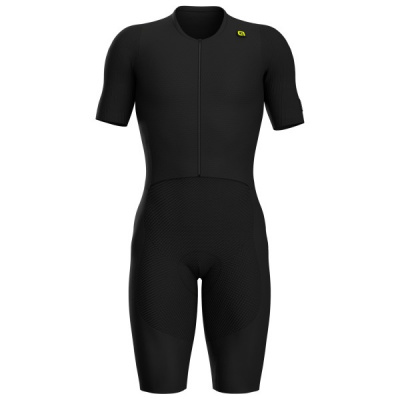
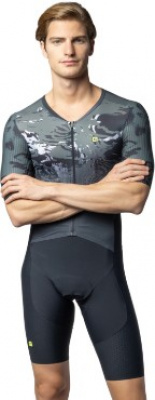
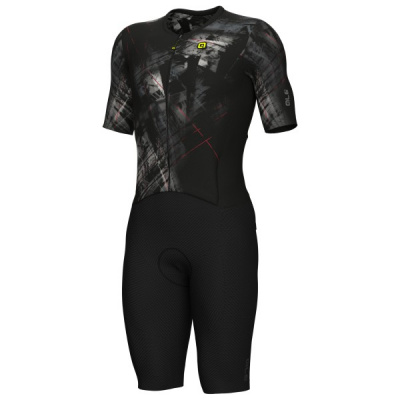
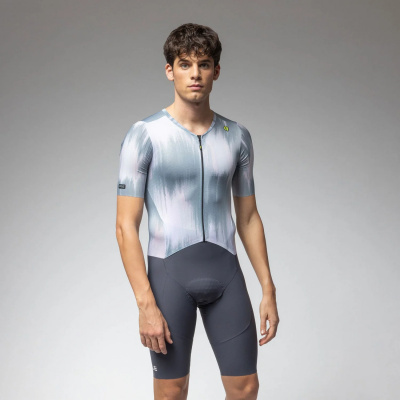
Ale skinsuits are built around a single idea: remove everything that slows you down. Whether you're lined up for a Tuesday-evening 10-mile TT or chasing the front group in a criterium, these Italian-made speedsuits bring wind-tunnel-tested aerodynamics and a genuinely race-tuned fit to riders who care about the clock. Ale's Body Mapping technology sits at the heart of the range - placing the right fabrics in exactly the right places, so ventilation, compression, and aerodynamic drag reduction all work together rather than against each other. The chamois options, including the brand's 8H pad, are designed for aggressive, low riding positions rather than the upright geometry of a sportive bike, so comfort doesn't get traded away for speed. Raw-cut sleeve edges keep transitions smooth where fabric meets skin, and the elastane blends move with you rather than fighting your pedal stroke. Early-morning UK TTs call for fabrics that hold a touch of warmth without trapping heat once the effort ramps up - Ale's constructions handle that balance well. If you're serious about performance on the road or track, this is the category worth exploring.
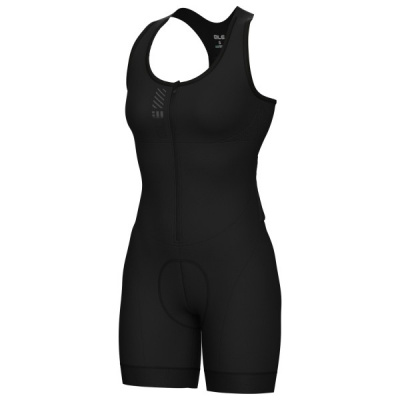
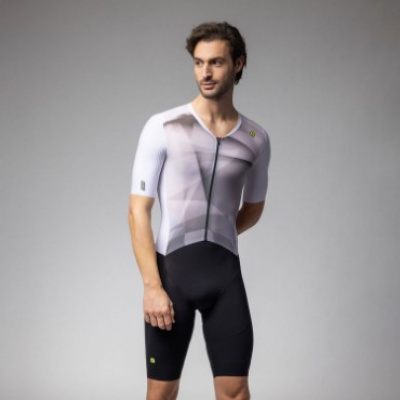
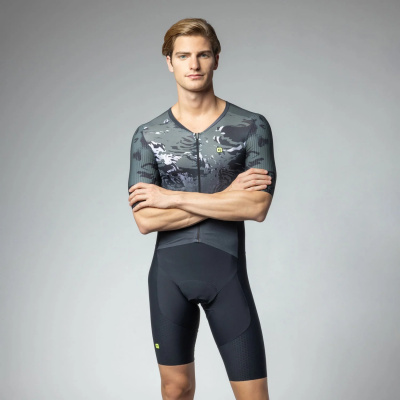
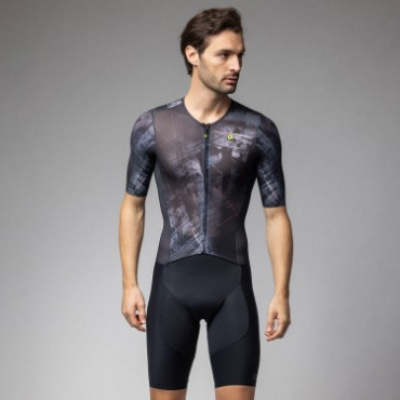
Prices and availability can change quickly. Delivery charges are not always included in listed prices.
Final price, stock status and delivery terms are set by retailer. We may receive a commission on purchases made.
Fabric Tech and Aerodynamic Performance
The fabrics Ale uses across its skinsuit range aren't chosen for feel alone - they're working aerodynamically at every panel seam. Aero Rib textured materials trip the boundary layer of air across your arms and torso, reducing aerodynamic drag in a way that smooth fabrics simply can't match. Think of it like the dimples on a golf ball: texture at speed is faster than flat. That principle is baked into the construction of Ale's higher-end suits, and it's particularly relevant if you're riding in the drops or tucked over aero bars where fabric is fully exposed to the wind.
Body Mapping technology is what separates a considered race garment from a generic tight-fitting suit. Ale uses it to position highly breathable, moisture-wicking panels across the chest, underarm, and lower back - exactly where sweat output is highest during hard efforts. On a warm-weather crit around a town-centre circuit or a long August TT, that targeted ventilation keeps your core temperature in check without introducing loose, flapping fabric that costs you watts. The denser, more compressive panels sit where structural support matters most, and the whole system is calibrated for an athlete in motion, not standing in the changing room.
For reference, Castelli skinsuits take a similar wind-tunnel-led approach, and Bioracer skinsuits are equally invested in panel-level aero development - so Ale sits in serious company here, competing on the strength of its Italian manufacturing and the breadth of its range.
Understanding the Ale Skinsuit Fit and Range
Ale's PR-S (Pro Racing System) and R-EV1 lines are cut for the riding position. That matters more than it sounds. Stand up straight in one of these suits and it will feel tight across the shoulders and short in the torso - that's intentional. Drop into your race position and the suit follows you perfectly, with zero bunching at the hip or pulling across the back. Riders who try a race skinsuit standing upright and conclude it doesn't fit are making a mistake that costs them real aerodynamic gains.
The chamois options reflect this same race-first thinking. The 8H pad is designed for time trial and track geometry - pelvis rotated forward, weight through the nose of the saddle, sustained high power. The 4H option suits riders in slightly less extreme positions. Neither is a long-distance comfort pad, and nor should they be; if you're using a skinsuit for a four-hour sportive, you're probably in the wrong garment category. These suits exist for events measured in minutes, not half-days.
Sizing tends to run true to Italian race standards, which means snug. If you're between sizes, go up - you want compression without restriction in the hip flexors. Silicone grippers at the leg openings keep the suit placed correctly under load, which makes a real difference to how the chamois pad sits throughout an effort. Compared with Assos skinsuits or Santini skinsuits, Ale's race cut tends to be particularly aggressive in the torso length - worth factoring in if you ride with a shorter reach.
Looking for multi-sport performance with quick-drying swim fabrics? Head over to our dedicated Ale Tri Clothing page for suits built around open-water exits and T1 transitions.
Layering and Care for UK Racing
A skinsuit alone can leave you cold at a 6am start in April. Pairing your suit with an Ale mesh base layer adds just enough warmth for those early-morning TT sign-ons without any meaningful aerodynamic penalty - the slim fit keeps it flat against the skin and out of the wind. A thin thermal layer works the same way for autumn track league. You don't need to suffer for aero; just use the right underlayer.
Skinsuit care is one of those things that gets ignored until the chamois starts breaking down or the elastane loses its snap. Cold wash only, always inside out, and no fabric softener - ever. Softener coats the elastane fibres and kills the compressive quality over time, and it degrades the chamois pad's foam structure faster than normal wear would. A mesh laundry bag is worth using to protect the raw-cut sleeve edges from snagging in the drum. Hang dry, out of direct sunlight, and the suit will hold its shape and performance through a full season of regular racing.
UK road grit from damp lanes puts real wear on seat panel fabrics, so it's worth checking the inner thigh and seat area every few washes for signs of thinning. Ale's higher-spec suits use reinforced seat-panel constructions for exactly this reason, but no fabric is indestructible. Round out your race kit with Ale socks and Ale gloves - consistent kit across a brand often means co-designed aero profiles at the cuffs and ankles, which is a small detail that adds up.
Ale Skinsuits FAQs
How tight should an Ale skinsuit fit?
It should sit against the skin with no bunching or loose fabric anywhere - genuinely second-skin. Standing up, it'll feel firm across the shoulders and short in the body. That's by design. Once you're in your riding position, it contours correctly. If it feels restrictive in the hip flexors when pedalling, go up a size.
Do you wear a base layer under a cycling skinsuit?
Yes, and for UK racing it often makes sense. A lightweight mesh base layer manages sweat and adds a marginal warmth layer for cold starts without affecting aerodynamics. For early-morning spring or autumn TTs, a slim thermal base layer is a practical choice. Skip the bulky options - anything thick enough to show through the suit is too much.
What is the difference between a skinsuit and a jersey/bib combo?
A skinsuit is one piece, so there's no overlap of jersey hem over bib shorts waistband, no bib strap lumps under a jersey, and no fabric edge flapping at speed. That smooth, uninterrupted surface reduces aerodynamic drag meaningfully at race pace. For events where seconds count - TTs, crits, track - a skinsuit is the faster choice.