
5dev Pedals
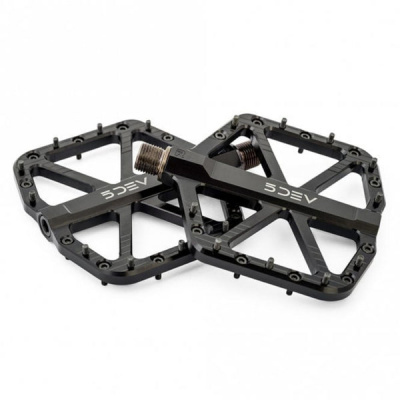
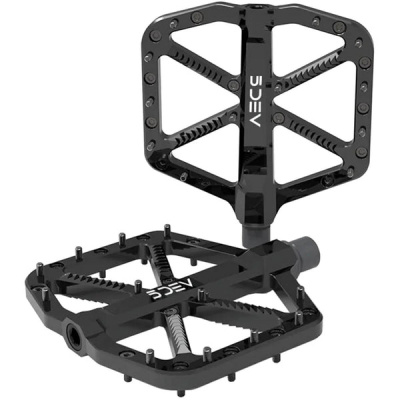
5Dev Pedals are machined from aerospace-grade billet aluminium or titanium using five-axis CNC processes - the kind of manufacturing precision usually reserved for components that end up in things that fly. The result is a flat pedal that's obsessively thin (as low as 10.6mm platform height), rigorously concave, and built to keep your feet planted when the trail turns nasty.
The platform geometry matters here. That ultra-low profile isn't just a weight-saving trick - it's the difference between clipping a rock and rolling clean through a janky Welsh rock garden. Pair the low body with strategically placed, adjustable titanium pins and a deeply concave deck, and your shoe rubber locks into the pedal rather than skating across it. Wet roots, off-camber loam, loose Peak District grit - the grip stays honest.
Inside, custom IGUS bushings and dual sealed bearings handle the muck without drama. These pedals are fully serviceable, which matters when you're not replacing them every season. The 9/16" axle thread fits any modern MTB crank, and the platform dimensions suit aggressive trail and enduro riding equally well. Compare current UK prices below.
Prices and availability can change quickly. Delivery charges are not always included in listed prices.
Final price, stock status and delivery terms are set by retailer. We may receive a commission on purchases made.
Fitment, Platform Size and Shoe Compatibility
Every 5Dev flat pedal runs a standard 9/16" threaded axle, so they bolt straight onto any modern MTB crankset without adapters or faff. That covers everything from budget trail bikes to high-end enduro builds with Boost or SuperBoost chainline spacing - the Q-factor stays consistent and predictable underfoot.
Platform dimensions sit around 106mm x 110mm depending on the model, which gives you a workable surface without the unwieldy feeling of an oversized slab. The concave profile is the important bit: it cups the sole of your shoe, centering your foot naturally and reducing the micro-adjustments you'd otherwise make on flatter platforms. On technical descents in the Brecon Beacons or loose moorland tracks above Hebden Bridge, that centering effect is worth more than raw platform area.
Pin compatibility deserves a word before you buy. The aggressive, adjustable pin layout on 5Dev pedals works best with soft-compound flat pedal shoes - think Stealth rubber or equivalent - where the pins can properly bite into the sole. Hard-soled shoes reduce that mechanical grip significantly. If you're currently riding stiff-soled shoes, the pedals will still function, but you won't be using what makes them good. Worth factoring in if you're pricing up a full contact-point refresh alongside 5Dev chainsets and cranks.
Alloy vs. Titanium: What the Lineup Actually Offers
5Dev run two core material paths: 7075-T6 aluminium alloy and full titanium. Both go through the same five-axis CNC machining process, so the geometry, pin placement and bearing setup are identical. What changes is the material character - and that changes more than just the weight.
The alloy models are the sensible entry point. 7075-T6 is aerospace-grade stuff, stiffer and harder than the 6061 alloy you'll find in most competing flat pedals. It machines cleanly, holds pin threads well over repeated replacements, and takes rock strikes without denting badly. If you're comparing these to Burgtec pedals or Hope pedals at a similar tier, the 5Dev alloy models sit comfortably in that bracket for build quality - the CNC finish is visibly tighter than most.
The titanium models go further. The weight drop is genuine and noticeable at the pedal - rotating mass you feel on every stroke. Titanium also has a natural hardness and impact resistance that means rock strikes tend to scratch rather than dent or crack the body. The aesthetic is distinct too, though that's a secondary consideration. You're paying a real premium for the Ti versions, and the honest trade-off is that most riders on trail centres or enduro tracks won't exhaust what the alloy models offer. The titanium option is for riders who want the lightest possible flat pedal and aren't treating price as a constraint.
5Dev also vary platform geometry across models - broader, chunkier platforms for freeride and bike park use versus trimmer profiles for all-around trail riding. Check the specific model dimensions before buying if your riding mixes disciplines. Pairing them with 5Dev stems keeps the build consistent if you're going all-in on the brand.
Keeping Them Running Through UK Conditions
UK riding is hard on pedal internals. Peak District grit is practically grinding paste once it mixes with water and gets into bearing races. The IGUS bushings in 5Dev pedals are self-lubricating polymer - they handle contamination better than standard bronze bushings and don't need constant greasing. The dual sealed bearings add a second layer of protection. That combination is genuinely better suited to muddy, abrasive British conditions than a single-bearing design.
Service intervals depend on how much wet riding you do. In dry conditions, a strip-down once a season is reasonable. Riding BikePark Wales in November through to March, you'll want to check them every couple of months. The service process is straightforward: remove the end cap, undo the axle nut, and the pedal body slides off the axle. Clean the internals, inspect the bearings for grittiness, re-grease, and reassemble. If the bearings feel rough, replace them - 5Dev use standard sizes that aren't proprietary. Seal the threads with a smear of anti-seize compound before installation; aluminium-on-steel seizure in a crank arm is a workshop problem nobody wants.
Pins snap on rocks. It happens on every flat pedal. On 5Dev pedals, replacement is straightforward - the pins are threaded and removable with a standard hex key. Keep a handful of spares in your pack on rocky days. The strategic pin placement means you can also dial the traction pattern: more pins toward the heel if you ride with your weight back, fewer toward the toe if you're getting shoe catch on technical climbs. DMR pedals and Nukeproof pedals offer similar pin-replacement serviceability, but the 5Dev adjustable placement system gives you more control over where the grip actually lands.
One practical note: the low-profile CNC machined body means less material at the edges. That's intentional for pedal-strike clearance, but it does mean the edges will show cosmetic damage from rock contact faster than a chunkier pedal. Function isn't affected - it's purely aesthetic - but worth knowing before your first ride on something rough.
5dev Pedals FAQs
Are 5Dev pedals worth the premium price?
For riders who push technical trails hard, yes. The five-axis CNC machining from 7075-T6 aluminium or titanium produces a genuinely tighter, more durable result than mass-produced alternatives. The ultra-low profile body reduces pedal strikes on rocky ground, and the concave platform with adjustable pins delivers locked-in grip that cheaper flat pedals don't match. If you're riding casually on smooth trails, the premium is harder to justify.
How do you service 5Dev pedals?
Remove the end cap and axle nut, then slide the pedal body off the axle. Clean out any contamination, check the sealed bearings for roughness, re-grease, and reassemble. The IGUS bushings are self-lubricating so they don't need frequent attention, but swap the bearings if they feel gritty - they're standard sizes and widely available. A full service once a season suits most riders; more often if you ride in wet, muddy conditions regularly.
Can I replace the pins on 5Dev flat pedals?
Yes, easily. The traction pins are threaded and unscrew with a standard hex key. You can replace snapped pins individually, swap in longer or shorter pins to adjust grip intensity, or reposition them across the platform to match your foot placement. Keep a few spare pins in your pack on rocky days - it's a quick trailside fix rather than a workshop job.