
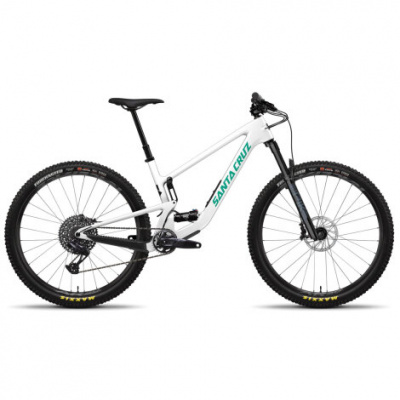
Santa Cruz Tallboy
Climb efficiently, descend confidently, and enjoy all-day trail adventures on a bike that refuses to pick sides.
- Lower-link VPP suspension: supportive climbs, composed descents
- Glovebox downtube storage keeps essentials close without a pack
- 29er wheels roll fast and calm rough ground
- Carbon C frame: same strength as CC, more accessible price
- 120mm rear, 130mm front: trail capability, XC efficiency
- Flip chip lets you fine-tune geometry for your terrain
Santa Cruz Tallboy Deals
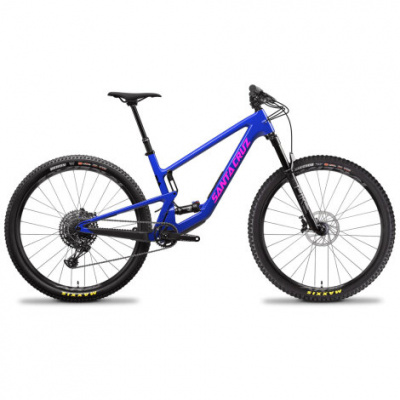
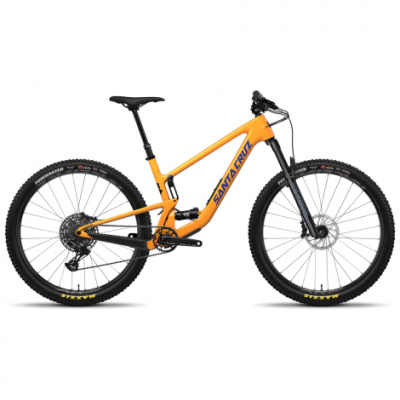

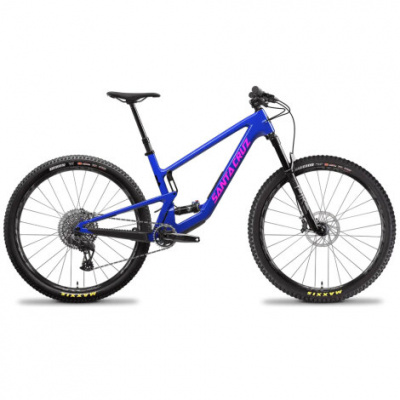
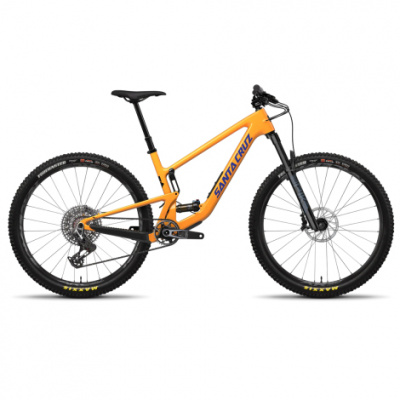
Prices and availability can change quickly. Delivery charges are not always included in listed prices.
Final price, stock status and delivery terms are set by retailer. We may receive a commission on purchases made.
Bikesy's Verdict
The Tallboy is the bike you buy when you're done compromising. It climbs with the efficiency of an XC machine, descends with the confidence of a trail bike, and handles everything in between with a playful character that makes every ride more fun. The VPP suspension, proportional geometry, and thoughtful details like the Glovebox storage add up to a machine that's genuinely versatile without feeling like a jack-of-all-trades that's master of none.
You'll pay for that capability - this isn't a budget option - but the Carbon C frame gives you the same strength and lifetime warranty as the pricier CC model, and the stock build is well sorted enough that you can ride it hard without needing immediate upgrades. If your riding mixes long climbs, technical singletrack, and fast descents, and you want one bike that does it all brilliantly, the Tallboy is worth every penny.
Pros
- Climbs efficiently with excellent traction and support
- Descends with confidence and composure beyond its 120 mm travel
- Playful, agile handling that encourages pushing limits
- Glovebox downtube storage reduces need for a pack
- Lifetime warranty on frame and bearings
- Size-specific geometry tuning for consistent feel across range
Cons
- Heavier than dedicated XC race bikes if you're chasing podiums
- SRAM G2 R brakes can lack power for heavier or more aggressive riders; four-piston upgrade worth considering
- Not the right choice for truly gnarly enduro terrain where longer travel would give more margin
About the Santa Cruz Tallboy
The Tallboy has earned its nickname - the downhiller's XC bike - by refusing to pick sides. Where most short-travel machines ask you to choose between climbing speed and descending confidence, this one delivers both. Built around Santa Cruz's lower-link VPP suspension and wrapped in a Carbon C frame that shares the stiffness and lifetime warranty of its pricier sibling, the Tallboy turns all-day rides into adventures rather than endurance tests. You get the snap and support you need when the gradient kicks up, then the composure to let off the brakes when gravity takes over.
It's a bike that makes sense of contradictions. The geometry sits in that sweet spot where reach is long enough to inspire confidence at speed but not so stretched that tight switchbacks become a wrestling match. Proportional tuning across the size range means a rider on an XS frame gets the same balanced feel as someone aboard the XXL, and size-specific chainstays keep the handling consistent whether you're threading singletrack or opening it up on fire roads. The Glovebox storage tucked into the downtube is more than a neat trick - it's a signal that Santa Cruz designed this for real rides, the kind where you leave the pack at home and still have room for a tube, tools, and a snack.
This isn't a bike that shouts. It's the one that quietly handles everything you throw at it, then leaves you grinning when you roll back to the car park wondering why you didn't push harder.
Santa Cruz Tallboy geometry
The numbers translate to a posture that's athletic without being aggressive. Reach grows steadily across the size range - from 403 mm on the XS to 518 mm on the XXL - giving you room to move your weight around when the trail gets rowdy. Stack climbs in step, so you're not folded over the front end or sitting bolt upright; instead, you land in a position that feels ready for anything. The 65.5-degree head angle is calm enough to inspire trust on fast, rough descents but not so slack that it dulls the steering when you need to flick through tight sections.
Seat tube angles steepen as frame size increases, from 75.7 degrees on the XS to 76.8 on the XXL, which keeps your weight centred over the bottom bracket and your pedalling efficient no matter your height. Chainstays lengthen slightly with size - 431 mm on the smallest frames, 444 mm on the XXL - so the bike's balance stays consistent rather than feeling twitchy on small sizes or sluggish on large ones. The result is a bike that climbs with your weight in the right place and descends without the front wheel wandering off-line when you're hard on the brakes.
Wheelbase stretches from 1147 mm to 1271 mm, giving bigger riders the stability they need without making smaller riders feel like they're piloting a barge. Bottom bracket drop holds steady at 34 mm across the range, so pedal clearance is predictable and the bike doesn't feel tippy when you're leaning into berms. When you flip the chip to the low setting, you drop the front end slightly and slacken things out for rougher, faster terrain; flip it high and you gain a touch of agility for tighter, more technical trails. It's a small adjustment, but it's there when your local loop changes character or you fancy a different feel.
Component choices & upgrades
The Carbon C build arrives well sorted. SRAM GX Eagle gives you a 10-50t cassette and reliable 12-speed shifting that handles everything from steep pinches to flat-out sprints. The Fox 34 Float Performance fork and Float rear shock deliver composed damping and enough adjustability to dial in your preferred feel without needing a degree in suspension tuning. RaceFace AR Offset 30 rims on DT Swiss 370 hubs are tough enough for rocky trails and light enough that you won't curse them on climbs. Maxxis Forekaster tyres in 2.4-inch width offer a sensible balance of rolling speed and grip, though they're not the most aggressive rubber if you spend serious time on steep, loose descents.
If your riding demands more, start with the tyres. A burlier rear - something like a Minion DHR II or Aggressor - will give you more confidence when the trail points down, and you can keep the Forekaster up front if you value steering precision. The SRAM G2 R brakes are adequate for most riders, but if you're heavier, faster, or riding steeper terrain regularly, a jump to four-piston stoppers like SRAM Code or Shimano XT will give you more power and modulation. The OneUp dropper post works well, but if you want more travel or prefer a different lever feel, swapping to a RockShox Reverb or PNW Loam is straightforward.
Wheels are the next logical step if you're chasing performance. Santa Cruz Reserve carbon hoops drop weight and add stiffness, which sharpens handling and improves acceleration. A shorter stem - say, 35 mm instead of the stock 42 mm - will quicken steering if you prefer a more playful feel, though most riders find the stock setup hits the mark. The Burgtec cockpit is solid; if you do swap bars, stick with something around 800 mm wide to maintain the bike's balanced character. The stock build is genuinely capable, so resist the urge to upgrade just because you can. Save your money unless your skills or terrain genuinely outstrip what's already fitted.
Where the Santa Cruz Tallboy excels
This is a bike for riders who want to cover ground efficiently but refuse to sacrifice fun when the trail tilts down. It's outstanding on long, varied rides where you'll climb fire roads, thread through technical singletrack, and then let loose on descents that would make a pure XC bike feel sketchy. The VPP suspension keeps the rear wheel glued to the ground on climbs, so traction stays consistent even when you're out of the saddle grinding up loose, steep pitches. On descents, it absorbs hits with a composure that belies its 120 mm of travel, staying calm over roots and rocks while giving you enough feedback to know what's happening beneath you.
It handles aggressive trail riding better than most bikes in its travel class. You can push into corners hard, trust the front end to hold a line, and pop off features without worrying the bike will fold under you. The playful character encourages you to ride faster and take chances, which is exactly what makes a good trail bike great. It's also brilliant for all-day epics where you'll mix terrain types and don't want to be stuck on a bike that's either too sluggish on climbs or too nervous on descents.
Where it's not ideal: pure XC racing, where every gram and every watt counts. The Tallboy is heavier and slightly less efficient than a dedicated race machine like the Santa Cruz Blur, and if you're chasing podiums on smooth, fast courses, you'll feel the difference. It's also not the right tool if you're spending most of your time on steep, gnarly enduro tracks. The 120 mm rear travel is impressive, but it has limits - when the terrain gets truly rough and fast, something like the Santa Cruz Hightower with its longer travel will give you more margin for error. If your local trails are mellow and you never push hard, the Tallboy might feel like overkill; a hardtail or shorter-travel XC bike would be lighter and cheaper. But if you want one bike that does most things brilliantly and nothing badly, this is it.
Santa Cruz Tallboy FAQs
What is the intended use of the Santa Cruz Tallboy?
The Tallboy is designed for aggressive cross-country and trail riding, bridging the gap between pure XC efficiency and confident descending. It's built for riders who want to climb well, descend fast, and enjoy all-day adventures without being limited by their bike's capability.
How does the VPP suspension on the Tallboy perform?
The lower-link VPP design delivers a supportive pedal platform that keeps the bike efficient on climbs while offering excellent bump absorption on descents. It's tuned to handle larger hits with composure, giving you more capability than the 120 mm travel figure might suggest. Small-bump sensitivity is good, and the suspension stays active without feeling wallowy or vague.
What is the recommended tyre clearance for the Santa Cruz Tallboy?
Santa Cruz recommends a maximum of 2.5 inches for rear tyres. That gives you room to fit burlier rubber if your terrain demands more grip or durability, though the stock 2.4-inch Forekasters are a sensible starting point for most riders.
Is the Santa Cruz Tallboy suitable for aggressive trail riding?
Yes, it punches well above its travel class. The geometry, suspension tune, and overall build make it confident and composed on technical descents and rough trails, though it's not a replacement for a longer-travel enduro bike if you're riding truly gnarly terrain regularly.
What are the differences between the Santa Cruz Tallboy C and CC frames?
Both frames share the same strength, stiffness, and lifetime warranty. The Carbon C uses a slightly heavier layup, making it more affordable, while the Carbon CC is lighter thanks to a premium carbon construction. The ride quality and durability are identical; you're trading a small weight penalty for a lower price on the C frame.
How does the Santa Cruz Tallboy compare to the Santa Cruz Hightower?
The Hightower offers longer travel - 145 to 150 mm rear, 160 mm front - making it better suited to more demanding descents and aggressive riding. The Tallboy is lighter, more efficient on climbs, and more playful, while the Hightower is more composed and forgiving when the terrain gets rough. Choose the Tallboy if you value efficiency and versatility; pick the Hightower if descending capability is your priority.
What is the typical weight of a Santa Cruz Tallboy Carbon C build?
A complete Carbon C build with SRAM GX Eagle and mid-range components typically weighs around 13 to 13.6 kg, depending on frame size and spec choices. That's not the lightest in its class, but the weight comes with durability and capability that lighter bikes often sacrifice.
Can I fit a longer travel fork on the Santa Cruz Tallboy?
Some riders run a 140 mm fork without issues, which slackens the geometry slightly and adds a touch more descending capability. Going beyond that risks compromising the bike's handling and putting undue stress on the frame, so it's best to stick within Santa Cruz's recommendations unless you're prepared to accept the trade-offs.
Key Features & Benefits
- Lower-link VPP suspension with 120 mm rear travel: Delivers efficient climbing with a supportive pedal platform and composed descending that handles rough terrain beyond its travel figure
- Glovebox integrated downtube storage: Carry essentials like tubes, tools, and snacks without a pack, keeping weight low and your back cool on long rides
- Carbon C frame with lifetime warranty: Same strength and stiffness as the premium CC frame at a more accessible price, backed by Santa Cruz's confidence in durability
- Proportional geometry and size-specific chainstays: Ensures balanced, consistent handling across all frame sizes, so every rider gets the same confident, playful feel
- Flip chip geometry adjustment: Fine-tune head angle, seat angle, and bottom bracket height to match your terrain or riding style without tools or fuss
Santa Cruz Tallboy 2020 and 2021 differences
The 2020 and 2021 Tallboy marked a significant redesign, introducing the lower-link VPP configuration and increasing travel to 120 mm rear and 130 mm front - up from the previous 100 mm. Geometry was lengthened and slackened, with longer reach figures and a 65.5-degree head angle replacing the steeper, shorter setup of earlier models. The Glovebox integrated downtube storage was introduced, and size-specific chainstays were added to maintain balanced handling across the range. Carbon CC frames were differentiated by red Santa Cruz lettering, while Carbon C frames featured white graphics. These changes repositioned the Tallboy from a pure XC bike into the aggressive cross-country and trail category it occupies today.
Alternatives to Consider
Within Santa Cruz's own range, the Blur is the obvious step down if pure XC racing is your focus. It runs 100 mm travel front and rear, weighs less, and pedals with sharper efficiency, but you'll sacrifice the Tallboy's descending composure and all-day comfort. Step up to the Hightower and you gain 145 to 150 mm rear travel and a 160 mm fork, making it the better choice if your local trails are steep, rough, and fast - though you'll pay for that capability with a heavier, less efficient climber.
Cross-brand, the Yeti SB140 is the closest rival, offering similar travel and a geometry that balances climbing and descending with a slightly different suspension feel - some riders find the Switch Infinity platform more linear, others prefer the VPP's support. The Trek Top Fuel 9.7 is another direct competitor, with comparable travel and a reputation for efficient climbing, though its suspension character leans a touch more towards XC efficiency than the Tallboy's playful descending prowess. If you want something that prioritises descents even more, the Norco Optic C2 offers similar travel but with geometry and suspension tuning that favour letting off the brakes over chasing KOMs. For a more aggressive short-travel option, the Specialized Epic Evo Comp sits in the same category but skews towards sharper handling and lighter weight, trading some of the Tallboy's composure for race-ready snap. The Ibis Ripley AF is worth a look if you want a similar ride character in an aluminium frame at a lower price, though you'll give up the Carbon C's stiffness and the Glovebox storage.
Reviews
Proportional geometry and size-specific chainstays deliver handling that feels balanced whether you're on the XS or the XXL. The VPP suspension stays active over roots and rocks without bobbing when you're out of the saddle, and the flip chip gives you just enough adjustment to tailor the bike's character without overthinking it. On climbs, traction is tenacious - the rear wheel stays planted even on loose, steep pitches where other bikes would spin or skip. When the trail points down, the Tallboy holds a line with confidence, absorbing hits that would rattle a pure XC bike and giving you the feedback to know what's happening beneath you.
Fox 34 Float Performance fork and Float rear shock offer composed damping that's easy to dial in, and the SRAM GX Eagle drivetrain shifts cleanly under load with a range that covers everything from grinding climbs to flat-out sprints. RaceFace AR Offset 30 rims on DT Swiss 370 hubs are tough enough for rocky trails without feeling sluggish, and the Maxxis Forekaster tyres roll fast while offering decent grip - though a burlier rear tyre is worth considering if you're pushing hard on loose descents. Because the bike's geometry and suspension are so well sorted, you can focus on riding rather than fighting the machine.
Glovebox storage is genuinely useful, not a gimmick. Carrying a tube, tools, and CO2 in the downtube keeps weight low and your back cool, and it's one less thing to think about when you're heading out for a long ride. The Carbon C frame feels stiff and responsive without being harsh, and the lifetime warranty on frame and bearings reflects Santa Cruz's confidence in their construction. Weight sits around 13 to 13.6 kg for a complete build, which isn't featherlight but feels justified when you're descending fast or pushing through rough sections. SRAM G2 R brakes are adequate for most riders, though heavier or more aggressive riders will want more power - a four-piston upgrade is straightforward and worthwhile if you're regularly on steep terrain.
Playful character encourages you to ride faster and take chances. The bike rewards commitment, staying composed when you're hard on the brakes or leaning into corners, and it pops off features with enough energy to make technical sections fun rather than exhausting. It's a bike that makes you want to session a tricky line or take the long way home, and that's what separates a good trail bike from a great one.
Full Specification
| Spec | Value |
|---|---|
| Frame Material | Carbon C |
| Frame Design | Lower-link mounted VPP (Virtual Pivot Point) |
| Frame Features | Internal cable routing; integrated downtube storage (Glovebox™); Flip Chip |
| Tyre Clearance | 2.5" (rear) |
| Available Sizes | XS, S, M, L, XL, XXL |
| Bottom Bracket | SRAM DUB 68/73mm Threaded |
| Rear Axle | 148x12mm Boost |
| Fork | Fox 34 Float Performance |
| Fork Travel | 130mm |
| Rear Shock | Fox Float Performance |
| Rear Shock Travel | 120mm |
| Rear Shock Mount | 190x45mm |
| Suspension Platform | Lower-link mounted VPP with air adjustable shock; rebound adjust; three-position damper (Open, Pedal, Lockout) |
| Drivetrain | 1x12 speed |
| Shifters | SRAM GX Eagle |
| Rear Derailleur | SRAM GX Eagle |
| Crankset | SRAM GX Eagle DUB, 32t |
| Cassette | SRAM GX Eagle XG-1275, 10-50t |
| Chain | SRAM GX Eagle, 12-speed |
| Brakes | Hydraulic Disc |
| Brake Levers | SRAM G2 R |
| Brake Calipers | SRAM G2 R |
| Rotors | 180mm |
| Wheels | 29-inch |
| Rims | RaceFace AR Offset 30 (30mm internal width) |
| Hubs (Front) | DT Swiss 370, 15x110 |
| Hubs (Rear) | DT Swiss 370, 12x148 |
| Tyres (Front) | Maxxis Forekaster 29"x2.4"WT, 3C, MaxxTerra, EXO |
| Tyres (Rear) | Maxxis Forekaster 29"x2.4"WT, 3C, MaxxTerra, EXO |
| Handlebar | Burgtec RideWide Alloy, 800mm width |
| Stem | Burgtec Enduro MK3, 42mm |
| Headset | Cane Creek 40 IS Integrated |
| Seatpost | OneUp V2 Dropper Post, 31.6mm diameter |
| Saddle | WTB Silverado, CroMo |
| Grips | Santa Cruz Bicycles House Grips |
| Weight (Approx) | 29 - 30 lbs (13.15 - 13.6 kg) for complete Carbon C S build |