
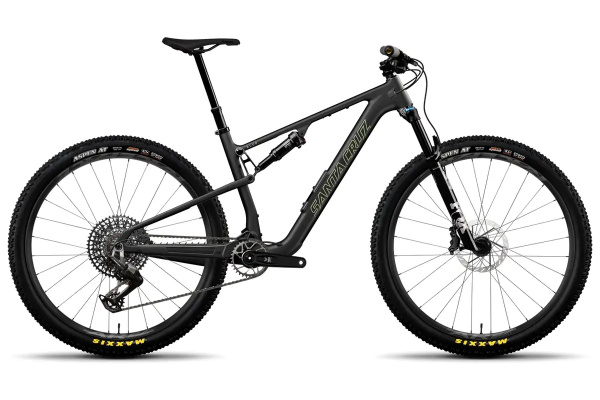
Santa Cruz Blur
Featherweight XC speed with supple Superlight suspension that climbs like a rocket and handles trails with more confidence than the scales suggest.
- Superlight suspension: flex stays, supple feel, race-day efficiency
- Carbon CC or C frame: sub-1.9 kg premium option
- 115 mm rear travel keeps you fast, composed
- XC or TR geometry: pure race or confident trail
- Two bottle mounts; three on M, L, XL
- UDH hanger, SRAM Eagle T-Type ready
Santa Cruz Blur Deals
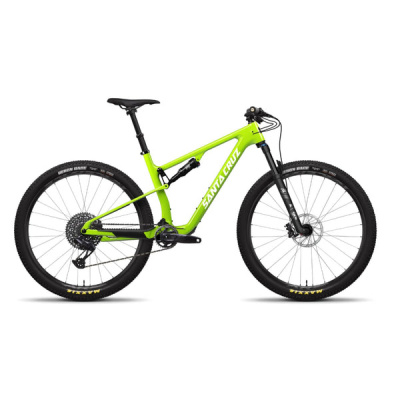
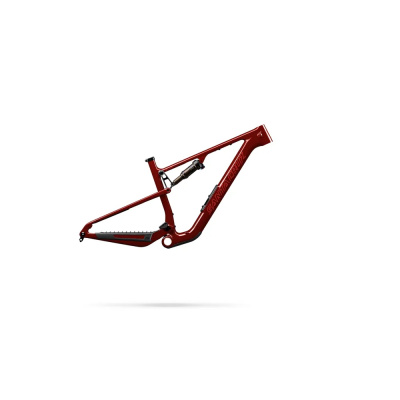

Prices and availability can change quickly. Delivery charges are not always included in listed prices.
Final price, stock status and delivery terms are set by retailer. We may receive a commission on purchases made.
Bikesy's Verdict
The Blur is Santa Cruz's purest expression of XC speed: light enough to climb like a hardtail, supple enough to stay composed on rough trails, and lively enough to make every ride feel like a race. The Superlight suspension is the star - it delivers traction and comfort without sacrificing efficiency, and it scales beautifully from smooth fire roads to technical singletrack. If you're chasing podiums in XC or marathon events, the Blur is one of the fastest tools available.
The TR variant broadens the brief just enough to make the bike genuinely versatile. You still get that featherweight climbing speed, but you gain enough descending confidence to ride harder trails without feeling like you're on the edge. It's a brilliant choice if you want one bike for racing and weekend rides, or if you simply prefer a bit more cushion without adding weight or dulling the bike's edge. The XC version, meanwhile, is uncompromising - lighter, sharper, and built for riders who live by the stopwatch.
It's expensive, especially in Carbon CC trim with premium components, but the quality is undeniable. The frame is beautifully made, the geometry is well judged, and the lifetime warranty backs up Santa Cruz's confidence in their engineering. If you want the fastest, most capable XC bike you can buy, and you're willing to pay for it, the Blur delivers.
Pros
- Exceptionally light Carbon CC frame at 1.86 kg
- Superlight suspension: supple, active, efficient under power
- Climbs with relentless speed and traction
- TR geometry adds confidence without sacrificing XC pace
- Lifetime warranty on frame and bearings
Cons
- Expensive, especially Carbon CC builds with premium components
- Limited descending capability compared to longer-travel trail bikes
- Dropper travel can be modest on smaller frames or XC specs
About the Santa Cruz Blur
The Blur has always been Santa Cruz's answer to the question: how light, how fast, and how capable can a full-suspension XC bike actually be? For 2026 the answer remains emphatic. Built around a carbon frame that tips the scales at barely 1.86 kg in Carbon CC trim, the Blur pairs that featherweight foundation with a single-pivot Superlight suspension platform that ditches the brand's signature VPP for something simpler, lighter, and startlingly supple. You get 115 mm of rear travel in the TR (trail) spec or 107 mm in the pure XC race configuration, both mated to 120 mm forks (or 110/107 mm on the XC variant). It's a bike that climbs like it's been launched from a catapult and descends with more composure than you'd expect from something this lean.
What sets the Blur apart isn't just the numbers on the scale. It's the way those flex stays deliver an initial stroke that soaks up trail chatter without wallowing under power, the way the geometry strikes a balance between race-day urgency and real-world confidence, and the way Santa Cruz has threaded the needle between outright speed and genuine usability. Whether you're chasing podiums in marathon events or simply want the fastest tool for your local singletrack, the Blur makes a compelling case. It's not trying to be a trail bike in disguise - it's an XC weapon that happens to ride better than most XC weapons have any right to.
The TR variant nudges the head angle back a fraction, adds a touch more travel, and opens the door to riders who want XC speed without sacrificing too much confidence when the trail tilts down. The XC version, meanwhile, is unashamedly focused: lighter, sharper, and built for riders who live by the stopwatch. Both share the same fundamental character - lively, responsive, and eager to accelerate - but the TR gives you a bit more breathing room when the terrain gets scrappy.
Santa Cruz Blur geometry
The Blur's geometry reflects its dual personality. In TR guise the head angle sits at 67.1 degrees across all sizes, which is calm enough to inspire confidence on technical descents without feeling sluggish when you need to flick the bike through tight switchbacks. Reach grows from 425 mm in small to 495 mm in extra-large, putting you in a position that's forward enough to weight the front wheel on climbs but not so stretched that you lose manoeuvrability. Stack climbs steadily with size, keeping the cockpit comfortable for long days without forcing an overly upright posture that bleeds speed.
Chainstays are locked at 430 mm regardless of frame size, which keeps the rear end snappy and responsive. You'll feel that short back end when you need to pop the bike over roots or change direction mid-corner - it's eager, almost playful, but never twitchy. The seat angle steepens slightly as you drop through the sizes (76.5 degrees on small, 76.0 on XL), which keeps your weight centred over the bottom bracket and helps you drive power through the pedals without sliding forward on steep climbs. Bottom bracket drop is a consistent 52 mm, low enough to feel planted in corners but high enough to clear most trail furniture without constant pedal strikes.
The XC version tightens things up further - steeper angles, slightly shorter travel - but the fundamental posture remains. You're perched in a position that encourages aggression, rewards smooth pedalling, and doesn't punish you when the trail gets rough. It's a geometry that feels at home on fire roads and singletrack alike, and it scales well across the size range without any awkward compromises.
Component choices & upgrades
The Blur arrives with builds that are already well sorted for their intended use. SRAM Eagle drivetrains - GX, X01, or XX1 depending on the spec - deliver the wide-range gearing you need for XC racing, with the newer T-Type transmission models offering robust, integrated shifting that's harder to knock out of tune. Fox or RockShox suspension is specced to match the frame's character: Fox 34 Stepcast or RockShox SID forks up front, Fox Float SL or RockShox SID Deluxe shocks out back, all tuned to balance support and suppleness. Brakes are typically SRAM Level or DB8 units with 160 or 180 mm rotors, which is ample for XC duties.
Wheels are a highlight. RaceFace AR Offset rims are common across mid-tier builds, offering a sensible internal width and proven durability. Higher-end models sometimes roll on Reserve 28 XC hoops, which are lighter and stiffer but come at a premium. Tyres lean towards fast-rolling options like the Maxxis Rekon Race or Aspen, both in 2.4-inch widths that strike a balance between grip and speed. If you're riding wetter, looser trails you might want to swap in something with more aggressive side knobs, but the stock rubber is well chosen for dry, hardpack conditions.
Dropper posts are fitted across most builds - OneUp or Fox Transfer units with 31.6 mm diameters - though travel can be modest on smaller frames or pure XC specs. If you're spending more time on technical descents you might want to upgrade to a longer-travel post, assuming your frame size allows it. Cockpit components are functional rather than flashy: SRAM or RaceFace stems and bars, typically 760 mm wide and 50 - 60 mm long, which suits the bike's quick handling. If you prefer a wider bar for more leverage on descents, that's an easy swap, but the stock setup works well for most riders.
Upgrades should be driven by your riding, not by restlessness. If you're racing and chasing every gram, a Reserve wheelset and XX1 drivetrain will shave weight and sharpen response. If you're riding rougher trails more often, consider a burlier tyre and perhaps a slightly wider rim. But the stock builds are thoughtfully assembled, and you'll get more from dialling in suspension settings and tyre pressures than from throwing money at marginal gains.
Where the Santa Cruz Blur excels
The Blur is outstanding at cross-country racing and marathon events. If your weekends involve mass-start XC races, long fire-road climbs punctuated by technical singletrack, or any scenario where pedalling efficiency and low weight are paramount, this bike will reward you. It climbs with a relentless, almost unfair efficiency - the Superlight suspension stays active enough to maintain traction but doesn't bob or wallow when you're out of the saddle hammering. On smooth, fast trails it feels like it has a motor, and on technical climbs it tracks cleanly without demanding constant line corrections.
The TR version extends that capability into faster, rougher trail riding. It's not a full trail bike - you won't want to session jump lines or charge through rock gardens at enduro pace - but it handles flowy singletrack, small drops, and punchy descents with more confidence than a pure XC race bike. The extra travel and slightly slacker geometry give you enough headroom to push harder on the downs without feeling like you're riding on eggshells. It's a brilliant choice if you want one bike for XC racing and weekend trail rides, or if you simply prefer a bit more cushion without sacrificing climbing speed.
Where the Blur is less ideal: proper enduro terrain, bike parks, or anything that demands long-travel suspension and slack geometry. It's not built for big hits or sustained rough descending, and while it'll survive the occasional rock garden, you'll be working harder than you would on a bike with 150 mm of travel and a 65-degree head angle. It's also not the bike for riders who prioritise comfort over speed - the geometry is purposeful, the ride position is forward, and the suspension is tuned for efficiency rather than plushness. If you want a bike that feels like an armchair on long, mellow rides, look elsewhere. But if you want to go fast on varied terrain and you're willing to meet the bike halfway with your riding, the Blur is exceptional.
Santa Cruz Blur FAQs
What is the difference between Santa Cruz Blur C and CC?
Carbon CC is Santa Cruz's premium layup: lighter, stiffer, and more expensive, with the frame weighing around 1.86 kg. Carbon C uses a different layup that's slightly heavier but offers the same strength and geometry at a lower price point. Both frames carry the same lifetime warranty, so the choice comes down to whether you're chasing every gram or prioritising value.
Is the Santa Cruz Blur good for trail riding?
The TR version is capable on trails, especially fast, flowy singletrack with moderate technical features. It's not a dedicated trail bike - you'll feel the limits on rough, steep descents - but it handles more than a pure XC race bike and offers a good balance if you want one bike for racing and weekend rides. The XC version is less suited to trail riding and is best kept on smoother, faster terrain.
How much travel does the Santa Cruz Blur have?
The TR spec offers 115 mm of rear travel paired with 120 mm forks. The XC race version drops to 107 mm rear travel and typically runs 110 or 107 mm forks. Both configurations use the Superlight single-pivot suspension with flex stays, which prioritises low weight and pedalling efficiency while still delivering a supple, active feel.
What is the weight of a Santa Cruz Blur Carbon CC frame?
The Carbon CC frame weighs approximately 1.86 kg (4.09 lbs), making it one of the lightest full-suspension XC frames available. Complete bike weights vary by build but typically range from around 10.4 kg for high-end Carbon CC builds to just under 12 kg for Carbon C models with more accessible components.
What kind of riding is the Santa Cruz Blur best suited for?
The Blur is best suited for cross-country racing, marathon events, and fast trail riding where climbing efficiency and low weight are priorities. The TR version extends that capability to more technical, varied trails, while the XC version is focused purely on racing and smooth, fast terrain. It's not designed for enduro, bike parks, or sustained rough descending.
Can I fit a longer travel fork on a Santa Cruz Blur?
Santa Cruz recommends 100 - 120 mm forks for the Blur, and fitting a longer-travel fork will slacken the geometry and raise the bottom bracket, which can compromise the bike's handling and pedalling efficiency. If you're tempted to add more travel, you're probably better served by a different bike - the Blur's geometry and suspension are optimised for its intended travel range, and pushing beyond that will dull its strengths.
What is the intended use of the Santa Cruz Blur?
The Blur is intended for XC racing, marathon racing, and fast trail riding. It's designed for riders who prioritise speed, efficiency, and low weight, and who are comfortable on a bike with a forward, purposeful geometry. The TR version broadens that remit slightly to include more technical trail riding, but the core focus remains on covering ground quickly and climbing efficiently.
Key Features & Benefits
- Superlight single-pivot suspension with flex stays: Delivers supple traction and trail compliance while staying efficient under hard pedalling, so you climb faster without sacrificing control on rough sections
- Carbon CC or Carbon C frame options: Choose the ultra-light 1.86 kg Carbon CC for maximum performance or the slightly heavier Carbon C for similar strength and geometry at a lower price
- XC and TR geometry variants: Pick the pure-race XC setup for stopwatch-chasing speed or the TR configuration for more confidence and capability on technical, varied trails
- UDH and SRAM Eagle T-Type compatibility: Future-proof drivetrain integration with robust, reliable shifting that's harder to knock out of tune, even on rough trails
- Two or three bottle mounts depending on size: Carry enough water for long marathon rides or all-day epics without resorting to a pack, keeping weight low and comfort high
Santa Cruz Blur 2025, 2024 & 2023 differences
The 2025 and 2024 model years share the same fundamental platform introduced in the 2021 redesign, which brought the Superlight single-pivot suspension and flex stays in place of the earlier VPP system. Geometry, travel options (XC and TR), and frame construction (Carbon CC and Carbon C) have remained consistent across these years. Component specifications have evolved with drivetrain updates - newer builds feature SRAM Eagle T-Type transmission, while earlier models used standard Eagle drivetrains - but the frame itself has seen no significant changes.
The 2023 models similarly carried forward the Superlight platform with minor component updates and colour options. Suspension tuning and shock models have been refined incrementally, with Fox Float SL and RockShox SID Deluxe shocks appearing across the range depending on build level. Wheel and tyre choices have shifted slightly - Reserve 28 XC wheels became more common on higher-end builds, and Maxxis Rekon Race tyres replaced some earlier Aspen specs - but the core ride character and capabilities have remained unchanged.
Earlier generations (2018 - 2020) featured VPP suspension and different geometry, representing a distinct platform. The current Superlight design, introduced in 2021, marked a significant departure towards lighter weight and simpler suspension kinematics, and that architecture has been stable through 2023, 2024, 2025, and into 2026.
Alternatives to Consider
Within Santa Cruz's own range, the Highball is the hardtail XC counterpart - lighter still, more efficient on smooth trails, but without the rear suspension cushion when things get rough. If you want more travel and trail capability, the Tallboy steps up to 120 mm rear travel and slacker geometry, bridging the gap between XC and proper trail riding.
Cross-brand, the Specialized Epic is the Blur's most direct rival: similarly light, similarly efficient, with Specialized's Brain suspension tech offering a different take on pedalling performance. The Scott Spark RC 900 brings TwinLoc remote suspension control and a slightly more planted feel, while the Orbea Oiz M10 offers a similar weight and travel envelope with a more progressive suspension curve. For riders chasing outright speed, the Cervélo ZFS-5 leans even harder into aero efficiency and stiffness, though it sacrifices some of the Blur's trail manners. If you want a touch more aggression without leaving the XC category, the Specialized Epic EVO and Yeti SB100 both offer slightly slacker geometry and more forgiving suspension, edging into downcountry territory while still climbing quickly.
Reviews
Lightweight builds and race-day geometry often come with a harsh, unforgiving ride, but the Superlight suspension defies that expectation. Flex stays deliver an initial stroke that's genuinely supple, soaking up trail chatter and keeping the rear tyre glued to the ground even when you're climbing over roots or loose rock. When you stand and sprint the platform firms up enough to prevent bob, yet it never feels locked out or dead - there's always a bit of give, always a bit of traction in reserve.
Climbing is where the Blur makes its strongest case. We've spent time studying how it behaves on long fire-road grinds and technical singletrack ascents, and the consensus is clear: this bike accelerates like it's been stung, holds momentum with minimal effort, and tracks cleanly through rough sections without demanding constant corrections. Because the suspension stays active you can sit and spin through technical climbs that would have you out of the saddle on a hardtail, and the steep seat angle keeps your weight centred so you're driving power straight down rather than sliding forward.
Descending reveals the difference between the XC and TR variants. The XC version is quick and capable on smooth, fast trails, but it asks you to pick clean lines and stay light on rough sections - it's a race bike, and it rides like one. The TR configuration adds enough travel and geometry slack to let you push harder on technical descents, carry more speed through rock gardens, and generally ride with less precision. It's not a trail bike, but it's confident enough that you won't feel like you're tiptoeing down anything short of proper enduro terrain.
Handling is lively without being nervous. Short chainstays and a forward cockpit position make the Blur eager to change direction, and it rewards smooth, deliberate inputs rather than ham-fisted corrections. When you weight the outside pedal and lean into a berm the bike carves cleanly; when you need to hop over a root or adjust your line mid-corner it responds instantly. That agility is a double-edged sword on very rough, high-speed descents - you'll work harder to keep it settled than you would on a longer, slacker bike - but on the climbs and flowy trails where the Blur spends most of its time, it's a joy.
Component choices across the range are sensible. SRAM Eagle drivetrains shift cleanly and offer the range you need for XC racing, while Fox and RockShox suspension is well tuned to the frame's character. Reserve wheels on higher-end builds are noticeably lighter and stiffer, but the stock RaceFace rims are durable and wide enough for modern tyre volumes. Tyres lean towards fast-rolling options, which suits the bike's intent, though you might want more aggressive rubber if you're riding loose or wet trails regularly.
Full Specification
| Spec | Value |
|---|---|
| Frame Material | Carbon C or Carbon CC |
| Frame Design | Full suspension single-pivot Superlight with flex stays |
| Frame Features | Internal cable routing; UDH; Post-mount rear brake; IS41/52 integrated headset; 73mm threaded bottom bracket |
| Tyre Clearance | Up to 2.4 inches |
| Water Bottle Mounts | Two (S); three (M, L, XL) |
| Rear Axle Spacing | Boost 148x12mm |
| Fork Compatibility | 100 - 120mm travel |
| Fork Offset | 44mm |
| Rear Travel (TR) | 115mm |
| Rear Travel (XC) | 107mm |
| Front Travel | 120mm (standard); 110 - 107mm (XC variant) |
| Drivetrain | 1x SRAM Eagle |
| Shifters | SRAM Eagle T-Type or SRAM AXS Pod Controller |
| Rear Derailleur | SRAM GX Eagle T-Type, SRAM X01 Eagle, or SRAM XX1 Eagle |
| Crankset | SRAM DUB T-Type or SRAM X01 Eagle |
| Bottom Bracket | SRAM DUB 73mm threaded |
| Cassette | SRAM Eagle 10 - 52t |
| Chain | SRAM GX Eagle T-Type or SRAM Eagle |
| Brakes | Hydraulic disc |
| Brake Calipers | SRAM DB8, SRAM Level TLM, SRAM Level TLS, or SRAM Maven |
| Rotors | 160mm or 180mm |
| Rims | RaceFace AR Offset 27 29-inch or Reserve 28 XC |
| Hubs (Front) | DT Swiss 370 15x110mm |
| Hubs (Rear) | DT Swiss 370 12x148mm |
| Tyres (Front) | Maxxis Rekon Race 29x2.4WT, Maxxis Rekon 2.25, or Maxxis Aspen 29x2.4 |
| Tyres (Rear) | Maxxis Rekon Race 29x2.4WT, Maxxis Rekon 2.25, or Maxxis Aspen 29x2.4 |
| Handlebar | SRAM Atmos Flat Bar 31.8x760mm or Renthal Fatbar 760mm |
| Stem | SRAM Atmos 60mm or RaceFace Apex 50mm |
| Headset | Cane Creek 50 IS or Cane Creek 40 IS |
| Seatpost | OneUp Dropper Post 31.6mm, Fox Transfer, or equivalent 31.6mm dropper |
| Saddle | SDG Bel-Air V3 Lux-Alloy or WTB |
| Frame Weight (Carbon CC) | Approximately 1.86 kg (4.09 lbs) |
| Approximate Build Weight | 10.4 - 11.97 kg (23 - 26.39 lbs) |