
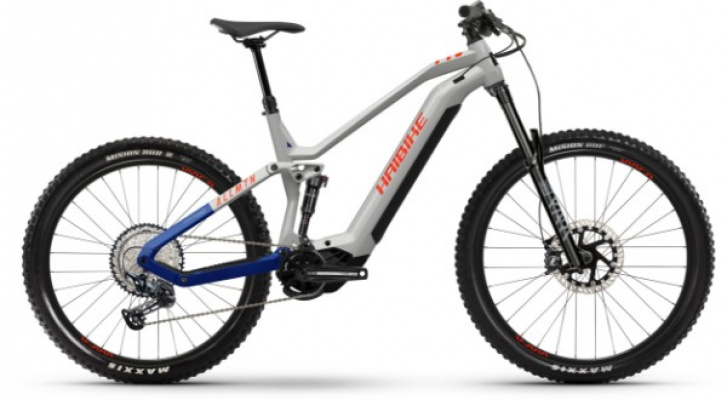
Haibike ALLMTN 7
Tackle steep climbs with confidence and rail descents on a powerful, stable platform built for demanding all-mountain riding.
- Yamaha PW-X3 motor: 85Nm torque, smooth high-cadence support
- 720Wh InTube battery for extended range
- Mullet setup: 29" front rolls over, 27.5" rear stays playful
- 160mm travel front and rear for rough terrain
- Modular Rail System for easy accessory mounting
- Magura four-piston brakes with 203mm rotors
Haibike ALLMTN 7 Deals

Prices and availability can change quickly. Delivery charges are not always included in listed prices.
Final price, stock status and delivery terms are set by retailer. We may receive a commission on purchases made.
Bikesy's Verdict
The Haibike ALLMTN 7 is a serious tool for riders who want to tackle steep, technical climbs without the suffering and then descend with confidence and control. The Yamaha PW-X3 motor is smooth, powerful, and efficient, the 720Wh battery delivers genuine range, and the geometry inspires stability without feeling sluggish. It's not the lightest or most playful bike in the category, but it's capable, well-specced, and built to handle demanding terrain day after day.
If you're a newer rider seeking a confidence-inspiring platform or an experienced hand looking for a versatile workhorse that covers serious ground, the ALLMTN 7 delivers. The mullet setup, strong brakes, and plush suspension make it a reassuring companion on unfamiliar trails, and the modular rail system adds practical versatility. It's a bike that rewards commitment and repays your trust with composed, predictable performance when the trail gets rough.
Pros
- Yamaha PW-X3 motor delivers smooth, powerful 85Nm torque with excellent high-cadence support
- 720Wh battery provides impressive range for long, demanding rides
- Stable, confidence-inspiring geometry with slack head angle and steep seat tube
- Magura four-piston brakes with 203mm rotors offer serious stopping power
- Mullet wheel setup balances rollover capability with rear-end agility
- Modular Rail System simplifies accessory mounting without frame clutter
Cons
- Around 24kg makes it heavier than lighter trail bikes if you're chasing nimble handling in tight sections
- Front-heavy weight distribution can feel less balanced on long, mellow tours where you're not constantly climbing
- Yamaha display ergonomics are less intuitive than Bosch or Shimano systems until you're familiar with them
About the Haibike ALLMTN 7
The Haibike ALLMTN 7 lands squarely in the aggressive all-mountain category, built around the premise that you want motor assistance for the climbs without sacrificing descending capability. This aluminium-framed machine pairs Yamaha's compact PW-X3 motor with a generous 720Wh battery, wrapped in modern geometry and 160mm of travel at both ends. It's the sort of bike that makes steep, technical ascents feel achievable and then rewards you with composed, confidence-inspiring behaviour when gravity takes over.
Haibike's approach here is uncompromising ePerformance - their term, but it fits. The ALLMTN 7 doesn't pretend to be a lightweight trail flyer or a pure enduro bruiser; instead it occupies the middle ground where powerful assistance meets versatile capability. You get a mullet wheel setup (29-inch front, 27.5-inch rear), four-piston Magura brakes, and a modular rail system that lets you bolt accessories directly to the frame without wrestling with straps or zip ties. It's a package aimed at riders who want to cover serious ground, climb gradients that would otherwise require a push, and descend with the sort of stability that keeps your heart rate in check.
The 2025 iteration continues to refine the formula, with suspension options from RockShox or FOX, SRAM or Shimano drivetrains, and a build quality that suggests Haibike expects this bike to take a beating. Whether you're a newer rider seeking confidence or an experienced hand looking for a capable workhorse, the ALLMTN 7 offers a compelling blend of power, range, and trail manners.
Haibike ALLMTN 7 geometry
The ALLMTN 7's geometry leans towards stability and confidence rather than razor-sharp agility. A slack head angle - around 65 degrees on previous iterations - plants the front wheel out ahead, giving you composure when the trail pitches down or the rocks pile up. That longer front centre means the bike tracks predictably through rough sections and doesn't get nervous when speed builds. You'll feel planted, not twitchy.
The steep seat tube angle, meanwhile, keeps your weight forward over the cranks when you're climbing. Combined with the Yamaha motor's smooth torque delivery, this geometry helps you maintain traction on steep, loose ascents where a slacker position would have the front wheel wandering. The reach figures are modern without being extreme, so you're not stretched out uncomfortably, and the stack gives enough height that you won't feel cramped in the cockpit.
Chainstays sit in the mid-range, balancing manoeuvrability with stability. The mullet wheel setup plays into this: the 29-inch front rolls over obstacles and holds momentum, while the 27.5-inch rear keeps the back end lively and responsive in tight corners. Bottom bracket drop is modest, giving you pedal clearance on technical climbs without sacrificing cornering stability. The overall effect is a bike that feels reassuring rather than playful - ideal if you're tackling unfamiliar trails or pushing your limits on descents.
Component choices & upgrades
The stock build on the ALLMTN 7 is already well sorted. Magura's MT7 or MT5 four-piston brakes with 203mm rotors front and rear deliver serious stopping power, and the SRAM GX Eagle or Shimano SLX 12-speed drivetrains offer wide-range gearing that's proven and reliable. The RockShox Yari or FOX 36 fork and RockShox Deluxe or FOX Float rear shock provide 160mm of plush, adjustable travel that handles rough terrain without fuss. Maxxis Minion tyres - DHF up front, DHR II at the back - are a benchmark combination for grip and durability. For most riders, this setup will do everything asked of it.
That said, if you're chasing marginal gains or your local trails demand more, there are sensible upgrade paths. A coil shock conversion could add suppleness and small-bump sensitivity if you ride particularly rocky or root-strewn terrain, though you'll sacrifice some pedalling efficiency. Upgrading to a FOX 38 fork would add stiffness and control for aggressive descending, but the weight penalty and cost are only worthwhile if you're regularly pushing hard on steep, rough lines.
Tyres are the easiest tweak: if you ride drier, hardpack trails, swapping to a faster-rolling rear tyre like a Maxxis Dissector or Schwalbe Magic Mary will reduce drag without giving up too much grip. Contact points - grips, saddle, pedals - are always personal, and upgrading to your preferred choices costs little but improves comfort significantly. The dropper post is functional, but if you want more travel or smoother action, aftermarket options from OneUp or PNW are straightforward swaps. The key is that the stock build doesn't leave you wanting; upgrades are about fine-tuning to your riding style, not fixing shortcomings.
Where the Haibike ALLMTN 7 excels
The ALLMTN 7 is outstanding at steep, technical climbing. The Yamaha PW-X3 motor delivers 85Nm of torque with a smooth, natural feel that supports you at higher cadences without the abrupt on-off character of some systems. Paired with the steep seat angle and grippy Minion tyres, this bike will haul you up gradients that would otherwise require a dismount. You'll maintain traction, keep momentum, and arrive at the top with energy to spare.
Descending is where the geometry and suspension pay dividends. The slack head angle and long wheelbase give you stability at speed, and the 160mm of travel soaks up impacts without feeling wallowy. The mullet setup means the front wheel rolls over obstacles confidently while the rear stays nimble enough to flick through tight corners. The Magura brakes inspire confidence - you can brake late and hard without fade. It's not the most playful bike on a descent, but it's composed and reassuring, which matters more when you're exploring new trails or pushing your comfort zone.
The 720Wh battery delivers impressive range. You'll comfortably manage long rides with significant elevation gain, and the motor's efficiency at higher cadences means you're not draining the battery on every climb. The modular rail system is a practical touch, letting you mount a bottle, tool, or spare battery without cluttering the frame with straps.
Where the ALLMTN 7 is less ideal: it's not a lightweight trail bike. At around 24kg, it's a substantial machine, and while the motor compensates on climbs, you'll feel the heft in tight, technical sections where you need to manhandle the bike. It's also not the sharpest tool for aggressive, race-pace riding - faster, more experienced riders might find it a touch sluggish compared to top-tier enduro machines. The Yamaha display ergonomics have drawn criticism for being less intuitive than Bosch or Shimano systems, though this is a minor niggle once you're familiar with it. Finally, the front-heavy weight distribution can feel less balanced on long, mellow tours where you're not constantly climbing or descending.
Haibike ALLMTN 7 FAQs
What is the range of the Haibike ALLMTN 7 with a 720Wh battery?
Range depends on terrain, rider weight, assist mode, and cadence, but expect 40 - 70km in mixed conditions with moderate assist. Steep climbs in high-power modes will drain the battery faster, while efficient pedalling on rolling terrain extends range significantly. The Yamaha motor's smooth high-cadence support helps maximise efficiency.
How does the Yamaha PW-X3 motor compare to Bosch motors?
The PW-X3 is more compact and lighter than Bosch's Performance Line CX, with slightly less peak torque (85Nm vs 85Nm on newer Bosch units) but a smoother, more natural power delivery, especially at higher cadences. Bosch systems often have more refined displays and connectivity, but the Yamaha feels more intuitive under pedal. Both are reliable and powerful; it's largely a matter of preference.
Is the Haibike ALLMTN 7 suitable for beginners?
Yes, particularly for beginners tackling challenging terrain. The motor assistance flattens the learning curve on climbs, and the stable geometry inspires confidence on descents. The weight requires some adjustment, but the bike's forgiving nature and powerful brakes make it accessible for newer riders building skills.
What is the recommended tyre pressure for the Maxxis Minion tyres on the ALLMTN 7?
Start around 22 - 25 psi rear, 20 - 23 psi front, adjusting for rider weight, terrain, and preference. Heavier riders or rocky trails may need a few psi more to avoid pinch flats; lighter riders or softer conditions can drop lower for better grip and compliance. Experiment to find your sweet spot.
How does the mullet wheel setup (29/27.5) affect the ALLMTN 7's handling?
The 29-inch front wheel rolls over obstacles more easily and holds momentum, improving stability and traction on descents and rough climbs. The 27.5-inch rear keeps the back end more manoeuvrable and playful in tight corners, and lowers the standover height slightly. The trade-off is a slightly less uniform feel compared to matched wheels, but most riders appreciate the blend of rollover and agility.
What are the maintenance intervals for the Haibike ALLMTN 7?
Service the suspension every 50 - 100 hours (lower leg service, full rebuild annually), check brake pads and rotor wear regularly, clean and lube the chain every few rides, and inspect the motor and battery connections periodically. Dropper posts benefit from occasional cleaning and lubrication. Follow Yamaha's motor service schedule - typically an annual check or every 1,000km - for optimal performance.
Can the Haibike ALLMTN 7 be used for bike park riding?
It's capable of handling bike park trails, particularly flow trails and moderate jump lines, thanks to its 160mm travel and robust build. However, it's heavier and less nimble than dedicated downhill or enduro race bikes, so it won't feel as sharp on tight, technical park features. The motor assistance is wasted on uplift-serviced parks, but if you're riding up and down, it's a solid choice.
What is the maximum rider weight for the Haibike ALLMTN 7?
Haibike typically rates their e-MTBs for a maximum system weight (rider plus bike plus gear) of around 120 - 130kg, though exact figures vary by model and year. Check the manual or contact Haibike directly for the specific limit. Heavier riders should also consider tyre pressure, spoke tension, and component durability for long-term reliability.
Key Features & Benefits
- Yamaha PW-X3 motor with 85Nm torque: Smooth, natural power delivery that supports you on steep climbs and maintains efficiency at higher cadences, so you tackle gradients that would otherwise require a push.
- 720Wh InTube battery: Extended range for long rides with significant elevation gain, reducing range anxiety and letting you explore further without worrying about running out of charge.
- Mullet wheel setup (29" front, 27.5" rear): Combines the rollover and momentum of a larger front wheel with the agility and manoeuvrability of a smaller rear, giving you confidence on descents and playfulness in corners.
- 160mm travel RockShox or FOX suspension: Plush, adjustable damping that absorbs rough terrain and impacts, keeping you comfortable and in control on demanding trails.
- Magura MT7/MT5 four-piston brakes with 203mm rotors: Powerful, fade-free stopping that inspires confidence on steep descents and technical sections, letting you brake late and hard when needed.
Haibike ALLMTN 7 2024 and 2023 differences
The 2024 ALLMTN 7 featured the same Yamaha PW-X3 motor and 720Wh InTube battery as the 2025 model, with a similar aluminium frame and 160mm travel suspension. Component spec typically included a FOX 36 Float Performance fork and FOX Float DPS Performance EVOL LV rear shock, along with SRAM or Shimano 12-speed drivetrains and Magura four-piston brakes. The geometry and mullet wheel setup remained consistent, so the 2025 iteration represents a refinement rather than a major overhaul.
Earlier models from 2022 continued the aluminium frame and Yamaha motor pairing, with 160mm travel and similar component choices. The 2021 model year saw the introduction of full carbon frame options for some bikes in the ALLMTN range, though the ALLMTN 7 typically remained aluminium. The 2021 bikes used the older Yamaha PW-X2 motor (80Nm) and a smaller 600Wh battery, with some models speccing FOX 38 FIT4 Factory forks and FOX DPX2 Factory shocks. Geometry was already modern, with a 65-degree head angle and 76.3-degree seat tube angle, so the core handling character has remained consistent across recent years. The shift to the PW-X3 motor and larger battery in later models brought smoother power delivery and extended range, but the fundamental all-mountain capability has been a constant.
Alternatives to Consider
Within Haibike's own range, the ALLMTN 6 offers a similar aluminium frame and Yamaha motor package but typically with slightly more budget-conscious components - a sensible step down if you're happy to sacrifice a tier of suspension or drivetrain performance for cost savings. Step up to the ALLMTN CF 9 and you'll gain a full carbon frame, shedding weight and adding stiffness, along with more premium suspension and finishing kit; it's the choice if you want the same capable geometry with less heft and sharper response.
Cross-brand, the Cube Stereo Hybrid 160 HPC SL is a direct rival, offering similar travel and a Bosch motor option with refined connectivity and display ergonomics. The Specialized Turbo Levo Comp brings Specialized's integrated tech and Mission Control app, with a slightly more trail-focused geometry that's playful without losing stability. The Trek Rail 7 pairs Bosch power with Trek's Mino Link adjustable geometry, giving you more versatility to tune handling for different trails. For a more budget-conscious alternative, the Giant Stance E+ 1 delivers capable all-mountain performance with Yamaha or Giant's own Syncdrive motor, though with slightly less premium suspension and finishing kit. Each of these machines offers a different balance of motor character, geometry, and component spec, so your choice hinges on whether you prioritise display refinement, weight, adjustability, or value.
Reviews
Steep, technical climbs reveal the ALLMTN 7's core strength. The Yamaha motor's 85Nm torque arrives smoothly, supporting you at higher cadences without the abrupt surge some systems deliver, and the steep seat angle keeps your weight planted over the cranks so traction holds even on loose, rocky gradients. You'll haul up ascents that would otherwise demand a dismount, arriving at the top with energy to spare. The 720Wh battery backs this up with impressive range, comfortably managing long rides with serious elevation gain.
When the trail tips downward, the slack head angle and long wheelbase deliver composed, confidence-inspiring stability. The 160mm of travel soaks up impacts without feeling vague, and the mullet setup means the front wheel rolls over obstacles predictably while the rear stays nimble enough to flick through tight corners. Magura's four-piston brakes are a highlight - powerful, fade-free, and reassuring when you need to scrub speed late into a corner or on a steep chute. It's not the most playful bike on a descent, but it's reassuring and capable, which matters more when you're exploring new trails or pushing your comfort zone.
The modular rail system is a practical touch, letting you mount accessories directly to the frame without wrestling with straps. Cable routing is mostly tidy, though some builds may need a bit of attention to keep things neat. The Yamaha display ergonomics draw occasional criticism for being less intuitive than Bosch or Shimano units, but once you're familiar with the interface it's a minor niggle. At around 24kg, the bike's heft is noticeable in tight, technical sections where you need to manhandle it, and the front-heavy weight distribution can feel less balanced on long, mellow tours. Faster, more aggressive riders might find it a touch sluggish compared to top-tier enduro machines, but for most riders tackling demanding all-mountain terrain, the ALLMTN 7 delivers a compelling blend of power, stability, and range.
Full Specification
| Frame Material | Aluminium |
| Motor | Yamaha PW-X3 |
| Motor Torque | 85 Nm |
| Battery | 720 Wh InTube |
| Fork | RockShox Yari RC or FOX 36 Float Performance/Factory, 160 mm travel |
| Rear Shock | FOX Float DPS Performance EVOL LV or RockShox Deluxe Select Plus, 160 mm travel |
| Drivetrain | 1×12 speed, SRAM GX Eagle or Shimano SLX M7100 |
| Cassette | SRAM Eagle PG1230 or Shimano M6100, 10-51T or 10-50T |
| Brakes | Magura MT7 or MT5, 4-piston hydraulic disc |
| Brake Rotors | 203 mm front and rear |
| Front Tyre | Maxxis Minion DHF 29" × 2.5" |
| Rear Tyre | Maxxis Minion DHR II 27.5" × 2.6" |
| Front Rim | WTB ST i30 TCS |
| Rear Rim | WTB ST i35 TCS |
| Front Hub | Haibike Components The Hub ++, 15×110 mm Boost |
| Rear Hub | Haibike Components The Hub ++, 12×148 mm Boost |
| Handlebar | Haibike Components TheBar +++ 780 mm |
| Stem | Haibike Components TheStem +++ (31.8 mm clamp) |
| Seatpost | Dropper post, 34.9 mm diameter |
| Saddle | fi'zi:k Terra Aidon X5-160 |
| Headset | Acros BlockLock |
| Crankset | Haibike Components The Crank ++ or SRAM X-Sync 2, 38T |
| Chain | SRAM SX Eagle or Shimano M6100 |
| Weight (Size L) | Approximately 24.0 kg |
| Available Sizes | S, M, L, XL |