
Wtb Saddles
WTB saddles have earned their place as a go-to contact point for riders who take the rough with the rougher - whether that's churning through Peak District grit, grinding out Scottish gravel epics, or railing singletrack in the Welsh valleys. The range covers everything from aggressive trail shapes to long-distance comfort builds, and the proprietary tech behind them is more considered than most saddle brands give themselves credit for.
The Love Channel - a central depression running the length of the saddle - takes meaningful pressure off soft tissue on long efforts, while the Flex-Tuned shell lets the saddle absorb high-frequency vibration rather than passing it straight into you. That matters more than it sounds on a poorly maintained bridleway at mile forty. ABR corners add abrasion-resistant material exactly where saddles take the most punishment: the edges. Drop your bike against a drystone wall or go down in wet mud and you'll appreciate that detail.
Sizing is handled through WTB's Fit Right System, which ties your wrist measurement to your sit bone width and steers you towards Narrow, Medium, or Wide. It takes the guesswork out of a decision that most riders still get wrong. Compare the Volt, Silverado, Koda, and Gravelier below.
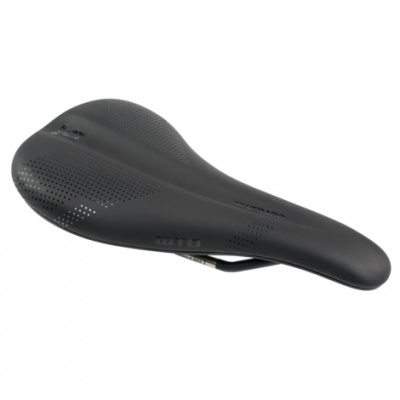
Prices and availability can change quickly. Delivery charges are not always included in listed prices.
Final price, stock status and delivery terms are set by retailer. We may receive a commission on purchases made.
Rails, Sizing, and What You Need to Know Before You Buy
Rail material is the first decision, and it's not just about weight. Steel rails are heavy but virtually indestructible - fine for a budget build or a winter hack. Cromoly drops some grams while keeping the toughness, and it's the option we'd point most riders towards if they want durability without paying premium prices. Stainless sits in a similar bracket but resists corrosion better, which matters if your bike lives in a shed and spends winter coated in road salt. Titanium rails flex fractionally under load, which some riders swear smooths out rough surfaces - there's something in it, particularly on long gravel days. Carbon rails are the lightest option, but they come with a catch worth underscoring.
WTB's carbon rails are 7x9mm oval rather than the standard 7x7mm round profile. If your seatpost uses a side-clamp mechanism designed for round rails, fitting a carbon-railed WTB saddle will crush and ruin the rail - no recovery from that. Top-down clamps handle oval rails correctly. Check your seatpost spec before ordering. It's the sort of thing that catches people out, and it shouldn't.
Sizing follows the Fit Right System: measure your wrist circumference at the widest point, and WTB's chart maps that to a likely sit bone width. From there, Narrow (130mm), Medium (142mm), and Wide (150mm) cover the spread. It's not infallible - body geometry is complicated - but it's a faster starting point than guessing, and it gets most riders into the right ballpark first time. The 7x9mm oval rails reference applies to carbon variants only; all other rail materials use standard round profiles compatible with most seatpost clamps.
Volt, Silverado, Koda, Gravelier: Matching the Shape to the Ride
The Volt is the one most MTB riders will recognise. It has a curved profile with a pronounced rear section - what WTB calls a whale-tail - that cups you in place on steep climbs and technical descents. If you're shifting your weight constantly, the Volt holds you without fighting you. It suits trail and enduro riding well, and it works on bikes where you're not spending long stretches in a static position. DNA padding keeps it firm enough to hold its shape over a full day without feeling like a park bench.
The Silverado is flatter and longer-nosed. That matters because it lets you slide fore and aft as the gradient or effort level changes - something XC racers and gravel riders do constantly without thinking about it. The best WTB saddle for gravel riding is almost always one of the Silverado variants, precisely because the flat deck rewards active position changes. If you're comparing WTB Volt vs Silverado, the simplest frame is this: curved and planted versus flat and mobile.
The Koda takes a different approach with its short nose and generous central cut-out. Spend six hours in the saddle on a bikepacking route and you'll understand why a shorter nose reduces perineal pressure during sustained seated efforts. The comfortable WTB saddle for bikepacking conversation usually starts and ends here. HLX padding - plush and shock-absorbing rather than dense - makes the Koda better at absorbing the constant vibration of loaded gravel tracks, though it adds a touch of weight compared to DNA-padded equivalents.
The Gravelier is built around the demands of an aggressive drop-bar position. Pressure distribution shifts dramatically when you're low and forward, and the Gravelier's geometry accounts for that, combining pressure relief with a profile that works in both the drops and on the hoods. Worth considering alongside Fabric saddles and Fizik saddles if you're riding a gravel or road bike and spending real time in a committed position.
On padding: HLX is the comfort-first choice - softer, more compliant, better at soaking up trail buzz, but heavier and less precise underfoot on longer efforts. DNA is denser and lighter, holds its shape better over time, and suits riders who want performance feel rather than cushioned compliance. The WTB saddle fit system and padding tier are separate decisions, which means you can get a Volt in either spec depending on how you ride.
If you're coming from brands like Ergon saddles or Brooks saddles, the WTB range sits between ergonomic touring comfort and performance racing shapes - versatile enough to cover most riding without being a specialist in any one direction.
Keeping Your WTB Saddle in Good Shape Through a UK Winter
UK riding is hard on saddles. The combination of mud, grit, and constant wet means abrasion is the main threat to longevity, not mechanical failure. WTB's ABR corners - abrasion-resistant reinforcement on the saddle edges - address exactly this. They're not a marketing detail; edges are where saddles fail first, particularly if you're leaning bikes against brick walls or crashing in gritty, wet mud. The reinforcement meaningfully extends the life of the cover in those spots.
The microfibre cover cleans well with mild soapy water and a soft cloth. Avoid harsh degreasers - they can work down through the cover and degrade the foam underneath, which shortens the padding's lifespan without you noticing until the saddle suddenly feels completely different. A rinse and gentle wipe after muddy rides is enough. Don't pressure wash directly onto the saddle.
Minimal or seamless stitching on WTB's higher-spec covers prevents water ingress during heavy downpours. That's worth noting if you commute or ride through autumn and winter regularly - water trapped under cover stitching accelerates foam breakdown. If you're pairing your saddle with WTB gravel and cyclocross tyres for year-round riding, it's worth treating the whole contact point setup with the same care. And if you're running WTB grips too, give those the same post-ride rinse - grit works into grip cores just as fast.
One practical note: if you're setting up a new saddle after a crash or replacing a worn one, check the rail clamp bolts are torqued to spec. Under-torqued clamps allow the saddle to rotate under load, which is annoying at best and dangerous at worst. Most seatpost manufacturers publish torque values - follow them.
Wtb Saddles FAQs
How do I choose the right size WTB saddle?
WTB's Fit Right System uses your wrist circumference as a proxy for sit bone width - measure at the widest point and cross-reference with WTB's chart. It'll point you towards Narrow (130mm), Medium (142mm), or Wide (150mm). It's not a guarantee, but it gets most riders closer than guessing from experience alone.
What is the difference between the WTB Volt and Silverado?
The Volt has a curved profile with a raised rear section that holds you in place - good for technical trail riding and steep climbs where you need the saddle to work with your position. The Silverado is flatter and longer-nosed, which suits XC and gravel riders who shift fore and aft regularly. Different tools for different styles of riding.
Do I need a special seatpost for WTB carbon rail saddles?
Yes. WTB carbon rails are 7x9mm oval, not the standard 7x7mm round. Side-clamp seatposts built for round rails will crush oval carbon rails - it's not repairable. You need a top-down clamp that's explicitly rated for oval rails. Check your seatpost spec carefully before ordering a carbon-railed saddle.