
Weeride Child Seats
WeeRide child seats take a fundamentally different approach to carrying small passengers on a bike - and once you've seen the logic, rear-mounted seats start to look a bit like an afterthought. Instead of bolting a child behind you where you can't see them, WeeRide's patented center-mounting bar places your little one between your arms, directly in your sightline. You can chat to them, spot when they're dozing off, and react before a flailing arm ends up somewhere it shouldn't.
The mounting bar itself clamps independently to your steerer tube at the front and your seatpost at the rear. That two-point fix distributes the child's weight across the bike rather than dumping it all at one end, which keeps handling noticeably more predictable - useful when you're threading through a narrow A-frame gate or picking a line along a rutted canal towpath. Because it doesn't rely on a rear rack or frame eyelets, it works on a far wider range of bikes than most riders expect, full-suspension mountain bikes included.
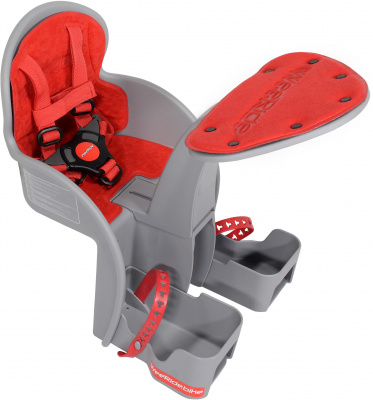
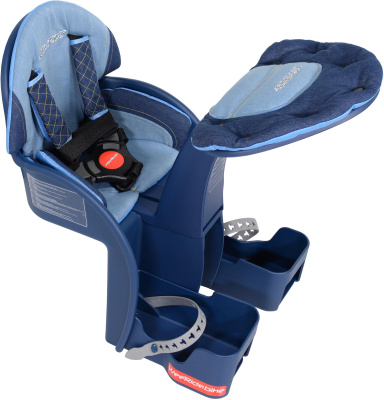
All models share the same core safety architecture: a 5-point harness, enclosed movable footrests that keep feet well clear of the spokes, and a padded headrest designed to catch a nodding head mid-ride. Browse the SafeFront range below to find the right fit for your bike and your riding.
Prices and availability can change quickly. Delivery charges are not always included in listed prices.
Final price, stock status and delivery terms are set by retailer. We may receive a commission on purchases made.
Will a WeeRide Mounting Bar Actually Fit Your Bike?
This is the question most people ask in the shop, and the honest answer is: probably yes, but check a couple of things first. The mounting bar needs clamping space on your steerer tube - typically at least 5mm of exposed steerer between the bottom of your stem and the top of your headset. Most mountain bikes and hybrids have this without any adjustment. Road bikes with stacked spacers removed and the stem slammed hard against the headset can be tighter, and bikes with extreme drop handlebars may leave the seat positioned awkwardly close to the bars once it's on.
At the rear, the bar clamps to your seatpost. Standard 27.2mm and 31.6mm alloy posts are straightforward. If your bike runs a carbon seatpost or a carbon steerer, you need to be more careful - clamping forces must stay within the manufacturer's torque limit, so check your frame manual before you reach for the torque wrench. A slipped clamp on a carbon tube isn't a minor inconvenience; it's a trip home in a van.
The good news for mountain bikers is that WeeRide's center mount design sidesteps the compatibility headaches that come with rear seats. No need for pannier bosses, no rack fitting around full-suspension linkages, no awkward clearance around a rear tyre with generous volume. If you've been told a child seat won't work on your trail bike, a WeeRide is worth a second look. Heavily oversized e-bike top tubes are the main frame type that occasionally causes fitment issues - the geometry can push the seat further back than ideal - so if you're running a large-format e-MTB, it's worth confirming dimensions before you buy. Hamax and Bobike offer alternative mounting systems if your frame genuinely won't play ball.
SafeFront vs SafeFront Deluxe: Where the Money Goes
WeeRide keeps the lineup fairly clean, which makes comparing models straightforward. The core safety architecture - the patented independent center-mounting bar, the 5-point harness, the enclosed movable footrests, and the padded headrest - is consistent across the range. You're not trading safety features for price. What changes as you move up is the quality of the materials wrapped around that structure.
The standard SafeFront uses functional padding that does the job on shorter rides. Step up to the Deluxe tier and you get noticeably thicker foam, more plush harness straps that sit more comfortably against a child's shoulders on longer outings, and a headrest with more robust outer fabric that holds its shape better after repeated use. If your family rides are mostly a 20-minute school run on dry days, the standard model is entirely sufficient. If you're spending two hours on a Sunday bimbling round a forest trail with a three-year-old who will absolutely fall asleep in the last 40 minutes, the Deluxe padding earns its keep.
It's worth comparing across the category before you commit. Thule child seats sit at the premium end and are worth a look if budget isn't the primary constraint. Kids Ride Shotgun takes a different front-mount approach - lighter and simpler, but without WeeRide's enclosed footrests or integrated headrest. The right choice depends on how long your rides are and how much your child sleeps in transit.
Keeping the Seat in Good Shape Through a UK Winter
British riding weather being what it is, a bit of maintenance thinking goes a long way. The padded inserts on WeeRide seats are removable, and it's worth pulling them out if the bike is stored in a damp shed or if you've been caught in a proper downpour. Foam that stays wet in a cold garage has a habit of going musty by spring. The outer fabric on most WeeRide models wipes clean easily enough - a damp cloth after a muddy canal towpath ride keeps it looking reasonable - but saturated inserts need air to dry fully before they go back in.
From a mechanical standpoint, the mounting bar clamps are the one thing that genuinely rewards regular attention. Rough bridleways, cobbled town centres, and the general bumpy chaos of UK cycling infrastructure all work at bolt torque over time. Get into the habit of checking both the front steerer tube clamp and the rear seatpost clamp every few rides - particularly after anything particularly choppy. If the bar has shifted even a few millimetres, re-torque and re-check the seat's alignment before your child gets back in it. It takes two minutes and it matters. A torque wrench is the right tool here; guessing by feel isn't good enough on a fitting that's holding a child to a moving bike.
Seatpost clearance is also worth monitoring across the season. If you swap seatposts or adjust saddle height significantly, recheck that the rear clamp is still positioned correctly and hasn't crept toward a collar or cable stop. Small changes to your bike setup can affect the bar position more than you'd expect.
Weeride Child Seats FAQs
Does a WeeRide fit any bike?
It fits the majority of bikes - including full-suspension mountain bikes - thanks to the independent mounting bar that clamps to the steerer tube and seatpost rather than relying on a rear rack. Exceptions include bikes with very little exposed steerer tube, heavily oversized e-bike top tubes, or extreme drop handlebars where positioning can become awkward. Carbon steerers and seatposts are compatible but require careful torque management.
What age can a child use a WeeRide seat?
WeeRide seats suit children roughly aged 1 to 4, provided the child can hold their own head up unsupported - essential for safe riding. The hard cut-off is a weight limit of 15kg, regardless of age. Once your child hits that limit, it's time to look at a trail-a-bike or cargo setup rather than pushing the seat beyond its rating.
How do you install a WeeRide mounting bar?
The bar clamps at two points: the steerer tube just below your stem, and the seatpost below your saddle. Fit both clamps loosely first, set the bar level, then torque the bolts evenly - don't fully tighten one side before the other. If you're working with carbon components, check the manufacturer's maximum clamp torque and stay within it. Give the bar a firm test wiggle before every ride.