
Viking E-Bikes
Viking E-Bikes have been part of British cycling life for well over a century, and the electric range channels that long familiarity with practical, no-nonsense riding into something genuinely useful for modern commuters. These aren't bikes chasing Strava segments or trail-centre bragging rights - they're designed for the rider who wants to get to work without arriving in a sweat, knock out the school run on two wheels, or simply rediscover their local lanes with a bit of battery-backed confidence.
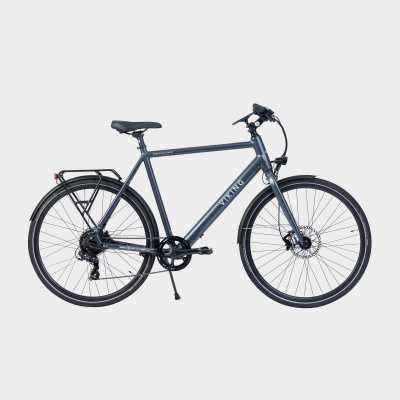
The range sits firmly in the accessible, entry-level bracket. You get step-through heritage models with upright geometry, compact folding options built around multi-modal commuting, and urban hybrids that come mudguard-ready and rack-equipped straight out of the box. Viking's focus is on pedal assist system simplicity, alloy frame durability, and a riding position that actually makes sense in stop-start city traffic - rather than packing in tech that adds cost without adding everyday usefulness.
If you're weighing up a first e-bike or replacing a tired conventional commuter, Viking electric bikes UK riders keep coming back to offer a clear proposition: reliable, comfortable, and priced so the decision doesn't keep you up at night.
Prices and availability can change quickly. Delivery charges are not always included in listed prices.
Final price, stock status and delivery terms are set by retailer. We may receive a commission on purchases made.
Decoding the Viking E-Bike Lineup
Viking organises its e-bike range around three broad families, and knowing which one fits your life makes the choice straightforward. The Heritage models - the Belgravia being the most recognisable - are built around a low-step or step-through frame that makes mounting and dismounting effortless. Think front basket, swept-back bars, and an upright position that lets you see over van roofs at junctions. These suit leisure riders, older cyclists returning to the saddle, and anyone who values ease of use over outright pace.
The urban and commuter hybrids sit in the middle ground: still relaxed in geometry, but with a slightly sportier stance and fewer heritage styling cues. They're the workhorse option - good for daily mileage on mixed roads without the added weight of a classic-style build. Then there's the folding range, headlined by the E-Go. Compact, practical, and aimed squarely at riders who need to combine cycling with trains or buses. The E-Go Compact Folding Mechanisms are designed with UK multi-modal transport in mind, so the fold is genuinely usable rather than a theoretical feature you try once and abandon.
What Viking doesn't do is chase the premium end of the market. You won't find mid-drive motors, full-suspension frames, or integrated GPS here. That's a deliberate choice, not an oversight - and it's worth understanding before you compare them with brands like Dawes e-bikes or Carrera e-bikes, which operate in an overlapping but slightly broader spec range. Viking's strength is in keeping things simple enough that ownership is genuinely low-friction.
The Viking Tech Philosophy: Simplicity Meets Heritage
The core of most Viking electric bikes is a rear hub motor - typically 250W, which is the UK legal ceiling for pedelecs - paired with a 36V battery range that keeps the system light, affordable, and easy to service. Hub-drive systems have a straightforward advantage: fewer moving parts than mid-drive setups, no chainring wear from motor torque, and a drivetrain that behaves much like a conventional bike when you're pedalling without assist. That matters for maintenance costs over a three-to-five-year ownership period.
The trade-off against a mid-drive is well understood. Hub motors deliver their power at the wheel rather than through the gears, which means they're less efficient on sustained climbs and can feel slightly less natural in their assistance delivery. For flat urban commuting or rolling countryside, you won't notice. On a long, steep drag - say, grinding up out of a valley in the Yorkshire Wolds loaded with panniers - a mid-drive from a higher-spec brand would handle it more smoothly. Viking's answer is that most of their riders simply don't need that.
The Heritage Geometry across the range deserves specific attention. The upright, relaxed riding position isn't just a styling choice - it places you higher in the sightline of car drivers, reduces strain on your lower back during longer commutes, and makes filtering through traffic feel less precarious. It's the geometry equivalent of riding a Dutch city bike rather than a road racer, and in dense urban traffic, that visibility genuinely matters. Claud Butler e-bikes take a similar approach to accessible urban geometry if you want a direct comparison point.
The Integrated 36V Hub-Drive Systems also keep battery integration clean and the overall weight manageable. Viking Viking e-bike reviews consistently note that the step-through models in particular feel easy to handle at low speed - relevant when you're manoeuvring in a crowded bike shelter or lifting the bike over a threshold.
Living with a Viking E-Bike in the UK
British weather doesn't ease up on commuter bikes, and Viking's spec choices reflect that. Full-length mudguards and pannier rack integration come as standard on most models - you're not buying a bike and then spending again to make it commute-ready. That out-of-the-box practicality is one of the clearest arguments for Viking over some rivals at a similar price point, where mudguards are an optional extra.
Battery care matters more in winter than most people realise. Lithium cells lose capacity noticeably in sub-zero temperatures, so bringing the removable battery indoors overnight during a cold snap is worth the habit. It's not just about range on a given ride - repeated cold-soaking accelerates long-term cell degradation. Most Viking batteries detach cleanly for exactly this reason. Charge it in the hallway, not the shed, and you'll be protecting the pack's longevity over hundreds of cycles.
The drivetrain needs attention too if you're riding through winter salt. Rear hub motors keep the electrical system away from the worst of the road muck, but the chain, cassette, and derailleur still take a battering from UK road grit between October and March. A rinse and re-lube every couple of weeks through winter is the minimum - ignore it and you'll be replacing components well before their time. The higher-volume tyres on Viking's urban models soak up urban commuting road surface abuse reasonably well on rigid frames, though if your regular route has serious pothole exposure, a gel saddle cover adds meaningful comfort at negligible cost.
For riders considering the folding E-Go specifically, the compact wheel size means it's more affected by surface irregularities than a full-size commuter. Fine for smooth tarmac and canal towpaths; less comfortable on rougher surfaces. Worth knowing before you commit. If folding portability isn't a hard requirement, a standard-wheeled urban model from Viking - or alternatives like Apollo e-bikes or Assist e-bikes - will ride more planted over broken road surfaces.
Overall, Viking electric bikes UK commuters find practical are practical precisely because the spec is honest about what the bikes are for. They're not pretending to be performance machines. Fit them with a decent lock, keep the battery warm, and stay on top of the drivetrain, and they'll cover years of daily miles without drama.
Viking E-Bikes FAQs
Are Viking electric bikes any good?
For the price point, yes - genuinely. Viking e-bikes are built around entry-level components that prioritise reliability and ease of use over high-end performance figures. If you're commuting daily, doing leisure rides, or running errands, they do the job well. Don't expect them to compete with premium mid-drive systems, but for their intended use they're solid, comfortable bikes.
How long does a Viking e-bike battery last?
Most models return 25 to 45 miles per charge depending on assist level, your weight, and how hilly your route is. The battery pack itself typically manages 500 to 800 full charge cycles before you'll see a meaningful drop in maximum range. Keeping it indoors during cold weather and avoiding full discharge regularly will help it last towards the top of that window.
Are Viking e-bikes suitable for hilly areas?
Their 250W rear hub motors handle moderate urban inclines and rolling hills without much fuss. For steeper, sustained climbs - particularly loaded up with shopping or panniers - they'll manage, though the assist will work harder and range will drop. If your commute involves serious hills day in, day out, a mid-drive motor from a more performance-focused brand would serve you better long-term.