
Van Rysel Smart Turbo Trainers
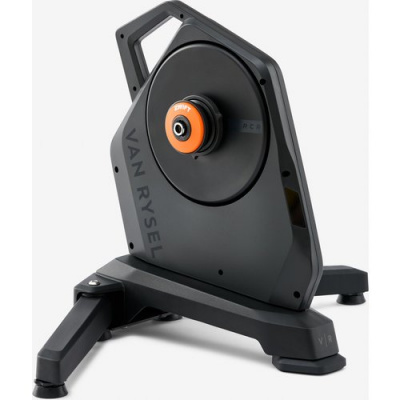
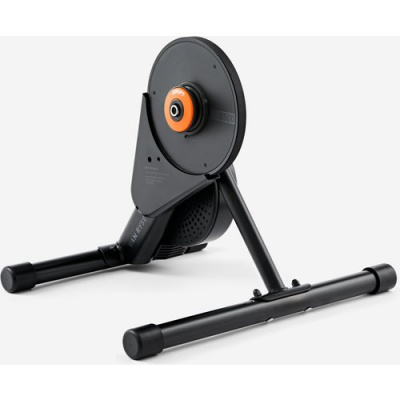
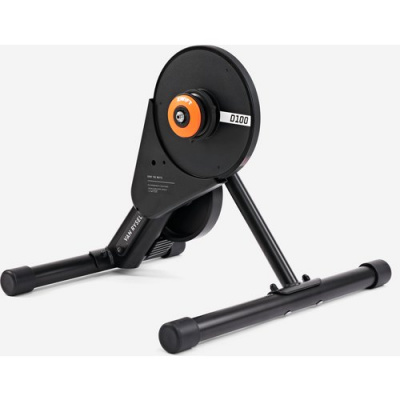
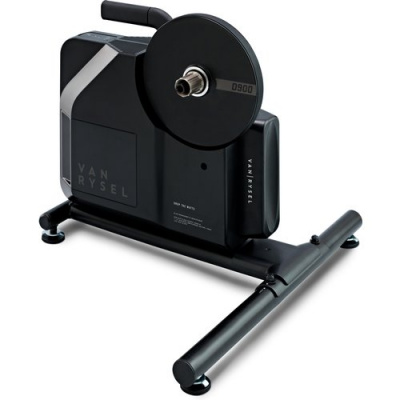
Van Rysel smart turbo trainers make a convincing case for moving your training indoors when the roads turn filthy and the daylight disappears by half three. These are direct-drive interactive trainers built around precise power measurement, quiet operation, and genuinely seamless connectivity with platforms like Zwift, Rouvy, and TrainerRoad. Forget the tyre-slip and wobble of older wheel-on units - Van Rysel's direct drive transmission locks your drivetrain straight into the resistance unit, giving you power data you can actually trust and a ride feel that's closer to tarmac than a turbo session has any right to be. The range spans accessible entry points through to the performance-focused D900, which delivers power accuracy to within plus or minus two per cent and handles max wattage outputs that'll test even well-conditioned riders. ERG mode keeps your intervals honest, resistance shifts automatically to match simulated gradients up to 20 per cent, and dual-band ANT+ FE-C and Bluetooth FTMS mean the trainer talks fluently to virtually every training app on the market. For UK riders squeezed into a spare room or garage through a five-month winter, that combination of accuracy, quiet running, and broad compatibility is exactly what matters.
Prices and availability can change quickly. Delivery charges are not always included in listed prices.
Final price, stock status and delivery terms are set by retailer. We may receive a commission on purchases made.
How the Tech Ecosystem Actually Hangs Together
Van Rysel smart trainers broadcast simultaneously over both Bluetooth FTMS and ANT+ FE-C, which means they'll connect to your phone, tablet, laptop, or dedicated head unit without any faffing about with dongles or pairing headaches. Open Zwift and the trainer appears. Same with Rouvy, TrainerRoad, Wahoo's app, or pretty much anything built to modern open standards. That's not a given across the market - some brands still require proprietary apps as a bridge - so it's worth calling out.
Once paired, the trainer operates in two main modes depending on what your app is asking for. In simulation mode, resistance adjusts dynamically as virtual roads change gradient - the trainer steepens the load as you hit a virtual climb and backs off on descents. Simulated gradients run up to 20 per cent on the higher-spec models, which is steep enough to make a 53/39 feel very inadequate. Switch to ERG mode for structured intervals and the trainer holds a precise power target regardless of your cadence, so you can focus on hitting the numbers rather than constantly adjusting your effort. It's the kind of consistency that makes threshold blocks and VO2 sessions genuinely productive rather than a guessing game.
If you're weighing up Van Rysel against the broader market, Wahoo smart trainers and Elite smart trainers occupy similar ground with their own connectivity approaches and app ecosystems - worth a look if you want to compare specs directly. And if you're not ready to commit to a smart unit yet and just want a straightforward resistance trainer to spin out tired legs, our regular turbo trainers category covers the wheel-on options without the interactive pricing.
Flywheel, Power Limits, and Why Your Neighbours Might Actually Forgive You
The physical specs that separate a trainer worth owning from one that collects dust come down to three things: flywheel weight, maximum power output, and noise. Van Rysel's direct drive design addresses all three with more conviction than wheel-on alternatives manage.
Flywheel weight shapes how the trainer feels under load. A heavier flywheel stores more kinetic energy as it spins, which smooths out the dead spot at the bottom of each pedal stroke and gives the resistance a quality closer to rolling momentum on an actual road. It's the difference between pedalling through treacle and pedalling through something that behaves like forward motion. The D900 sits at the top of the range here, with power handling up to 2000W for sprint efforts and a flywheel that contributes to that more natural ride feel through sustained efforts.
Noise is a serious consideration for anyone living in a UK terrace or flat. Direct drive eliminates the tyre-on-roller contact that makes wheel-on trainers sound like a jet engine spooling up, so your downstairs neighbour is dealing with drivetrain hum rather than something that rattles the pictures off the wall. Pair the trainer with a good mat and you're managing vibration transmission through the floor as well. It won't be silent - no trainer is - but it's a meaningful step down from wheel-on running noise, and it's the kind of detail that keeps a training setup viable long-term in shared housing.
The D500 sits below the D900 in the range and makes sense for riders whose training doesn't regularly push into high wattage sprint territory. If your sessions are mostly aerobic work and structured endurance intervals, the D500 covers that ground without the premium of the top-spec model. Know what you're actually training for before you spend up.
Getting It Set Up Without the Usual Faff
Direct-drive trainers take more than five minutes to unbox and ride, and it's worth being straight about that. The most common catch is the cassette. Most Van Rysel direct-drive trainers ship without one, so you'll need to buy a cassette that matches your bike's drivetrain - 11-speed Shimano is the most common starting point - and fit it to the trainer's freehub body before you can turn a pedal. If you've never changed a cassette before, it's a ten-minute job with a chain whip and lockring tool, and a quick search brings up plenty of clear guides. Just make sure you match the speed count and freehub standard before you order.
Axle compatibility is the other thing to check. Van Rysel trainers typically ship with adapters covering the most common standards, but verify whether your bike runs quick-release or thru-axle and in what diameter before assuming the box contains what you need. A 142x12 thru-axle bike and a quick-release frame need different setups, and it's a frustrating discovery to make when you've already cleared the spare room.
Setting up Van Rysel smart trainer hardware is straightforward once the cassette and axle are sorted - shift into the small ring, clamp the bike in, connect to your app, and you're ready to ride. Calibrate after a ten-minute warm-up and you'll be getting the most accurate power numbers the unit can produce.
UK spare rooms in winter are humid, poorly ventilated, and brutal on bike components. Sweat drips onto stems, headsets, and top tubes and causes corrosion that's invisible until it's a problem. A sweat guard over the stem and top tube is cheap insurance, and a trainer mat protects your floor while dampening vibration. Head over to our turbo trainer accessories section for mats, guards, and riser blocks to keep your front wheel level - all the bits that make a winter training setup actually comfortable to use session after session.
If you're building out a full indoor training setup, it's also worth pairing your trainer with kit that works hard in that environment. Van Rysel's own base layers and bib shorts are designed with performance cycling in mind and carry the same value-for-spec approach as the trainers themselves.
Van Rysel Smart Turbo Trainers FAQs
Does the Van Rysel smart trainer work with Zwift?
Yes. Van Rysel smart trainers broadcast over both Bluetooth FTMS and ANT+ FE-C, so they connect directly to Zwift, TrainerRoad, and Rouvy without any additional hardware or bridging app. Resistance adjusts automatically in response to virtual gradients and ERG mode power targets.
Do I need to buy a cassette for my Van Rysel turbo trainer?
Almost certainly, yes. Most Van Rysel direct-drive models don't include a cassette in the box. You'll need to fit one that matches your bike's drivetrain - 11-speed Shimano is the most common - before your first ride. Check your speed count and freehub standard before ordering.
How do I calibrate my Van Rysel smart trainer?
Run a spin-down calibration through your training app - Zwift and most others have this built into their device settings. Do it after a ten-minute warm-up ride so the unit is at operating temperature. That gives the internal sensors the best conditions to produce accurate, consistent power readings.