
Van Rysel E-Bikes
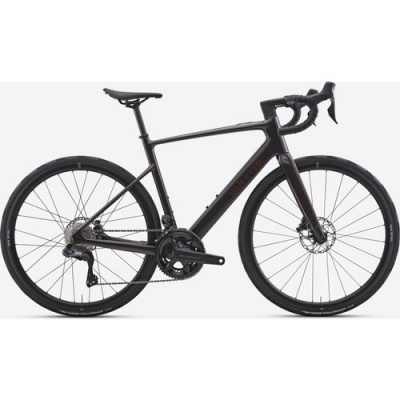
Van Rysel E-Bikes occupy a genuinely interesting corner of the e-road market - Decathlon's obsessive cost-engineering applied to a category that usually demands deep pockets. These aren't heavy commuter machines with a battery bolted on as an afterthought. The E-EDR range is built around lightweight integration and a ride feel that stays close to a conventional road bike, which is a harder thing to achieve than it sounds.
The key is the Mahle X35 hub motor. Tucked into the rear wheel, it delivers pedal assist without the bulk or weight penalty of a mid-drive unit, and - crucially - it produces zero drag once you're rolling above 15.5mph. That matters on a road bike. You're not fighting the motor when you don't need it.
Endurance geometry runs through the whole lineup. Slightly more stack, a touch more reach stability - it's shaped for long days in the saddle rather than criterium aggression, which suits most UK riders perfectly. Whether you're managing a knee niggle, trying to keep pace with a quicker group, or just want to stop dreading that climb on the way home, the E-EDR builds make a coherent case. Shimano 105 spec on the value builds keeps the drivetrain dependable without unnecessary complication.
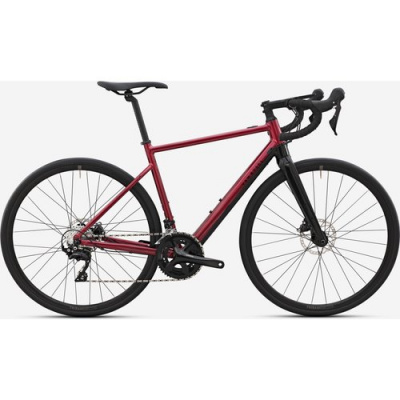
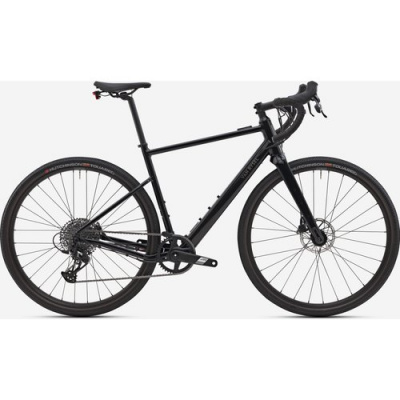
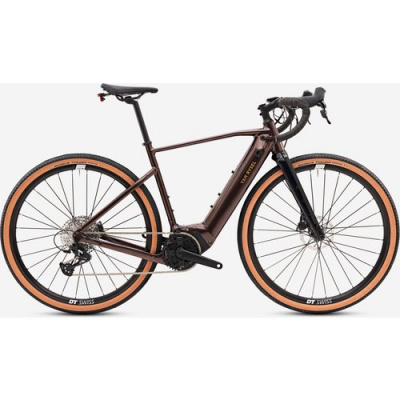
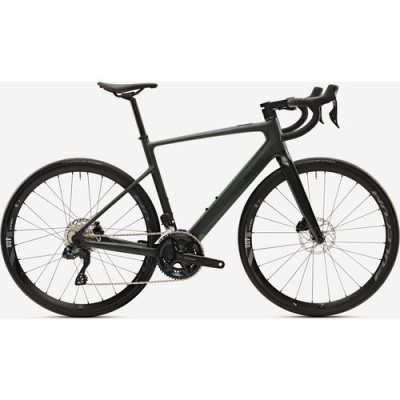
Prices and availability can change quickly. Delivery charges are not always included in listed prices.
Final price, stock status and delivery terms are set by retailer. We may receive a commission on purchases made.
Decoding the Van Rysel E-Bike Lineup
The E-EDR family breaks down into two clear paths: aluminium frame (AF) and carbon frame (CF). The AF models keep the weight and cost down enough that the electric assist genuinely makes sense as a value proposition - you're getting a capable endurance road bike with a hidden motor, not a compromise. Step up to the CF builds and the VR Carbon Layups start doing meaningful work, pulling weight out of the frame and improving the way the bike responds under load.
Trim levels follow a familiar pattern. The Shimano 105 builds are where most UK riders should start looking. It's a groupset that handles British winters without theatrics, shifts reliably through grime, and is straightforward to service at any decent local shop. Higher-spec builds with Ultegra or electronic shifting exist for riders who want the performance headroom, but for everyday riding - sportives, weekend loops, commutes with hills - 105 does the job without fuss.
Worth noting: if you're weighing up whether you need the motor at all, our Van Rysel road bikes hub covers the non-assisted range in full. For those eyeing mixed-surface riding, the Van Rysel gravel bikes are worth a look alongside.
The Van Rysel Tech Philosophy: Stealth Power
Van Rysel chose hub motors deliberately, and it's worth understanding why. Mid-drive systems - the kind you find on many e-MTBs and cargo bikes - sit at the bottom bracket and interact directly with the drivetrain. They're powerful and effective, but they add mechanical drag when unpowered, wear chainrings faster, and tend to make the bike feel heavier through the front end. For an e-road bike, that's the wrong set of trade-offs.
The Mahle X35 (on higher-spec E-EDR builds) and Mahle X20 (on entry models) sit in the rear hub. They're compact, well-sealed, and effectively invisible - the bike looks like a standard road bike to anyone who isn't specifically hunting for motor hardware. More importantly, there's no drag above 15.5mph. The motor simply freewheels. That means on a fast descent or a rolling false flat where you've got momentum, the bike behaves exactly as a non-assisted road bike would. No resistance, no mechanical penalty.
The assist itself - up to 40Nm of torque depending on the model - is tuned to feel natural rather than intrusive. It ramps in smoothly as you push on the pedals, which keeps the ride character close to what road cyclists expect. This is the core of the Van Rysel E-EDR approach: integrated battery, hub motor, endurance geometry - all working together to produce something that doesn't feel like a category compromise.
The E-EDR geometry itself prioritises stability on long rides. More forgiving than a race bike, but not slack enough to feel vague. It handles well on open roads and gives you confidence on descents, which is useful when you're covering more ground than usual because the motor's taken the sting out of the climbs. Riders coming from Cannondale e-bikes or Boardman e-bikes will find the Van Rysel position immediately familiar - perhaps slightly more upright, which works in the bike's favour for endurance use.
Living with a Van Rysel E-Bike in the UK
British riding conditions are a specific test for any e-bike. Rain, cold, and the sort of punchy gradients you get in the Peak District or the North York Moors aren't gentle on electronics or batteries. Here's what's worth knowing before you commit.
The Mahle hub motor is well-sealed and handles wet weather reliably - it's genuinely not a problem in UK winters, which is more than can be said for some rival systems. The one thing to stay on top of is the charging port. Keep it covered when not in use. Water ingress there is the most common cause of electrical issues on hub-motor e-bikes generally, not just Van Rysel's. It takes five seconds to check before a ride. Do it.
Battery range is the other honest conversation. The internal 250Wh battery will give you around 60 miles of assisted riding in reasonable conditions - but cold weather bites into that meaningfully. Below five degrees, you can realistically lose 15 - 20% of range. Plan shorter loops in winter, or look at the Mahle range extender option, which slots into a bottle cage mount and pushes the assisted range beyond 100 miles. Useful for longer sportives or days when you genuinely want to stop thinking about the battery.
Tyre clearance on the E-EDR allows for wider rubber than a traditional race bike. Use it. Fitting a robust 28 - 32mm winter tyre makes a tangible difference to grip on wet Lancashire lanes or muddy peak crossings - and it doesn't compromise the motor integration at all. It's the simplest upgrade you can make for year-round use.
For a complete winter riding setup, pair the bike with gear that matches its all-conditions intent. The Van Rysel jackets range covers waterproof and thermal options built around road cycling, and their Van Rysel bib shorts include thermal and winter-weight options worth adding to the kit list. A Van Rysel GPS computer that integrates with the Mahle SmartBike Systems app rounds things out - you can monitor battery state and assist level without breaking your riding position. If you're also comparing with more urban-focused options, BTwin e-bikes offer a different take on the assisted riding proposition worth benchmarking against.
Related searches:
Van Rysel E-Bikes FAQs
Are Van Rysel e-bikes good for hilly routes?
Yes. The Mahle hub motors on the E-EDR deliver up to 40Nm of torque, which translates to smooth, progressive assist on steep climbs. It won't feel like a motorbike - the power ramps in naturally - but it takes the edge off sustained gradients in a way that feels like a legitimate tailwind rather than a cheat.
What is the range of a Van Rysel E-EDR?
The internal 250Wh battery typically manages around 60 miles of assisted riding, though cold weather and heavier assist use will reduce that. The Mahle range extender - a water-bottle-sized add-on - can push total range beyond 100 miles, which covers most UK sportive distances comfortably.
Can you ride a Van Rysel e-bike with the motor turned off?
Completely. The Mahle hub motor produces no drag when switched off or when you're riding above the 15.5mph assist cut-off. In practice, the bike rides like a standard endurance road bike - just with a slightly heavier rear wheel. Most riders won't notice the difference on rolling roads.