
USWE Saddle Bags
USWE saddle bags carry the same obsessive anti-sway thinking that made their hydration packs famous - and on a rough gravel track or a rocky singletrack descent, that matters more than you might expect. A bag that swings and bounces doesn't just feel annoying; it shifts your rear wheel's handling balance and can foul your tyre or chainstay at the worst possible moment.
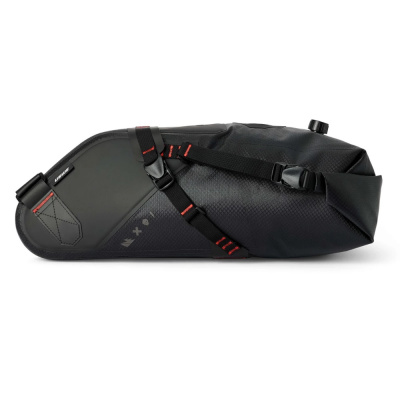
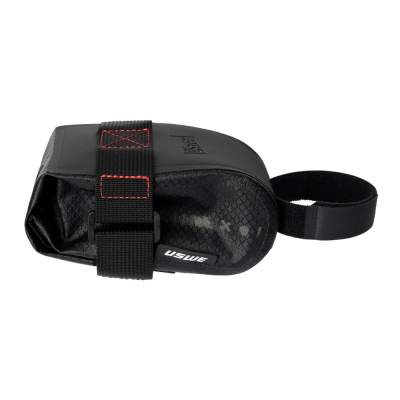
USWE's seat packs are built around their anti-sway strap system, derived from the NDM (No Dancing Monkey) tech originally engineered to stop hydration packs moving on your back. Applied to a saddle bag, it means the pack stays planted against the seatpost and rails rather than pendulum-swinging through every rut. The shell uses PU-coated ripstop nylon - tough enough to take repeated hits of abrasive rear-wheel grit spray, which in a UK winter acts more like grinding paste than mud. Weather-resistant YKK zippers run across the main compartment, keeping the contents dry when you're grinding through a soggy Peak District bridleway or a wet Welsh trail centre loop.
If you're after a stable, durable seat pack that doesn't compromise your bike's handling, compare UK prices across the USWE range below.
Prices and availability can change quickly. Delivery charges are not always included in listed prices.
Final price, stock status and delivery terms are set by retailer. We may receive a commission on purchases made.
Fitting USWE Saddle Bags: Rail Spacing, Seatpost Straps, and Dropper Post Clearance
Getting a USWE saddle bag to sit properly starts with understanding what your bike actually allows. The upper straps loop over the saddle rails, so standard 7 mm round rails and most alloy or carbon rail profiles are covered. Titanium rails with unusual cross-sections are the occasional outlier - worth checking before you buy if your saddle is anything exotic.
The seatpost strap is where dropper post owners need to pay attention. You need enough exposed stanchion above the frame's seat tube to wrap the strap securely - typically at least 50 - 60 mm of usable post. On short-travel droppers or bikes with very high seat tube junctions, that can be tight. Measure what you've got before committing to a larger bag, because a strap fitted too low near the seat tube collar will creep and let the bag rotate.
The bigger dropper concern is tyre clearance at full bottom-out. Drop your post completely, then compress the rear suspension to its travel limit - that's the closest the bag will ever get to the tyre. On full-suspension MTBs with short chainstays and generous tyre clearance, many compact USWE packs clear comfortably. On longer bags, check you have at least 20 - 25 mm of gap in that worst-case position. Tyre buzz - that rhythmic slap of bag against rubber - is irritating on a smooth road and can abrade both bag and tyre sidewall over time. Choosing a more compact capacity option is often the sensible fix on full-squish bikes rather than forcing a larger pack to work.
Capacity Tiers and Pairing With the Rest of Your USWE Setup
USWE's saddle bag range covers a fairly focused capacity spread, which suits their core audience of gravel riders and trail MTB riders who want essentials rather than a full overnight kit. At the compact end, you're looking at space for two tubes, a multi-tool, a couple of tyre plugs, and a CO2 or mini pump - the baseline that covers most day rides without the bag adding meaningful weight or bulk behind the saddle.
Step up in capacity and you gain room for a waterproof layer, a snack, and a small first-aid kit - the kind of load that makes sense for longer gravel days or bikepacking overnights where you're splitting luggage across multiple bags. That's where the USWE bounce-free saddle bag approach really pays off: on a five-hour gravel ride, a swaying bag at the back becomes genuinely fatiguing to ride behind, and it can unsettle the bike on loose surfaces in a way that a compact, rigid frame bag or handlebar bag simply doesn't.
For that kind of extended setup, it's worth thinking about your system as a whole. A USWE bar bag handles bulkier, lighter items at the front, balancing the load distribution. A USWE frame bag takes on dense, heavy items like tools and food centrally - the best place for weight on the bike. And a USWE hip pack or USWE hydration pack keeps fluids and on-the-go snacks accessible without stopping. Used together, the anti-sway philosophy runs through the whole setup rather than just one piece of it.
If you're weighing USWE against other options, Apidura saddle bags are the benchmark for ultralight bikepacking volume, while Miss Grape saddle bags offer a strong value-to-build-quality ratio. EVOC saddle bags lean more structured and protective. USWE sits firmly in the security-first, trail-focused corner of that group.
Keeping Your USWE Saddle Bag Running Through a UK Winter
British winters are hard on saddle bags in ways that don't get talked about enough. The real enemy isn't rain - it's the fine grit that gets lifted off wet roads and trails by your rear tyre and blasted directly at the bag's zippers and fabric face. That grit is abrasive, and over months of riding it works its way into zipper teeth and acts like a very slow grinding wheel.
The PU-coated ripstop nylon shell handles this well - it's tougher than it looks and resists abrasion without cracking or delaminating the way cheaper TPU laminates can. But the weather-resistant YKK zippers need a little help. After muddy rides, rinse the zippers with clean water before they dry out, then apply a dedicated zipper lubricant - a wax-based product works better than silicone spray in gritty conditions because it doesn't attract dirt. A seized zipper on a cold morning at the trailhead is miserable, and it's entirely avoidable.
Protecting your seatpost from strap rub is non-negotiable. The anti-sway strap grips the post firmly - which is exactly what you want - but with grit trapped between strap and post, it will score anodising on alloy posts and, more critically, can damage the outer layers of a carbon post over time. A strip of helicopter tape (frame protection film) around the post where the strap sits costs almost nothing and completely solves the problem. Apply it before the first ride, not after you've noticed the damage.
For muddy full-suspension bikes, check the underside of the bag after winter rides. Mud can pack between bag and tyre, especially if clearances are tight, and that compressed mud acts as a grinding medium in its own right. A quick rinse and a check of the mounting straps for slippage takes two minutes and keeps the setup dialled.
USWE Saddle Bags FAQs
Are USWE saddle bags compatible with dropper posts?
Most compact USWE saddle bags work with dropper posts as long as you have sufficient exposed stanchion above the frame for the seatpost strap to grip. The critical check is tyre clearance - drop your post fully, compress the rear suspension, and confirm the bag doesn't contact the tyre in that worst-case position. A shorter-capacity bag is often the cleaner choice on full-squish bikes.
How do you attach a USWE saddle bag securely?
Feed the upper straps over the saddle rails and tension them evenly, then secure the seatpost strap snugly around the post. Before you fit the strap, apply a layer of frame protection tape to the post - it stops grit working between strap and post and prevents any abrasion damage to anodised or carbon surfaces. Check strap tension after the first few rides; they can settle slightly.
Are USWE saddle bags fully waterproof?
They're highly water-resistant - PU-coated ripstop fabric and weather-resistant YKK zippers handle rear-wheel spray and sustained rain well. They're not submersion-proof, though. In a proper UK downpour, anything sensitive like a phone or bank card is better off in a small dry bag inside the main compartment. For everything else, the protection is more than adequate.