
USWE Bar Bags
USWE bar bags carry over the same obsessive anti-bounce engineering that made the brand's hydration packs a fixture on World Cup enduro courses - applied here to your handlebar. If you've ever watched a poorly mounted bag slap its way down a rough descent, you'll understand why that matters. USWE's approach starts with a high-frequency welded TPU and Ripstop construction that leaves no stitched seams for water to creep through - genuinely useful when you're deep into a Welsh autumn and the rain has been horizontal for two hours. The strap tensioning system, adapted directly from their 'No Dancing Monkey' pack philosophy, cinches the load tight against the bars so there's no lateral wobble, no ghost-shifting from a bag that's torquing your cables, and no rattling over rock gardens. Anti-rotation stability straps anchor to the head tube, keeping the whole setup locked in place even when the front end is getting a proper battering. Roll-top closures replace zippers that wet grit would jam within a ride or two. These aren't bags that just happen to fit a bike - they're designed around the mechanical realities of aggressive riding, and that specificity shows in how they fit, how they stay put, and how they hold up over a UK winter.
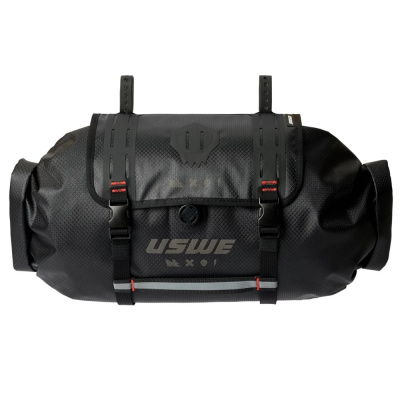
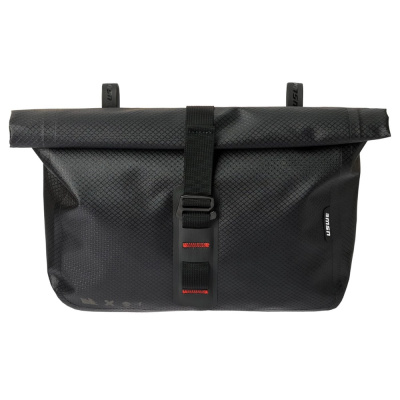
Prices and availability can change quickly. Delivery charges are not always included in listed prices.
Final price, stock status and delivery terms are set by retailer. We may receive a commission on purchases made.
Getting the Fit Right: Clearance, Cables, and Bar Compatibility
Before you even think about packing a USWE bar bag, get a tape measure out. The critical number is the gap between your handlebars and the top of your front tyre at full suspension compression - not static sag, but fully bottomed out. On a trail bike with 150mm of travel, that gap shrinks faster than you'd expect. You want a minimum of 50mm of clearance at full bottom-out; less than that and a loaded bag will contact the tyre on big hits, which is a fast way to cause a crash or shred the bag fabric.
Drop bar riders have their own set of variables. A wide flared gravel bar gives you more usable clamping width than a narrow road bar, but the curve of the drops affects how the bag sits. Measure your clamp area carefully and check USWE's stated maximum bar diameter for each model - modern oversized aluminium and carbon bars vary more than you'd think. Flat MTB bars are generally more straightforward, though bar ends or GPS mounts can eat into your usable length.
Cable routing is where most installs go wrong. The attachment straps must be routed underneath brake hoses and gear cables, not over them. Pressure on a hydraulic hose mid-ride won't immediately cause a failure, but it accelerates wear and can introduce air over time. USWE include foam spacer blocks with their bags - use them. They push the bag body away from the bar, creating a channel through which cables can articulate freely without kinking. If you run electronic shifting, pay particular attention to where the wire exits the bar end; a strap over a Di2 or AXS wire junction can cause intermittent signal drops that are maddening to diagnose. The best USWE handlebar bag for gravel setups tends to be one sized so it doesn't overwhelm a 700c front end - check the stated bag diameter against your fork crown-to-bar measurement if you're running a rigid fork with a tighter stack.
Choosing the Right Bag From the USWE Range
USWE keep their bar bag lineup focused rather than sprawling, which makes the choice relatively clean. The compact options - typically in the 3 - 5 litre range - are aimed at day-long gravel rides where you need a mid-layer, a rain jacket, and maybe a bivvy shelter for an overnighter done light. These smaller bags sit low on the bar, preserve handling feel, and suit riders who don't want to fundamentally change the front-end dynamics of their bike.
The larger handlebar rolls push into genuine multi-day territory. Pack a lightweight sleeping bag, an inflatable mat, and a tent footprint, and you're looking at a setup that can carry a week's camping kit across something like the Cairngorms or a point-to-point across Dartmoor. The trade-off is that a fully loaded large roll adds meaningful rotational inertia to the front wheel - steering feels heavier, and tight switchbacks require more input. That's physics, not a design flaw, and it applies across the bikepacking category regardless of brand. If you want to compare how USWE stacks up against alternatives, Apidura bar bags and Ortlieb bar bags offer their own takes on capacity and waterproofing, while Miss Grape bar bags are worth a look if you want a more boutique, custom-fit approach.
Once you've sorted the bar bag, think about how it integrates with the rest of your setup. A bar bag alone doesn't balance a bikepacking rig - pair it with USWE frame bags and USWE saddle bags to distribute weight sensibly, keeping the heavy stuff low and central. If you're running long days without café stops, USWE hydration packs keep water off the bike entirely, which helps front-end handling considerably.
Keeping It Together Through a UK Winter
Here's where a lot of people get caught out. Wet grit - the kind that coats everything after twenty minutes on a Peak District bridleway in November - acts like valve-grinding paste when it gets trapped between a mounting strap and a carbon head tube or alloy bar. Left to work itself in over repeated rides, it removes clearcoat, then paint, then material. Not quickly, but certainly. Before you install any bar bag on a carbon fork or painted frame, apply helicopter tape (frame protection film) to every contact point. Every single one. It costs almost nothing and prevents damage that costs significantly more to repair.
The waterproof TPU construction on USWE bags is genuinely robust - high-frequency welding bonds the fabric at a molecular level rather than relying on stitching, so there are no needle holes for water to track through. A USWE bounce-free bar bag handles relentless Welsh winter rain without complaint. What you should avoid is blasting the bag with a pressure washer after a muddy ride. The jet can delaminate welded seams over time, particularly around the roll-top closure folds. Instead, rinse it under a normal hose or wipe it down with a sponge and mild soapy water, then leave it open to dry fully before rolling it closed for storage. Damp trapped inside an enclosed bag breeds mildew fast.
The roll-top closure deserves a mention on its own terms. A waterproof USWE bar bag uses a roll-top rather than a zipper specifically because UK grit jams standard zip sliders within a handful of winter rides. Roll-tops are also genuinely more waterproof under sustained rain - no zipper teeth means no capillary action pulling water inward. Roll it at least three full times before clipping the buckle, and clip the buckle before the descent rather than at the bottom when the bag has already been rattled around.
USWE Bar Bags FAQs
Do USWE bar bags rub against the front tyre?
Not if the installation is done properly. Measure the gap between your handlebars and the tyre with the suspension fully compressed - not at static sag. You need at least 50mm of clearance at full bottom-out. On bikes with longer travel forks, that gap closes significantly under load, so check it carefully before committing to a bag size.
How do you attach a USWE bar bag around bike cables?
Route the mounting straps underneath brake hoses and gear cables, never over them. Use the foam spacer blocks that USWE include in the box - they push the bag body away from the bar and create space for cables to move naturally during steering and braking. Straps running over hydraulic hoses or electronic wiring can cause progressive wear and intermittent shifting issues.
Are USWE handlebar bags fully waterproof?
Yes, in practical riding terms. The high-frequency welded TPU construction eliminates stitched seams, and the roll-top closure keeps sustained rain out effectively - roll it at least three times before clipping. That said, prolonged submersion in river crossings can eventually force water through the closure folds under sustained hydrostatic pressure, so don't treat it as a dry bag for crossings.