
Trek Socks
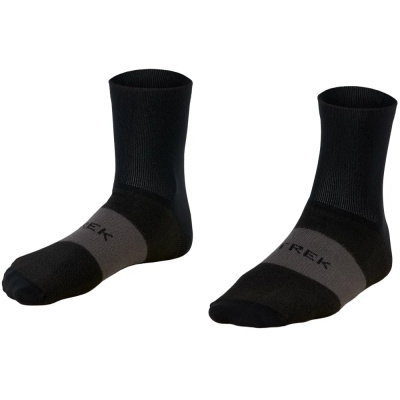
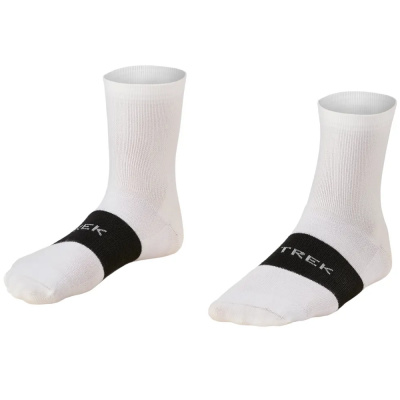
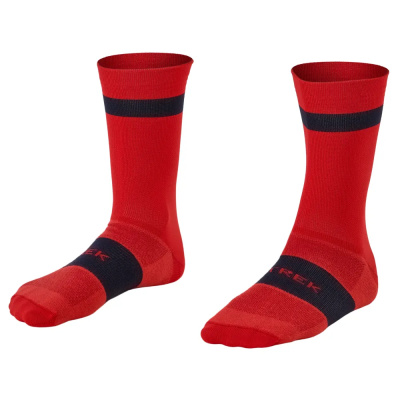
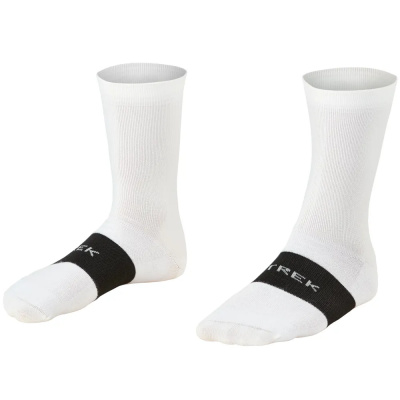
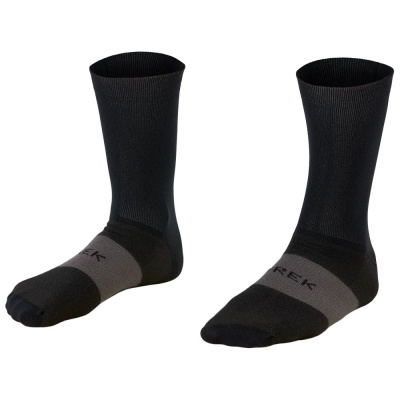
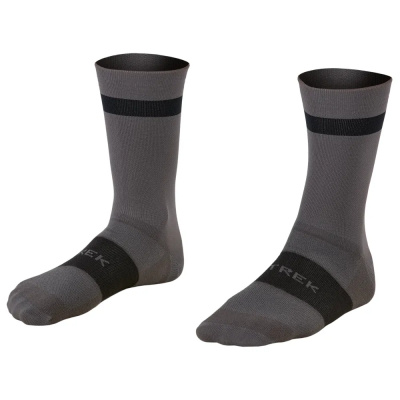
Trek cycling socks sit at a surprisingly critical point in your kit - the interface between foot and shoe - and getting that layer wrong costs you comfort long before it costs you watts. Trek's range covers the full spectrum, from razor-thin aero road socks built for maximum power transfer to reinforced, cushioned options designed to soak up trail vibration on full-day mountain bike rides.
The foundation across the line is Trek's Profila Dry yarn, which pulls moisture away from the skin rapidly, keeping your feet drier during hard efforts than a standard synthetic construction manages. Pair that with compressive arch support built into the sole panel, and you've got a sock that reduces the low-grade foot fatigue that creeps in after three hours in the saddle. Flat-toe seams prevent the bunching and hot spots that tight road shoes punish you for, and MTB-specific models add targeted cushioning where trail feedback hits hardest.
For UK riders, the merino wool blends are worth paying attention to - damp shoulder-season rides from October through April demand thermal regulation and odour control that pure synthetics struggle to match. Trek's range handles both ends of the calendar without compromise.
Prices and availability can change quickly. Delivery charges are not always included in listed prices.
Final price, stock status and delivery terms are set by retailer. We may receive a commission on purchases made.
Fabric Tech and How It Handles the Weather
Trek's Profila Dry yarns are the backbone of the summer and year-round synthetic options. The yarn structure is engineered to channel sweat away from the skin and push it outward where it can evaporate - so on a humid August climb through the Brecon Beacons, your feet stay drier than they would in a basic polyester sock. Breathable mesh panels are positioned across the instep on road-focused models, adding direct airflow where the shoe upper allows it. That matters more than it sounds when you're two hours into a sportive and your shoes have warmed up like a greenhouse.
The merino blends take a different approach. Natural merino fibre regulates temperature passively, trapping a fine layer of warmth when it's cold and releasing excess heat as effort increases. It also resists odour far better than synthetics on multi-day trips or back-to-back rides. For UK autumn and winter riding - think wet lanes in the Lake District or a grim grey Saturday in the Peak District - a merino blend sock is the sensible call. Heel and toe reinforcement in these models adds durability without adding bulk, because merino alone wears thin quickly in high-friction zones.
Under hard pedalling efforts, the compressive arch support panel holds the sock's structure against the foot rather than letting fabric shift and bunch. It's a small detail, but it's the kind of thing you notice on a four-hour ride when cheaper socks have started to wrinkle under the ball of your foot.
The Range Explained: Aero, Road, and MTB
Trek's sock hierarchy breaks down into three clear tiers, each aimed at a different type of riding. At the top end sit the aero and race-oriented options - ultra-thin construction, taller cuffs that sit above the ankle to reduce aerodynamic drag, and aggressive compression throughout. These are for riders who care about marginal gains and train or race on the road. If you're comparing them to something like Castelli socks at a similar price point, the Trek aero options are competitive on weight and compressive fit.
The road crew-length socks sit in the middle - standard weight, balanced compression, and a more forgiving fit that suits sportive riders and commuters equally well. They're the everyday option. Not stripped back, not overbuilt. The crew length also makes them practical for cooler days when you want a little more ankle coverage without going full winter-weight.
Trek mountain bike socks are a different product. Targeted cushioning sits under the metatarsals and around the heel, which matters when you're riding flat pedals on rough ground or spending hours standing on clipless pedals over rocky singletrack. The fabric is heavier and more abrasion-resistant to cope with contact between the sock and the shoe's internal structure under load. They're chunkier than road options, and they're not trying to save grams - comfort and durability are the priority. Compared to DeFeet socks, which also do well in the MTB space, Trek's cushioned models feel purposefully reinforced rather than just padded.
On sizing: Trek socks run true to size against standard European shoe sizing. The flat-toe seam construction is important here - it sits flush against the toe box rather than creating a ridge, which is what prevents blistering inside the close fit of a road shoe. If you're between sizes, go smaller. A sock that's slightly snug stays in place; one that's slightly large will move, and that movement causes friction.
Fitting, Thickness, and Keeping Them in Good Shape
Sock thickness is one of those things that catches riders out. If you've fitted your road shoes with a thin summer sock and then swap to a thicker winter merino option, you may find the fit tighter than expected - particularly in shoes with a narrow last or a precision BOA closure. Worth checking before a cold morning ride rather than discovering the problem at the trailhead. It's sensible to fit winter shoes, or at least check the volume, with the actual socks you plan to wear.
For winter visibility, Trek's range includes high-vis and reflective colourways in certain models. Pairing those with Trek lights makes sense if you're building out a winter commuter or evening training setup - every bit of reflectivity helps on unlit roads.
Care matters more than most riders give it credit for, especially with technical fabrics. Synthetic Profila Dry socks should go in the machine at 30 degrees, no fabric softener. Softener coats the fibres and destroys the moisture-wicking structure - the sock will feel fine but stop working properly. Merino blends need a cool, gentle cycle with a mild detergent, then air-drying flat. Tumble drying merino shrinks it, sometimes dramatically. Hang them up, let them dry naturally, and they'll last considerably longer. If Trek socks feel like they're losing performance after a few months, care routine is usually the first thing worth checking. Brands like Assos and Endura follow the same logic across their technical sock lines - the fabric investment only pays off if you look after it.
A Trek saddle bag is worth considering alongside if you're building out a complete kit - a spare pair of dry socks stashed in there has saved more than a few rides.
Trek Socks FAQs
Are Trek cycling socks true to size?
Yes, Trek socks follow standard European shoe sizing and fit true to size for most riders. If you're between sizes, size down - a slightly snug fit keeps the sock in place and prevents the fabric movement that causes blistering inside a close-fitting cycling shoe.
What is the difference between Trek road and MTB socks?
Trek road socks are thinner and lighter, built to fit inside low-volume shoes without adding bulk, with an emphasis on ventilation and aerodynamic fit. MTB socks are heavier-duty, with targeted cushioning under the metatarsals and reinforced zones to handle trail vibration, abrasion, and extended time on the pedals.
How do I wash merino wool cycling socks?
Use a cool gentle cycle at 30°C with a mild detergent - no fabric softener, which damages natural fibres. Air-dry flat rather than tumble drying; heat shrinks merino and weakens the yarn structure. Treat them carefully and they'll hold their shape and performance for a long time.