
Trek Gravel And Cyclocross Tyres
Trek gravel and cyclocross tyres - sold under the Bontrager name that Trek has long used for its own-brand components - cover a surprisingly wide spread of conditions, from dry South Downs chalk to the kind of sticky November mud that turns a CX course into a comedy sketch. Whether you're chasing fast lap times or just trying to keep the rubber side down on a flinty bridleway, there's a tread pattern and casing tier that fits the job. The lineup is built around Trek's TLR (Tubeless Ready) bead design, which makes seating a tubeless setup noticeably easier than fighting with some third-party options, and Hard-Case Lite sub-tread puncture protection adds a reassuring layer against the sharp stuff lurking beneath wet leaves. Casing options range from race-spec 120 TPI folding aramid bead constructions down to wire-bead Comp versions that take more punishment before giving up. That spread matters in the UK, where a single ride can flip between smooth gravel track and flint-strewn footpath inside ten minutes. Use the grid below to compare widths, tread patterns, and prices side by side.
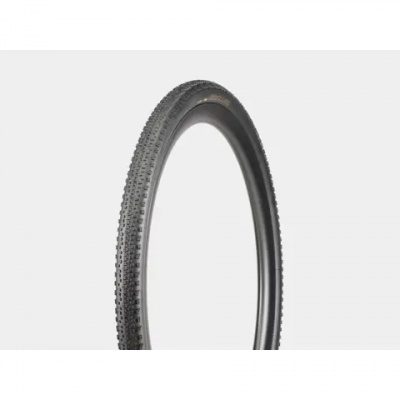
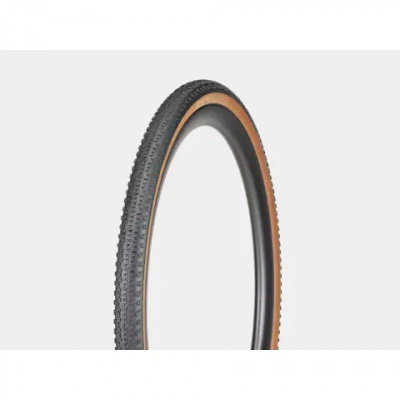
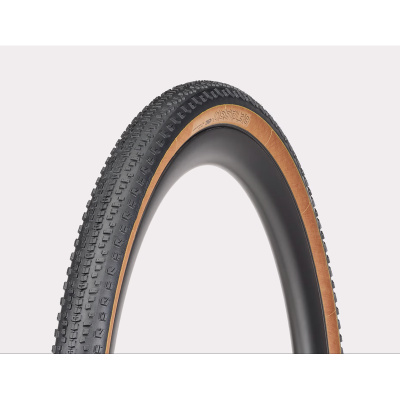
Prices and availability can change quickly. Delivery charges are not always included in listed prices.
Final price, stock status and delivery terms are set by retailer. We may receive a commission on purchases made.
Getting the Fit Right: Clearance, Standards, and Tubeless Setup
Before anything else, check your frame's stated tyre clearance. Most modern Trek gravel bikes accommodate a 700x40c tyre comfortably, and several newer models open up to 700x45c - but older frames and many cyclocross rigs hold tighter tolerances, so measure the gap between your fork crown and your current tyre before sizing up. A few millimetres of clearance sounds fine until you're running mud-clogged knobs on a Welsh winter lane and the whole wheel locks solid.
For a TLR (Tubeless Ready) setup, rim internal width matters too. Bontrager's tubeless tyres are designed to seat on rims with an internal width between roughly 19mm and 25mm; go narrower and you'll fight the bead, go wider and the tyre profile distorts. You'll also need compatible Trek rim tape to seal the spoke bed properly - don't cut corners here, because a slow leak traced back to a tape overlap wastes more time than doing it right first time. Once the tape is sorted, seating the bead is where a Trek electric pump earns its keep; the fast initial blast of air is often the difference between a bead that snaps into place cleanly and one that refuses to seat at all. Tubeless valves with removable cores let you inject sealant without dismounting the tyre, which is worth factoring in when you're standing in a cold garage in February.
Tread Patterns and Casing Tiers: GR, CX, and Where They Sit
The Trek GR vs CX distinction is straightforward once you understand what each tread is optimised for. Trek GR1 vs GR2 tyres is the comparison that comes up most often, and the difference is meaningful rather than marginal. The GR1 runs tightly spaced, low-profile knobs arranged for low rolling resistance on hardpack gravel and compressed dirt - think the kind of fast, dry lanes you'd find cutting across the Lincolnshire Wolds in summer. The GR2 opens the tread up significantly, with taller, more widely spaced knobs that bite into loose or wet surfaces and shed mud rather than packing it in. On a damp Peak District bridleway, the GR2's traction advantage over the GR1 is immediately obvious.
The CX series - particularly the CX3 - goes further still, with an aggressive, widely spaced shedding pattern designed for the deep, sticky winter mud of a British cyclocross course. That open tread rolls with more resistance on firm ground, so it's the wrong choice for everyday gravel riding, but on a waterlogged course in January it simply works in a way that a gravel-oriented tread doesn't. If you're comparing options from other brands, Panaracer gravel and cyclocross tyres and WTB gravel and cyclocross tyres occupy similar tread-pattern territory, so they're worth a look if you want a direct comparison.
Casing tier shapes both performance and price. The RSL (Race Shop Limited) and Team Issue versions use a 120 TPI casing with a folding aramid bead - the high thread count makes the casing more supple and conforming, which translates directly into better grip and ride feel on unpredictable surfaces. The aramid bead keeps weight down. The Comp tier uses a lower TPI construction and a wire bead: heavier, less supple, but more resistant to cuts and more forgiving of neglect. For a rider doing one or two club rides a week on mixed UK surfaces, the Comp casing is often the more sensible long-term choice. For racing or fast-paced sportives, the RSL and Team Issue casings are noticeably livelier. Dual-compound rubber - softer on the outer knobs for grip, harder at the centre for durability - appears across the premium tiers and gives you something close to the best of both worlds.
UK Durability and Keeping the Wheels Rolling Through Winter
The South Downs chalk path is one of the more unforgiving surfaces a tubeless gravel tyre encounters - flinty edges can slash a sidewall in a way that sealant simply can't plug, and no amount of rolling resistance optimisation matters once you're walking back to the car. Bontrager's Inner Strength casing is the specific response to this: a reinforced sidewall layer that adds cut resistance without the deadening effect of a full puncture-protection belt running edge to edge. It won't make the tyre immune to a direct slash from a particularly vicious flint, but it meaningfully raises the threshold compared with a standard sidewall construction.
Sealant needs attention on a schedule, not just when you hear air hissing. In UK conditions - where winter temperatures drop sealant viscosity and summer heat dries it out faster - check and top up every three months rather than the six-month interval that's fine in a warmer, drier climate. Pull the valve core, use a syringe to check volume, and top up if it's looking thin. Tread wear on a dual-compound tyre shows differently across the tyre: the harder centre compound outlasts the softer edge knobs, so check the cornering knobs specifically rather than just eyeballing the centre. If the edge knobs are squared off or the rubber is cracking, the grip budget has run out regardless of how the centre looks.
For riders pairing gravel or CX tyres with a full winter setup, Trek mudguards are worth considering alongside the tyre choice - a wider tyre at lower pressure throws more spray, and even a lightweight clip-on guard saves your drivetrain a significant amount of grit over a season. You might also want to browse Maxxis gravel and cyclocross tyres if you're after an alternative casing construction with similarly strong puncture credentials, or check Specialized gravel and cyclocross tyres for a different take on dual-compound rubber at similar price points. And if you're building up or upgrading a complete bike, the Trek gravel bikes range is the logical place to check tyre-to-frame compatibility before you buy.
The best Trek gravel tyres for UK winter riding come down to a simple filter: if you're mostly on compact or lightly loose surfaces, the GR2 in TLR trim with Inner Strength casing hits the durability and grip combination you need. If the rides lean towards proper mud and CX-style conditions, the CX3 is the honest answer. Neither is a compromise once it's matched to the right conditions.
Trek Gravel And Cyclocross Tyres FAQs
Are Trek gravel tyres tubeless ready?
Most premium Bontrager gravel and CX tyres feature TLR (Tubeless Ready) technology - that's the folding bead design that makes seating and air retention significantly easier than standard clincher conversions. You'll need TLR-compatible rim tape, tubeless valves, and sealant to complete the setup. The Comp wire-bead versions are not tubeless compatible, so check the spec before you buy.
What is the difference between Trek GR1 and GR2 tyres?
The GR1 is the faster-rolling option, with tightly spaced, low-profile knobs optimised for hardpack gravel and compressed dirt where you want minimal resistance. The GR2 has taller, more widely spaced knobs that generate better traction in loose, wet, or muddy conditions and shed mud more effectively. On dry summer tracks, GR1 is quicker; on a damp autumn bridleway, the GR2 earns its keep.
What tyre pressure should I run on Trek gravel tyres?
On a 700x40c tubeless setup, most riders land between 30 and 40 PSI - lighter riders and wetter, rooty conditions push you towards the lower end for better grip and compliance, while firmer surfaces and heavier riders suit pressures towards the top of that range. Don't transfer road bike habits here; gravel tyres reward running lower pressures than feels instinctively right coming from 28c road rubber.