
Topeak Frame Pumps
Topeak frame pumps sit in a genuinely useful gap in your kit - longer and more capable than a jersey-pocket mini pump, yet compact enough to clip to your frame and forget about until you need it. That matters when you're standing on a January lane in the Peaks with numb fingers, a flint in your rear tyre, and a standard mini pump that's going to take 200 strokes to get you rolling again.
The Morph series is where Topeak made its name. Fold-out foot pad, flexible hose, T-handle - together they let you pump with real body weight behind each stroke, much closer to using a track pump than anything else you'd carry on the bike. SmartHead technology means the chuck automatically adjusts to both Presta and Schrader valves, so there's no fiddling with adapters at the roadside. Most models mount securely under a standard water bottle cage via a bracket, keeping them rattle-free and out of the way. If you're after something smaller, our Topeak mini pumps page covers pocket-sized options, and for post-ride setup there's a separate page for Topeak shock pumps.


Prices and availability can change quickly. Delivery charges are not always included in listed prices.
Final price, stock status and delivery terms are set by retailer. We may receive a commission on purchases made.
How Topeak Frame Pumps Fit Your Bike
Most Topeak frame pumps ship with a mounting bracket designed to sit beneath a standard water bottle cage, using the same 64mm boss spacing you'll find on virtually every road and gravel frame sold in the UK. The pump drops into the bracket, clicks in, and stays put. Simple enough that you should sort it in the car park before your first ride with it.
The SmartHead chuck is the headline feature - it reads the valve automatically and seals without you having to reconfigure anything. Older or more budget-oriented models use a reversible internal rubber gasket instead: flip it one way for Presta valve, the other for Schrader valve. Both work reliably, but SmartHead is quicker with cold hands. Topeak's TwinHead system, found on select models, takes a different approach with a dual-sided head - one port per valve type - giving you an instant mechanical choice rather than an auto-sensing mechanism.
One thing worth checking before you buy: barrel length. A full-length frame pump on a compact road frame or a short-travel full-suspension MTB can foul the crank arm, front derailleur cage, or the shock body on the downtube. Measure your available frame space - from cage boss to the nearest obstruction - before committing to a longer-barrel model. If clearance is tight, a shorter Morph or a Topeak mini pump with a hose attachment is the practical move.
Morph, Turbo Morph, and MasterBlaster - Which One?
Topeak's frame pump range breaks into two distinct families. The Morph series uses what Topeak calls Morph Technology - a fold-out foot pad that anchors the pump to the ground, a flexible hose that connects to your valve without torquing it sideways, and a T-handle that gives you a proper two-handed grip. Combined, these three features transform the pumping action from a frustrating wrestle into something that actually feels controlled. You're pushing down with your whole upper body rather than trying to balance a rigid pump on a fragile valve stem.
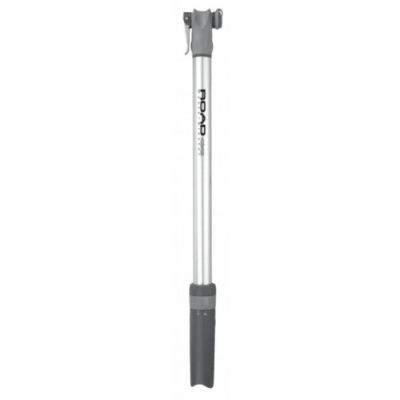
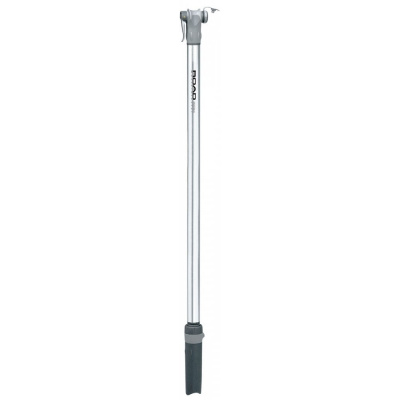
Within the Morph family, the Road Morph G is the road-specific choice - high psi/bar ceiling, narrower barrel volume, and an inline gauge (that's what the 'G' stands for) so you can hit your target pressure without guesswork. For 25mm or 28mm road tyres running 80 - 100psi, that gauge is genuinely useful rather than a gimmick. The Mountain Morph prioritises volume over pressure - wider barrel, more air per stroke, better suited to getting a 2.4-inch MTB tyre back to rideable pressure in fewer strokes. The Turbo Morph adds a dial gauge for clearer readability.
The MasterBlaster sits outside the Morph family. It's a traditional frame-fit design - no foot pad, no hose - built for clean frame integration over pumping ergonomics. If you want something that disappears against the frame aesthetically and you're not planning long roadside inflation sessions, it fits that brief. But for anything beyond a quick top-up, the Morph's flexible hose alone makes a meaningful difference: it stops the chuck from levering against the valve stem during vigorous pumping, which is exactly how you snap a Presta valve core on a cold morning. Alternatives like Silca frame pumps and Zefal frame pumps take their own approaches to hose and chuck design - worth a look if you're comparing across brands. Brompton frame pumps are another option if you're fitting to a folding bike with non-standard boss positions.
Pair any frame pump with a Topeak puncture kit and you've got a proper roadside repair setup - or go tubeless and keep a Topeak tubeless repair kit in your back pocket for plugging cuts before you even reach for the pump.
Keeping It Working Through a UK Winter
Frame-mounted pumps take a battering. They sit right in the firing line of front-wheel road spray - grit, road salt, wet mud - and most riders ignore them until the moment they actually need one. That's when you find out the chuck is seized or the stroke feels like dragging a piston through wet concrete.
The SmartHead chuck is the part that needs the most attention. Grit works its way into the mechanism, especially after lanes covered in autumn debris or salted winter tarmac. After a muddy or wet ride, rinse the chuck end with clean water and work the head a few times to clear any residue. Don't leave it caked and hope for the best - a seized chuck on a freezing roadside is deeply annoying.
The main barrel plunger relies on an O-ring seal to push air efficiently. Over time, that seal dries out, and you'll notice the pump feeling gritty or losing efficiency before it should. A small amount of silicone-based grease on the O-ring - not petroleum-based, which degrades rubber - keeps the stroke smooth and maintains a solid air seal. It takes two minutes and extends the pump's useful life considerably. Check the O-ring once or twice a season if you're riding through winter regularly. Topeak's own tools and accessories range includes maintenance kit if you want to keep everything in the same ecosystem.
One more practical note: if you're running CO2 inflators as your primary emergency inflation, a frame pump still earns its place as a backup. CO2 canisters are single-use, and running out mid-ride on a remote Welsh lane with a second puncture is not a situation you want to be in.
Topeak Frame Pumps FAQs
How do you mount a Topeak frame pump?
Topeak frame pumps come with a mounting bracket that fixes under your water bottle cage using standard 64mm frame bosses - the same ones your cage already uses. The pump clips in and out of the bracket without tools. Before fitting, check that the barrel clears your crank arm and any derailleur cage, particularly on compact or full-suspension frames where space gets tight.
Does the Topeak Road Morph fit both Presta and Schrader valves?
Yes. Depending on the model year, it uses either the auto-adjusting SmartHead chuck or a reversible internal rubber gasket. Both let you inflate Presta and Schrader valves without carrying separate adapters. SmartHead is the faster option when you're cold and in a hurry, since it reads the valve and seals automatically.
What is the difference between a frame pump and a mini pump?
A frame pump has a longer barrel, so each stroke moves more air - fewer strokes to reach pressure, and on Morph models you get a foot pad and T-handle so you're pumping with your whole body rather than just your arms. Mini pumps are smaller and lighter, built for pockets or saddlebags, but reaching road tyre pressures takes considerably more effort and time.