
Thule Pannier Racks
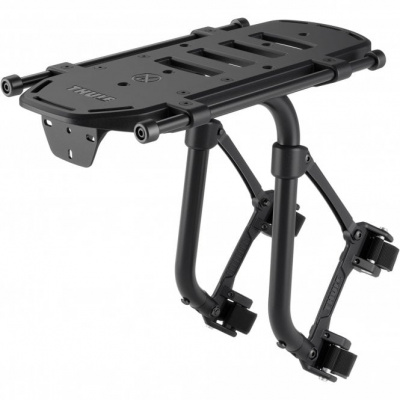
Thule pannier racks turn almost any bike into a capable commuter or loaded tourer - and the key word there is any. Most racks demand braze-on eyelets, which immediately rules out a huge chunk of modern bikes. Thule sidesteps that problem entirely with their Pack 'n Pedal mounting system, which ratchets directly onto seat stays or fork legs without touching a single threaded insert. Carbon road bike, full-suspension trail rig, gravel bike with no mounts - none of that is a barrier here.
The racks themselves are built from aluminium construction, so rust isn't a conversation you'll be having after a Scottish winter commute. Hardware is stainless throughout, which matters when wet grit and road salt are a near-constant presence from October through March. Rubberised grip pads sit between the mounting straps and your frame, protecting paintwork and - critically - keeping carbon fibre safe from abrasion. The adjustable deck and side rails mean you can dial in heel clearance properly rather than hoping for the best.
Whether you're packing for a weekend on the Pennine Bridleway or just carrying a change of clothes and a laptop across town, Thule gives you a stable, high-payload capacity platform that doesn't ask much of your bike's geometry in return.
Prices and availability can change quickly. Delivery charges are not always included in listed prices.
Final price, stock status and delivery terms are set by retailer. We may receive a commission on purchases made.
Compatibility and How the Mounting System Actually Works
Traditional racks rely on seat stay mounting via braze-on eyelets - the small threaded bosses your frame mayor may not have. A lot of modern bikes, particularly full-suspension MTBs and aero road frames, simply don't have them. Thule's Pack 'n Pedal mounting system works around this by using adjustable ratchet straps that cinch directly onto the stays or fork legs. Tighten them down, and the rack goes nowhere. It's a genuinely simple idea that opens up rack touring to bikes that would otherwise need an aftermarket adaptor or a complete rethink.
The ratcheting mechanism accommodates a wide range of seat stay angles, which is useful given how differently bikes are built - a compact gravel frame sits very differently to a long-travel enduro bike. The system also works around disc brake calipers without fouling, and because the straps flex slightly with the frame rather than bolting rigidly to it, there's no stress concentration on the stays under load. That said, if you're running a carbon frame, keep strap tension within Thule's stated limits. The rubberised grip pads do an excellent job of preventing slip and protecting the surface, but carbon has its own tolerance thresholds and over-tensioning won't do you any favours.
If you need replacement straps, buckles, or any other hardware after a season of hard use, we'd point you straight to our dedicated Thule adapters and spares page rather than cover every component here - that's where you'll find the full list of compatible replacement parts alongside current UK pricing.
For those looking at how Thule stacks up against the competition, Old Man Mountain pannier racks take a similar strap-free approach using specific frame mounts, while Blackburn pannier racks tend to target eyelet-equipped bikes at a lower price point. Neither offers quite the same breadth of frame compatibility as the Pack 'n Pedal system.
The Tour Rack and What You Actually Need to Run It
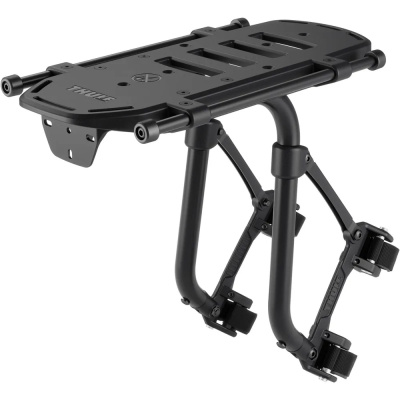
The flagship here is the Thule Tour Rack - and it's worth understanding before you buy that it's a dual-purpose design. Mount it on the rear seat stays and you've got a rear rack with an 11 kg payload capacity. Flip the setup to the front forks and that drops slightly to 10 kg, which Thule recommend to preserve safe steering dynamics under load. Front-loading in particular changes how a bike handles, so keeping weight within that limit isn't just box-ticking.
Here's the thing most people miss: the Thule Tour Rack on its own isn't enough if you're planning to use standard hook-on panniers. Without the Thule Side Frames accessory fitted, there's no lower anchor point to stop a pannier swinging inward toward your wheel. That's not a minor annoyance - it's a spoke-destroying, ride-ending problem. The side frames bolt onto the rack's side rails, creating the rigid lower cradle that standard pannier hooks need. If you're using Thule's own pannier bags, the system is engineered to clip together neatly. If you're bringing bags from another brand, the side frames are non-negotiable.
The adjustable deck on the Tour Rack also lets you shift the platform fore and aft, which directly affects how much room your heels have on the backstroke. Worth spending five minutes getting this right at the start rather than discovering mid-ride that your ankle is clipping the bag on every pedal revolution.
Pairing the rack with Thule pannier bags keeps the ecosystem tidy - the mounting interface is designed to work together, and the bags are built to the same waterproofing standard you'd want for UK riding. If you're comparing rack-and-bag systems, Ortlieb pannier racks are the obvious reference point for waterproofing pedigree, though their system is more eyelet-dependent at the rack level.
Keeping the Rack Solid Through a UK Winter
The biggest issue with strap-on racks in wet British conditions isn't corrosion - it's grit. Fine wet grit works its way under the mounting straps and acts like sandpaper against your frame, even with rubber pads in place. On a steel or alloy frame that means paint damage; on carbon it's a more serious concern. The fix is straightforward: clean the contact points on your frame thoroughly before fitting the rack, then apply a layer of frame protection film before the pads go on. It adds maybe ten minutes to the installation and saves a lot of grief over winter.
Check strap tension again after your first 50 miles of loaded riding. Straps can stretch slightly once they've been wet and dried out a few times, particularly in the first few weeks of use. A small drop in tension is enough to let the rack shift under braking, so it's worth giving everything a once-over before it becomes a handling issue rather than after. This is especially true if you're riding loaded on looser surfaces - a rack that's perfectly snug on smooth tarmac will find every weakness when the track gets rough.
Thule's aluminium construction and stainless steel hardware mean the rack itself won't pit or seize up, but the ratchet buckles benefit from an occasional rinse if you've been deep in the mud. A seized buckle mid-tour is the kind of problem you'd rather not diagnose at the side of a lane in the Brecon Beacons.
Thule Pannier Racks FAQs
Does the Thule Tour Rack fit full suspension bikes?
Yes. The Thule Tour Rack uses adjustable ratchet straps that mount directly to the seat stays, so it doesn't need frame eyelets at all. The straps move with the rear triangle as the suspension compresses, which means it works on full-suspension bikes without fouling the linkage or brake caliper.
How much weight can a Thule pannier rack hold?
Rear-mounted on the seat stays, the Thule Tour Rack is rated to 11 kg. If you're running it on the front forks, Thule drop the recommended limit to 10 kg to keep steering predictable under load. Stay within those figures - overloading a strap-mounted rack stresses the contact points more than a bolted eyelet setup.
Can you put any pannier bags on a Thule rack?
You can, but you'll need the Thule Side Frames fitted first. Without them, standard hook-on panniers have no lower anchor point and will swing into your spokes under load. With the side frames in place, most standard pannier bags attach safely. Thule's own pannier bags clip in without additional adapters.