
Tern Trailers
Tern bike trailers and towing accessories are built to the same over-engineered standard as the cargo bikes they attach to - which is to say, they're not messing about. Whether you're running a Tern e-bike on last-mile deliveries or using your GSD to haul a week's shopping back from the supermarket, these hitches and trailer solutions are designed around serious payload hauling rather than the occasional bag of compost.
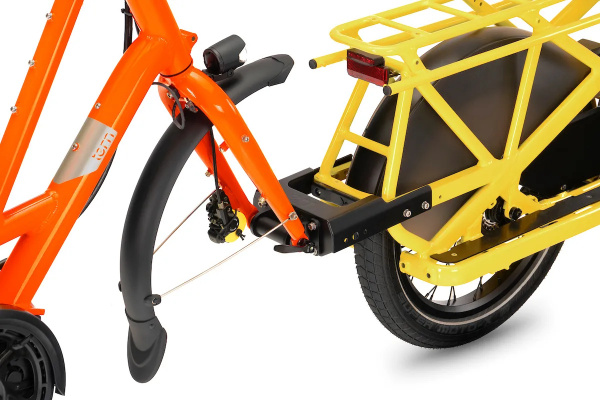
The centrepiece is the Tail Hitch L system, a proprietary mounting solution engineered specifically for Tern's GSD and HSD frames. It keeps the tow point low and central, which does wonders for stability when you've got 40-plus kilos swinging behind you on a greasy roundabout. That low center of gravity isn't marketing copy - it's the difference between a confident turn and a white-knuckle moment.
Tern's range also extends to compatibility with third-party cargo trailer systems, including heavy-duty commercial setups, making it genuinely flexible for business and family use alike. Pair the right hitch with the right thru-axle adapter and you've got a towing rig that can take on a British winter without drama. Check the payload limit for your specific setup before loading up - and we'll walk you through exactly how to do that below.
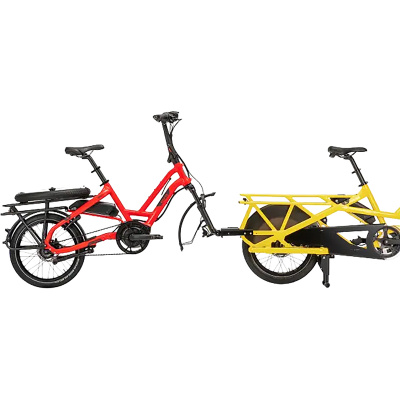
Prices and availability can change quickly. Delivery charges are not always included in listed prices.
Final price, stock status and delivery terms are set by retailer. We may receive a commission on purchases made.
Fitting Your Tern Trailer: Hitch Standards and Compatibility
Getting the right hitch on a Tern GSD or HSD isn't quite as simple as bolting on any old axle mount, and it's worth understanding why before you buy. The Tail Hitch L is Tern's dedicated solution - it mounts directly into the frame's specific dropout interface rather than clamping around the rear axle like a standard trailer coupling. That distinction matters. A frame-integrated mounting point distributes tow forces more evenly and sits further back from the drivetrain, giving the tow arm room to pivot without fouling the rear derailleur or, on a loaded GSD, the kickstand during a tight turn.
GSD Gen 1 and Gen 2 frames use slightly different dropout geometries, so check your generation before ordering. The axle spacing and thread pitch for the thru-axle adapter also differ between model years - this is the kind of detail that catches people out. If you're unsure, Tern's frame serial number lookup will confirm compatibility, or a decent bike shop can measure the dropout width in seconds. Clearance around the rear wheel matters too, especially if you're running wider cargo tyres or have a pannier system fitted. The Tail Hitch L is designed with that clearance in mind, but verify it against your exact build.
One firm mechanical note: never exceed the Gross Vehicle Weight rating of the towing bike. On a Tern GSD that figure includes the rider, the bike itself, any cargo on the bike, and the loaded trailer combined. It's a surprisingly easy limit to approach when you factor in a heavy trailer plus cargo. Overloading doesn't just stress the hitch - it affects braking distances and steering response in ways that become very apparent on a wet descent.
Tern Towing Solutions: What You Need to Know
Tern's approach to towing splits broadly into two camps. The first is using the Tail Hitch L with a conventional two-wheel trailer - options from Burley or Thule fit here, provided you're using the correct coupler standard. Most quality trailers use a 12mm ball-and-socket or a loop coupler, and compatibility is generally straightforward once the hitch is installed. This setup suits regular cargo hauling - grocery runs, school pick-ups, the kind of loads that sit comfortably under 40kg.
The second camp is heavier commercial use. Tern's GSD compatibility with Carla Cargo systems opens up a different league of cargo capacity - these are flatbed trailer rigs designed for business deliveries, capable of shifting loads that would fill a car boot. The structural benefit of Tern's dedicated flatbed-compatible frame mounting points over a standard axle-mounted hitch becomes obvious at this scale: a conventional axle clamp under 60kg of shifting cargo is a liability; a purpose-built frame interface is not. If you're running a courier or local delivery operation, this is the configuration worth investigating.
For riders who want to expand what their setup can carry without going full commercial, Tern pannier bags combined with a modest trailer is often the most practical combination - spread the load, keep the bike stable, and avoid maxing out the trailer's payload limit in one go. It's also worth considering Topeak trailers if your towing needs are lighter and budget is a factor, though for GSD-specific integration, Tern's own system is the cleaner solution.
UK Durability and Maintenance: Keeping Your Rig Rolling
A Tern towing setup on UK roads faces a specific set of hazards that riders elsewhere don't deal with in quite the same way. Winter road salt accelerates corrosion on any exposed metal, and the hitch pin and pivot joints are the first places it bites. Marine-grade grease on all exposed threads and quick-release mechanisms is the fix - not a one-off application, either. Do it at the start of winter and check it monthly if you're riding through November to February. A seized hitch pin sounds like a minor inconvenience until you're standing in the rain trying to detach your trailer with numb fingers.
The tow arm's elastomer or spring - whichever your specific setup uses - absorbs the constant micro-movements between bike and trailer. Over time, particularly in cold weather, these elements fatigue and lose their damping characteristics. You'll notice it as a new rattle or a slight wobble at low speed with a loaded trailer. It's not dangerous immediately, but it's a signal to inspect and replace before it becomes one. Check the pivot play every few months; there should be controlled movement, not slop.
Trailer tyre pressure is something riders consistently underestimate when they load up. A tow hitch rated for 50kg doesn't help much if the trailer tyres are running soft and pinch-flatting on the kind of potholed urban roads you find across most UK cities. Check the trailer tyre's maximum pressure rating and run close to it when carrying heavy loads - a firm tyre is far more resistant to pinch damage than one that's been left at summer pressure through a loaded winter commute. If you're covering mixed surfaces, drop pressure slightly for compliance, but know where the pinch-flat threshold is for your specific load. Worth carrying a spare inner tube sized for the trailer wheel; they're not always easy to source at the roadside.
If you're also running a Tern child seat alongside a trailer, double-check the combined effect on the bike's GVW and handling balance. It's a common configuration on family cargo bikes and perfectly manageable, but it needs conscious load planning rather than just fitting everything and hoping for the best.
Tern Trailers FAQs
Are Tern trailers compatible with all bikes?
Not straightforwardly. The Tail Hitch L is a proprietary system built for Tern's GSD and HSD frames specifically - it won't fit a standard bike dropout. That said, you can attach conventional trailers to a Tern bike using the correct thru-axle adapter, which gives you access to a wider range of trailer options beyond Tern's own ecosystem.
How much weight can a Tern bike trailer carry?
It depends on the specific trailer and hitch combination, but heavy-duty configurations on a Tern GSD can tow up to around 60kg. The critical figure to watch is the bike's Gross Vehicle Weight - that's the combined total of rider, bike, on-bike cargo, and loaded trailer. Exceed it and you're into unsafe braking and handling territory.
How do you attach a trailer to a Tern GSD?
You install the Tail Hitch L into the GSD's dedicated frame dropout, which gives you a stable, low mounting point for the tow arm. This keeps the connection point clear of the rear derailleur and pannier bags during turns. It's a cleaner setup than a standard axle clamp and takes the stress off the axle threads under load.