
Tern Pannier Bags
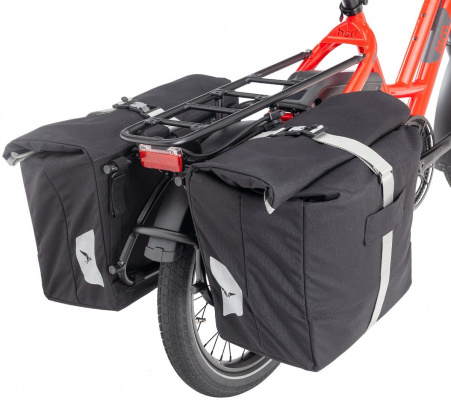
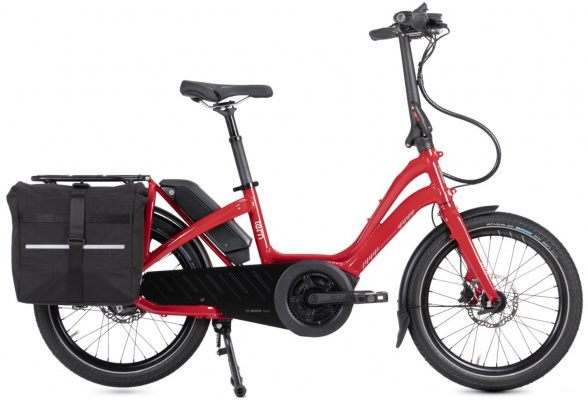
Tern pannier bags are engineered specifically for the hauling demands that most pannier ranges simply aren't built around - namely, the compact 20-inch wheel geometry of bikes like the GSD, HSD, and Vektron, where heel clearance and load stability have to be designed in from the start, not bolted on as an afterthought. That tight packaging matters enormously if you're running a child seat, loading up after a supermarket run, or covering a daily commute through the kind of persistent drizzle that makes a sub-par closure system a very bad life choice very quickly.
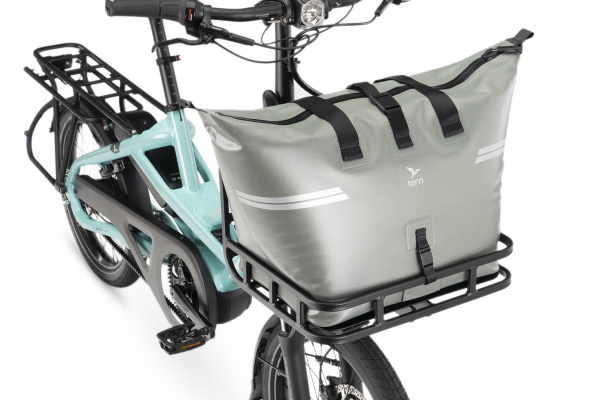
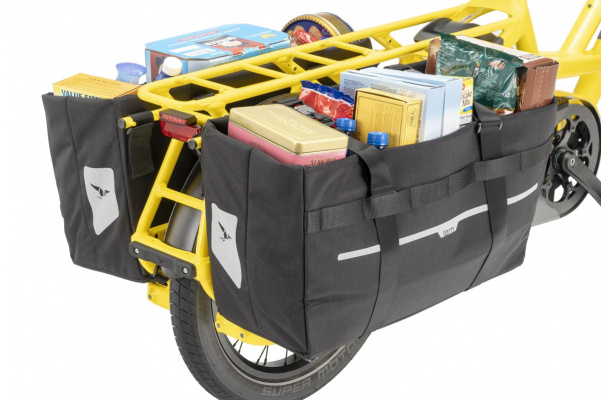
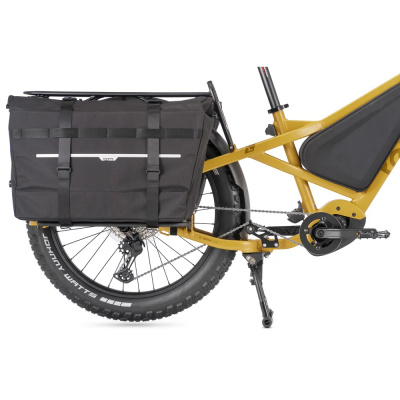
What sets Tern's own bags apart is the integration. The Cargo Hold series slots into Tern's integrated rear racks with a precision that generic panniers can't match, and the fold-flat Bucketload design means you're not lugging around a rigid shell when the bag's empty. Fidlock magnetic buckles let you clip and go one-handed - useful when you're juggling a kid, a helmet, and a coffee. Bluesign-approved fabrics keep the sustainability credentials honest, and the reflective decals are doing real work on dark November mornings rather than just dressing things up. Whether you need cavernous grocery capacity or a slim urban bag that disappears when you don't need it, there's a Tern pannier built around your actual ride.
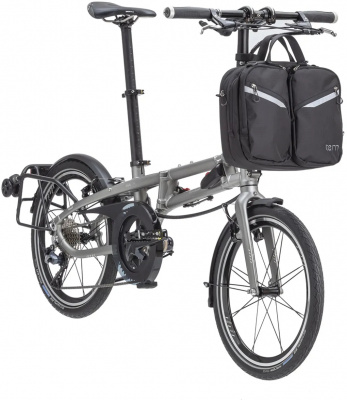
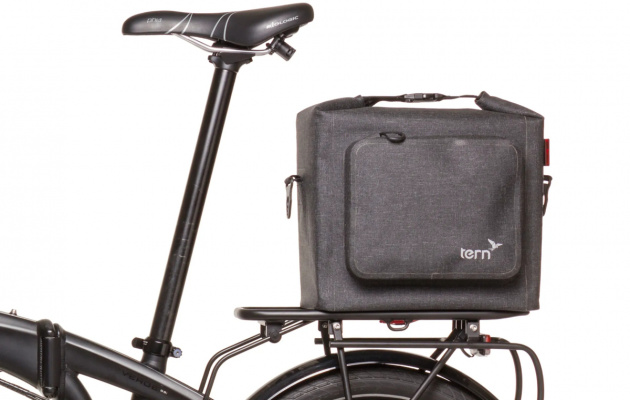
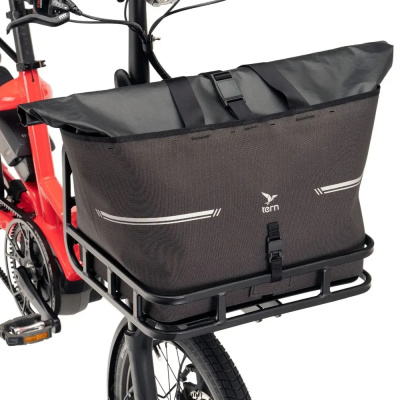
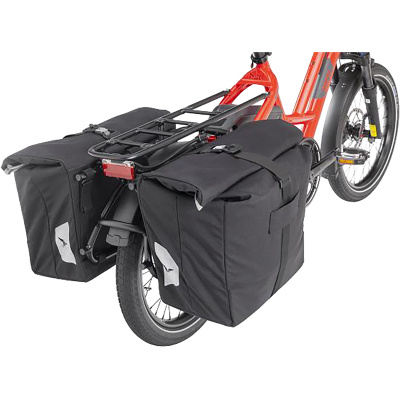
Prices and availability can change quickly. Delivery charges are not always included in listed prices.
Final price, stock status and delivery terms are set by retailer. We may receive a commission on purchases made.
Rack Compatibility and Getting the Fit Right
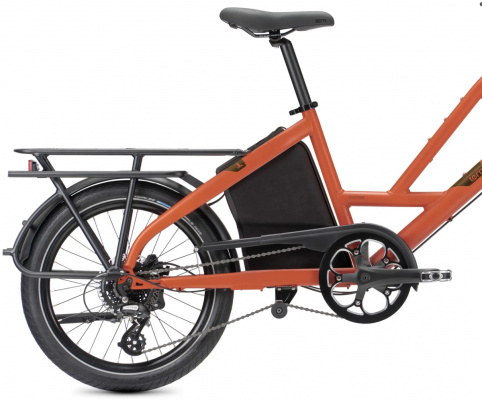
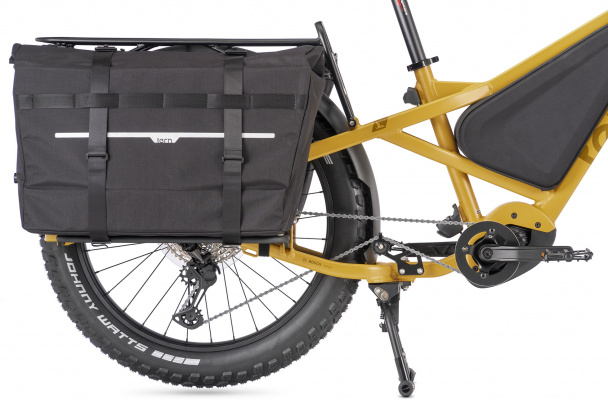
Tern panniers are primarily designed around Tern's own integrated rack systems, and that specificity cuts both ways. On a GSD or HSD, the Cargo Hold series locks into place with a confidence you won't get from an off-the-shelf pannier hung on a standard rack - the bag geometry accounts for the shorter rear triangle and the lower load line that 20-inch wheels demand. That lower centre of gravity is part of why these bikes handle so well loaded, and the panniers are calibrated not to undo it.
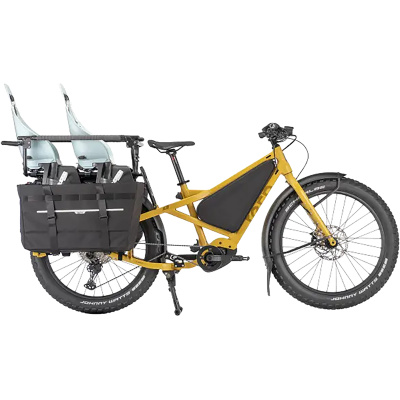
If you're running a Tern with an aftermarket rack rather than the factory-integrated unit, some models use conventional hook-and-bungee systems that'll mount on standard 10 - 16mm tubing. But heel clearance becomes your problem to solve rather than Tern's, and on a compact folding bike the margin is genuinely slim. Worth measuring before you buy. The Clubhouse and Joyride handlebar systems don't directly affect pannier fitment, but if you've configured your GSD with a child seat via the Clubhouse attachment, you'll want to check the specific Cargo Hold variant - Tern designed that series to coexist with rear child seats without the footrests causing contact issues.
Looking for front-mounted storage or frame-triangle luggage? Check out our dedicated Tern Baskets and Tern Frame Bags pages. And if you haven't yet sorted your rack, the Tern pannier racks page is the sensible starting point.
Cargo Hold, Bucketload, and Dry Goods - Which One's Yours
Tern's bag range splits into three distinct tiers, and the differences are meaningful enough that picking the wrong one is a genuine frustration.
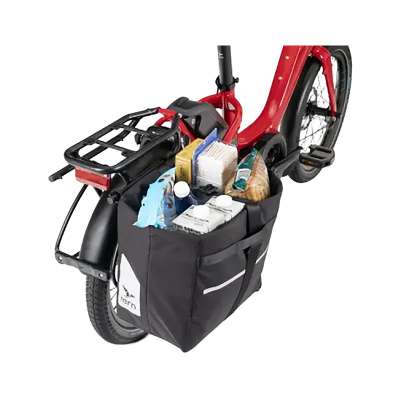
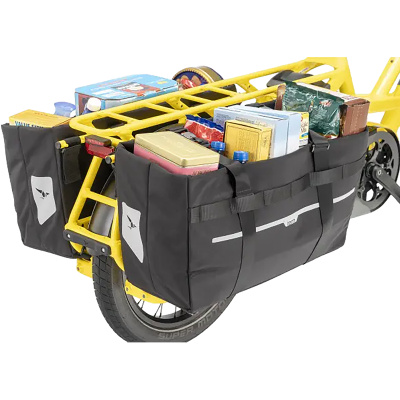
The Cargo Hold series sits at the top. Capacity runs from around 37 litres up to 72 litres depending on configuration, and the expandable Cargo Hold design gives you a bag that genuinely grows with the load - useful when Tuesday's shop is twice the size of Monday's commute. These are the bags for family hauling: weekly groceries, school run kit, the occasional flat-pack that seemed like a good idea at the time. The roll-top closure adds weather resistance without the rigidity of a hard shell, and the volume means you're rarely forcing the zip on an overpacked bag.
The Bucketload series takes a different approach. The fold-flat Bucketload technology collapses the bag down to almost nothing when it's empty, which is genuinely useful if your commute involves locking the bike in a city centre and you'd rather not carry a rigid pannier under your arm all day. When loaded, it opens into a structured, usable shape. It won't match the raw volume of the Cargo Hold, but for urban commuters who want a bag that isn't a liability when empty, it's the smarter call.
The Dry Goods series is for riders who want protection beyond weather-resistant. Sonic-welded construction removes the stitched seams that DWR coatings alone can't fully protect - these bags are as close to submersible as a pannier realistically gets. If your commute crosses a floodplain or you're regularly out in conditions that make Cargo Hold riders think twice, Dry Goods is the serious option. It's worth comparing with Ortlieb panniers, which have long set the waterproof pannier standard - Tern's Dry Goods competes credibly, though Ortlieb's hook system remains arguably simpler to retrofit across multiple bikes.
For riders weighing up alternatives, Altura panniers offer solid value at the more accessible end of the waterproof commuter market, and Basil panniers are worth a look for riders after a more lifestyle-oriented aesthetic without sacrificing practicality. Tern's advantage over those brands is the ecosystem integration - none of them are designed with the GSD's geometry in mind.
Keeping Tern Panniers Honest Through a UK Winter
Road grit and salt are the slow killers of pannier hardware, and the Fidlock magnetic buckles need a bit of attention if they're going to keep clicking cleanly through February. Rinse them regularly with fresh water - a quick blast from a hose or a bottle is enough - and keep the magnetic contact faces free of grit build-up. Grit jams the mechanism gradually rather than catastrophically, so you might not notice it degrading until you're trying to clip the bag on one-handed in the rain. Don't let it get to that point.
Lower tension straps on loaded panniers can work loose on rough roads and drift towards the drivetrain or rear disc rotor. It's a straightforward fix - tuck excess strap length back through the retainer or use a small strap keeper - but easy to overlook. On a GSD with hydraulic discs, any contact with the rotor is worth taking seriously.
The weather-resistant fabrics on the Cargo Hold and Bucketload ranges use a DWR coating that does degrade with use and washing. After a heavy winter season you'll notice water starting to soak in rather than bead off. Reproofing with a spray-on DWR product - Grangers or Nikwax both work well - brings the performance back without needing to replace the bag. It takes ten minutes and extends the effective life of the fabric significantly. Bluesign-approved materials are built to handle repeated treatment without degrading, so don't be shy about doing it annually. If you're pairing your GSD or HSD with a Tern child seat, double-check the tension strap routing after the first few rides - the seat changes the load dynamics slightly and it's worth confirming nothing has migrated.
Tern Pannier Bags FAQs
Do Tern pannier bags fit all bike racks?
Not all of them, and it matters. Models like the Cargo Hold are designed around Tern's own integrated GSD and HSD racks, where the geometry and tube dimensions are specific. Some Tern bags use standard hook systems that'll work on conventional racks, but heel clearance on a compact 20-inch wheel bike can be tight. Always check rack dimensions and clearance figures before ordering.
Are Tern Cargo Hold panniers fully waterproof?
They're highly weather-resistant rather than fully waterproof - fine for the kind of persistent drizzle most UK commutes throw at you, but not submersible. The DWR-coated fabrics and roll-top closures handle light to moderate rain well. For genuinely torrential conditions or guaranteed dry contents, step up to the Tern Dry Goods series, which uses sonic-welded construction to eliminate vulnerable seams.
Can you use Tern panniers with a child seat installed?
Yes, and Tern specifically accounts for this. The Cargo Hold series is designed to run alongside rear child seats - including the Thule Yepp Maxi - on GSD and HSD models. The bag shape and closure system are configured to clear the seat's footrests without fouling. It's one of the more thoughtful bits of integration in the range, and worth confirming against your specific seat model before purchase.