
Tektro 9 Speed Rear Derailleurs
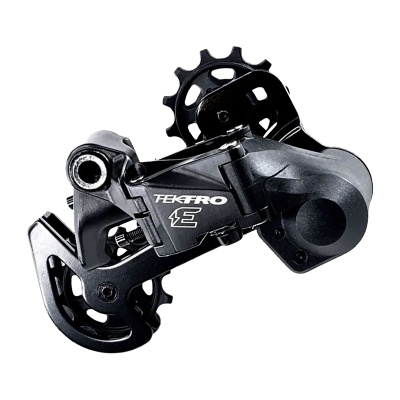
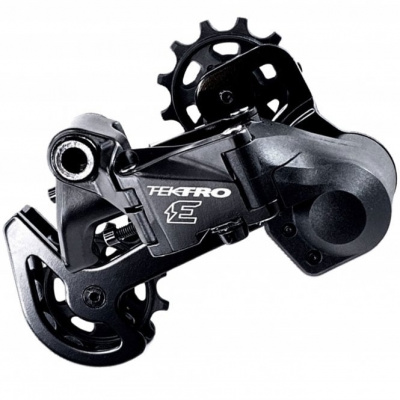
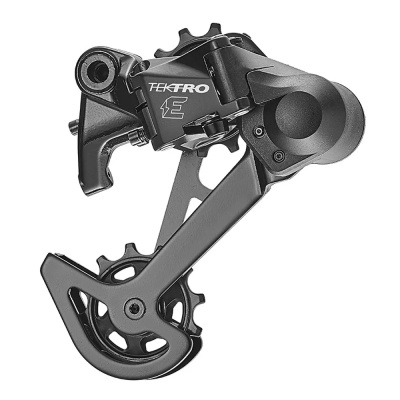
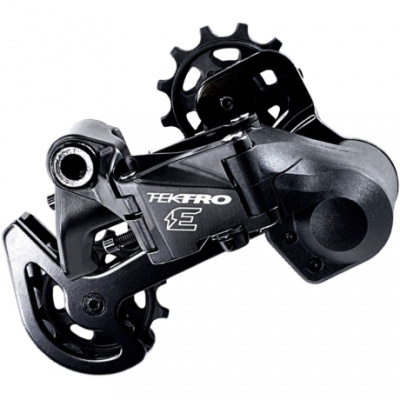
Tektro 9 speed rear derailleurs cover a lot of ground - from budget trail replacements to the torque-hardened ED9 series built specifically for e-bikes. If you've bent a cage on a rock garden or you're chasing cleaner shifts on a mid-drive motor, there's a Tektro mech worth considering here. The standard 9-speed MTB range uses forged aluminium construction and sits comfortably alongside Shimano 9-speed rear derailleurs and SRAM 9-speed rear derailleurs as a cost-conscious alternative with solid real-world credentials. The ED9 (E-Drive 9) models step things up: reinforced clutch mechanisms, heavier return springs, and cages built to resist the twisting load that a mid-drive motor puts through your drivetrain. Worth knowing before you buy - cage length matters. A long SGS cage handles wider-range cassettes and the bigger tooth differences you'll find on trail and e-bike builds, while a shorter GS cage suits tighter, road-adjacent drivetrains. Compare prices across UK retailers using the grid below and check the model specs carefully against your current setup before checkout.
Prices and availability can change quickly. Delivery charges are not always included in listed prices.
Final price, stock status and delivery terms are set by retailer. We may receive a commission on purchases made.
Will It Fit? Compatibility, Cage Length, and What to Watch
Most standard Tektro 9-speed MTB rear mechs share the same cable pull ratio as Shimano's 9-speed mountain shifters, so if you're running Shimano levers, you can drop a Tektro mech in without recalibrating anything. Clean swap. Where it gets more specific is the ED9 ecosystem - Tektro designed those derailleurs around the matching ED9 shifter, and mixing in third-party levers can throw the indexing off. If you're building or repairing an e-bike drivetrain, keep the ED9 components together.
Cage length is the next decision. SGS (long cage) is what you want for a wide-range cassette - most modern Tektro 9-speed SGS mechs clear up to a 46T large sprocket, which gives you real climbing range on a loaded trail bike or a Peaks descent where you need that bottom gear. GS (medium cage) suits tighter setups, typically capping out lower. Always cross-reference the total capacity figure - that's the maximum tooth difference your derailleur can absorb across both the cassette and the chainring swap combined. Get that wrong and you'll either have a saggy chain or a mech that pulls tight and won't shift cleanly. Pair a new mech with fresh Tektro 9-speed cassettes and you'll get the best out of the indexing from day one.
One more thing on the derailleur hanger: Tektro mechs use a standard direct-mount interface, but hanger geometry varies by frame. Order a spare hanger when you order the derailleur. They bend so the mech doesn't, and finding the right hanger six weeks later when you want to ride is frustrating.
Standard Range vs ED9 - Where Your Money Goes
The standard Tektro 9-speed MTB rear mech is a no-drama replacement part. Forged aluminium parallelogram, solid pivot points, does what it says. For a hardtail commuter, a leisure trail bike, or a kid's first proper mountain bike, it's entirely fit for purpose. Think of it as the reliable workhorse - not glamorous, but it won't let you down on a Sunday morning loop of the South Downs.
The ED9 (E-Drive 9) is a different animal. Mid-drive motors generate significant chain torque under power - far beyond what a rider's legs produce - and a standard derailleur cage can twist or bounce under that load, causing chain drops at the worst possible moment. The ED9 addresses this with a stronger clutch mechanism that keeps chain tension consistent, heavier-duty return springs that maintain crisp downshifts even when the motor is working hard, and a reinforced cage that resists the twisting forces a standard mech simply isn't designed for. If you're running a Bosch, Shimano EP8, or similar mid-drive system, the ED9 is the logical choice - not a luxury.
Compared to Microshift 9-speed rear derailleurs, Tektro's ED9 has the edge specifically on e-bike applications thanks to that dedicated torque management. For a standard acoustic drivetrain, both brands compete closely on value. The Tektro standard range pairs naturally with Tektro chainsets and cranks if you're doing a fuller drivetrain refresh.
Keeping It Running Through a UK Winter
A Tektro 9-speed mech that shifts perfectly in September can feel like it's full of gravel by February. That's not dramatic - it's just what grit, mud, and road salt do to pivot points and jockey wheel bearings. The fix is regular attention to a few specific spots.
The parallelogram pivots - the four pivot points on the body of the mech - need lubrication after every muddy ride. A drop of wet lube or a thin oil worked into each pivot keeps the spring tension consistent and stops the derailleur from sticking mid-shift. The B-knuckle (the lower pivot that controls the mech's angle relative to the cassette) collects grinding paste particularly efficiently. Clean it, lube it, and re-check your B-tension screw clearance - that 5 - 6mm gap between the upper jockey wheel and the largest cog gets eaten up when grit builds in the pivot.
Jockey wheels take the most punishment. The lower one runs closest to the muck, and once its bearings get gritty, you'll feel it as a rough, dragging sensation through the drivetrain. Replaceable jockey wheels are cheap; ignoring worn ones costs you a cassette. Check them every few months through winter.
Don't overlook your inner cables. A sticky cable mimics a broken derailleur almost perfectly - sluggish upshifts, poor return - and UK wet conditions accelerate cable housing corrosion faster than most riders expect. Fresh cables and housing will transform a derailleur you thought needed replacing. Tektro cables are worth looking at here; housing that matches your mech's pull characteristics keeps indexing consistent.
One last thing: if you're riding Welsh trail centres or Scottish gnar where creek crossings are unavoidable, rinse the mech with clean water after the ride rather than leaving trail mud to dry and set. Dried mud is abrasive; wet mud washes off. Thirty seconds with a bottle does more for longevity than any amount of retroactive cleaning.
Tektro 9 Speed Rear Derailleurs FAQs
Are Tektro 9-speed rear derailleurs compatible with Shimano shifters?
Standard Tektro 9-speed derailleurs use the same cable pull ratio as Shimano 9-speed MTB shifters, so they're generally cross-compatible - you can run Shimano levers with a Tektro mech without issue. The exception is the ED9 e-bike system, which is designed to work with the matching ED9 shifter for reliable indexing under motor load. Mixing ED9 with non-ED9 shifters isn't recommended.
What is the maximum cassette size for a Tektro 9-speed derailleur?
Most current Tektro 9-speed rear mechs with an SGS (long) cage can clear up to a 46T large sprocket. Always check the specific model's total capacity rating, which tells you the maximum tooth difference the derailleur can manage across your full cassette and chainring range. Getting this wrong gives you either a slack chain or a mech that won't index cleanly.
How do I adjust a Tektro 9-speed rear derailleur?
Set the High (H) and Low (L) limit screws first with the cable disconnected, aligning the jockey wheels with the smallest and largest cogs respectively. Reattach the cable, then use the barrel adjuster to dial in the indexing - small turns make a real difference. Finally, set the B-tension screw so the upper jockey wheel sits 5 - 6mm from the largest cog. Check it under pedalling load, not just static.