
SRAM 9 Speed Rear Derailleurs
A reliable SRAM 9 speed rear derailleur is one of those components that earns its keep quietly - until it doesn't, and suddenly every pedal stroke is a lottery. Whether you're keeping a hardtail ticking over, refreshing a hybrid commuter, or replacing a bent mech after a trail-side disagreement with a rock, SRAM's 9-speed range covers the bases without fuss.
What sets these mechs apart is SRAM's 1:1 actuation ratio - cable pull and derailleur movement are matched exactly, which means cable stretch and mud ingress have far less opportunity to throw your shifts off. That's not a trivial point if you ride through a British winter, where grit and wet quickly turn a vague cable pull into something resembling a lucky dip. Direct Route technology tidies up the cable line further, eliminating the housing loop that would otherwise trap water and debris.
You'll find short, medium, and long cage options here, spanning models suited to everything from 1x drivetrains to triple-chainring touring setups. Check the cage length and max tooth capacity against your existing drivetrain before buying - get that right and fitting is straightforward. Browse the listings below to compare UK prices across the range.
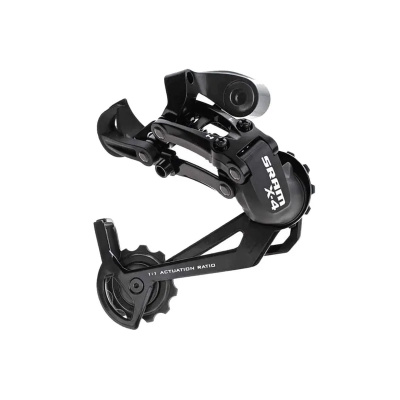
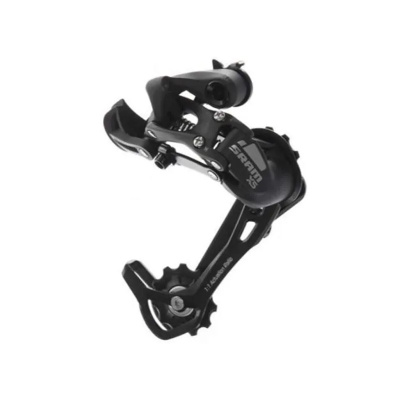


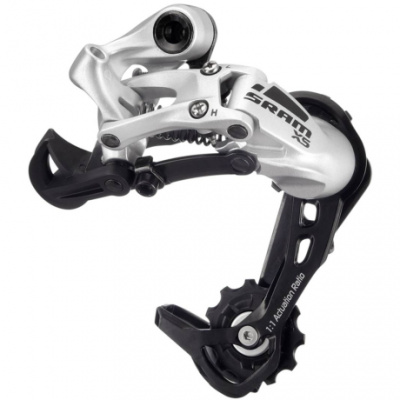
Prices and availability can change quickly. Delivery charges are not always included in listed prices.
Final price, stock status and delivery terms are set by retailer. We may receive a commission on purchases made.
Compatibility: What Works With What
Before anything else, here's the thing that trips people up most often: SRAM 9-speed mountain derailleurs are not compatible with Shimano 9-speed shifters. Full stop. SRAM uses a 1:1 actuation ratio - meaning one millimetre of cable pull moves the derailleur one millimetre - while Shimano's mountain shifters use a 2:1 ratio. Mix the two and you'll get shifts that are either wildly over- or under-indexed. You need a SRAM shifter designed for 1:1 compatibility to pair with these mechs. If you're unsure what's already on your bike, check the shifter body for SRAM branding before ordering. For riders considering alternatives, Shimano 9-speed rear derailleurs and microSHIFT 9-speed options both use different pull ratios and are worth a look if you're switching ecosystems entirely.
Cage length is the other compatibility question worth nailing down. A long cage derailleur handles the chain slack generated by a triple chainring setup - it's the right choice for a 3x9 drivetrain with a wide-range cassette. A medium cage suits double chainring setups and keeps the mech better protected when things get rough. Short cage is for 1x or downhill configurations where chain wrap and ground clearance matter more than total capacity. On max tooth capacity, most SRAM 9-speed mechs - including the X5 and X7 - are rated to clear a 34T or 36T maximum rear cog, depending on the specific model. Always cross-reference the stated capacity with your cassette before committing, particularly if you're running an extended-range setup on a hybrid or touring bike.
The Model Hierarchy: X5, X7, and X9 Explained
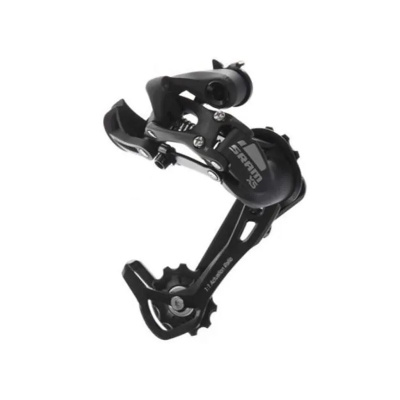
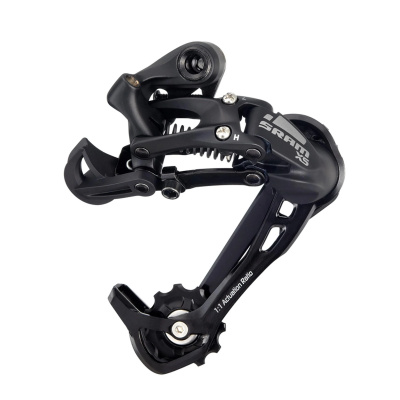
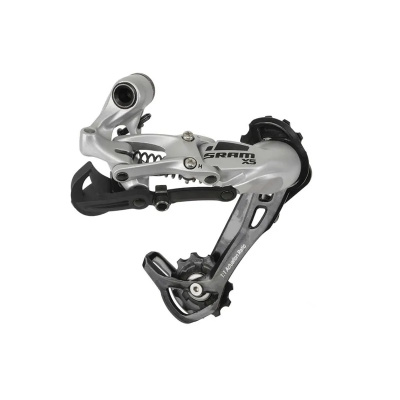
The SRAM 9-speed lineup runs from the X5 at the workhorse end up through the X7 and X9, and understanding what the extra spend actually buys you makes the choice much simpler. The SRAM X5 9 speed rear mech uses a Grilon composite body - a glass-reinforced polymer that's genuinely light and tough enough for trail use - paired with stamped steel cage plates. It's not glamorous, but it shifts well, it takes a knock without shattering, and for riders who want a dependable replacement without spending more than the bike is worth, it's the sensible call.
Step up to the SRAM X7 9 speed derailleur and the body construction tightens up. You're still getting Grilon composite on parts of the chassis, but the parallelogram linkages move to forged alloy, which reduces flex under load and keeps indexing more precise over time. The jockey wheels gain sealed cartridge bearings rather than open bushings - a meaningful upgrade on gritty UK rides where unsealed bushings can wear down surprisingly fast over a single winter. Weight drops slightly too, though that's rarely the deciding factor at this level.
The X9 pushes further into alloy construction throughout, sheds more grams, and uses higher-quality bearing cartridges in the jockey wheels. If you're building up a capable trail bike and want a mech that won't need touching for seasons, the X9 justifies its position. That said, for most riders refreshing a bike rather than building a flagship, the X7 sits in a sensible middle ground - better durability than the X5 without X9 pricing. Worth knowing: all three models share the same Exact Actuation system, so the shift feel is consistent across the range. You're buying refinement and longevity as you go up, not a fundamentally different shifting experience.
One practical note - check the derailleur hanger on your frame before ordering any replacement mech. Hangers are frame-specific and a worn or bent one will undermine even a new derailleur's performance immediately. If yours looks suspect, sort it first. You can find compatible hardware via our SRAM derailleur clamps page.
Keeping It Running Through a UK Winter
The Direct Route cable routing on SRAM's 9-speed mechs is genuinely useful in British conditions. By eliminating the traditional housing loop at the derailleur, there's no U-bend for water and grit to pool in - and in practice, that means cable tension stays more consistent through the kind of wet, muddy rides that see conventional setups drifting out of index by the end of a lap. It's a quiet advantage that becomes obvious the first time you finish a December ride in Wales and your shifting is still spot-on.
Setting the B-tension screw correctly is the single most overlooked step when fitting a new mech. Get it wrong and the top jockey wheel will either drag against the cassette or sit so far away that chain pickup becomes sluggish. The general rule: with the chain on the largest rear cog, adjust the B-tension screw until there's a consistent 5 - 6mm gap between the top jockey wheel and the cog. Do this after the cable is routed and indexed - not before - and recheck it if you change cassette size.
For jockey wheel replacements and other small hardware, we'd point you to our dedicated SRAM jockey wheels page for pulleys, and the SRAM derailleur spares section for everything else - limit screws, springs, and the like. Keeping a spare set of jockey wheels to hand is worth it if you ride through winter regularly; unsealed bushings on entry-level mechs do wear, and fresh pulleys restore crisp shifting faster than a full mech swap.
SRAM 9 Speed Rear Derailleurs FAQs
Are SRAM 9-speed derailleurs compatible with Shimano shifters?
No - and it's a common mistake. SRAM 9-speed mountain derailleurs use a 1:1 actuation ratio, where Shimano mountain shifters use a 2:1 ratio. The two systems won't index correctly together. You need a SRAM shifter built for 1:1 compatibility to run alongside a SRAM 9-speed mech.
What is the maximum cassette size for a SRAM 9-speed rear derailleur?
Most SRAM 9-speed mechs, including the X5 and X7, handle a maximum rear cog of 34T or 36T depending on the model. Check the specific derailleur's stated max tooth capacity before upgrading your cassette - running beyond the rated size causes poor shifting and risks damage to the mech.
How do I choose between a medium and long cage SRAM derailleur?
Go long cage if you're running a triple chainring setup - it's built to absorb the extra chain slack a 3x drivetrain generates. For a double or 1x drivetrain, a medium or short cage gives better ground clearance and slightly crisper shifts. If you're unsure, match the cage length to whatever you're directly replacing.