
Surly Mountain Bikes
Surly mountain bikes aren't built to win XC races or impress people with their spec sheet - they're built to still be rideable in fifteen years, in the dark, covered in Peak District clay, with a bikepacking load strapped to every tube. That's the deal. Every bike in the Surly MTB range is built around proprietary 4130 Chromoly steel, which means you're getting a frame with genuine ride feel rather than the kind of engineered stiffness that transmits every root and rock straight into your palms.
The lineup spans proper trail hardtails like the Karate Monkey and the rolling-momentum Krampus, through to fat bikes like the Ice Cream Truck and the Wednesday - each one a blank canvas with the clearance, mounting points, and geometry to be built whatever way suits you. Rigid singlespeed for winter grit survival. Loaded bikepacking rig. Rowdy singletrack weapon with a suspension fork bolted on. All of the above.
Massive tyre clearance, endless rack and bag mounts, and geometry that doesn't penalise you for riding slowly through bog: Surly's range rewards riders who want a bike that works across conditions and lasts long enough to become genuinely irreplaceable.
Prices and availability can change quickly. Delivery charges are not always included in listed prices.
Final price, stock status and delivery terms are set by retailer. We may receive a commission on purchases made.
Mapping the Surly MTB Range
There are four bikes worth knowing here, and they serve meaningfully different purposes. The Karate Monkey is the agile one - a 27.5+ and 29er-compatible trail all-rounder with slack-ish geometry and enough tyre clearance to run chunky rubber in the slop. It handles singletrack with real confidence, corners predictably, and builds up well as either a geared trail bike or a stripped-back winter singlespeed. It's the one most riders gravitate to first, and usually stick with.
The Krampus is a different animal. Designed specifically around 29+ wheels - that's 29-inch rims running 3.0-inch-plus tyres - it rolls over loose and rough ground with a kind of unstoppable momentum that a standard 29er simply can't replicate. It's heavier to accelerate, but once it's moving it irons out the kind of trail chop that would rattle a lighter bike apart. Think of it as the option for riders who spend more time on rough bridleways and rooted forest singletrack than bike park berms.
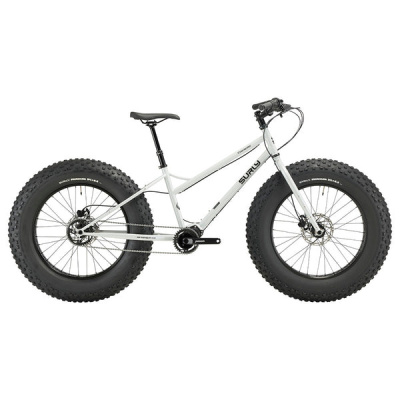
Then there's the fat bike pair. The Ice Cream Truck runs 26-inch fat rubber and is Surly's do-everything bruiser - snow, sand, soft moorland, winter trails that have dissolved into soup. The Wednesday steps up to 27.5-inch fat wheels for a more trail-bike feel without losing the grip and float that makes fat bikes genuinely useful rather than just novelty items. If you're comparing DMR mountain bikes or Hope mountain bikes against the Surly range, the key difference is philosophy: Surly bikes are deliberately over-engineered for versatility and longevity rather than optimised for a single discipline or weight target.
Looking to build your own custom steel rig from scratch? Head over to our dedicated Surly Frames page to find bare framesets ready for your dream spec.
The Tech Behind the Steel
Surly's 'Natch!' custom-butted 4130 Chromoly steel tubing is the foundation everything else rests on. Generic chromoly is fine. Natch tubing is something else - Surly's own butting profiles mean the tube walls are thicker where stress concentrates (at the joints, at the dropouts) and thinner in the mid-sections where you want compliance. The result is a frame that has genuine flex in the right places, absorbing trail chatter through the stays and fork rather than your wrists and lower back. That's not a marketing claim - it's a measurable property of well-designed steel, and it's why steel hardtails continue to be ridden hard long after comparable aluminium frames have been retired or cracked.
The Gnot-Boost rear spacing is one of those details that sounds nerdy but matters enormously in practice. Surly's investment-cast dropouts are machined to flex and fit 135mm, 142mm, and 148mm Boost hub widths. That means if you've already got a decent wheelset built on older 142mm spacing, it fits. If you want to run the wider 148mm Boost standard for better spoke bracing and more tyre clearance, that fits too. You're not locked into a single standard the moment you buy the frame, which matters when wheel standards keep shifting and you'd rather not rebuild a wheelset every time a new spec arrives.
The investment cast dropouts with horizontal slotted options are equally clever. The slotted rear dropout lets you run a singlespeed setup without a tensioner - you just slide the wheel back to tension the chain. Clean, reliable, and one less thing to pack mud into on a winter ride. Suspension-corrected rigid forks mean the geometry is designed around a specific fork travel figure, so if you later decide you want to run a 120mm or 140mm suspension fork, the head angle stays sensible rather than steepening into nervous territory. It keeps your options open without requiring a whole new frame. Pair that with a set of Surly handlebars and you've got a cockpit that suits the relaxed, upright position these bikes are designed around.
Running a Surly Through a British Winter
Steel and UK winters have a complicated relationship. The good news: Surly's chromoly is tough, weldable anywhere in the world if something goes wrong, and forgiving in a crash. The less good news: leave raw steel unprotected inside the frame and moisture will find it. Before you build, spray Frame Saver or Boeshield T-9 into the tubes through the bottle cage bosses and let it drain. It takes five minutes and it'll outlast several winters of riding in Scottish mist and Welsh drizzle.
The tyre clearance on these bikes is genuinely transformative in British mud conditions. A standard 2.35-inch trail tyre packs up with clay on a Brecon Beacons winter ride and suddenly you're pedalling a solid lump. Surly's plus-size and fat clearances stay open - the mud has somewhere to go - so grip and rolling resistance stay consistent even when conditions deteriorate. That's not a small thing when you're two hours from the van and the trail has turned to custard.
There's also a quiet financial argument for running a rigid, pivot-free frame through winter grit. Suspension bearings, pivot hardware, and derailleur internals are expensive to replace when road salt and abrasive mud get into them repeatedly. A rigid singlespeed Karate Monkey has almost nothing to destroy. Full-suspension bikes earn their keep on technical trails, but a Surly hardtail in singlespeed trim is genuinely low-maintenance in a way that matters when you're riding through November to April. Finish the build with a set of Surly MTB tyres matched to the conditions, and if you're planning any loaded touring or bikepacking, the frame's mounting points work directly with Surly pannier racks and Surly pannier bags without any adapter faffing. Also worth a look if you're drawn to Surly's broader catalogue: their gravel bikes and touring bikes share the same steel-first philosophy and the same mounting-point generosity.
Surly Mountain Bikes FAQs
Are Surly mountain bikes good for trail riding?
Yes, solidly. The Karate Monkey and Krampus both run modern trail geometry that handles singletrack well. The compliant nature of Surly's custom-butted steel soaks up trail chatter in a way that aluminium hardtails don't, so you stay comfortable and in control without needing rear suspension. They're particularly capable on natural, rooty trails rather than sculpted bike park lines.
What is the difference between the Surly Krampus and Karate Monkey?
The Krampus is built specifically around 29+ wheels - big-diameter rims with 3.0-inch-plus tyres that roll over rough, loose ground with impressive momentum. The Karate Monkey is more versatile: it runs 27.5+ or standard 29er setups and handles more nimbly on tighter singletrack. If you want a trail all-rounder, the Karate Monkey. If you ride rougher, choppier ground and want that unstoppable rolling feel, the Krampus.
Why are Surly bikes heavier than other brands?
Because the priority is durability and ride quality, not weight. Surly's Natch 4130 Chromoly steel is custom-butted for compliance and strength, but steel is inherently denser than aluminium or carbon. The trade-off is a frame that can be repaired anywhere, handles loaded bikepacking without complaint, and won't fatigue or crack after years of hard use. For riders who clock big miles in rough conditions, that's the better deal.