
Surly Gravel Bikes
Surly gravel bikes aren't trying to win the Tour de France, and that's precisely the point. Where most brands chase marginal aero gains and fragile carbon layups, Surly builds steel rigs designed to go anywhere, carry anything, and still be rideable after a ding off a Pennine gatepost. Every frame in the range is shaped around 4130 CroMoly steel - specifically their own 'Natch tubing, drawn to Surly's own specs rather than grabbed off a generic shelf. That matters more than you'd think when you're three days into a Scottish Highlands bikepacking loop and the trail has turned to porridge.
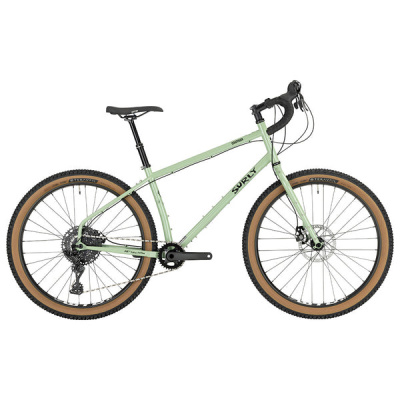
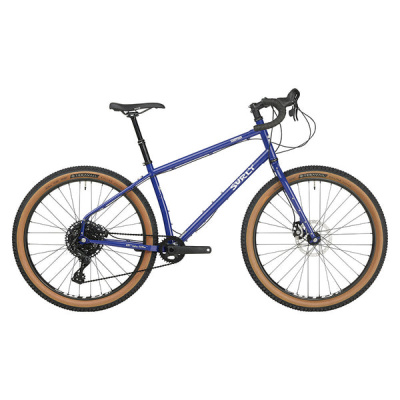
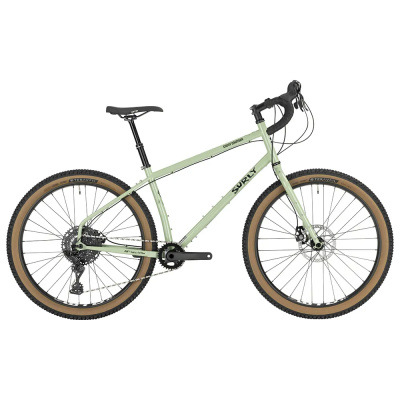
The lineup covers real ground. The Midnight Special is a fast-rolling road-plus machine built around high-volume 650b tyres. The Straggler takes a cyclocross-inspired approach - nimbler handling, 700c or 650b compatibility. The Ghost Grappler pushes further into drop-bar off-road riding, where the going gets properly rough. All three share Surly's obsession with tyre clearance, mount count, and frames you can actually repair if something goes wrong far from home. Compare UK prices on the full range below.
Prices and availability can change quickly. Delivery charges are not always included in listed prices.
Final price, stock status and delivery terms are set by retailer. We may receive a commission on purchases made.
Decoding the Surly Gravel Lineup
Three bikes, three distinct characters - but they share the same core DNA. Start with the Midnight Special if fast gravel and road-plus riding is your thing. It's shaped specifically around big 650b tyres, which smooth out the sort of rutted bridleways and loose grit tracks that would rattle a standard road bike to pieces. The geometry sits somewhere between a fast tourer and a performance gravel bike - you're not hunched over the bars, but you're not sat upright either. It suits riders who want one bike that can do a brisk 60-mile mixed-surface day and also handle a loaded weekend route without complaint.
The Straggler is the crosser of the family. Quicker steering, a slightly more aggressive position, and the flexibility to run either 700c or 650b wheels depending on what the day demands. If you're coming from a cyclocross background or you want a bike that feels lively on tighter loops rather than epic distance missions, the Straggler is the one to look at. It handles the technical stuff - think rooty forest tracks in the Brecon Beacons or tight chalk cuts in the South Downs - better than the Midnight Special's more relaxed layout allows.
Then there's the Ghost Grappler. This is the model that genuinely blurs the line between gravel and trail riding. Drop bars, but with the clearance and geometry to run proper off-road tyres and tackle descents that would make most gravel bikes nervous. It's not a cross-country race weapon - it's a Surly bikepacking bike at heart, designed for riders who refuse to let the route dictate where they go. If you're considering alternatives in a similar space, Kona gravel bikes and Genesis gravel bikes offer comparable drop-bar versatility, though neither matches Surly's mount count or tyre clearance figures.
If you're after something beyond the gravel category entirely, our Surly touring bikes page covers the long-haul specialists, and Surly mountain bikes handles the flat-bar off-road side of the range. Want to start with just a frame? Browse Surly frames and build it out your way.
The Steel and the Tech Behind It
Surly's 'Natch tubing is the foundation everything else sits on. It's not generic 4130 CroMoly - Surly draws the tubes to their own dimensions, varying wall thickness along each tube's length (butting) based on where stress actually concentrates. The result is a frame that uses steel's natural compliance to absorb road buzz and trail chop, without feeling vague or wallowy. Think of it as the difference between a mattress and a trampoline: both absorb impact, but one gives you control over where you end up.
The Gnot-Boost rear dropout spacing is one of those details that sounds like marketing until you actually need it. It's machined to flex between 135mm quick-release, 142mm thru-axle, and 148mm Boost hub spacing - on the same frame. That means if you buy a Surly today and want to run a different wheelset in two years, or the standard has shifted again (it will), you're not immediately stuck. For bikepacking builds especially, where you might be swapping wheels for a loaded trip versus a fast day out, that flexibility is genuinely useful rather than theoretical.
Then there are the braze-ons. Surly fits three-pack mounts in places other brands don't bother - fork legs, down tube, top tube, seat tube. You can run multiple frame bags, a full rack setup front and rear, or a combination of both without running out of attachment points. Pair the frame with Surly pannier racks or their own pannier bags and the whole system clicks together without adapters or bodges.
Running a Surly Through a British Winter
Steel and British weather is a conversation worth having before you buy. Surly frames go through an ED (Electrophoretic Deposition) coating process inside the tubes - it's an electrochemical primer that coats the internal walls before the outer paint goes on. That matters in the UK because condensation and wet weather find their way inside any frame eventually, and bare steel rusts. The ED coating is Surly's answer to that; it's not a magic shield, but it's a serious preventative measure that keeps the internals protected through damp Welsh winters and salty Scottish crossings.
Weight is worth addressing plainly. A Surly steel gravel bike is heavier than an equivalent aluminium or carbon frame - there's no getting around that. On a long climb up a Peak District gritstone ridge, you'll feel those extra grams. But on the descent, where the surface is loose and unpredictable, the stiffness-to-compliance balance of the steel chassis earns its keep. Steel also dents rather than cracks, and a dent is a problem you can assess and often ride home on. A carbon crack is a different conversation entirely.
The tyre clearance is where Surly pulls decisively ahead of most drop-bar competitors. Welsh clay in January is sticky enough to pack solid into a frame with tight clearances, grinding to a halt against the tyre. Surly's figures give you room to run genuinely wide rubber - the kind that sheds mud rather than collecting it - which makes a real difference on days when the bridleway surface is more clay sculpt than gravel path. If you're running the Ghost Grappler on rougher stuff, consider swapping to a more aggressive-compound tyre from the Surly MTB tyre range for better grip in the wet. Bar choice matters too on these bikes - wider drops or flared bars open up control in the rough, and Surly's own handlebar options are spec'd with that in mind.
Surly Gravel Bikes FAQs
Are Surly bikes good for gravel?
Very much so. Models like the Midnight Special and Ghost Grappler are built specifically for mixed-surface riding - compliant steel frames, serious tyre clearance, and enough mount points to carry gear all day. They prioritise comfort over long distances and durability over outright pace, which suits most UK gravel riding better than a lightweight race-focused bike would.
What is the difference between the Surly Straggler and Midnight Special?
The Straggler is cyclocross-inspired - quicker steering, more agile feel, and it runs either 700c or 650b wheels. The Midnight Special is shaped specifically around high-volume 650b tyres for a smoother, more cushioned ride on rougher tracks. If you want a lively, technical feel, go Straggler. If you want maximum comfort on long mixed-surface days, the Midnight Special makes more sense.
Why are Surly bikes heavier than other gravel bikes?
It's the steel. Surly uses their own 'Natch 4130 CroMoly tubing, which is heavier than aluminium or carbon but significantly more durable and repairable. For bikepacking loads and rough UK conditions, that trade-off is deliberate - a frame that absorbs punishment, dents rather than cracks, and can be fixed far from a workshop is worth the extra weight on the scales.