
SRM Power Meters
SRM Power Meters occupy a category of their own - these are the devices that effectively invented the discipline, and decades on they're still the benchmark that everyone else is measured against. If you're serious about training by numbers, whether that's pacing a long Alpine-style drag through the Pennines or nailing VO2 max intervals on a turbo, the data quality here is genuinely different from what you get further down the market.
The headline figure is +/- 1% accuracy, backed by a 144-point calibration process that most rivals simply don't replicate. That matters when the difference between a good block of training and an overcooked one comes down to a handful of watts. SRM offers both spider-based configurations and the newer SRM EXAKT pedals, so there's a mounting solution whether you're running a dedicated race bike or rotating between multiple builds. Active temperature compensation keeps readings honest even when the mercury drops on a damp January morning - which, let's be honest, describes a lot of UK riding. IPX7 waterproofing handles the road spray and relentless grime. These aren't power meters that ask for fair-weather conditions; they're built to cope with whatever a British winter throws at a drivetrain.
Prices and availability can change quickly. Delivery charges are not always included in listed prices.
Final price, stock status and delivery terms are set by retailer. We may receive a commission on purchases made.
Connectivity and the Devices It Talks To
Every current SRM unit broadcasts on both ANT+ and Bluetooth LE simultaneously, which means pairing is straightforward regardless of what's on your bars. Garmin head units pick them up instantly, as do Wahoo devices - and if you're already deep in the SRM ecosystem, the PowerControl PC8 and PC14 computers offer a tighter integration that pulls in additional data fields. No dongles, no faffing, no choosing between protocols.
Syncing training data downstream is equally clean. Rides push automatically to TrainingPeaks, Strava, and most other popular platforms, so your coach or your own analysis workflow doesn't require any extra steps. If you're comparing options, Garmin power meters offer solid connectivity at a lower entry point, and Wahoo power meters have earned a loyal following for their app-driven setup. SRM's edge is in the data integrity upstream - what arrives at your head unit is simply more trustworthy.
One practical note: if you're running an older head unit that's ANT+-only, you're still fully covered. The dual broadcast doesn't compromise either signal.
Accuracy in Practice and What to Expect From the Battery
The +/- 1% accuracy figure isn't marketing shorthand - it comes from a 144-point calibration process applied during manufacture, checking strain gauges across the full range of load and crank angle. In use, that translates to power numbers you can trust ride after ride without wondering whether a reading spike was real effort or sensor noise. For interval training, that consistency compounds over weeks; your power curve actually reflects your fitness, not measurement drift.
Active temperature compensation is worth understanding. When you roll out on a cold morning and the temperature changes as you warm up or the sun breaks through, uncorrected strain gauges shift their baseline. SRM's compensation circuit corrects for this continuously, which is particularly relevant for UK riding where a two-hour loop can swing several degrees. It's one of the reasons SRM data holds up where cheaper units start to wander.
Battery life splits depending on the generation you're looking at. Newer rechargeable models deliver around 100 hours per charge - ample for most training blocks before you need to plug in. Older spider-based units used a sealed cell rated to approximately 1,900 hours, which sounds extraordinary until it runs out and requires a factory SRM power meter battery replacement rather than a home swap. Worth knowing before you buy used. For most riders picking up a current model, the rechargeable system is the one to focus on.
Compared to options like Quarq power meters or Favero power meters, SRM sits at a higher price point - that gap reflects the manufacturing precision and the calibration process, not just brand premium. If budget is the primary filter, those alternatives do a solid job. If accuracy at the margins matters to you, SRM justifies the difference.
Fitting It to Your Bike and Keeping It Honest
Setting up an SRM power meter varies by configuration. The SRM spider power meter installs around your bottom bracket and requires the correct torque on every fixing - get the spec sheet out and use a torque wrench, not feel. Undertightened spiders introduce flex that corrupts readings; overtightened ones can damage the unit. It's a five-minute job done properly, and it's worth doing properly.
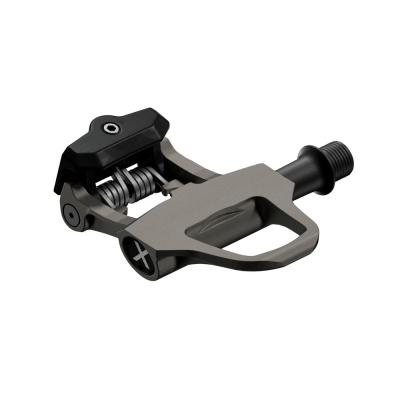
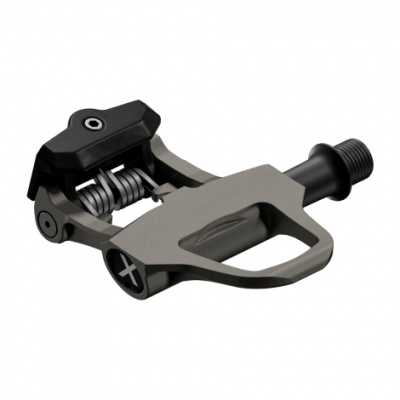
The SRM EXAKT pedals are a more flexible option if you rotate bikes or don't want to commit to a specific crankset. Pedal-based measurement has improved significantly, and for most training purposes the EXAKT system keeps pace with SRM's own accuracy standards. They're also a cleaner option for anyone sharing a power meter between a road bike and a gravel setup.
IPX7 waterproofing means submersion to one metre - it's a rating that comfortably covers road spray, puddle strikes, and pressure washing. UK winter roads throw grit and standing water at drivetrains constantly; SRM units handle it without complaint. That said, avoid directing a pressure washer directly at the unit housing at close range as a habit, even if the rating technically permits it.
Before every ride, run a zero offset calibration. It takes seconds through your paired head unit - unclip the pedals, hold the cranks at the 6 o'clock position, and trigger the offset. This resets the baseline for any temperature or load shifts since you last rode and is the single most important maintenance habit for keeping your data clean. Think of it like tyre pressure: you could skip it, but you'd notice eventually. When you're working through setting up an SRM power meter for the first time, building this into your pre-ride routine from the start saves confusion later.
SRM Power Meters FAQs
How often do you need to calibrate an SRM power meter?
Run a zero-offset calibration before every ride. It takes a few seconds through your head unit - hold the cranks vertical, trigger the offset, done. It corrects for temperature shifts between sessions and keeps your baseline accurate. Skipping it occasionally won't ruin your data, but making it a habit costs nothing and removes a variable.
How long does the battery last on an SRM power meter?
It depends on the model. Current rechargeable units give around 100 hours per charge, which covers most riders for several weeks of regular training. Older sealed-battery spider models could run to roughly 1,900 hours total, but when they're depleted you need a factory SRM power meter battery replacement - not something you can handle at home.
Are SRM power meters compatible with Garmin and Wahoo?
Yes, fully. Modern SRM units broadcast dual ANT+ and Bluetooth LE simultaneously, so they pair with Garmin, Wahoo, and SRM's own PowerControl PC8 and PC14 computers without any workarounds. ANT+-only older head units work fine too. Once paired, data syncs downstream to Strava, TrainingPeaks, and most other platforms automatically.