
Spatzwear Jackets
Spatzwear jackets were born out of Yorkshire winters - the kind that arrive sideways and don't apologise. Founded by former pro Tom Barras, Spatzwear set out to solve a real problem: most foul-weather cycling kit either bogs you down in bulk or lets the cold straight through. These jackets do neither. The design philosophy is tight, race-cut protection that moves with your body, sheds rain without turning you into a sauna on a steep drag, and holds its shape at 30mph into a headwind.
Whether you're grinding out December base miles on the Dales or pinning a number on a wet spring sportive, Spatzwear has a jacket built for it. The range spans lightweight packable rain shells - your go-everywhere insurance policy - through to deep-winter thermal softshells that take the edge off a proper freeze. Every layer is engineered with four-way stretch fabrics, advanced DWR coatings, and extended drop tails to deal with road spray before it reaches your back. It's foul weather gear with a performance bias, not a compromise. Browse the full range below and work out which jacket suits your riding.
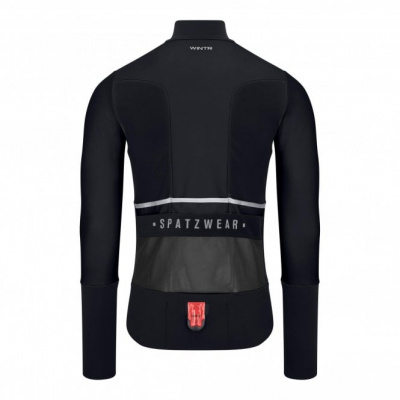
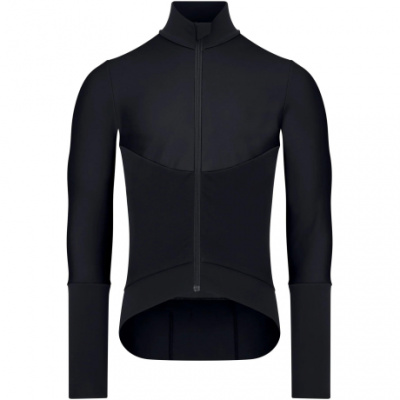
Prices and availability can change quickly. Delivery charges are not always included in listed prices.
Final price, stock status and delivery terms are set by retailer. We may receive a commission on purchases made.
Fabric Tech and Weather Performance
The core of what makes Spatzwear a serious option in bad weather is how it combines protection with breathability. Four-way stretch thermal fabrics are used throughout the range, which means the jacket moves with you rather than fighting your pedal stroke. That matters more than it sounds - a stiff outer layer bunches at the shoulders and elbows, creates drag, and traps hot air when the gradient kicks up.
DWR coating - durable water repellent treatment - is applied across the range, beading rain and road spray off the surface before it has a chance to saturate the outer fabric. On fully waterproof hard-shell models, taped seams close off every potential leak point, so there's no creeping damp through stitching on a three-hour ride in driving rain. Softer thermal models trade that absolute seal for better breathability, which is the right call for high-output riding where overheating is as much a problem as the weather.
Targeted breathability panels - usually positioned across the back and under the arms - allow heat and moisture to escape on climbs without opening up a cold-air channel across your chest. Think of it as managing airflow rather than just blocking it. Extended drop tails are a small detail with a big payoff: that extra length at the rear keeps wheel spray off your lower back even when you're stretched out on the drops. It's the kind of thing you only notice when a jacket doesn't have it. Compared to the broader approach taken by brands like Endura, Spatzwear leans harder into the race-performance side of the equation, prioritising aero fit and low weight over volume-friendly construction.
Understanding the Spatzwear Fit and Range
Spatzwear runs a race cut across the range. That means a close, aerodynamic fit designed to eliminate wind flap and avoid the baggy-sail effect that costs you energy on exposed roads. If you've ever ridden in an oversized rain jacket and felt it billowing behind you on a fast descent, you'll understand why this matters. The aero-cut profile keeps everything tight to the body, reducing drag and stopping cold air from tunnelling up under the hem.
Sizing is worth thinking about before you order. If you're running a standard base layer underneath, go true to size. If you're planning to stack a Spatzwear base layer and a mid-layer for deep winter, consider sizing up - the race cut leaves minimal room for extra bulk. A snug jacket that restricts your breathing on a climb is worse than one that fits with a little more room. When in doubt, measure your chest and compare to the brand's own sizing chart rather than guessing from your usual size in a looser-cut brand.
The product hierarchy runs from thin, packable rain shells that weigh almost nothing and stuff into a back pocket, through mid-weight wind and water-resistant jackets for changeable days, up to proper thermal softshells for sustained winter riding in low temperatures. The lighter end of the range is what you'd reach for on a cool spring morning that might turn wet; the thermal end is for January rides where the temperature doesn't get above four degrees and you're out for three hours. Brands like Castelli and Assos occupy a similar performance-first space, so if you're comparing options, the fit philosophy and target rider are comparable - though Spatzwear's Yorkshire roots give it a particular focus on sustained bad weather rather than just the cold.
Layering and Care for UK Riding
A Spatzwear jacket works hardest when the rest of your kit is pulling its weight too. The moisture-wicking layer closest to your skin is doing the heavy lifting on a tough climb - if that's a cheap cotton base, the jacket above it can't save you from a sweaty, cold descent. Pairing your jacket with Spatzwear base layers is the obvious starting point; the fabrics are designed to work together, and the moisture management is consistent across the system. Add Spatzwear bib tights and Spatzwear gloves and you've got a coherent system rather than a patchwork of different stretch rates and thermal weights.
For the jacket itself, fit your overshoes before you decide on jacket length - drop tails sit differently depending on what's covering your ankles, and you want that rear coverage to work with your Spatzwear overshoes rather than clashing with them. It's a five-second check in the car park that saves a soggy back for hours.
On washing: get this wrong and you'll gradually kill the DWR coating faster than Yorkshire grit ever would. Wash at 30 degrees, use a dedicated technical apparel cleaner - something like Nikwax Tech Wash - and avoid biological detergents or fabric softener at all costs. Softener in particular clogs the DWR and turns a water-beading surface into a sponge. After washing, low heat reactivates the DWR treatment: a short tumble-dry on a low setting or a cool iron run briefly over the outer surface does the job. You'll see the water beading behaviour return. Do this every few washes and the jacket will stay genuinely weatherproof for a long time. Skip it and you'll be wondering why your jacket feels damp after ten minutes in a shower. Albion take a similar approach with their technical outer layers, and the care routine is broadly the same across premium DWR-treated kit.
Spatzwear Jackets FAQs
Are Spatzwear jackets fully waterproof?
It depends on the model. Fully waterproof hard-shell jackets in the range feature taped seams and are built to handle sustained heavy rain. Thermal softshells are highly water-resistant with a premium DWR coating that beads away most conditions but aren't rated as fully waterproof. Check the specific model's description to confirm which category it sits in before buying.
How should a Spatzwear winter jacket fit?
Spatzwear jackets are cut close to the body - deliberately so, to reduce wind flap and keep the aerodynamic profile tight. If you're wearing a single base layer underneath, go true to size. If you plan to stack heavier mid-layers for deep winter riding, size up. The race cut leaves little extra room, so a size too small will restrict movement and breathing on hard efforts.
How do I wash my Spatzwear waterproof jacket?
Wash at 30 degrees using a technical apparel cleaner - avoid biological detergents and fabric softener entirely, as both degrade the DWR coating. After washing, reactivate the water-repellent finish with gentle heat: a short tumble-dry on low or a cool iron briefly applied to the outer fabric. Do this regularly and the jacket will continue beading water rather than absorbing it.