
Shimano Jackets
Shimano cycling jackets apply the same considered engineering to outerwear as the brand does to its groupsets - and that precision shows in how these jackets actually perform when a Welsh descent turns wet or a winter club run meets a biting headwind. The lineup runs from featherlight wind shells you can stuff into a back pocket to seriously capable deep-winter pieces built around breathable membranes and thermal fleece linings. At the top sits the S-PHYRE range, cut for riders who want an aerodynamic, next-to-skin fit without sacrificing weather protection. Below that, the Element series trades that race-sharp profile for a more forgiving cut that works just as well on the commute as it does on a Saturday morning chain gang. Across the range, DWR coating keeps light showers beading off the fabric, while taped seams and high hydrostatic head ratings feature on the fully waterproof models for days when the rain means business. Reflective detailing runs through the collection too, a practical nod to the low-light reality of UK winter riding. Whether you're chasing watts or just trying to get home dry, there's a Shimano jacket built around that specific need.
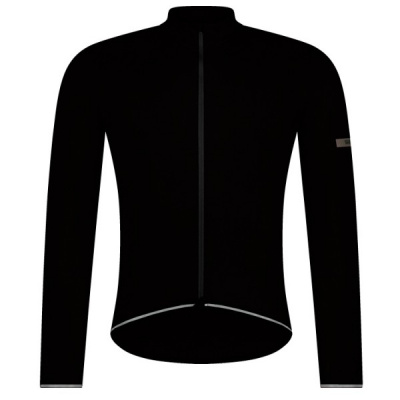
Prices and availability can change quickly. Delivery charges are not always included in listed prices.
Final price, stock status and delivery terms are set by retailer. We may receive a commission on purchases made.
Fabric Tech & Weather Performance
Shimano splits its jacket tech into two clear camps, and knowing which camp you're in makes choosing much simpler. Fully waterproof models - the kind you'd reach for on a sodden Peak District day - use taped seams to block water ingress at every stitch point, backed by fabrics rated to meaningful hydrostatic head figures. These aren't jackets that merely tolerate rain; they're built to sit in it. The breathable membrane underneath matters just as much, because a jacket that keeps water out but traps heat and sweat is a miserable companion on any climb.
The windproof and water-resistant softshells take a different approach. A DWR coating causes water to bead and roll off rather than saturate the fabric, keeping you dry through brief showers without the slightly stiffer feel of a fully taped construction. Breathability is generally higher in these models, which makes them the smarter call for hard efforts - a hilly sportive in unpredictable spring weather, say, where you're generating real heat on the ups and need that moisture to move.
Winter models bring in Shimano's Metallic Thermal Tech, which uses a reflective inner surface to bounce body heat back toward you rather than letting it escape. The practical effect is meaningful warmth retention without the kind of bulk that makes a jacket feel restrictive mid-ride. Pair that with a windproof front panel and you've got a jacket that handles the sort of biting headwinds that make January road riding genuinely unpleasant. Strategic 360-degree high-visibility reflectivity features across the range - panels and piping positioned to catch car headlights from multiple angles, not just a single strip on the back.
Understanding the Shimano Fit & Range
The S-PHYRE range occupies the top of the hierarchy, and the fit reflects that positioning. These are cut for riding position - an aggressive forward lean with arms extended - so the sleeves sit long and the back panel drops to cover your lower back properly when you're tucked over the bars. If you try one on standing upright in a shop it'll feel odd. On the bike, it locks in like a second skin. That aerodynamic, next-to-skin profile is genuinely useful if you race or ride fast groups, but it does demand you size carefully; there's no room to go up a size and layer heavily underneath.
The Evolve and Element ranges are where most riders will land. The fit here is what you'd call club-standard - tailored enough to avoid flapping in a crosswind, relaxed enough to wear a thermal jersey underneath and not feel squeezed. A drop tail keeps your lower back covered without the jacket riding up, which becomes relevant the moment you start to descend. These models suit the widest variety of riders: commuters, weekend gravel riders, and anyone who values comfort over marginal aero gains.
Worth noting: if you're after core protection without the sleeves, our dedicated Shimano Gilets page covers the packable wind protection options in that format. It's a common mid-layer choice when temperatures are in that awkward shoulder-season zone.
For comparison, Castelli jackets tend toward an equally aggressive race fit at the top end, while Endura jackets and Altura jackets generally offer a broader range of relaxed fits suited to UK commuting and year-round riding. Shimano sits comfortably between those two camps depending on which tier you choose.
Layering & Care for UK Riding
Building a layering system for UK riding is less about following rules and more about being honest with yourself about the temperature range you're heading into. For anything above about eight degrees with the jacket on, a lightweight moisture-wicking base layer under a short-sleeve jersey does the job - the jacket handles the rest. Drop below that and a thermal fleece mid-layer or a long-sleeve thermal jersey becomes the sensible call, particularly if you're pairing the jacket with a Shimano windbreak jacket rather than a fully insulated piece. Shimano's own base layers are worth stacking with their jackets since the fits are mapped to work together, but any snug-fitting technical base layer does the same job functionally.
On colder days, don't forget the extremities. Shimano gloves and Shimano overshoes are the practical companions to a Shimano winter bike jacket - you can have the best torso protection going and still call it a day early because your feet gave up. For genuinely grim days, Shimano overtrousers round out the system and keep the lower half as protected as the upper.
Care is where a lot of riders undo good kit. Washing a Shimano waterproof cycling jacket in standard biological detergent is the fastest way to kill the DWR coating - the surfactants in biological products clog the coating's pores and water stops beading within a few washes. Use a dedicated technical apparel cleaner, wash at 30 degrees, and skip the fabric softener entirely. To reactivate an existing DWR coating after washing, a short tumble dry on low heat or a careful pass with a warm iron on a low setting can restore water repellency without reproofing. If the coating has degraded further, a spray-on or wash-in DWR product gets things working again. It's worth doing - a well-maintained DWR coating is the difference between a jacket that sheds a shower and one that soaks through.
Shimano Jackets FAQs
Are Shimano cycling jackets waterproof?
It depends on the model. Shimano's fully waterproof jackets feature taped seams and a high hydrostatic head rating - the S-PHYRE and Beaufort models sit in this category. Other jackets in the range use DWR-treated fabrics and windproof membranes that handle light showers well but aren't designed for sustained heavy rain. Check the specific model's waterproof rating before buying.
How do Shimano cycling jackets fit?
Fit varies significantly across the range. S-PHYRE jackets use an aerodynamic, close-to-body race cut that's designed to be worn in a deep riding position - sizing up won't work well here. The Element and Evolve ranges run with a more relaxed club fit that accommodates a mid-layer underneath and suits a broader range of rider shapes and riding styles.
How should I wash my Shimano waterproof jacket?
Wash at 30 degrees using a technical fabric cleaner - never a standard biological detergent or fabric softener, both of which degrade the DWR coating quickly. After washing, apply low heat via a tumble dryer or warm iron to reactivate the DWR. If water stops beading properly over time, a spray-on reproofing product restores the coating without needing to replace the jacket.